


Digital Marketing Articles
What is Performance Marketing? Complete Guide for 2026
What is the Voice of the Customer and Why Does it Matter
What is A/B Testing in Marketing? A Beginner’s Guide to Smarter Campaign Optimization
What is Lead Nurturing in Marketing? A Practical Guide for Beginners


Get In Touch For Details! Request More Information

Top Roles and Responsibilities of Digital Marketers
Jun 03, 2026 4 Min Read 8001 Views
(Last Updated)
Digital marketing has become the backbone of business growth in the online world, helping brands connect with audiences more effectively. The roles and responsibilities of digital marketers focus on building a strong online presence and driving meaningful engagement.
They work on SEO, social media, campaigns, and performance tracking to improve results. By using data and creative strategies, they help businesses increase visibility, traffic, and conversions in a competitive digital space.
Table of contents
- TL;DR Summary
- A Brief Introduction to Digital Marketing
- Main Components of Digital Marketing
- Roles and Responsibilities of Digital Marketers
- SEO & SEM Specialist
- Content Marketing Manager
- Social Media Manager
- Email Marketing Manager
- PPC Specialist
- Marketing Automation Specialist
- Data Analyst
- Influencer Marketing Manager
- Digital Marketing Manager
- Key Digital Marketing Skills
- Conclusion
- FAQs
- How do digital marketers decide which strategy to use for a campaign?
- Why is data analysis important in digital marketing roles?
- How do digital marketers measure campaign success?
- What makes social media campaigns different from SEO work?
- How does automation support digital marketing work?
- Why is continuous learning important in this field?
- What makes the roles and responsibilities of digital marketers critical for business growth?
TL;DR Summary
- The roles and responsibilities of digital marketers include managing SEO, social media, campaigns, and performance tracking to improve online visibility and engagement.
- Digital marketing is built on key components such as SEO, SEM, content marketing, social media marketing, email marketing, and PPC.
- Digital marketers’ roles and responsibilities depend on skills such as data analytics, PPC management, technical SEO, marketing automation, and conversion optimisation.
- These combined skills and components help digital marketers create data-driven strategies to improve traffic, engagement, and overall campaign performance.
Over 90% of online experiences start with a search engine, and digital marketers use SEO, content, ads, and data skills to turn that traffic into real business growth.
A Brief Introduction to Digital Marketing
Digital marketing refers to the use of digital channels—such as search engines, social media, email, and websites—to promote products, services, or brands. It differs from traditional marketing by focusing on highly measurable, data-driven approaches to reach global audiences and increase customer engagement.
Kickstart your career in 5 days with HCL GUVI’s Digital Marketing Email Course—practical learning, real projects, zero cost.
Main Components of Digital Marketing
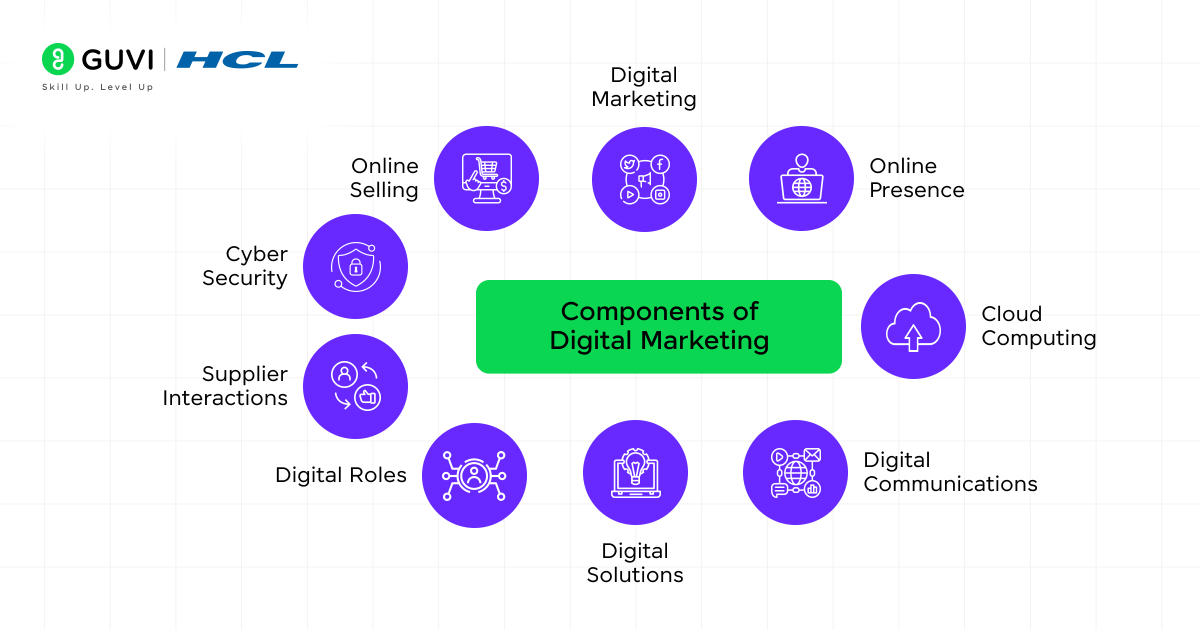
| Component | Description |
| SEO (Search Engine Optimization) | Optimizing websites to achieve higher rankings on search engine result pages (SERPs) organically. Key elements include keyword optimization, technical SEO, and backlinks. |
| SEM (Search Engine Marketing) | Paid advertising strategies to achieve immediate visibility. SEM encompasses Google Ads, paid search, and display advertising. |
| Content Marketing | Creating valuable content that attracts, informs, and retains an audience while driving conversions. This includes blogs, videos, eBooks, and infographics. |
| Social Media Marketing | Managing social media platforms to foster engagement and build brand loyalty. It also involves paid advertising and organic outreach on platforms like Facebook, LinkedIn, etc. |
| Email Marketing | Sending targeted, personalized emails to a segmented list, aiming to nurture leads or engage customers. |
| PPC (Pay-Per-Click) | Paid media strategy where businesses pay for each click on their ads, primarily used for search engine advertising. |
Roles and Responsibilities of Digital Marketers
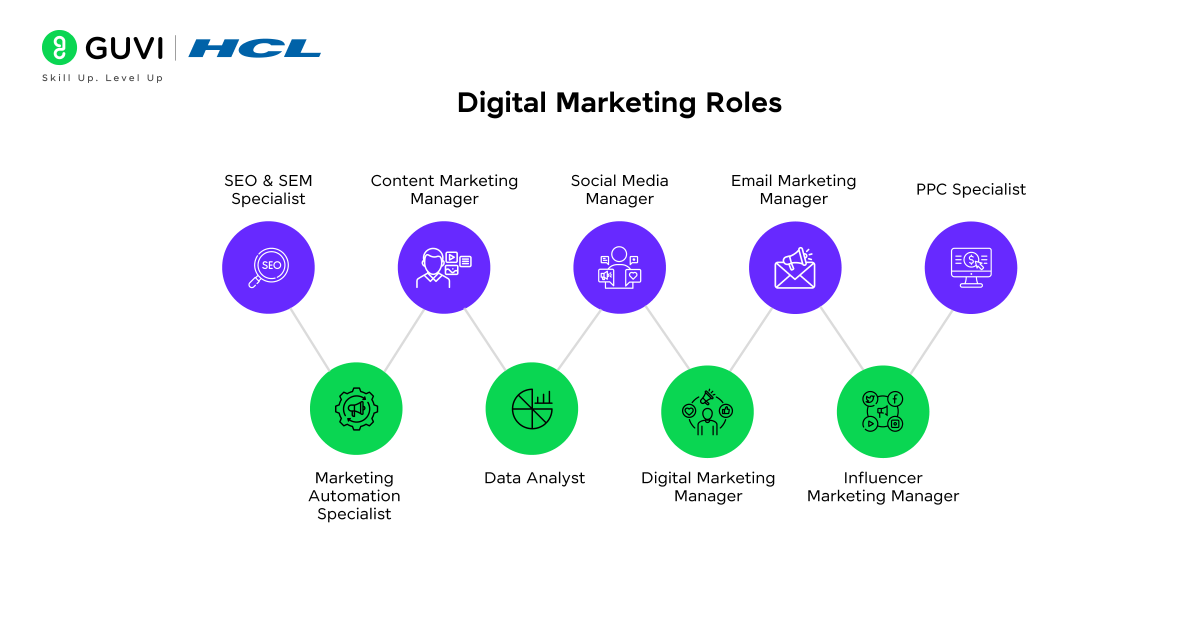
These are the following key roles and responsibilities of digital marketers that play a crucial role in building and managing a strong online presence for businesses.
They focus on improving brand visibility, attracting the right audience, and driving meaningful engagement across multiple digital platforms.
By using different strategies, tools, and data-driven insights, digital marketers help optimize campaigns, increase traffic, and achieve better overall performance and growth in the competitive digital space.
1. SEO & SEM Specialist
As previously mentioned, SEO (Search Engine Optimization) and SEM (Search Engine Marketing) specialists focus on improving visibility on search engines. They work to enhance organic traffic while managing paid campaigns.
- Key Responsibilities:
- SEO: Implementing on-page and off-page SEO strategies, backlinking, optimizing for mobile, and improving site speed.
- SEM: Creating and optimizing paid campaigns on search engines like Google and Bing.
Average Salary: ₹3.5LPA to ₹8LPA
2. Content Marketing Manager
Content marketing is a strategy to attract customers through valuable content. This role requires balancing creativity with SEO tactics to ensure content ranks well on search engines.
- Key Responsibilities:
- Strategy Development: Creating long-term content strategies and editorial calendars.
- SEO Integration: Ensuring content includes SEO best practices.
- Content Optimization: A/B testing content formats and analyzing performance metrics.
Average Salary: ₹4.5LPA to ₹12LPA
3. Social Media Manager
The role has evolved to manage both organic and paid social media efforts. Social media managers are responsible for building brand awareness and driving engagement through various platforms like Facebook, Instagram, LinkedIn, etc.
- Key Responsibilities:
- Strategy Development: Crafting social media content plans aligned with brand voice.
- Analytics: Monitoring KPIs (engagement, reach, impressions) and tweaking campaigns accordingly.
- Platform-Specific Strategies: Tailoring content and paid ads for optimal performance on different platforms.
Average Salary: ₹4LPA to ₹9LPA
4. Email Marketing Manager
Email marketing managers build strategies that ensure effective communication with leads and existing customers through targeted emails.
- Key Responsibilities:
- Segmentation: Using data to segment audiences based on behavior, interests, etc.
- Campaign Automation: Setting up automated workflows for nurturing leads and driving conversions.
- A/B Testing: Running tests on subject lines, layouts, and CTAs to improve email performance.
Average Salary: ₹4LPA to ₹10LPA
5. PPC Specialist
Pay-per-click (PPC) marketing is essential for businesses looking for instant visibility on search engines and social platforms. PPC specialists manage these paid campaigns to drive traffic and conversions.
- Key Responsibilities:
- Keyword Research: Identifying the most profitable keywords to target.
- Budget Management: Allocating budget across platforms to maximize ROI.
- Campaign Optimization: Continuously optimizing campaigns through split testing and performance analysis.
Average Salary: ₹3LPA to ₹8LPA
6. Marketing Automation Specialist
Automation is key to scaling digital marketing efforts. A marketing automation specialist sets up automated workflows to optimize processes like lead nurturing, customer segmentation, and personalized outreach.

- Key Responsibilities:
- Automation Strategy: Developing workflows for email sequences, social media posts, and lead scoring.
- Lead Nurturing: Automating communications based on the customer journey.
- CRM Management: Using tools like HubSpot or Marketo for segmentation and automation.
Average Salary: ₹5LPA to ₹12LPA
7. Data Analyst
Data is at the heart of modern digital marketing. A data analyst focuses on interpreting campaign performance and providing actionable insights to optimize strategies.
- Key Responsibilities:
- Tracking & Reporting: Monitoring campaign performance across all channels.
- Data Visualization: Presenting findings using dashboards and reports.
- Predictive Analysis: Using historical data to forecast future trends and customer behavior.
Average Salary: ₹4LPA to ₹10LPA
8. Influencer Marketing Manager
Influencer marketing is rapidly growing, and managing relationships with influencers is crucial. This role focuses on identifying influencers, negotiating partnerships, and managing campaign deliverables.
- Key Responsibilities:
- Influencer Outreach: Identifying relevant influencers based on audience alignment.
- Campaign Management: Managing deliverables, contracts, and content schedules.
- Performance Tracking: Analyzing the ROI of influencer campaigns based on engagement, reach, and conversions.
Average Salary: ₹5LPA to ₹12LPA
9. Digital Marketing Manager
Digital Marketing Managers oversee the overall digital marketing strategy, coordinating with different teams to ensure brand consistency and campaign effectiveness. Their role is crucial in aligning the business’s marketing goals with online strategies.
Key Responsibilities:
- Strategy Development: Crafting comprehensive digital marketing plans, including SEO, SEM, social media, and content strategies.
- Campaign Oversight: Managing and optimizing multi-channel campaigns, ensuring alignment with business goals.
- Team Coordination: Leading cross-functional teams including SEO, PPC, social media, and content teams.
- Performance Analysis: Tracking KPIs and providing insights to improve performance.
Average Salary: ₹8LPA to ₹18LPA
Key Digital Marketing Skills
Digital marketers need a blend of technical and creative skills. Here’s an in-depth look at the critical competencies:
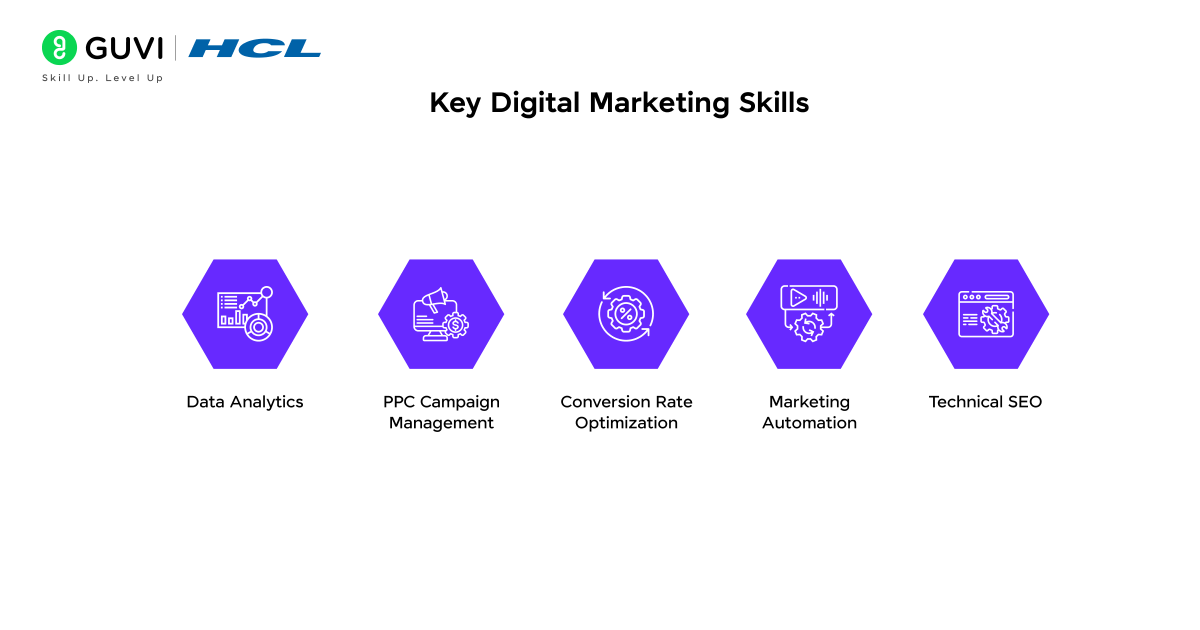
| Skill | Description | Tools |
| Data Analytics | Understanding of data analytics to track and interpret campaign performance metrics, user behavior, and ROI. | Google Analytics, HubSpot, SEMrush. |
| PPC Campaign Management | Expertise in managing and optimizing PPC campaigns to improve the click-through rate and minimize cost-per-click. | Google Ads, Facebook Ads Manager, LinkedIn Ads. |
| Conversion Rate Optimization | A/B testing, UX improvements, and CTA optimizations to enhance conversion rates across websites and landing pages. | Optimizely, Crazy Egg, Hotjar. |
| Marketing Automation | Utilizing automation platforms to scale email marketing, customer segmentation, and lead nurturing efforts. | Mailchimp, Marketo, ActiveCampaign. |
| Technical SEO | Proficient in improving site performance by optimizing page speed, mobile compatibility, and crawlability through server-side tactics. | Screaming Frog, Ahrefs, SEMrush. |
If you want to learn Digital Marketing through a step-by-step process guided by an actual Digital Marketer, consider enrolling in HCL GUVI’s Certified Digital Marketing Course, which not only teaches you everything about the subject but also provides you with an industry-grade certificate!
Conclusion
Digital marketing is a fast-evolving and essential field that demands both creativity and technical expertise. The roles and responsibilities of digital marketers are crucial in helping businesses grow online by managing SEO, content, campaigns, and data-driven strategies. To succeed in today’s competitive space, understanding these responsibilities is important for building effective, results-driven marketing careers.
FAQs
1. How do digital marketers decide which strategy to use for a campaign?
They choose strategies based on audience behavior, business goals, and data insights to improve results in different tasks handled by digital marketers.
2. Why is data analysis important in digital marketing roles?
It helps improve decision-making by tracking performance, identifying gaps, and optimizing work done in the roles and responsibilities of digital marketers.
3. How do digital marketers measure campaign success?
They track KPIs such as traffic, engagement, conversions, and ROI to evaluate the effectiveness of digital marketers’ roles and responsibilities.
4. What makes social media campaigns different from SEO work?
Social media focuses on engagement and awareness, while SEO focuses on rankings and organic traffic in the roles and responsibilities of digital marketers.
5. How does automation support digital marketing work?
It saves time by handling repetitive tasks such as email and lead nurturing, improving efficiency in digital marketing operations.
6. Why is continuous learning important in this field?
Because tools, trends, and platforms keep changing, updating skills is essential for success in this role.
7. What makes the roles and responsibilities of digital marketers critical for business growth?
The roles and responsibilities of digital marketers involve using data, targeting, and multi-channel strategies to improve performance and drive digital growth.
Success Stories









Did you enjoy this article?