


Java Articles
How to Run Java in Visual Studio Code?
Why Large Enterprises Still Rely on Java: Legacy Systems, Stability & Scale
Java + Spring Boot in 2026: What You Need to Know to Get Hired


Get In Touch For Details! Request More Information
Java 8 Lambda Expressions: A Comprehensive Guide
Aug 06, 2025 2 Min Read 1347 Views
(Last Updated)
Java 8 brought a wave of new features that transformed the way developers write code, and one of its standout innovations is Lambda Expressions.
Lambda expressions enable a functional programming style in Java, providing a concise way to represent instances of functional interfaces.
Let’s dive into the concept, its syntax, and how it simplifies Java programming.
Table of contents
- What is a Lambda Expression?
- Key Features of Lambda Expressions:
- Syntax of Lambda Expressions
- Examples:
- Functional Interface Compatibility
- Example:
- Benefits of Using Lambda Expressions
- Lambda Expressions with Stream API
- Example: Filter and Map Operations
- Common Use Cases for Lambda Expressions
- Limitations of Lambda Expressions
- Conclusion
What is a Lambda Expression?
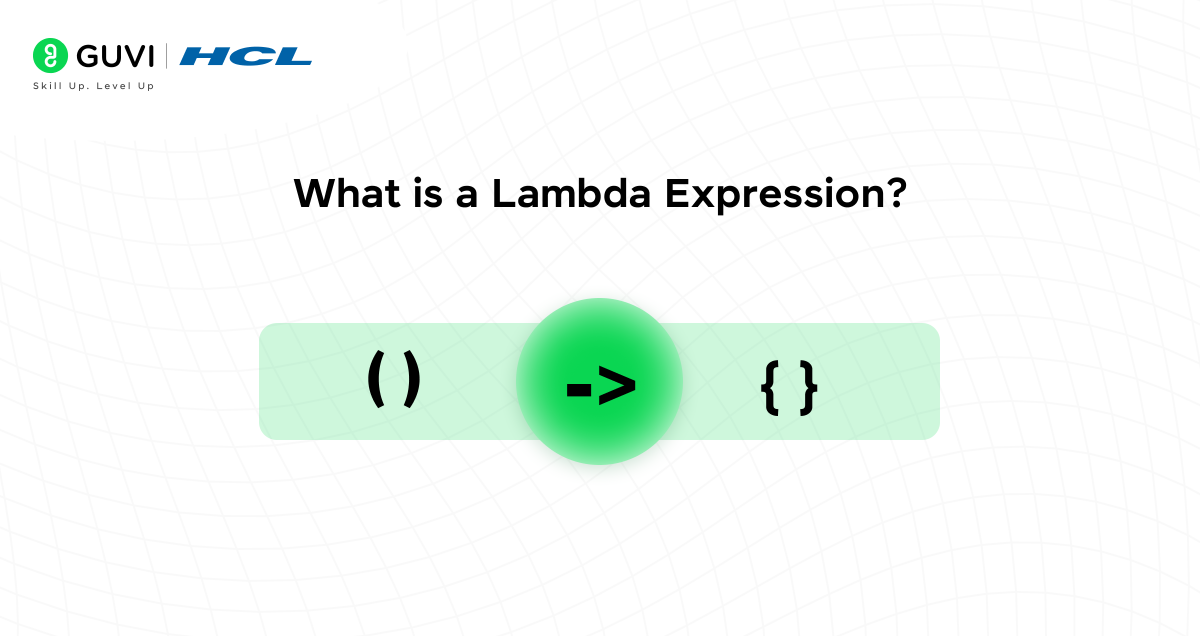
A Lambda Expression is essentially an anonymous function that provides a shorthand way to write implementations of functional interfaces. It eliminates the need for verbose anonymous class syntax, making your code more readable and maintainable.
Key Features of Lambda Expressions:
- Anonymous: No need to define a class or method explicitly.
- Concise: Reduces boilerplate code.
- Functional Interface Compatible: Works with interfaces that have a single abstract method (SAM interfaces).
Syntax of Lambda Expressions
The syntax of a consists of three parts:
(parameters) -> { body }
- Parameters: Represents inputs to the lambda. Parentheses can be omitted for a single parameter.
- Arrow Token (->): Separates parameters from the lambda body.
- Body: Contains the logic or expression to execute.
Examples:
Without Parameters:() -> System.out.println("Hello, Lambda!");
With a Single Parameter:
x -> x * x;
With Multiple Parameters:
(a, b) -> a + b;
Functional Interface Compatibility
It works seamlessly with functional interfaces. A functional interface is an interface that has exactly one abstract method, such as Runnable, Callable, or custom interfaces annotated with @FunctionalInterface.
Example:
@FunctionalInterface
interface MathOperation {
    int operate(int a, int b);
}

public class LambdaExample {
    public static void main(String[] args) {
        MathOperation addition = (a, b) -> a + b;
        System.out.println("Addition: " + addition.operate(5, 3));
    }
}
Benefits of Using Lambda Expressions
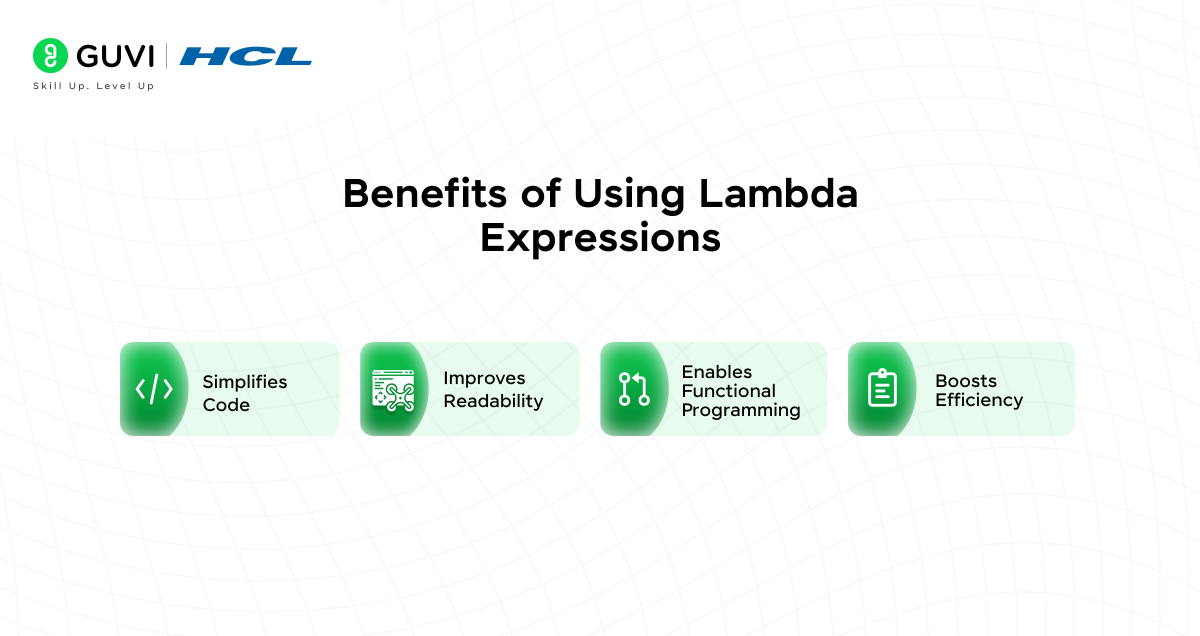
- Simplifies Code: Eliminates the need for anonymous inner classes.
- Improves Readability: Reduces clutter by expressing logic succinctly.
- Enables Functional Programming: Encourages a declarative coding style.
- Boosts Efficiency: Enhances APIs like streams and collections.
Lambda Expressions with Stream API
One of the most powerful uses of lambda expressions is with Java’s Stream API, introduced in Java 8. They allow developers to write concise code for complex data transformations and computations.
Example: Filter and Map Operations
import java.util.Arrays;
import java.util.List;

public class StreamExample {
    public static void main(String[] args) {
        List<String> names = Arrays.asList("Alice", "Bob", "Charlie");

        // Using Lambda with Stream
        names.stream()
            .filter(name -> name.startsWith("A"))
            .map(String::toUpperCase)
            .forEach(System.out::println); // Output: ALICE
    }
}
Common Use Cases for Lambda Expressions
Event Handling:
button.addActionListener(e -> System.out.println("Button clicked!"));
Thread Creation:
new Thread(() -> System.out.println("Thread running")).start();
Custom Sorting:
List<Integer> numbers = Arrays.asList(3, 1, 4, 2);
numbers.sort((a, b) -> a - b);
Limitations of Lambda Expressions
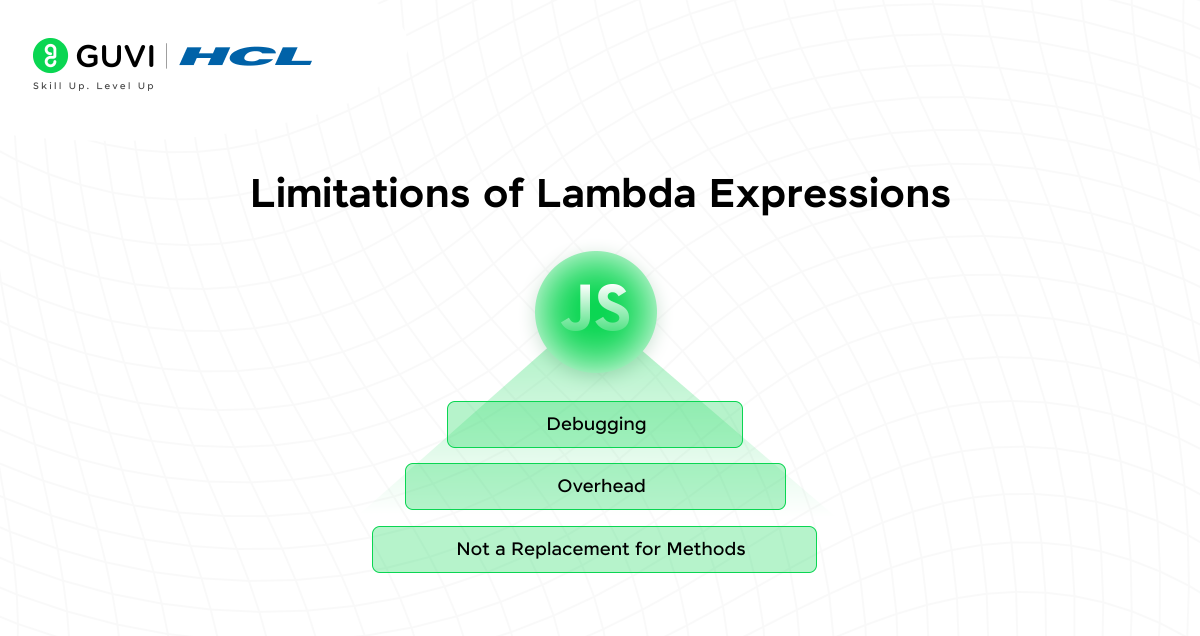
- Debugging: Identifying issues can be tricky as they lack descriptive names.
- Overhead: Overuse of lambda expressions can lead to less readable code for complex logic.
- Not a Replacement for Methods: Use lambdas judiciously for functional programming and avoid using them for logic that deserves proper method abstraction.
Begin your career journey with GUVI’s Java Full Stack Development Course, providing placement assistance. Master essential technologies including Java, Maven, Eclipse, HTML, CSS, MongoDB, and more while working on practical, real-world projects to enhance your expertise.
Conclusion
Lambda expressions have revolutionized Java programming, enabling developers to write cleaner, more efficient, and more expressive code. By embracing this feature, you can streamline common tasks, particularly when working with collections, threads, and event-driven programming. Start using lambdas today and unlock a new level of coding productivity!
Success Stories

About the Author
Lavish Jain
A Professional Developer Mentor and Corporate Trainer with over 10 years of experience, I have contributed to technological advancements through comprehensive training and mentorship. My journey includes pivotal roles at Cluebix, Focus-4D,ThoughtWorks, and currently with Guvi -HCL Group, where I shape the careers of aspiring developers. I specialize in simplifying complex concepts, making them accessible to learners at all levels, and have successfully trained lakhs of budding developer through corporate and boot camp courses focused on full-stack development.
View all posts by Lavish Jain
Connect with me @










Did you enjoy this article?