


Motion Graphics Articles
Top Graphic Design Courses with Certification in 2025
Motion Graphic Designer vs Graphic Designer: Which Career Is Right for You?
What is the Difference Between Animation and VFX?
Top 22 Animator Interview Questions (With Answers): Prepare Like a Pro for Your Next Job Interview!


Get In Touch For Details! Request More Information
6 Inspiring Motion Graphics Portfolios to Spark Your Creativity
Sep 25, 2025 7 Min Read 3456 Views
(Last Updated)
Motion graphics design is an extensively creative field. They say that greater power comes with greater responsibility. Similarly, creativity comes with a creative block. What’s better to drive away creativity block than browsing through the work of some of the top motion graphic designers and taking cues from their awesome portfolios?
We asked GUVI’s motion graphics head, Mr. Charles for some help so that we could help you out, and the result is this compilation of the top 5 most inspiring motion graphics portfolios. They are a good example for any beginner or motion graphics design professional in terms of presentation, projects, and journey. So, without much ado, let’s dive in.
80% of recruiters spend three minutes or less reviewing a design portfolio, which means your work must make a strong first impression quickly.
54% of design managers spend 5–10 minutes reviewing portfolios, while another 11% take longer, suggesting that deeper storytelling matters to experienced evaluators.
Video content is projected to account for around 82% of all internet traffic by 2025. It reflects how critical motion visuals have become across digital platforms.
Table of contents
- Top 6 Motion Graphics Design Portfolios
- John Schlemmer
- Lydia Xuan
- Karim Maaloul
- Zoe Prosser
- Anastasiia Andriichuk
- Yaniv Fridman
- Do’s and Don’ts of Building a Motion Graphics Portfolio
- Do: Keep the Selection Focused
- Don’t: Overload with Too Much Work
- Do: Share the Story Behind the Work
- Don’t: Skip Context Entirely
- Do: Maintain a Consistent Style
- Don’t: Mix Styles Without Purpose
- Do: Present Work in High Quality
- Don’t: Neglect Technical Details
- Do: Keep the Portfolio Updated
- Don’t: Let Work Become Outdated
- Do: Keep the Website Simple
- Don’t: Overdesign the Presentation
- Essential Skill Set for Motion Graphics Designers
- Concluding Thoughts
- FAQs
- What makes a motion graphics portfolio stand out?
- How often should I update my motion graphics portfolio?
- What should be included in a motion graphics portfolio?
- Can I include collaborative projects in my motion graphics portfolio?
- What is the best platform to host a motion graphics portfolio?
- How can I make my motion graphics portfolio more engaging?
- Should I tailor my motion graphics portfolio for different applications?
Top 6 Motion Graphics Design Portfolios
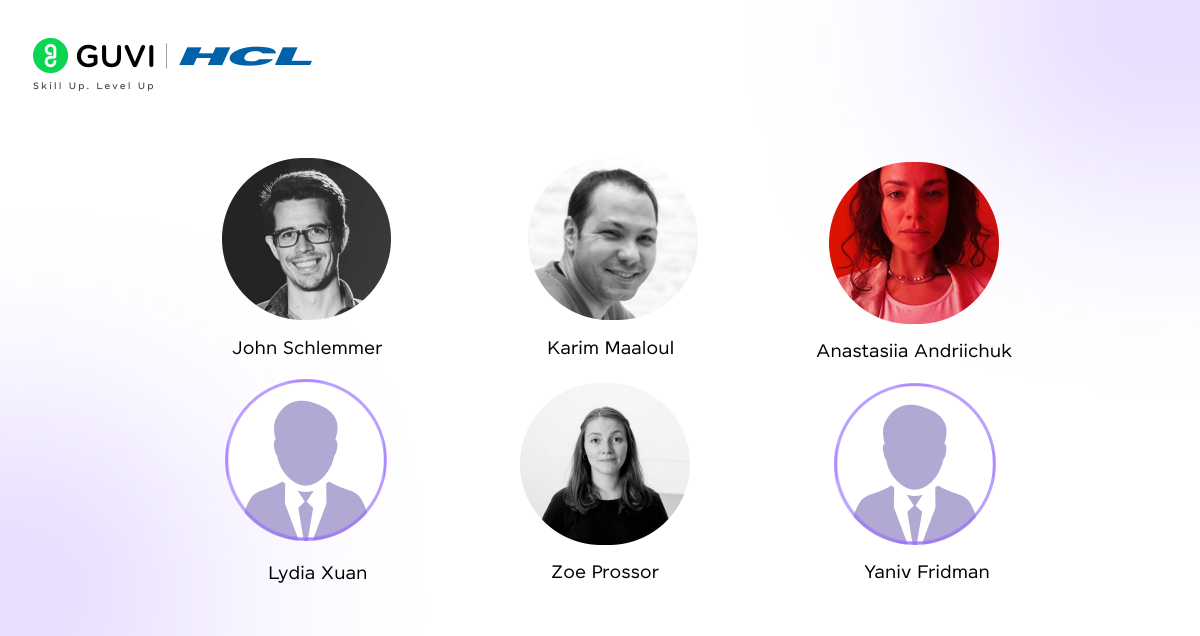
The motion graphics portfolios mentioned here amalgamate creativity, simplicity, and quality work. Budding motion graphics designers can take inspiration from the way these motion graphics designers have presented their work in the portfolios and the type of work they do in terms of style, design, product, and varying requirements.
Let’s have a look at these brilliant motion graphics designer portfolios:
1. John Schlemmer
John Schlemmer is a Communication Apps Motion and UXE Lead at Google. He directs Android’s suite of communication products while defining, authoring, speaking, and advocating the industry standards for motion design in web and mobile UI.
John Schlemmer’s portfolio on Dribbble showcases a wide range of motion graphics work, predominantly for major projects at Google. It exhibits a range of techniques from simple icon animations to more complex integrative promotional videos, showcasing versatility. John Schlemmer’s portfolio sets itself apart with its strong thematic focus on Google’s ecosystem and its clean, modern aesthetic that clearly communicates the function and style of the featured products.
What You Can Learn from John’s Portfolio:
• Specializing in a specific ecosystem helps establish authority with top companies.
• Balancing technical accuracy with creative motion builds trust with stakeholders.
• A clean and modern aesthetic makes complex products easy to understand.
Top Highlights of John’s Portfolio
• Motion graphics created for Android’s communication apps.
• Wide range of work on Dribbble from icon animations to promotional videos.
• Strong thematic focus on Google’s design system.
Check out the complete portfolio of John Schlemmer.
Also Read | Best Motion Graphics Design Courses for Beginners
2. Lydia Xuan
Lydia Xuan is a freelance motion graphics designer based in Singapore, specializing in transforming ideas into captivating visual journeys. She has also worked on several commercial projects for major brands like KFC, Pond’s, and McDonald’s, creating engaging content tailored for social media and television ads.
Lydia successfully navigates between different mediums and styles, from digital 2D animations to more complex 3D renderings. Lydia’s portfolio is marked by a vibrant use of color and a dynamic range of compositions, from flat designs to intricate 3D animations. Her work often incorporates playful yet polished graphics that make her projects stand out.
What You Can Learn from Lydia’s Portfolio
- Adapting across 2D and 3D formats increases appeal to commercial clients.
- Vibrant colors and playful compositions create strong emotional impact.
- A simple portfolio layout ensures the work remains the center of attention.
Top Highlights of Lydia’s Portfolio
- Commercial projects for brands such as KFC, Pond’s, and McDonald’s.
- Balanced showcase of social media ads and TV spots.
- Distinct signature style with polished, engaging visuals.
Check out the complete portfolio of Lydia Xuan.
Also Read | How Much Does a Motion Graphics Designer Earn

3. Karim Maaloul
Karim Maaloul is a motion graphics designer, illustrator, and UI/UX designer based in Belgium. He’s the creative director and co-founder of EPIC Web Agency. Karim Maaloul’s portfolio, showcased on Yakudoo, presents a creative blend of art direction and motion graphics.
Karim’s portfolio uses a straightforward layout that emphasizes each project through vivid images and succinct descriptions, making it easy for visitors to grasp the scope and uniqueness of his work. His projects often blend visual art with technology, demonstrating his skill in creating immersive digital experiences.
What You Can Learn from Karim’s Portfolio
• Blending visual art with technology creates immersive experiences.
• Character design and interactive visuals add depth to digital projects.
• A straightforward portfolio layout highlights the uniqueness of each project.
Top Highlights of Karim’s Portfolio
• Co-founder and creative director at EPIC Web Agency.
• Strong artistic vision seen in games and app interfaces.
• Vivid imagery supported by concise project descriptions.
Check out the complete portfolio of Karim Maaloul.
Also Read | Roadmap to Becoming a Successful Motion Graphics Design
4. Zoe Prosser
Zoe Prosser is a London-based motion designer whose portfolio is accessible through a straightforward, minimalistic website, highlighting her work in motion design. The site features a showreel along with a section about her background and detailed work projects.
Zoe’s showreel is prominently featured, providing a quick, comprehensive view of her capabilities and style in motion design. It’s pretty unique and one-of-a-kind. This is a crucial tool for motion designers to convey their proficiency and aesthetics.
What You Can Learn from Zoe’s Portfolio
- A showreel delivers a quick and powerful impression of skills.
- Minimal design helps decision-makers evaluate work without distraction.
- A simple personal site is effective when paired with strong content.
Top Highlights of Zoe’s Portfolio
- A prominently featured showreel summarizing her design style.
- Website layout designed for fast access to projects.
- Detailed sections about background and selected works.
Check out the complete portfolio of Zoe Prosser.
Also Read | Watch Out for These Motion Graphics Trends This Year
5. Anastasiia Andriichuk
Anastasiia Andriichuk is a visual creator with a strong presence on Dribbble, where she has garnered a significant following. Her portfolio features a diverse range of projects that emphasize her skills in animation, product design, and visual storytelling.
Her work is marked by a lively use of color and a clear proficiency in creating animations that are not only beautiful but also functionally effective in conveying themes and stories. She has a colorful and expressive style, with a focus on animations that are both engaging and visually delightful. It’s easy to navigate and is designed to showcase her creativity and technical prowess in a visually rich format.
What You Can Learn from Anastasiia’s Portfolio
- Visual storytelling strengthens brand messages through animation.
- Expressive colors help designs stand out and stay memorable.
- Easy navigation creates a smoother experience for portfolio visitors.
Top Highlights of Anastasiia’s Portfolio
- Strong following on Dribbble due to her diverse project range.
- Work that spans product design, animation, and visual storytelling.
- Style marked by lively, colorful, and expressive animations.
Check out the complete portfolio of Anastasiia Andriichuk.
Also Read | Best Product-Based Companies for Motion Graphics Designers
6. Yaniv Fridman
Yaniv Fridman is a creative director, motion designer, and animator working as a motion design art director at Apple. His portfolio is set apart with simplicity showcased by the professional layout that focuses on the reel through which Yaniv aims to present himself as a seasoned expert in motion design, emphasizing quality and efficacy.
The minimalistic approach of the website suggests a focus on his work’s visual impact without the clutter of excessive textual content. This style is pretty effective in motion design as it allows potential clients or collaborators to engage with the work without distraction immediately. Future motion graphic designers, you can take note!
What You Can Learn from Yaniv’s Portfolio
- Simplicity in presentation communicates authority and confidence.
- A polished reel helps build a strong narrative of expertise.
- Positioning as an experienced professional enhances credibility.
Top Highlights of Yaniv’s Portfolio
- Currently art director at Apple, focusing on motion design.
- Minimalistic portfolio layout highlighting his showreel.
- Portfolio focused on quality, clarity, and visual impact.
Check out the complete portfolio of Yaniv Fridman.
If these portfolios have sparked your creativity, why not take the next step in refining your own skills? GUVI’s Motion Graphics Design Course helps you master industry-standard tools like Adobe Illustrator, Photoshop, After Effects, and Premiere Pro while working on real-world projects. Guided by experts, you’ll build a strong portfolio that speaks for itself and sets you apart in the creative industry.
Do’s and Don’ts of Building a Motion Graphics Portfolio
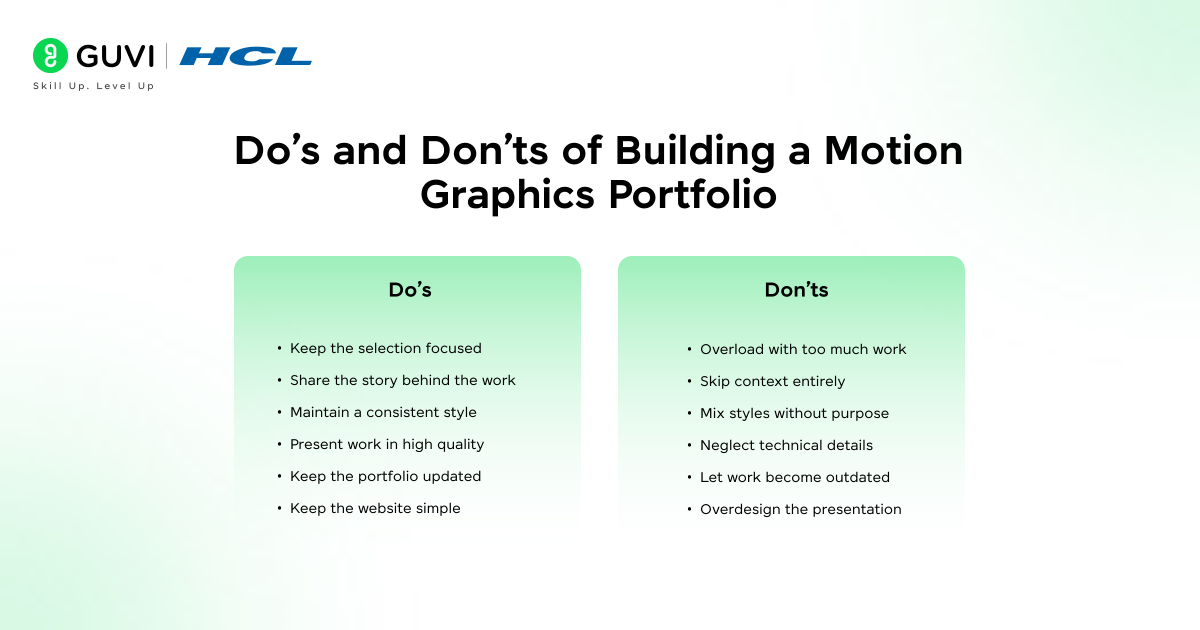
Do: Keep the Selection Focused
A strong portfolio highlights only the best projects. Showing a smaller number of well-polished works creates a stronger impression than filling it with everything you have ever made. This approach helps the viewer focus on your real strengths without distraction.
Don’t: Overload with Too Much Work
Adding too many projects makes your portfolio look crowded. Important pieces lose attention when they are buried under weaker ones. Viewers prefer clarity, and a clean selection builds trust more quickly.
Do: Share the Story Behind the Work
A project feels stronger when people see how it was created. Short notes on sketches, drafts, or problem-solving steps add depth to the final result. This gives clients and recruiters confidence in both your creativity and your process.
Don’t: Skip Context Entirely
Only presenting the final video leaves questions unanswered. Without context, it is hard for a viewer to understand your role or the challenges you solved. This can reduce the impact of your best projects.
Do: Maintain a Consistent Style
Consistency helps build credibility. A portfolio that shows a clear creative direction feels more professional and organized. It also proves that you can deliver reliable results when working with a client.
Don’t: Mix Styles Without Purpose
Switching between unrelated styles makes the portfolio feel scattered. It gives the impression that you are unsure of your direction. Presenting versatility works best when it feels intentional and well-curated.
Do: Present Work in High Quality
Good presentation shows respect for your craft. Videos that load smoothly in high resolution make your creativity shine. Small details such as clean transitions or proper file formats help keep attention on the work itself.
Don’t: Neglect Technical Details
Poor compression or blurry visuals distract viewers right away. Even strong ideas can look weak when presented poorly. Technical care is as important as creative skill.
Do: Keep the Portfolio Updated
Refreshing your portfolio with new projects shows growth and energy. It communicates that your skills are current and improving. Regular updates also remove weaker or outdated work that no longer reflects your ability.
Don’t: Let Work Become Outdated
Old projects that remain for too long weaken the overall impression. Viewers may assume you have not improved since those earlier works. A stale portfolio can send the wrong message even if you are active elsewhere.
Do: Keep the Website Simple
A clean layout makes your projects easy to browse. Simple navigation allows clients and recruiters to quickly focus on the work. This keeps the attention exactly where it should be.
Don’t: Overdesign the Presentation
Overly complex menus or heavy effects take focus away from the portfolio. They may even frustrate busy viewers who just want to see your projects. A simple and clear design lets your work speak without barriers.
Essential Skill Set for Motion Graphics Designers
A strong motion graphics portfolio needs more than visual appeal. The skills behind the work show whether a designer can deliver in real-world projects. Below are the essential skills that help professionals stand out.
- Technical Software Proficiency
Motion graphics relies on tools such as Adobe After Effects, Cinema 4D, and Blender. Proficiency in these programs allows designers to create animations with precision. Knowledge of editing platforms like Adobe Premiere Pro or Final Cut Pro adds strength by supporting end-to-end production.
- Strong Sense of Timing and Movement
Animation is about movement, but movement only works if the timing feels natural. A good designer knows how to adjust speed, rhythm, and flow so visuals connect smoothly with sound and storytelling. This skill separates polished work from basic motion.
- Graphic Design Fundamentals
Motion graphics build on the same foundation as traditional design. Understanding color, typography, balance, and layout ensures that every frame looks professional. Designers with strong fundamentals make animations that are visually clear and emotionally appealing.
Read More: Graphic Designer vs. UI/UX Designer: Top Differences
- Storytelling Ability
A motion piece feels powerful when it communicates a message. Designers must translate complex ideas into simple visuals that audiences remember. Storytelling makes motion graphics more than decoration. It gives them purpose.
- Problem-Solving Mindset
Projects rarely run smoothly from start to finish. A skilled motion designer adapts quickly, adjusting animations when concepts shift or client needs change. This problem-solving mindset builds trust and keeps production on track.
- Collaboration and Communication
Most motion projects involve teams of designers, writers, and producers. Clear communication ensures everyone works toward the same vision. Collaboration skills also help when presenting ideas to clients who may not understand design terminology.
Concluding Thoughts
So, if you’re a motion designer stuck in the loop of the same old designs, aesthetics, or styles and need some invigorating ideas, and of course the spectacular ways of presenting them, these awesome motion graphics portfolios will be your holy grail.
If you’re a fresher and looking for some good motion graphics portfolio for inspiration, all the aforementioned portfolios have a distinct voice, style, and identity, which you can adopt or improvise based on your own art style and taste. It’s just that interesting! Try it yourself and let us know if you found any other portfolios that you feel definitely deserve a spot in this list!
FAQs
What makes a motion graphics portfolio stand out?
A standout motion graphics portfolio typically features a diverse range of work that showcases the designer’s skill in animation, storytelling, and technical proficiency. It should also be well-organized, easy to navigate, and visually appealing to immediately grab attention.
How often should I update my motion graphics portfolio?
It’s advisable to update your portfolio whenever you complete a significant project or when your skills improve significantly. Keeping your portfolio fresh and current is crucial for reflecting your latest abilities and styles to potential clients or employers.
What should be included in a motion graphics portfolio?
A motion graphics portfolio should include your best work, which might consist of short films, animated adverts, explainer videos, and interactive animations. Additionally, including a brief about the project context, your role, tools used, and the project’s outcome can provide valuable insights into your work process.
Can I include collaborative projects in my motion graphics portfolio?
Yes, collaborative projects can be included in your portfolio. However, it’s important to clearly state your specific contributions to the project to ensure potential employers understand your role.
What is the best platform to host a motion graphics portfolio?
Platforms like Behance, Dribble, Vimeo, and personal websites are popular choices for hosting motion graphics portfolios. These platforms allow creatives to showcase their work in a professional manner and attract visibility from within the industry.
How can I make my motion graphics portfolio more engaging?
Incorporating interactive elements, such as embedded videos, clickable content, and animations that activate on scrolling, can make your portfolio more engaging. Also, ensuring that the portfolio is mobile-friendly and loads quickly can improve the viewing experience.
Should I tailor my motion graphics portfolio for different applications?
Yes, it’s beneficial to tailor your portfolio based on the specific job or client you are targeting. Highlighting projects relevant to the potential job or client’s industry can make your application more compelling.
Success Stories

About the Author
Vaishali
I'm a seasoned writer with four years of experience across technical, non-technical, and just about every genre or niche you can imagine. Adaptable and curious, I enjoy exploring new topics and making information engaging and easy to understand. Fueled by a steady stream of tea, I approach each project with creativity, reliability, and genuine enthusiasm for storytelling.
View all posts by Vaishali
Connect with me @








Did you enjoy this article?