


DevOps Articles
My DevOps Interview Experience at MAANG: From Rejection to Success [2026]
What is Ansible in DevOps? A Complete Practical Guide
Azure DevOps Lifecycle: 7 Stages from Planning to Deployment


Get In Touch For Details! Request More Information
DevOps and Infrastructure Fundamentals for Full-Stack Engineers
Feb 27, 2026 4 Min Read 819 Views
(Last Updated)
Have you ever questioned yourself why an application has been working well with your local system and yet fails when it goes live? To most full-stack engineers, building features is only one part of the job. The real challenge begins when applications need to be deployed, scaled, monitored, and maintained in real production environments.
This is where DevOps and Infrastructure Fundamentals come in. Today’s full-stack engineers are expected to know frontend and backend development, along with the support of infrastructure, cloud platforms, as well as automated delivery pipelines, for modern applications. DevOps basics, infrastructure basics, CI/CD basics, and cloud infrastructure basics are all concepts that assist the developer in overcoming the gap between writing software and running code that is reliable at scale.
Quick answer:
DevOps & Infrastructure Fundamentals help full-stack engineers build, deploy, scale, and maintain applications reliably by combining development skills with cloud infrastructure, CI/CD pipelines, automation, containers, and monitoring practices used in modern software systems.
Table of contents
- What are the DevOps and Infrastructure Fundamentals?
- Why DevOps is a Requirement of Full-Stack Engineers?
- Fundamentals of Core DevOps: Every developer must know
- Infrastructure Fundamentals Explained for Developers
- Linux/ Developers: The Foundation Layer
- Cloud Computing and Cloud Infrastructure Basics
- Containers and Docker for Full Stack Engineers
- Introduction to Kubernetes in Application Scaling
- Infrastructure as Code Fundamentals
- SRE vs DevOps Basics
- Wrapping it up:
- FAQs
- Are DevOps skills required in full-stack engineers?
- Is Linux significant to DevOps?
- Is it better to learn Docker or Kubernetes?
- What is the overall intent of DevOps?
What are the DevOps and Infrastructure Fundamentals?
DevOps & Infrastructure Fundamentals refer to the core concepts, practices, and tools that assist teams to deliver software more quickly, reliably, and at scale. DevOps is also about teamwork between development and operations, whereas infrastructure also determines the systems in which applications run.
For developers, these fundamentals include:
- Learning about servers, networks, and cloud platforms.
- Automation of application assemblies and deployments.
- Application environment management.
- Securing performance, reliabilit,y and security.
Rather than passing code to the operations teams, developers are involved with shared responsibility for the way applications will work in production.
Why DevOps is a Requirement of Full-Stack Engineers?
Frontend and backend logic are already the concern of full-stack developers. To make the full stack complete, the addition of DevOps to the full stack developers is required.
The most important reasons why DevOps skills are important:
- Applications are deployed multiple times per day
- Cloud-native systems require infrastructure knowledge.
- Developers are supposed to have ownership of production stability in companies.
- Infrastructure visibility is necessary in order to debug production issues.
Full-stack engineers make fewer deployment failures, enhance performance, and work more effectively with DevOps teams by learning about infrastructure engineers.
Fundamentals of Core DevOps: Every developer must know
DevOps fundamentals are not tool-specific. They are principles that guide how software is built and delivered.
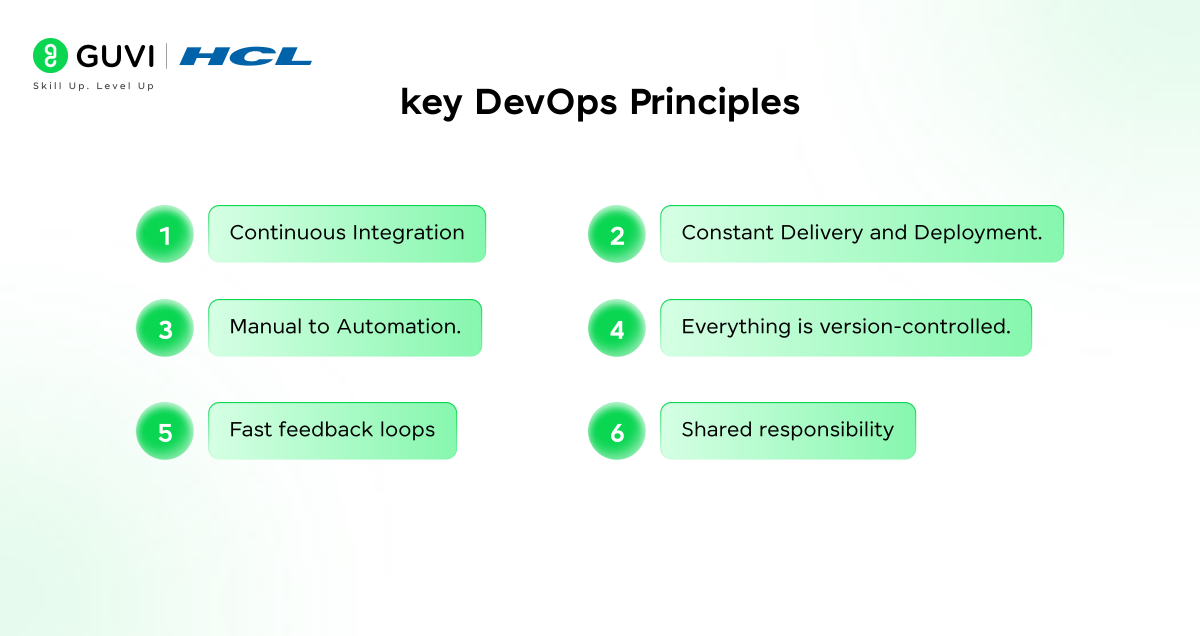
Some of the key DevOps principles are:
- Continuous Integration
- Constant Delivery and Deployment.
- Manual to Automation.
- Everything is version-controlled.
- Fast feedback loops
- Shared responsibility
These basics give code an easy time of passing on to production with little or no risk.
Infrastructure Fundamentals Explained for Developers
Infrastructure fundamentals refer to the technical components that underlie the application deployment and performance, as well as scalability.
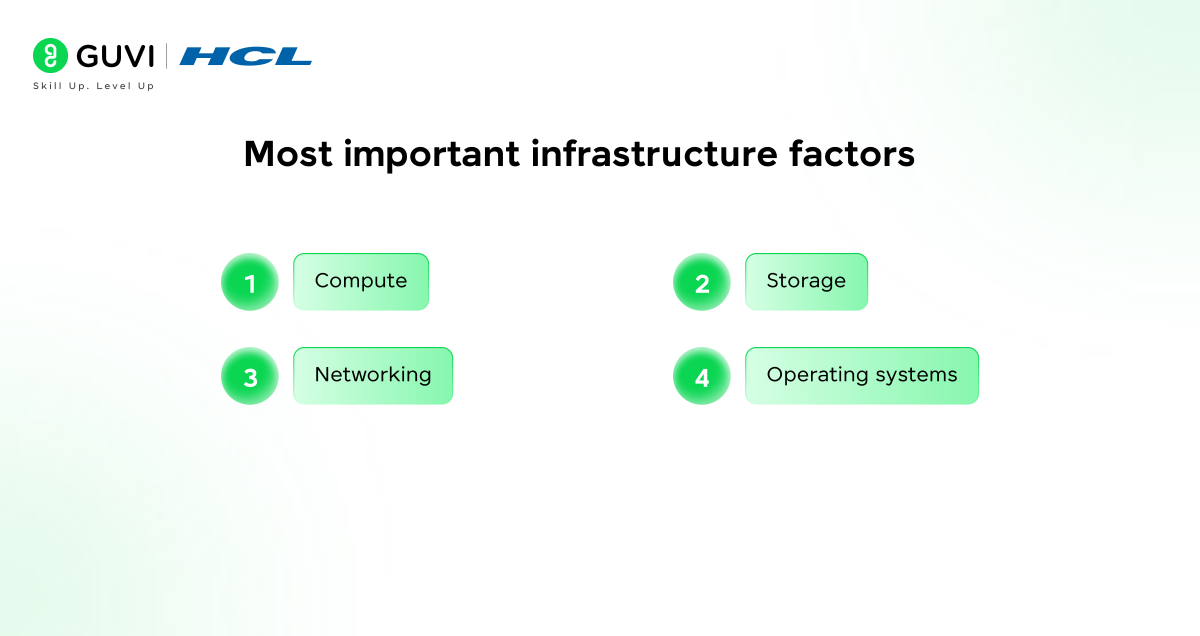
The most important infrastructure factors are:
- Compute (servers and virtual machines): These provide the processing power required to run applications, handle requests, and execute backend logic.
- Storage (databases, object storage): Application data, user files, logs, and backups are stored in structured and scalable systems.
- Networking (DNS, load balancers, firewall): Networking elements control the flow of traffic and route requests, and ensure the safety of communication between the services.
- Operating systems: The operating system serves as the communication between the hardware and applications, and it is effective in managing resources.

Linux/ Developers: The Foundation Layer
Linux is the operating system in most production environments, and therefore Linux for developers is a fundamental DevOps requirement.
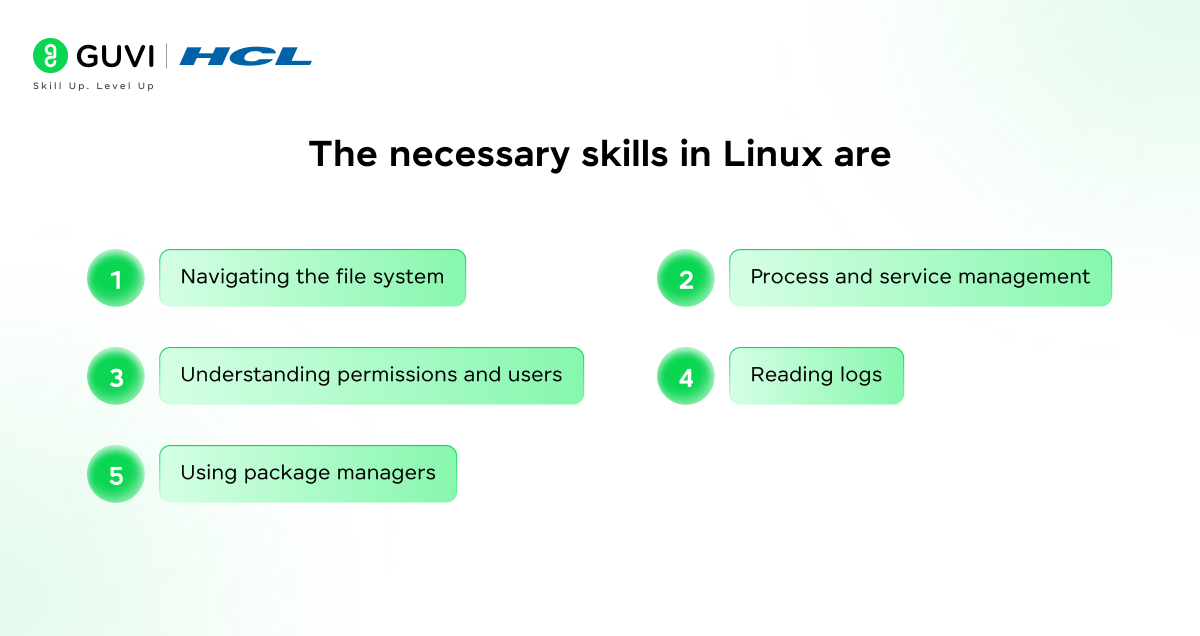
The necessary skills in Linux are:
- Navigating the file system: Helps developers find application files, logs, and configuration data faster.
- Process and service management: Enables control over running applications, background services, and system workloads.
- Understanding permissions and users: Enables access control and eliminates unauthorised activities on servers.
- Reading logs: Assists in identifying the errors and system failures during production failures.
- Using package managers: Eases the process of software installations, updates and managing dependencies.
Linux experience enables programmers to debug production problems and work directly with the server environments.
CI/CD Basics and Automated Delivery Pipelines
CI/CD basics form the backbone of modern DevOps workflows by automating software delivery.
Continuous Integration ensures:
- Code is tested automatically: Every code change is validated through automated tests to detect issues early.
- Bugs are caught early: Frequent integration reduces the risk of large, hard-to-fix errors later.
- Teams merge changes frequently: Smaller updates improve collaboration and reduce conflicts.
Also read the 7 Best DevOps Online Courses for Beginners
Continuous Deployment ensures:
- Code moves automatically to production:
Approved changes are released without manual intervention. - Manual errors are reduced: Automation minimises mistakes caused by repetitive manual steps.
- Releases are faster and safer: Frequent deployments lower risk and improve reliability.
CI/CD pipelines consistently transform raw code into production-ready applications.
Cloud Computing and Cloud Infrastructure Basics
Developers of cloud computing do not need to control hardware.
Basic concepts of cloud infrastructure are:
- Virtual machines: Offer scalable computing resources that are on demand.
- Managed databases: Reduce operational work through automatic management of backups, scaling, and maintenance.
- Load balancers: Balance traffic to all servers to enhance performance and availability.
- Auto-scaling: Scales resources in accordance with the application’s needs.
Cloud-based systems enable programmers to develop apps that can be scaled globally with low initial investments.
Containers and Docker for Full Stack Engineers
Docker full-stack engineers can also be used to guarantee that apps behave similarly in any environment.
Containers package:
- Application code: Includes the complete source code required to run the application.
- Dependencies: Combines the libraries and the runtime components to prevent conflicts in version.
- Configuration: Ensures consistent setup across development, testing, and production.
Benefits of Docker include:
- Faster deployments: Containers are fast and ease release procedures.
- Fewer environment-related bugs: Applications are universally similar.
- Easy scaling: Containers could be easily copied to deal with the increased traffic.
Docker provides high-quality execution of applications throughout the entire development.
Introduction to Kubernetes in Application Scaling
Kubernetes fundamentals are focused on container orchestration.
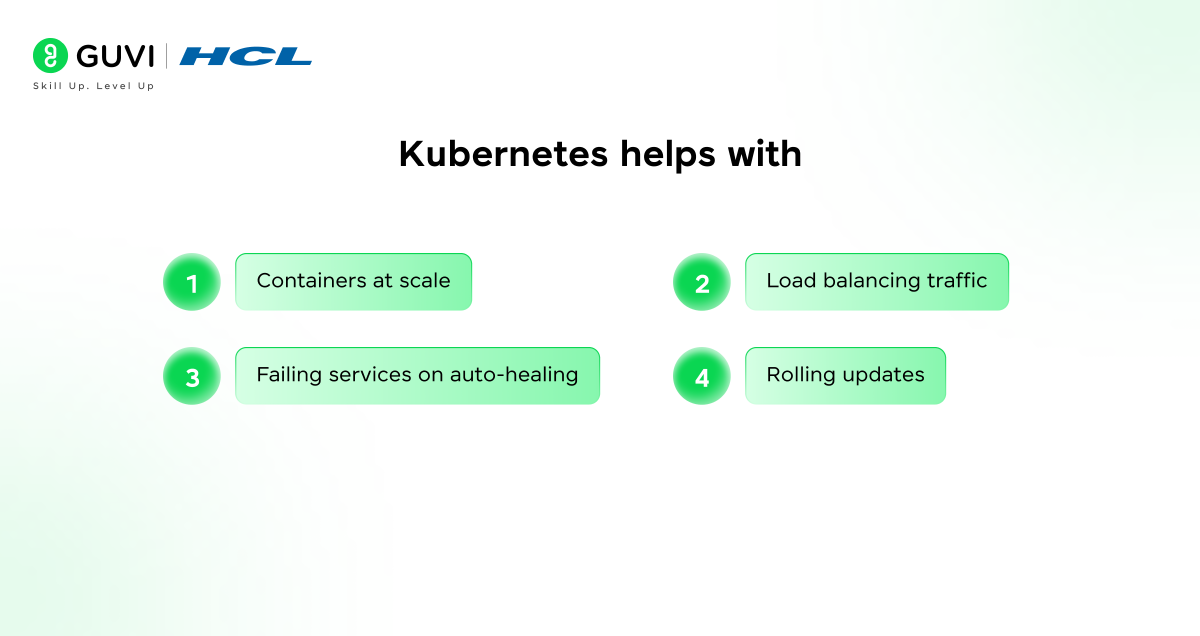
Kubernetes helps with:
- Containers at scale
- Load balancing traffic
- Failing services on auto-healing.
- Rolling updates
To developers, Kubernetes eliminates the hassle of having to operate containerized applications manually.
New to DevOps? Start with clear explanations and practical concepts. Download HCL GUVI’s DevOps eBook and build strong DevOps & infrastructure foundations.
Infrastructure as Code Fundamentals
Infrastructure as code fundamentals treat infrastructure configurations like software code.
Key advantages:
- Version-controlled infrastructure
- Repeatable deployments
- Decreased drift in configuration.
Infrastructure creation is reliable and can be automated using such instruments as Terraform and CloudFormation.
SRE vs DevOps Basics
SRE vs DevOps basics represent different but complementary approaches,
DevOps emphasizes:
- Culture: Encouraging shared responsibility across teams.
- Collaboration: Breaking silos between development and operations.
- Automation: Reducing manual effort in delivery processes.
Site Reliability Engineering emphasizes:
- Reliability targets: Defining acceptable failure thresholds.
- Error budgets: Balancing innovation with system stability.
- Engineering solutions to operations: Solving operational problems through code.
Kickstart your career by enrolling in HCL GUVI’s DevOps Course, where you will master technologies including Linux, Git, AWS, etc, and build interesting real-life DevOps projects.
Wrapping it up:
DevOps & Infrastructure Fundamentals are no longer optional for full-stack engineers. Beyond writing frontend and backend code, developers must understand deployment, cloud infrastructure, CI/CD pipelines, and system reliability. These skills help build scalable, stable, and production-ready applications while improving collaboration with DevOps teams. Full-stack engineers with DevOps knowledge are better prepared for modern software development roles.
FAQs
1. Are DevOps skills required in full-stack engineers?
Yes, DevOps skills assist developers in deploying, scaling as well as maintaining applications in production.
2. Is Linux significant to DevOps?
Yes, Linux is popular in production and the management of servers is obligatory in Linux.
3. Is it better to learn Docker or Kubernetes?
Yes, Docker ought to be acquired first, with Kubernetes to scale.
4. What is the overall intent of DevOps?
The primary objective is to deliver faster, reliable and automated software.
Success Stories

About the Author
Vishalini Devarajan
An Aerospace Engineer turned content writer, I focus on making complex concepts easy to understand through well-structured, reader-friendly blogs. Whether it’s a technical topic or a non-technical one, I love creating content that is clear, engaging, and impactful.
View all posts by Vishalini Devarajan
Connect with me @














Did you enjoy this article?