


Career Articles
Data Analyst or Data Scientist: Which Has Better Demand for Mid-Career BPO Professionals?
BPO Workforce Management Analyst to Data Analyst: What Skills Transfer?
CFA Charterholders: Are You Missing Out on Data Science Opportunities?


Get In Touch For Details! Request More Information

The Hidden Professional Skills That Actually Get You Hired in 2025
Jan 27, 2026 5 Min Read 1850 Views
(Last Updated)
Professional skills have dramatically evolved, with 92% of employers now saying soft skills matter as much as, or even more than, hard skills. The world is changing rapidly, and the job market is transforming alongside it.
According to the World Economic Forum’s Future of Jobs Report, many professionals should focus on developing their soft skills to enhance existing expertise. In fact, analytical thinking is considered essential by seven out of ten companies. With increasing job competition in today’s fast-paced environment, you need more than just a college degree to thrive in the professional world.
This guide explores the top professional skills to get hired in 2025, emerging skills that employers are secretly looking for, and practical ways you can develop these high-income skills to stay relevant and valuable in the evolving job market.
Quick Answer:
In 2025, the candidates who get hired fastest are those who combine strong technical abilities with high-impact soft skills like emotional intelligence, adaptability, digital communication, and creative problem-solving—skills that employers now consider essential for thriving in a rapidly evolving workplace.
Table of contents
- The Shift in Hiring: Why Hidden Skills Matter Now
- Soft skills vs Hard skills: What's changing in 2025
- The rise of transferable and in-demand skills
- 8 Professional Skills That Get You Hired in 2025
- Emotional intelligence and self-awareness
- Remote collaboration and digital communication
- Cultural competence and inclusion mindset
- Data literacy for non-technical roles
- Creative problem solving under pressure
- Initiative and self-driven learning
- Cross-functional thinking and systems awareness
- Social influence and quiet leadership
- How To Identify And Develop These Professional Skills
- 1) Reflecting on past experiences for skill discovery
- 2) Using online tools and feedback to assess strengths
- 3) Professional skills examples from real jobs
- Concluding Thoughts...
- FAQs
- Q1. What are the most important professional skills for getting hired in 2025?
- Q2. How is the hiring process changing for 2025?
- Q3. Why is adaptability considered a critical skill for future jobs?
- Q4. How can I develop the hidden professional skills employers are looking for?
- Q5. What role does emotional intelligence play in professional success?
The Shift in Hiring: Why Hidden Skills Matter Now
The job market is undergoing a fundamental transformation. By 2025, skills-based hiring will be the primary focus of recruitment strategies, moving away from the traditional practice of evaluating candidates based on degrees alone. This evolution reflects a growing recognition that practical abilities matter more than paper qualifications in today’s rapidly changing business environment.
Soft skills vs Hard skills: What’s changing in 2025
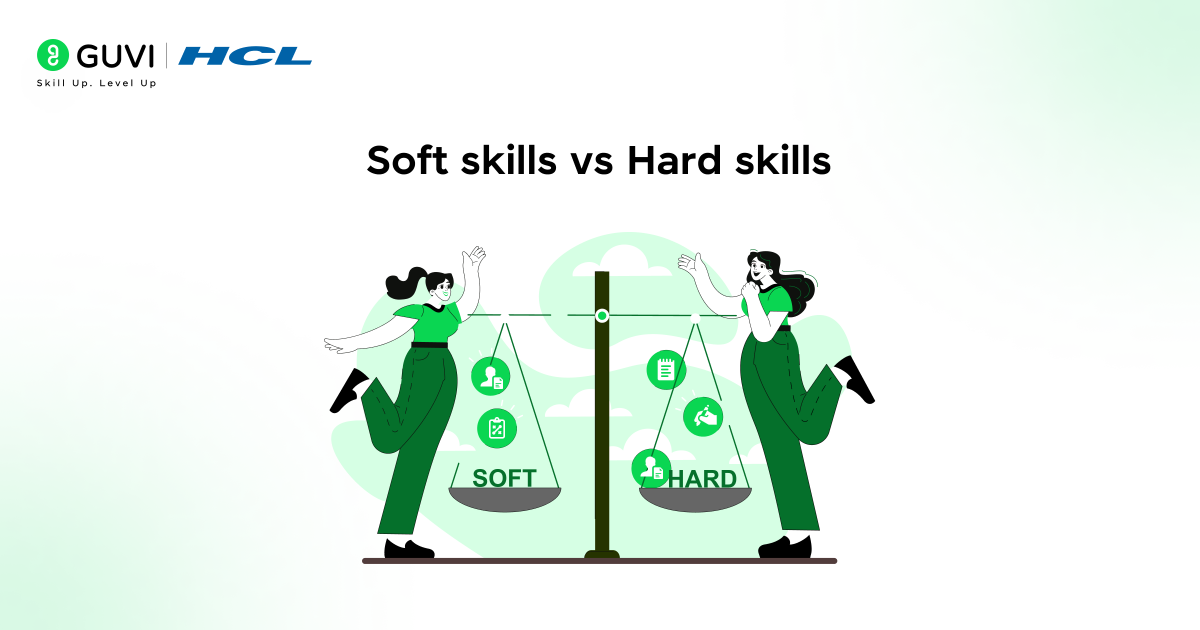
- The balance between technical expertise and human capabilities is shifting dramatically. While hard skills demonstrate what you can do, soft skills show how you do it—and employers are taking notice. Research shows 92% of hiring professionals now consider soft skills to be equally or more important than technical qualifications.
- On LinkedIn, recruiters are five times more likely to search for candidates based on their skills than their educational background. This represents a significant shift from traditional hiring practices. The percentage of job postings requiring a college degree has already decreased from 20% pre-pandemic to 17% by the end of 2024.
- Nonetheless, technological skills are projected to grow in importance more rapidly than any other skills in the next five years, with AI and big data leading the list. The ideal candidate in 2025 will blend both technical competencies and distinctly human capabilities.
The rise of transferable and in-demand skills
- Transferable skills represent abilities you’ve developed in one role that can be readily applied to another without requiring much additional training. They’re increasingly valuable as career paths become less linear and job roles evolve rapidly.
- Employers value transferable skills for several compelling reasons. First, they make you more adaptable, allowing you to apply previous knowledge to new situations. Second, you become a less risky hire—your track record of successfully applying these skills in different contexts gives employers greater confidence in your ability to perform. Third, you can provide immediate value without extensive onboarding.
- The World Economic Forum reports that employers expect 39% of key skills required in the job market will change by 2030. Forward-thinking professionals are responding accordingly—57% of workers now pursue training outside of work.
- By focusing on developing transferable and in-demand skills rather than job-specific abilities, you position yourself to thrive through multiple career transitions, making you valuable across industries and roles regardless of how the professional landscape continues to evolve.
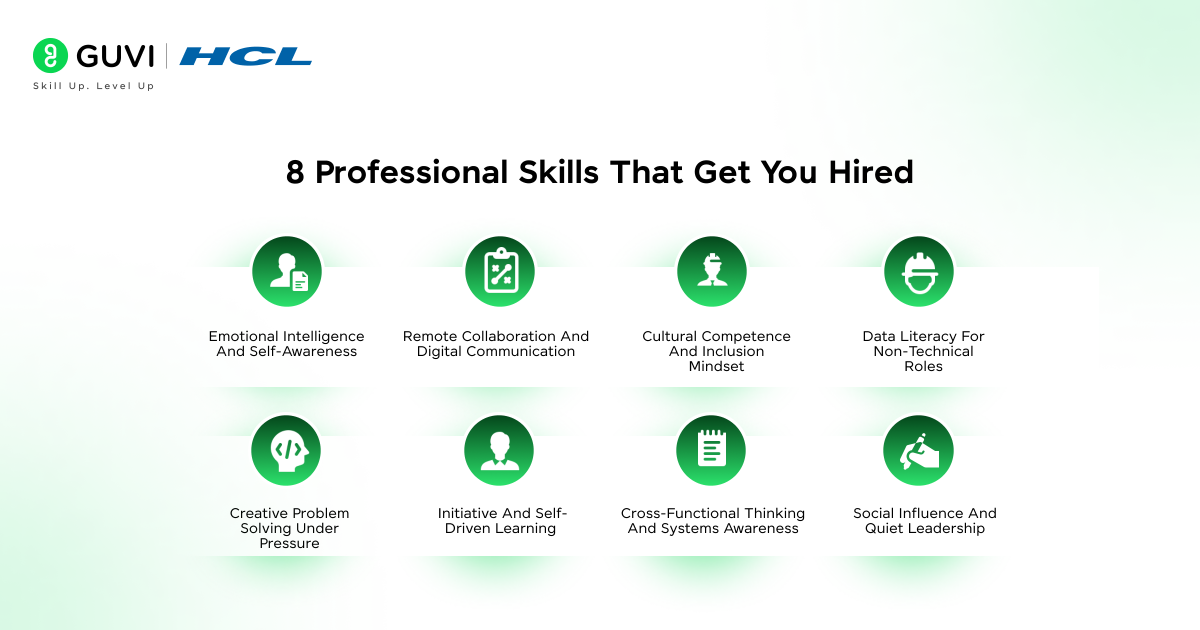
8 Professional Skills That Get You Hired in 2025
Beyond the traditional resume highlights, employers are now seeking professionals with deeper, more nuanced capabilities. These hidden professional skills often determine who gets hired and who thrives in the evolving workplace of 2025.
1. Emotional intelligence and self-awareness
- Emotional intelligence has become a top-tier professional skill, with several EQ components now ranking among the top 10 core competencies sought by employers.
- This hidden strength includes recognising your own emotions, managing them effectively, demonstrating empathy toward others, and navigating social interactions skillfully.
- Leaders with high EQ create positive work environments where teams are more motivated, innovative, and engaged.
2. Remote collaboration and digital communication
- As workplaces become increasingly digital, the ability to collaborate effectively across distances has become essential.
- Strong remote collaboration skills include clear digital communication, active listening, and the capacity to build trust virtually.
- This hidden skill requires both technical proficiency with collaboration tools and the interpersonal abilities to maintain engagement when physically separated.
- Professionals who excel at remote collaboration save approximately nine minutes per hour-long meeting by efficiently resolving technical issues.
3. Cultural competence and inclusion mindset
- Cultural competence—the ability to work productively with people from different backgrounds—creates psychological safety in diverse workplaces.
- Organisations with inclusive cultures are twice as likely to meet or exceed financial targets.
- Developing an inclusion mindset means actively seeking diverse perspectives and creating environments where everyone feels valued.
- This hidden skill enables leaders to recognize how unconscious biases shape workplace dynamics.
4. Data literacy for non-technical roles
- Data literacy has evolved from a specialised skill to an essential capability across all positions.
- Nearly 80% of today’s employers consider the ability to interpret and communicate data effectively a fundamental requirement.
- However, a survey of over 9,000 employees found that only 21% were confident in their data literacy skills.
- Those who develop this capability can identify patterns that drive business growth and make more precise decisions.
5. Creative problem solving under pressure
- The ability to remain creative while facing tight deadlines or high stakes is increasingly valuable.
- Research shows that meaningful pressure—feeling “on a mission”—can actually enhance creativity rather than diminish it.
- This hidden skill involves managing distractions effectively and maintaining cognitive flexibility under stress.
6. Initiative and self-driven learning
- Self-directed learning has become critical for career growth, with professionals who demonstrate initiative consistently outperforming peers.
- This approach empowers employees to identify their own learning needs and pursue development independently.
- Almost 80% of employees report that self-directed learning has boosted their confidence, making them more likely to take risks and display creative thinking.

7. Cross-functional thinking and systems awareness
- Leaders with systems awareness understand how different departments interconnect and impact the entire organisation.
- They can anticipate not just the immediate consequences of decisions but also the second and third-order effects.
- Organisations implementing cross-functional collaboration report productivity increases of up to 39%.
8. Social influence and quiet leadership
- The ability to influence others through integrity and emotional intelligence rather than authority is highly valued.
- Quiet leadership—characterised by deep listening, emotional regulation, and trust-building—creates environments where teams feel safe to innovate.
- This hidden skill enables leaders to gain commitment through empathy and consistency rather than charisma.
The way companies evaluate talent has changed drastically in the last decade, and some hiring realities may surprise you:
Soft Skills Beat Degrees: A recent LinkedIn Workplace Report confirmed that recruiters now prioritize skills over educational qualifications, with skill-based searches rising over 20% year-on-year.
Jobs Are Evolving Faster Than Ever: According to the World Economic Forum, 39% of the skills required in the workforce will change by 2030—meaning nearly half of what you rely on today may not stay relevant.
These insights show just how quickly the professional world is shifting—and why developing hidden, transferable skills is more important than ever.
How To Identify And Develop These Professional Skills
Discovering your unique skill set begins with honest self-reflection. Identifying hidden talents is the foundation for professional growth in a skills-first job market.
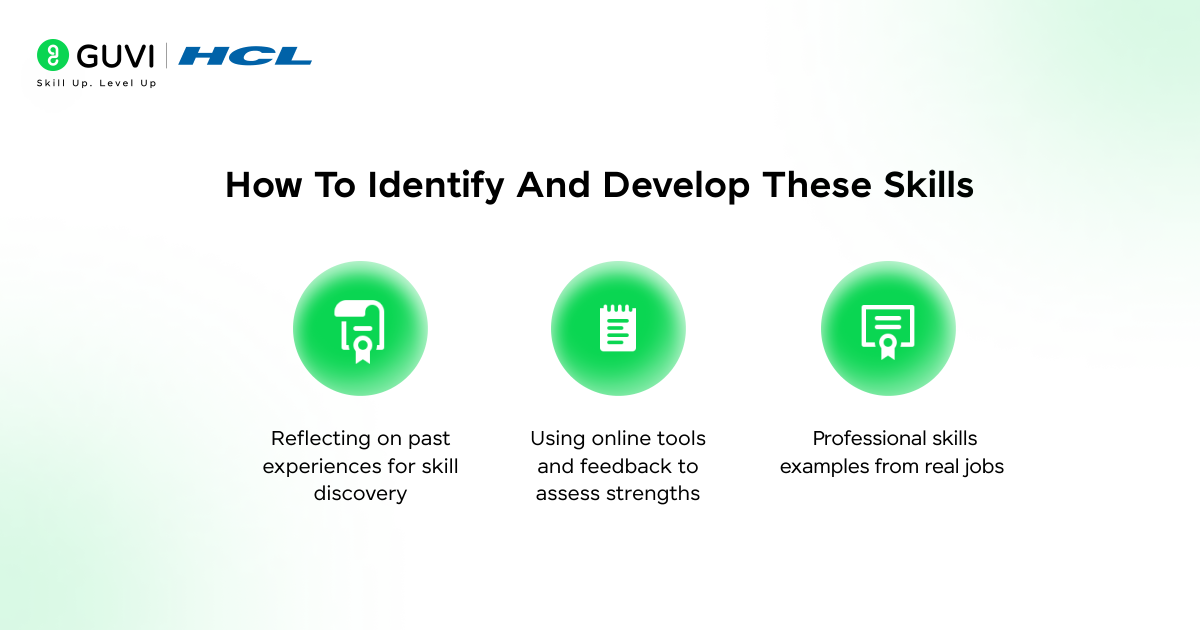
1) Reflecting on past experiences for skill discovery
Start by examining activities from the last five years—school, work, volunteering, and hobbies. Ask yourself what you enjoyed, what you learned, and which aspects you’d like to continue pursuing. Notice what others frequently ask for your help with—these requests often point to your natural strengths.
2) Using online tools and feedback to assess strengths
Several assessment tools can provide objective insights into your capabilities:
- Interest Profilers identify careers matching your personality and interests
- Skills Profilers help connect your existing skills to potential occupations
- Work Importance Profilers reveal what you value most in a job
The FOCUS 2 Career assessment generates major and career suggestions based on your values, interests, personality, and skills (VIPS).
3) Professional skills examples from real jobs
Observe how successful professionals in your field interact, accomplish tasks, and navigate workplace challenges. Notice which skills they demonstrate most effectively—whether it’s communication, problem-solving, or technical abilities.
Boost your chances of getting hired by enrolling in the HCL GUVI’s AI Software Development Course—a program co-designed with IIT M Pravartak Foundation and MongoDB Inc. that fuses technical expertise (Java → Gen-AI) with real-world interview preparation, 15+ hands-on projects and four industry-recognised certifications to ensure you’re not just qualified—but truly hireable.
Concluding Thoughts…
The professional landscape certainly looks different heading into 2025, with employers placing unprecedented value on skills that might not appear on traditional resumes. Your ability to adapt, demonstrate emotional intelligence, and collaborate effectively across digital platforms will likely determine your career trajectory more than degrees or certifications alone.
Therefore, your professional skills development strategy should focus on building both technical competencies and distinctly human capabilities. Companies need employees who can navigate uncertainty, interpret data regardless of their role, and influence others through integrity rather than authority.
The future belongs to those who blend technical expertise with distinctly human capabilities like empathy, cultural competence, and systems thinking. Your investment in developing these skills today creates your competitive advantage tomorrow.
FAQs
Q1. What are the most important professional skills for getting hired in 2025?
The most crucial skills include emotional intelligence, remote collaboration, cultural competence, data literacy, creative problem-solving, self-driven learning, cross-functional thinking, and social influence. These skills are increasingly valued by employers alongside technical expertise.
Q2. How is the hiring process changing for 2025?
By 2025, hiring will focus more on skills-based assessment rather than traditional degrees. Employers are placing greater emphasis on practical abilities, adaptability, and a candidate’s mindset, recognizing that these factors are often more indicative of success in rapidly changing work environments.
Q3. Why is adaptability considered a critical skill for future jobs?
Adaptability is crucial because of the rapid pace of technological change and business disruption. Employers value professionals who can quickly adjust to new situations, embrace change, and maintain effectiveness during uncertainty. It’s seen as essential for navigating the volatile business landscape of 2025 and beyond.
Q4. How can I develop the hidden professional skills employers are looking for?
You can develop these skills through self-reflection on past experiences, using online assessment tools, observing successful professionals in your field, and taking targeted short courses or certifications. Consistent investment in learning and practicing these skills is key to building your professional toolkit.
Q5. What role does emotional intelligence play in professional success?
Emotional intelligence is increasingly recognized as one of the top-tier professional skills. It involves recognizing and managing your own emotions, demonstrating empathy, and navigating social interactions skillfully. Leaders with high emotional intelligence create positive work environments, leading to more motivated, innovative, and engaged teams.
Success Stories

About the Author
Jaishree Tomar
A recent CS Graduate with a quirk for writing and coding, a Data Science and Machine Learning enthusiast trying to pave my own way with tech. I have worked as a freelancer with a UK-based Digital Marketing firm writing various tech blogs, articles, and code snippets. Now, working as a Technical Writer at GUVI writing to my heart’s content!
View all posts by Jaishree Tomar
Connect with me @











Did you enjoy this article?