


Ethical Hacking Articles
What Is a VPN and How Does It Protect Your Privacy?
Top 40 Ethical Hacking Interview Questions and Answers
A Compelling Ethical Hacker Resume: 10 Tips and Tricks to Follow

Get In Touch For Details! Request More Information
Best Ethical Hacking Courses with Certificates in 2026
Sep 30, 2026 6 Min Read 3921 Views
(Last Updated)
Table of contents
- TL;DR
- What Is Ethical Hacking?
- Importance of Ethical Hacking and Why Ethical Hacking Courses Matter
- Why Learn Ethical Hacking Courses in 2026?
- Ethical Hacking Courses: At a Glance
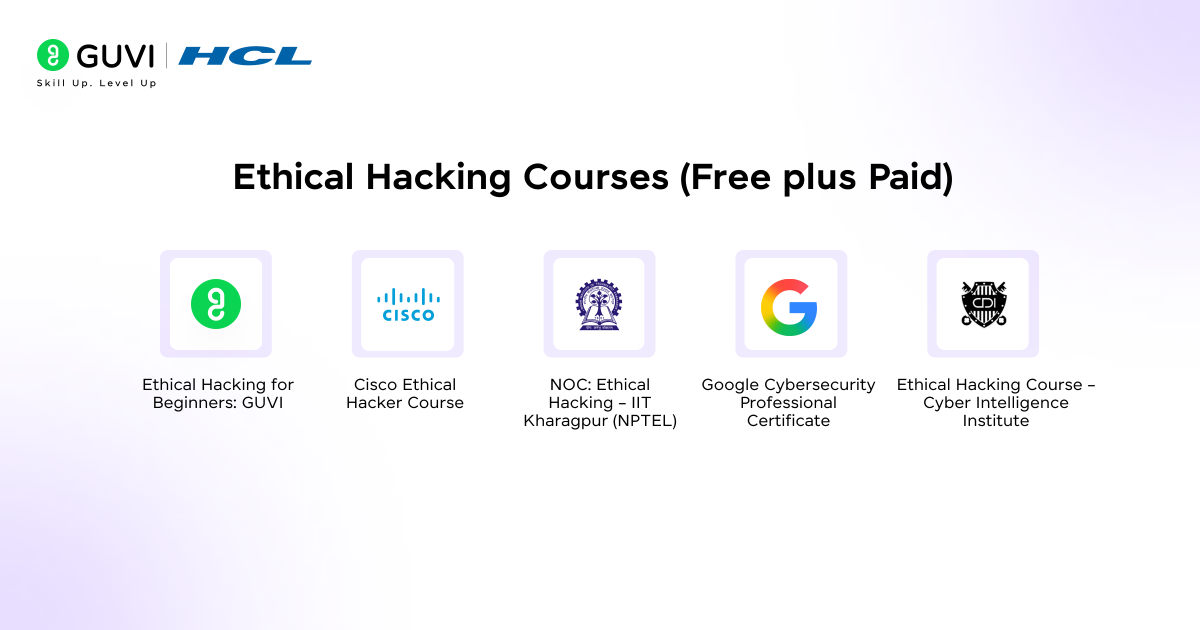
- Top 5 Ethical Hacking Courses (Free plus Paid)
- Ethical Hacking for Beginners Course by HCL GUVI
- Cisco Ethical Hacking Course
- NOC: Ethical Hacking – IIT Kharagpur (NPTEL)
- Google Cybersecurity Professional Certificate
- Ethical Hacking Course by Cyber Intelligence Institute
- Free vs Paid Ethical Hacking Courses: Which Should You Choose?
- Do You Need Coding Experience to Learn Ethical Hacking?
- Career Paths After an Ethical Hacking Course
- Skills You Gain from an Ethical Hacking Course
- How to Choose the Right Ethical Hacking Course?
- What Should You Learn After an Ethical Hacking Course?
- Conclusion
- FAQs
- What qualifications do I need to learn ethical hacking?
- Can I learn ethical hacking without coding?
- How long does it take to learn ethical hacking?
- Is an ethical hacking certificate enough to get a job?
- What should I learn after completing an ethical hacking course?
TL;DR
- Ethical hacking courses teach learners how to identify, test, and report security vulnerabilities in authorised environments.
- Beginners can start with free options such as HCL GUVI, Cisco Networking Academy, or NPTEL, while broader cybersecurity programs such as Google’s certificate can help build foundational security skills.
- The right course depends on your current knowledge, preferred learning format, practical lab exposure, certificate requirements, and career goals.
Introduction
What if you could legally break into systems, understand how cyber-attacks work, and use that knowledge to protect companies from real threats? That is the core idea behind ethical hacking.
As cybersecurity becomes an important part of modern businesses, ethical hacking skills can help learners understand vulnerabilities, test systems safely, and prepare for security-focused roles.
But with so many courses available, choosing the right ethical hacking course can be confusing. Some are free, some are paid, and their certificates, learning formats, and practical exposure can vary.
This guide covers the 5 best ethical hacking courses with certificates in 2026, including free and paid options, what you will learn, portfolio projects, career paths, and how to choose a course based on your learning goals.
What Is Ethical Hacking?
Ethical hacking is the authorised practice of identifying and testing security weaknesses in systems, networks, and applications.
Unlike malicious hacking, ethical hacking is performed with permission and follows defined legal and security boundaries.
Ethical hacking courses help learners understand how attacks happen and how vulnerabilities can be identified and addressed before attackers can exploit them.
Importance of Ethical Hacking and Why Ethical Hacking Courses Matter
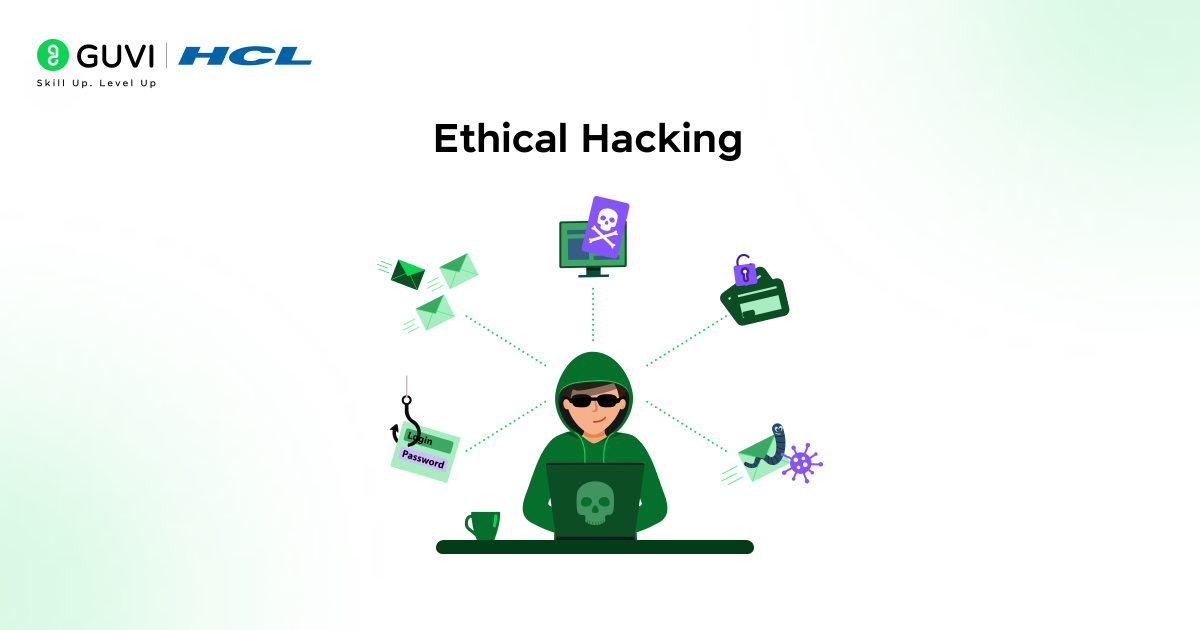
Organisations rely on secure systems to protect data, yet many breaches still happen because attackers find weaknesses before defenders do.
Ethical hacking changes that balance by teaching learners how cyber attacks work, how vulnerabilities appear and how they can be fixed before damage occurs.
A structured course is important because it replaces random learning with verified methods, legal guidelines and step-by-step security workflows. It also helps beginners move from theory to real tasks such as vulnerability scanning and incident reports.
With growing demand for cybersecurity analysts, an ethical hacking course gives learners a recognised starting point and a practical route into security roles.
Why Learn Ethical Hacking Courses in 2026?
Organisations rely on secure systems to protect data, applications, networks, and digital services. However, attackers continue to look for weaknesses in these systems.
Learning ethical hacking can help you understand:
- How vulnerabilities appear in systems and applications
- How attackers identify potential entry points
- How security teams test systems in controlled environments
- How vulnerabilities can be documented and reported
- How security weaknesses can be reduced through appropriate controls
A structured course can also make learning easier for beginners by providing a defined syllabus, practical exercises, and a learning path instead of requiring them to collect information from different sources.
With growing demand for cybersecurity analysts, an ethical hacking course gives learners a recognised starting point and a practical route into security roles.
Ethical Hacking Courses: At a Glance
| Course | Provider | Duration | Fee | Certificate | Best For |
| Ethical Hacking for Beginners | HCL GUVI | Self-paced | Free | Yes | Beginners |
| Cisco Ethical Hacker | Cisco Networking Academy | 70 hours | Course is free; certificate requires an additional fee | Yes | Beginners and network professionals |
| NOC: Ethical Hacking | IIT Kharagpur – NPTEL | 12 weeks | Free to learn; ₹1,000 for optional exam/certificate | Yes | Academic learning |
| Google Cybersecurity Professional Certificate | 6 months | Paid; financial aid available | Yes | Beginners and career switchers | |
| Ethical Hacking Course | Cyber Intelligence Institute | Self-paced | Paid | Yes | Structured ethical hacking learning |
Top 5 Ethical Hacking Courses (Free plus Paid)
1. Ethical Hacking for Beginners Course by HCL GUVI
HCL GUVI’s Ethical Hacking for Beginners course is designed for learners who want to understand the fundamentals of ethical hacking and cybersecurity through a structured learning path.
Duration: Self-paced
Course Fee: Free
Certificate: Yes
What You Will Learn
- Cybersecurity fundamentals: How systems and networks are exposed to attacks
- Linux for ethical hacking: Commands and file handling for lab tasks
- Vulnerability scanning: Techniques to detect weak points in web apps and networks
- Password and identity attacks: Brute force patterns and credential risks
- Network sniffing and spoofing: Traffic capture and manipulation basics
- Web application security: Intro to flaws such as injection and weak authentication
What You’ll Build for Your Portfolio
- Local hacking lab setup using Kali Linux or similar
- Reconnaissance report based on safe target scanning
- Vulnerability scan summary with findings and risk level notes
- Web testing walkthrough showing a controlled injection test
Best For
- Beginners learning the importance of cybersecurity
- Students exploring ethical hacking before advanced study
- Developers adding security awareness
- IT support staff moving toward security roles
Course Link: Ethical Hacking for Beginners Course by HCL GUVI
If you are starting from scratch and want to learn ethical hacking through a free, hands-on ethical hacking course, this can be a practical starting point before moving to more advanced cybersecurity learning.
2. Cisco Ethical Hacking Course
The Cisco Ethical Hacking course introduces learners to ethical hacking concepts, attacker techniques, network defence, and penetration-testing workflows.
Duration: 70 hours
Course Fee: Free course. Certificate requires an additional fee charged by Cisco.
Certificate: Yes
What You Will Learn
- Security principles: Types of cybersecurity and threats, risks and defensive layers
- Attacker techniques: Malware, social engineering and exploitation basics
- Network defence: Rules, segmentation and hardening steps
- Endpoint protection: Device-level security methods
- Pen-test workflow: Planning, scanning, exploitation and reporting at beginner level
What You’ll Build for Your Portfolio
- Security policy checklist for basic organisational review
- Threat model outline with assets and risk paths
- Controlled exploit demo from a legal lab environment
- Pen-test brief showing findings and suggested mitigation
Best For
- Learners who want a vendor-backed cyber course
- Beginners preparing for entry security certifications
- Network professionals adding security skills
- Students targeting cybersecurity internships
Course Link: Cisco Ethical Hacker Course
3. NOC: Ethical Hacking – IIT Kharagpur (NPTEL)
The NOC: Ethical Hacking course from IIT Kharagpur through NPTEL covers ethical hacking from an academic and technical perspective. It’s useful for learners who prefer a structured, faculty-led approach.
Duration: 12 weeks
Course Fee: Free to learn. Optional exam and certificate cost ₹1,000.
Certificate: Available through the optional certification process
What You Will Learn
- Information security foundations: CIA triad and core threat areas
- Cryptography basics: Hashing, encryption and usage scenarios
- Memory exploitation: Buffer overflow concepts in compiled programs
- Wireless and mobile security: Risks in Wi-Fi networks and Android platforms
- Digital forensics: Log analysis, artefact tracing and incident review
- Ethics and legal boundaries in offensive security
What You’ll Build for Your Portfolio
- Network attack simulation with stepwise documentation
- Exploit write-up based on a controlled lab exercise
- Cryptography task output showing hashing or encryption results
- Incident response note outlining detection and containment steps
Best For
- Students preparing for cybersecurity analyst roles in academia or government
- Learners who prefer faculty-led theory with practical labs
- Candidates planning to attempt advanced security exams later
- Professionals who want an academic-level credential in ethical hacking
Course Link: NOC: Ethical Hacking: IIT Kharagpur (NPTEL)
4. Google Cybersecurity Professional Certificate
Duration: 6 months (self-paced, approx. 10 hours per week)
Course Fee: Paid program with financial aid option
Certificate: Yes
What You Will Learn
- Security Foundations: Core terms, threat types, security controls, zero-trust basics
- Network Defence Skills: Firewalls, VPNs, intrusion detection, packet analysis
- Vulnerability Assessment: Scanning methods, risk scoring, remediation planning
- Linux and SQL for Security: Command usage, log extraction, incident queries
- Security Operations Workflow: Ticket handling, SIEM monitoring, alert triage
- Hands-on SOC Practice: Real-time case investigations using industry tools
What You’ll Build for Your Portfolio
- Security Incident Report: Full investigation summary with root-cause analysis
- Vulnerability Scan Dashboard: Risk map built from automated scanning tools
- Log Analysis Case File: SIEM-based evidence showing threat detection workflow
- Network Hardening Plan: Action items for firewall rules, access layers and patching
Best For
- Beginners pivoting into cybersecurity roles
- IT support staff moving toward SOC or analyst jobs
- Learners preparing for entry-level certifications such as Security+
- Career shifters who want employer-recognised proof of skills
Course Link: Google Cybersecurity Professional Certificate
5. Ethical Hacking Course by Cyber Intelligence Institute
The Ethical Hacking Course by Cyber Intelligence Institute covers core ethical hacking concepts, reconnaissance, vulnerability detection, exploitation, web security, and defensive practices.
Duration: Self-paced (access as long as you remain enrolled)
Course Fee: Paid course (pricing available on enrolment page)

Certificate: Yes
What You Will Learn
- Fundamental ethical hacking concepts: Key terminology, legal scope and ethical boundaries
- Network reconnaissance and scanning: Footprinting, port scanning and open-source intelligence (OSINT) methods
- Vulnerability detection and exploitation: Service misconfigurations, weak credentials, injection points
- Web application and network security attacks: Cross-site scripting, session hijacking, TCP/IP vulnerabilities
- Defence and mitigation strategies: Hardening systems, patch management and security policy design
- Hands-on lab practice: Real-world tools and scenarios that simulate attacker behaviour
What You’ll Build for Your Portfolio
- Reconnaissance summary report: Collected data and findings from target mapping
- Vulnerability report: Detailed detection of weaknesses, risk ratings and suggested fixes
- Attack walkthrough document: Step-by-step documentation of a proof-of-concept exploit in a lab environment
- Security mitigation checklist: Action items and configuration recommendations for improved defence
Best For
- Learners seeking a structured entry into ethical hacking roles
- IT professionals who want to gain offensive-security awareness
- Individuals who wish to build writing samples for pentesting or cybersecurity roadmap
- Students evaluating cybersecurity as a career path before committing to advanced certifications
Course Link: Ethical Hacking Course by Cyber Intelligence Institute
Ready to move from curiosity to cybersecurity?
Enrol in our Ethical Hacking for Beginners course, a free, hands-on path to learn real hacking tools, network defence, and vulnerability testing in safe labs.
Earn a recognised certificate and start building the skills that top companies hire for.
Free vs Paid Ethical Hacking Courses: Which Should You Choose?
Both free and paid ethical hacking courses can be useful, depending on your learning goals.
| Factor | Free Courses | Paid Courses |
| Cost | Little or no learning cost | Requires course investment |
| Learning structure | Varies by provider | Usually follows a defined curriculum |
| Practical learning | Depends on the course | Often includes structured labs |
| Certificate | May require a separate exam or fee | Usually included or available as part of the program |
| Best for | Beginners exploring the field | Learners seeking a structured career path |
If you are completely new to cybersecurity, starting with a free course can help you understand whether ethical hacking interests you.
Once you have the basics, you can consider advanced courses or certifications based on your career goals.
Do You Need Coding Experience to Learn Ethical Hacking?
You do not necessarily need advanced programming skills to start learning ethical hacking. Beginners can first build a foundation in networking, Linux, cybersecurity concepts, and basic security tools.
As you progress, programming knowledge can become useful for understanding applications, automating security tasks, analysing vulnerabilities, and working with security scripts.
A useful starting foundation includes:
- Networking fundamentals
- Linux and command-line basics
- Cybersecurity concepts
- Basic programming or scripting
- Web application fundamentals
- Understanding of ethical and legal boundaries
Career Paths After an Ethical Hacking Course
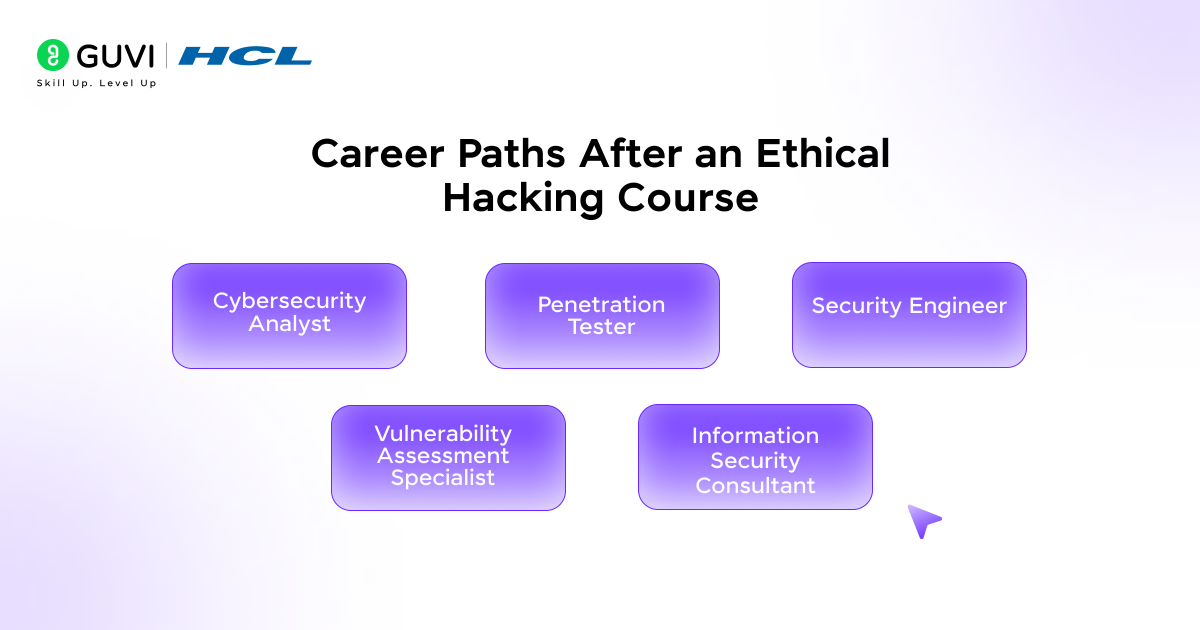
- Cybersecurity Analyst: Reviews alerts and prepares incident reports that help companies respond faster to security breaches.
- Penetration Tester: Conducts authorised attacks on networks and applications to reveal weaknesses before they are used by real attackers.
- Security Engineer: Builds defence layers such as firewalls, access policies and monitoring systems that protect business infrastructure.
- Vulnerability Assessment Specialist: Runs automated and manual scans, documents exposure levels and supports teams in applying high-priority patches.
- Information Security Consultant: Advises organisations on security standards, legal compliance and long-term risk control strategies based on industry needs.
Skills You Gain from an Ethical Hacking Course
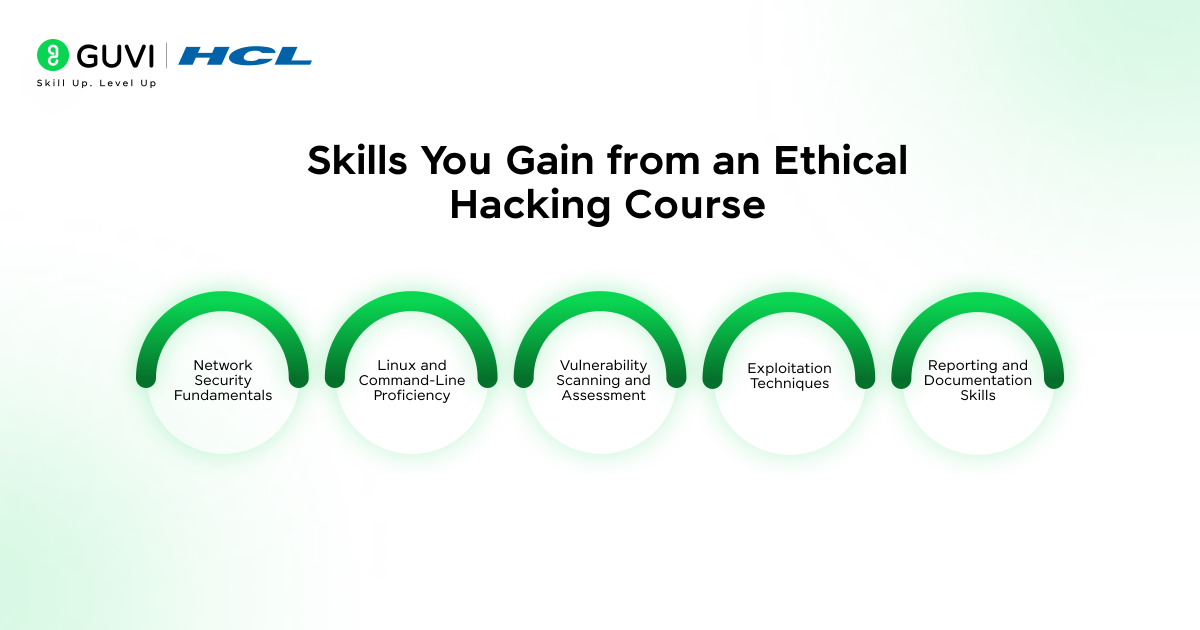
- Network Security Fundamentals: Understand how data moves across networks, which helps you identify weak points in routers, switches and communication paths.
- Linux and Command-Line Proficiency: Use terminal-based tools for scanning, privilege checks and file investigations since most security workflows rely on Linux environments.
- Vulnerability Scanning and Assessment: Learn how to detect security gaps in operating systems, web apps and cloud environments, followed by risk-based prioritisation.
- Exploitation Techniques: Study how attackers gain access through password flaws, misconfigurations and unsafe code so you can block the same attack paths.
- Reporting and Documentation Skills: Prepare structured findings that explain the issue, impact and recommended fix, which is a core requirement in cybersecurity jobs.
How to Choose the Right Ethical Hacking Course?
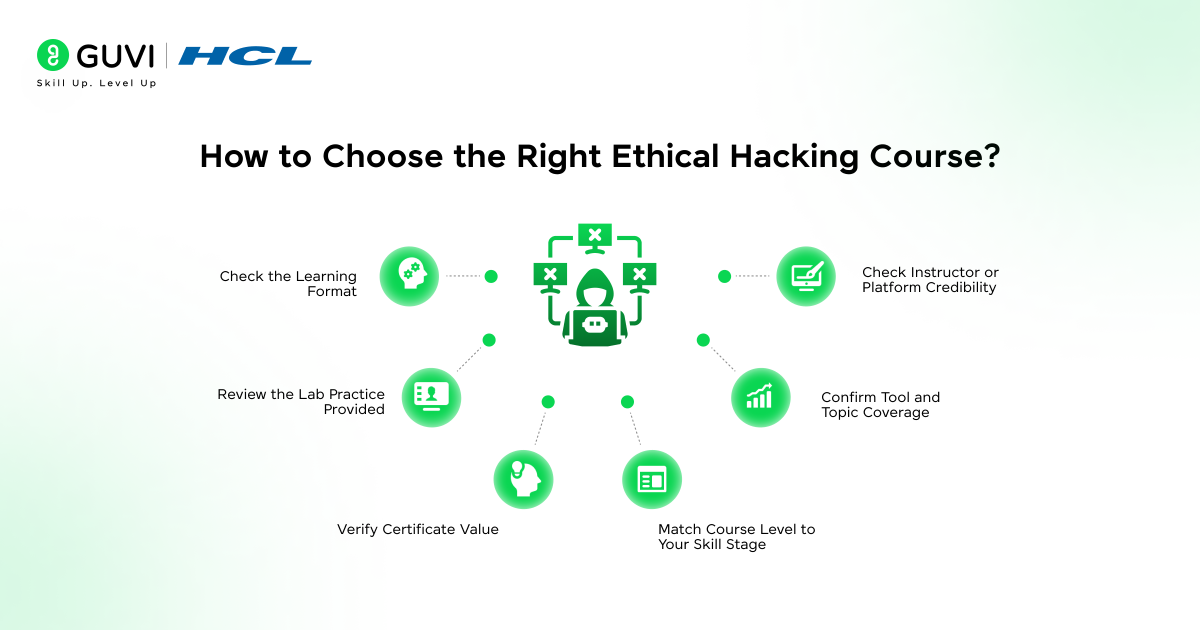
- Check the Learning Format: Decide whether you prefer self-paced video lessons, live classes or faculty-led programs with structured timelines.
- Review the Lab Practice Provided: A strong course includes hands-on tasks with tools like Kali Linux, Metasploit or vulnerable machines so you do more than theory.
- Verify Certificate Value: Look for certificates recognised by employers, training bodies or industry platforms instead of general participation badges.
- Match Course Level to Your Skill Stage: Beginner courses focus on basics such as reconnaissance and passwords. Advanced courses move into exploit development, malware and red-team workflows.
- Confirm Tool and Topic Coverage: A good syllabus includes networking, Linux, OWASP, scanning tools, exploitation, reporting and legal boundaries of ethical hacking.
- Check Instructor or Platform Credibility: Courses backed by universities, cybersecurity companies or certified trainers carry more weight in hiring.
What Should You Learn After an Ethical Hacking Course?
An introductory ethical hacking course is only a starting point. After completing one, you can continue building your skills through:
- Advanced penetration testing
- Web application security
- Network security
- Cloud security
- Digital forensics
- Security operations
- Vulnerability management
- Security certifications
- More advanced lab environments and projects
Regular practice is important because cybersecurity tools, attack techniques, and defensive practices continue to evolve.
Conclusion
Ethical hacking is an important skill area within cybersecurity, particularly for roles involving vulnerability assessment, penetration testing, and security testing.
A well-chosen course can give you the structure and legal framework needed to practise safely while building foundational security skills.
When choosing an ethical hacking course, look beyond the certificate. Consider the syllabus, hands-on labs, practical projects, learning format, course provider, and how well the course matches your career goals.
Once the basics are clear, continued practice and advanced learning can help you build stronger cybersecurity skills.
FAQs
1. What qualifications do I need to learn ethical hacking?
You do not necessarily need a cybersecurity degree to start learning ethical hacking. Beginners can start with basic knowledge of computers, networking, Linux, and cybersecurity. You can develop programming knowledge alongside ethical hacking skills.
2. Can I learn ethical hacking without coding?
Yes. You can start ethical hacking without advanced coding knowledge. However, learning basic programming or scripting can become useful as you move into areas such as automation, web security, vulnerability analysis, and penetration testing.
3. How long does it take to learn ethical hacking?
The learning time depends on your existing knowledge and the depth of skills you want to develop. A beginner course can help you understand the fundamentals, while becoming comfortable with penetration testing and advanced security concepts requires continued practice.
4. Is an ethical hacking certificate enough to get a job?
A certificate can demonstrate that you completed a course or assessment, but it is not the only factor considered for cybersecurity roles. Practical skills, hands-on lab experience, projects, networking knowledge, Linux skills, and the ability to document security findings can also be important.
5. What should I learn after completing an ethical hacking course?
After learning the fundamentals, you can explore penetration testing, web application security, cloud security, digital forensics, vulnerability management, security operations, and advanced cybersecurity certifications.
Success Stories

About the Author
Hashmithaa
Hi, I’m Hashmithaa — a content writer with a love for words. Writing isn’t just what I do; it’s how I connect, communicate, and create meaning in a noisy digital world. And if my words help someone make a better decision, learn something new, or feel more confident, then I’ve done my job well.
View all posts by Hashmithaa
Connect with me @







Did you enjoy this article?