


Full Stack Development Articles
Claude for Architecture and Engineering Documentation
Freelancing as a Python Developer: Getting Your First Client


Get In Touch For Details! Request More Information
Apache Storm vs Spark: Full Comparison & Use Cases
Nov 23, 2025 6 Min Read 2145 Views
(Last Updated)
In today’s digital age, data has become a necessity for survival—a reality that holds for the majority of the population. From governing a nation or a region to running a small business, data acts as a fuel to perform tasks seamlessly. A heavy volume of data is generated daily through social media activities, online transactions, web and mobile applications, and intelligent sensor systems. But imagine for a moment how challenging it would be to process this massive flow of information.
This is where advanced computing tools, such as Apache Storm and Apache Spark, come into play. These tools were created to address the data processing issue faced by many companies that rely heavily on their online presence and operations. Both are robust technologies for handling and analyzing data, but their working mechanisms differ significantly, and they are designed to serve different purposes.
In this blog, we will primarily focus on understanding both the tools and the factors that actually distinguish them. So let’s begin our discussion.
Table of contents
- What is Apache Storm?
- What is Apache Spark?
- Key Differences Between Apache Storm and Apache Spark
- Architecture Comparison
- Performance and Speed
- Scalability and Fault Tolerance
- Ease of Use and Learning Curve
- Integration and Ecosystem Support
- Cost and Resource Management
- Pros and Cons of Apache Storm and Apache Spark
- A. Apache Storm
- B. Apache Spark
- Real-World Use Cases of Apache Storm and Apache Spark
- Apache Storm
- Apache Spark
- Apache Storm vs Spark: Which One Should You Choose?
- Conclusion
- FAQs
- Which is better for real-time processing — Apache Storm or Spark?
- Can Apache Spark replace Apache Storm?
- Which is easier to learn and manage?
What is Apache Storm?
Apache Storm is an open-source processing system designed to process and handle real-time data efficiently. In simple terms, it is capable of handling information the moment they are generated or created. Unlike other outdated or traditional tools that accumulate the data and process it later, Apache Storm operates continuously without any technical glitches, processing live streams of information as they arrive.
Due to its rich set of features like rapid processing, fault-tolerant and reliable architecture, it becomes the ideal choice for monitoring social media operations, stock market updates, website interactions, and decoding readings from IoT (Internet of Things) sensors.
Storm uses spouts and bolts to operate smoothly; spouts are the entities responsible for collecting incoming data, whereas bolts process, assess, and pass the data along. These two components make Apache Storm fast, reliable, and scalable, enabling it to handle millions of data points within seconds without delay.
When to Use Apache Storm: Implement Apache Storm when your application encounters a slow data processing issue or requires an instant result when requests are sent, especially in the case of live and continuous data.
What is Apache Spark?

Apache Spark is a robust and effective open-source data processing engine designed to handle large volumes of data quickly and efficiently. In other words, we can also define Spark as a Distributed Data Processing system that processes data in batches or in small chunks by dividing them among multiple computer units. By doing this, Spark can run this data in parallel, which makes it much faster than other traditional data processing systems or tools.
It can be the best option for analyzing monthly sales information, website logs, or user behaviour along with their metrics. Apart from these, it also supports real-time data processing activities through Spark Streaming; however, its primary focus remains on managing big data with peak efficiency.
Nowadays, many tech companies and organizations are adopting Apache Spark for conducting data analysis, building machine learning (ML) models, designing predictive software systems, and generating insightful business reports. It also provides flexibility to developers by supporting multiple programming languages, including Python, Java, Scala, and R.
When to Use Apache Storm: Use this tool when there is a requirement to process a huge amount of stored data quickly without compromising on accuracy and effectiveness. To put it simply, use it for analyzing large-scale data and performing complex computations on large datasets.
Key Differences Between Apache Storm and Apache Spark
The following are the most significant differences between these tools:
1. Architecture Comparison

Apache Storm: The complete architecture of Apache Storm is based on a topology, where the continuous flow of data takes place through an interconnected network of spouts and bolts.
Spouts fetch and generate data, while bolts process and manipulate the data. This topology structure forms a directed graph, enabling the data to follow a predefined path.
Apache Spark: Apache Spark, on the other hand, uses a Resilient Distributed Dataset (RDD) architecture along with a DAG (Directed Acyclic Graph) execution engine. Here, the information is segregated into small groups and processed across multiple computing nodes in a parallel fashion.
Due to this architectural design pattern, it can handle various complex tasks such as batch processing, instant user interaction queries, and also real-time streaming processes through Spark Streaming (an extension of the core Spark API).
2. Performance and Speed
Apache Storm: It is specifically optimized for ultra-low latency (ULL), making it the best option to implement when every millisecond matters. Apache Storm is exceptionally effective in processing millions of pieces of information or events per second, while also providing instantaneous responses.
Integrating this tool can be effective for interactive banking dashboards, fraud detection systems, and other applications that often rely on immediate feedback cycles.
Apache Spark: Optimized for a higher rate of data delivery rather than minimal latency. This tool excels at processing large batches of data with a blazing-fast mechanism, made possible by its in-memory computation feature, which prevents sluggish disk reads.
Although it can handle real-time streams, its core strength lies in performing fast analysis of large datasets, rather than rapid per-event processing.
3. Scalability and Fault Tolerance
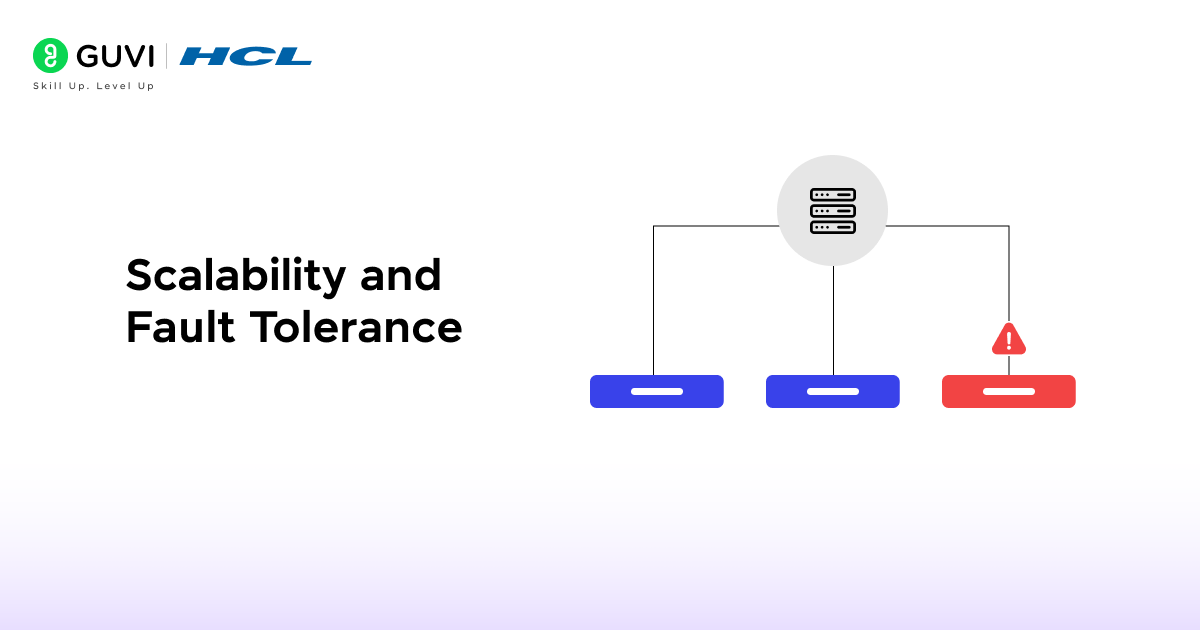
Apache Storm: Apache Storm is highly scalable in nature; you can easily increase the number of nodes or workers. While operating, if a spout or bolt malfunctions, Storm automatically reassigns the task to another worker, ensuring a non-blocking process without any data loss. Additionally, it monitors message processing to ensure consistency.
Apache Spark: Spark is also scalable, but in a different way; it is capable of processing petabytes of data across multiple computing nodes. Here, the fault tolerance is achieved through the RDD lineage, which is responsible for tracking the sources of the data.
If a computing node fails to be active, Spark only re-evaluates the missing boundaries, rather than re-processing the complete data, thereby preventing redundant and tedious tasks.
4. Ease of Use and Learning Curve

Apache Storm: It can be complex for beginners to comprehend due to its logical structure and the working principle of spouts and bolts. Designing and developing pipelines requires much more boilerplate code, and debugging bugs and errors can be frustrating at times.
Apache Spark: In comparison to Storm, Spark is more user-friendly and easier to learn. It supports an extensive set of built-in libraries for SQL queries (Spark SQL), machine learning (MLlib), graph processing (GraphX), and streaming. Due to these additional libraries, data processing becomes easier and faster to execute.
5. Integration and Ecosystem Support
Apache Storm: It gets seamlessly integrated with message brokers and streaming sources such as Apache Kafka, RabbitMQ, and Amazon Kinesis. The entire Storm ecosystem is based on real-time data pipelines, which enable it to push results to databases, dashboards, and other external services within a few seconds.
Apache Spark: It has a richer ecosystem than that of Storm, as it can handle multiple distinctive workloads simultaneously. It gets easily integrated with frameworks and platforms such as Hadoop, Hive, Kafka, HBase, and cloud storage. Modules such as Spark SQL, MLlib, GraphX, and Spark Streaming make it more suitable for performing complex tasks, including batch processing, data analysis, and even handling real-time micro-batch processing, offering more flexibility and versatility than Storm.
6. Cost and Resource Management

Apache Storm: When it comes to designing minor to moderate real-time pipelines, the overall development cost is minimal compared to other processing systems. It is lightweight and efficient, especially for real-time data, as the resource consumption is proportional to the incoming rate of information.
To ensure an optimum workflow, you only need an adequate number of computing nodes to handle the data streaming volume.
Apache Spark: It requires comparatively higher CPU and memory resources than Apache Storm, as it is used for in-memory computation tasks and large-scale data processing. In the case of big data analytics, Spark clusters are often expensive due to various factors, such as high memory usage and resource allocation overhead.
The resource management system within Spark enables dynamic resource allocation, which helps in optimizing cluster utilization.

Pros and Cons of Apache Storm and Apache Spark
A. Apache Storm
Pros:
- Processes live data instantly
- Ensures message reliability and fault tolerance
- Handles continuous data streams efficiently
Cons:
- Difficult to debug and maintain real-time topologies
- Requires more manual configuration
- Lacks strong support for batch analytics
B. Apache Spark
Pros:
- Handles massive datasets with in-memory speed
- Offers built-in libraries for ML, SQL, and graph analysis
- Simple coding with multi-language APIs
Cons:
- Consumes high memory and CPU resources
- Expensive to scale for enormous workloads
- Slight delay for accurate real-time event processing
Real-World Use Cases of Apache Storm and Apache Spark
Apache Storm
1. Social Media Monitoring
Social media monitoring features help in tracking the live activities of users on platforms such as Instagram, LinkedIn, or YouTube. Through real-time data stream processing, it is capable of capturing posts, current trends, and reactions of the people.
2. Fraud Detection
Fraud detection systems are advanced applications designed to continuously monitor transactional activities, including fund transfers, e-wallet payments, online shopping purchases, and many other types of transactions. Through complex algorithms such as K-Nearest Neighbors (KNN), Isolation Forest, and Decision Trees, it can effectively detect unusual movements or unauthorized access that can potentially lead to data breaches and security failures.
3. Real-Time Dashboards
These are interactive and user-friendly dashboards that provide real-time data in the form of valuable business metrics such as sales numbers, website traffic concentration, or customer behaviour. All data is updated every second without delay, made possible through stream processing, WebSocket connections, and data pipelines.
4. IoT Data Processing
IoT devices, such as sensors or cameras, continuously send data inputs about their surroundings in real-time. Sometimes, the data flow can be massive if the area of operation is extensive. As they can handle a continuous stream of data through stream processing, they help ensure a smooth workflow within the organization.
5. Recommendation Systems
Recommendation systems, when integrated with Apache Storm, yield a high-quality software feature within the application. Popular platforms such as Netflix, Spotify, and YouTube have advanced recommendation systems as a vital feature. By using complex logic and models like Neural Networks, Autoencoders, Matrix Factorization, and Clustering, this system uplifts the user experience to be more personal and smooth.
Apache Spark
1. Big Data Analysis
Big data analysis is a process that facilitates organizations to process high volumes of data to explore and observe the trends, patterns, and current market demand. And by implementing a distributed data processing system, large amounts of structured and unstructured data can be handled.
2. Machine Learning
By effectively implementing algorithms like Neural Networks or KNN, these processing systems learn independently by observing data patterns and being fed by them, which results in improved accuracy and predictive capabilities over time without requiring manual input.
3. ETL (Extract, Transform, Load) Pipelines
ETL pipelines are crucial in streamlining the process of collecting raw data from multiple sources, organizing it, and transforming it into a usable and structured format. These pipelines help in loading the massive data into a centralized system to ensure data accuracy, consistency, reliability, and integrity.
4. Log Analysis
Log Analysis is primarily conducted to review system or application logs and detect and assess errors, bugs, performance bottlenecks, or any suspicious activities within the software architecture. By processing logs through a distributed data processing unit, it helps identify anomalies, allowing organizations to easily troubleshoot technical problems in a much faster timeframe without compromising stability and security.
5. Business Intelligence (BI)
Business Intelligence (BI) provides a comprehensive suite of features, including data warehousing, online analytical processing, and interactive querying. With the help of these advanced features, it can process and organize massive datasets, allowing for a multidimensional assessment of data to provide insightful information, and enabling end-users to resolve their issues by drilling down into the correct data. It is an ideal choice for growth and efficiency.
Apache Storm vs Spark: Which One Should You Choose?
Choosing between Apache Storm and Apache Spark depends entirely on the kind of data processing application you are developing. If you are someone who is looking for an application that is capable of processing data the moment it is generated or created, such as monitoring live comments, tracking the stock prices of any specific sector, or detecting fraud in real-time, then Apache Storm is the right tool that can satisfy all your technical objectives in a much faster and effective way.
However, if you are designing a software platform that will frequently encounter large volumes of data and need to perform complex analyses on it, then choosing Apache Spark can significantly benefit you. It has immense resources integrated with it, through which it can process massive datasets quickly compared to other traditional processing engines. Due to its in-memory computational ability and parallel processing power, it can execute sophisticated functions such as graph processing, predictive analytics, data warehousing, log and event analysis, and real-time streaming.
Therefore, there is no definitive answer to which one is better; the simple answer lies in the technical requirements and needs. To summarize this section, we can say that Storm is for instant updates, and Spark is for deep analysis.
Apache Spark was initially developed at UC Berkeley’s AMPLab in 2009 and became an Apache top-level project in 2014. Its in-memory processing can make data tasks up to 100 times faster than traditional Hadoop MapReduce!
Joining a Full-Stack Development course that doesn’t align with your career objectives is a waste of time, and it’s a sad reality that the majority of courses in the market fall into this category. But don’t be anxious; there are a few platforms that provide comprehensive Full-Stack development courses, and among them, HCL GUVI offers one of the best. Enroll yourself in HCL GUVI’s IITM Pravartak Certified MERN Full Stack Development Course with AI Integration, and master the essential skills to crack any top product-based companies. Join us today, and earn credentials that validate your portfolio and enhance your hiring potential.
Conclusion
Both Apache Storm and Apache Spark are powerful data processing tools, but they serve different purposes. Apache Storm is the go-to solution for applications that demand instant, real-time processing and continuous data flow. At the same time, Apache Spark excels at analyzing large datasets, performing complex computations, and efficiently running machine learning models. Choosing between them depends on your project’s needs — use Storm when speed and real-time accuracy are critical, and Spark when you need deep data analysis and scalability for big data workloads.
FAQs
Which is better for real-time processing — Apache Storm or Spark?
Apache Storm processes data instantly. Spark works in micro-batches with a slight delay.
Can Apache Spark replace Apache Storm?
No, Spark is best suited for big data analytics, while Storm is ideal for ultra-low latency tasks.
Which is easier to learn and manage?
Apache Spark, thanks to its simple APIs and multi-language support.
Success Stories
































Did you enjoy this article?