


Mechanical CAD Articles
How Can Quality Engineers Transition Into Mechanical Engineering?
Why Should Mechanical Engineers Upskill in Generative Design?
How Can Automotive Technicians Transition Into Mechanical Engineering Roles?
How to Make a Civil to Mechanical Engineering Transition: Skills, Courses and Career Paths


Get In Touch For Details! Request More Information

Can Production Supervisors Become Mechanical Design Engineers?
Nov 11, 2026 4 Min Read 32 Views
(Last Updated)
A production supervisor to mechanical design engineer move is possible, and it starts from a stronger base than many people expect. Supervisors already understand machining, fabrication, assembly, materials, and the daily problems that arise when a drawing meets a real machine. Design engineers need that practical awareness. What they also need is formal design training: CAD, mechanics, and tolerancing. This guide covers what carries over, what to learn, and how to plan the change while you keep working.
Table of contents
- TL;DR
- What Is the Difference Between a Production Supervisor and a Mechanical Design Engineer?
- Why Should Production Supervisors Consider Mechanical Design Engineering?
- What Skills Can Production Supervisors Transfer to Mechanical Design Engineering?
- What Qualifications Are Required to Become a Mechanical Design Engineer?
- What Technical Skills Should Production Supervisors Learn?
- Mechanical Engineering Fundamentals
- Computer-Aided Design (CAD)
- Geometric Dimensioning and Tolerancing (GD&T)
- Computer-Aided Engineering (CAE)
- Design for Manufacturing (DFM)
- Production Supervisor to Mechanical Design Engineer: A Step-by-Step Roadmap
- Practical Projects to Build Mechanical Design Skills
- Career Opportunities After the Transition
- Conclusion
- FAQs
- Can a production supervisor become a mechanical design engineer?
- What qualifications are required to move from supervision to mechanical design?
- Can production supervisors learn SolidWorks or CATIA?
- Which technical skills should production supervisors learn first?
- What career opportunities are available after learning mechanical design?
TL;DR
- Shop-floor knowledge of processes, machines, and materials is a real advantage in design work.
- Design roles need skills production rarely builds: CAD, GD&T, mechanics, and basic simulation.
- Qualification requirements vary by employer and role. Production experience alone is not a substitute for them.
- Practical projects and a portfolio show design ability more clearly than a resume line.
- Start with fundamentals and one CAD tool, then add drawings, tolerancing, and analysis.
What Is the Difference Between a Production Supervisor and a Mechanical Design Engineer?
A production supervisor keeps output on schedule. They manage people, machines, and shifts, resolve breakdowns, and make sure parts leave the line to specification.
A mechanical design engineer decides what the part or assembly should be. They create models and drawings, choose materials and tolerances, check that a design can bear its loads, and work with manufacturing to make it buildable.
| Aspect | Production Supervisor | Mechanical Design Engineer |
| Key responsibilities | Production planning, team management, output and delivery targets | Component and assembly design, design reviews, design changes |
| Technical skills | Process knowledge, machine operation, troubleshooting | Mechanics, strength of materials, machine elements, GD&T |
| Common tools and software | Production schedules, ERP, shop-floor reports | SolidWorks, CATIA, Autodesk Inventor, ANSYS |
| Work environment | Shop floor, assembly lines, production planning | Design office, R&D, prototype and test areas |
| Typical deliverables | Daily output reports, shift plans, issue logs | 3D models, detailed drawings, bills of materials, analysis reports |
Production experience helps most where design meets manufacturing. A designer who has seen a part clamp badly or a tool fail to reach a feature draws better parts.
Want to transition from production supervision to mechanical design engineering? Build practical skills in CAD, mechanical design, GD&T, and engineering fundamentals with HCL GUVI’s Mechanical CAD Design Course. Gain hands-on experience and prepare for new opportunities in mechanical design.
Why Should Production Supervisors Consider Mechanical Design Engineering?
This is a change of focus, not a promotion. Production management and design suit different strengths, and both are respected careers. Reasons people choose design include:
- From execution to product design: You shape the part before production begins instead of managing its output.
- Understanding how components are developed: You see why a design exists, not only how to make it.
- CAD modelling and drawings: Building models and detailing drawings becomes your main craft.
- Applying manufacturing knowledge early: Your process awareness can reduce rework during development.
- Design and simulation tools: You work with software that predicts how a design behaves.
What Skills Can Production Supervisors Transfer to Mechanical Design Engineering?
Here is what supports a production to mechanical design move:
- Manufacturing process knowledge: You know what machining, fabrication, and assembly can realistically deliver.
- Machine and equipment knowledge: You understand how components function in real equipment.
- Problem-solving: Tracing a production defect to its cause is similar to resolving a design issue.
- Material knowledge: You have seen how materials cut, distort, weld, or wear.
- Quality and inspection: You are familiar with tolerances, measurements, and acceptance limits.
- Team coordination: Design engineers work constantly with production, quality, and maintenance teams.
These are strengths, but they are not design skills. Creating CAD models, calculating whether a part will hold, applying GD&T correctly, and running simulations must be learned deliberately.
Also read: What is Mechanical Engineering 101: Introduction to Principles, Applications and Skills
What Qualifications Are Required to Become a Mechanical Design Engineer?
Requirements depend on the employer, the role, and the seniority of the position. Common pathways include:
- Diploma in Mechanical Engineering: Often accepted for CAD designer, drafter, and junior design support roles.
- Bachelor’s degree in Mechanical Engineering: Frequently expected for design engineer positions, especially those involving analysis and product development.
- Other relevant engineering qualifications: Some employers accept related technical qualifications for specific roles.
- Additional CAD and design training: Practical courses build tool skills that formal qualifications may not emphasise.
Production experience or a short-term CAD course does not automatically qualify anyone for every mechanical design position. Read job descriptions for the roles you want and compare them with your own background first.
What Technical Skills Should Production Supervisors Learn?
Mechanical Engineering Fundamentals
Study engineering mechanics, strength of materials, material science, machine elements, and manufacturing processes. These underpin every design decision, from choosing a shaft diameter to selecting a fastener.
Computer-Aided Design (CAD)
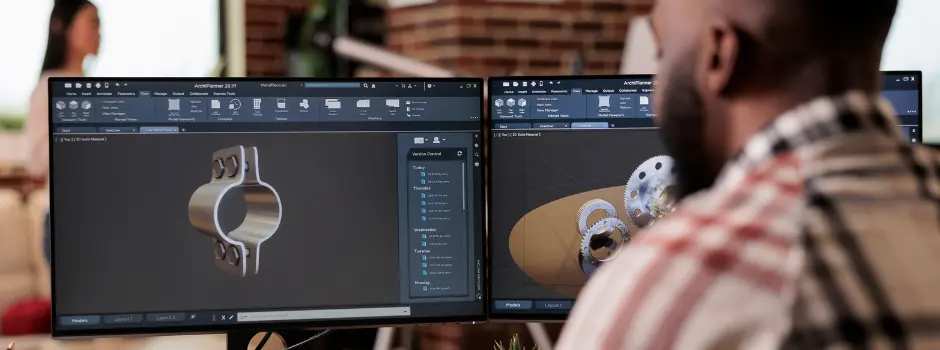
Learn 2D drafting, 3D part modelling, assemblies, and drawing creation in SolidWorks, CATIA, or Autodesk Inventor. Choose one tool that matches the job listings you are targeting. Strong CAD skills for production supervisors begin with applying what you already know about how parts are made.
Geometric Dimensioning and Tolerancing (GD&T)
Understand dimensions, tolerances, fits, and drawing standards. You have read tolerances on the floor. Now you will learn to specify them and justify why a feature needs a given limit.

Computer-Aided Engineering (CAE)
Begin with introductory FEA: applying loads and constraints, then reading stress and deformation results in tools such as ANSYS. Get comfortable with mechanics first so that results make sense.
Design for Manufacturing (DFM)
Learn to design components that are practical to manufacture, assemble, inspect, and maintain. This is where years on the shop floor pay off most clearly.
Also read: Who Is a Mechanical CAD Designer? A Complete Beginner’s Guide
Production Supervisor to Mechanical Design Engineer: A Step-by-Step Roadmap
Plan for months of steady part-time effort alongside your shifts.
- Assess your qualifications and manufacturing experience. Note your education, processes you know, and any drawing exposure.
- Identify qualification requirements for target roles. Collect ten design job descriptions and look for patterns.
- Strengthen mechanical fundamentals. Spend a few hours each week on mechanics and strength of materials.
- Learn one CAD tool. SolidWorks, CATIA, or Inventor all work.
- Practise drafting, 3D modelling, and assemblies. Recreate parts you handle at work.
- Understand GD&T and drawing standards. Apply them to your own drawings.
- Learn basic simulation concepts. Start with simple static analyses.
- Complete practical design projects. Choose projects linked to real manufacturing problems.
- Build a portfolio. Include models, drawings, and short project notes explaining your decisions.
- Apply for design roles or explore internal moves. Your employer may have design or tooling openings.
Practical Projects to Build Mechanical Design Skills
- Machine component 3D modelling: Model a shaft, bearing housing, or mounting bracket. This shows feature-based modelling and sensible geometry.
- Mechanical assembly design: Build a simple gearbox or fixture assembly. This demonstrates mates, fits, and how parts work together.
- Manufacturing fixture design: Design a fixture to hold a part during machining or assembly. It shows you can turn shop-floor needs into a buildable design.
- Engineering drawing creation: Prepare a fully dimensioned and toleranced drawing. This proves you can communicate design intent to a manufacturer.
- Bracket stress analysis: Run a basic FEA on a loaded bracket. It shows you can set up boundary conditions and interpret stress and deformation.
Also read: LinkedIn Profile Tips for Mechanical Engineers
Career Opportunities After the Transition
Roles depend on your qualifications, experience, and employer requirements, and they do not all share the same entry criteria.
- Junior Mechanical Design Engineer: Process awareness helps you avoid designs that are hard to produce.
- CAD Design Engineer: Knowing how parts are made improves the accuracy and practicality of models.
- Mechanical CAD Designer: Familiarity with drawings and tolerances helps with detailing.
- Product Design Engineer: Understanding how products are assembled and serviced informs better design decisions.
- Manufacturing Design Engineer: Direct production experience is especially useful in this role.
- Tool Design Engineer: Experience with jigs, fixtures, and tooling gives you context for tool design.
- Design and Development Engineer: Coordination across teams supports the product development cycle.
Conclusion
A production supervisor to mechanical design engineer transition builds on real strengths: process knowledge, machine familiarity, and teamwork across functions. It still requires formal qualifications where employers ask for them, solid mechanical fundamentals, CAD proficiency, GD&T, and practical projects that prove your skills. Treat it as a deliberate mechanical design engineering career path, not a shortcut, and take it one step at a time.
FAQs
1. Can a production supervisor become a mechanical design engineer?
Yes. Your manufacturing experience is useful, but you will need to add design skills such as CAD, GD&T, and mechanics, and meet the qualification requirements of the role.
2. What qualifications are required to move from supervision to mechanical design?
Many roles expect a diploma or bachelor’s degree in mechanical engineering, depending on the position. Requirements vary by employer and job role.
3. Can production supervisors learn SolidWorks or CATIA?
Yes. Both can be learned alongside a job. Start with one tool, practise on familiar parts, and build up to assemblies and drawings.
4. Which technical skills should production supervisors learn first?
Begin with mechanical fundamentals and one CAD tool. Then add GD&T, basic simulation, and design for manufacturing.
5. What career opportunities are available after learning mechanical design?
Options include Junior Mechanical Design Engineer, CAD Design Engineer, Mechanical CAD Designer, Product Design Engineer, Manufacturing Design Engineer, Tool Design Engineer, and Design and Development Engineer, depending on your qualifications.
Success Stories

About the Author
Vishalini Devarajan
An Aerospace Engineer turned content writer, I focus on making complex concepts easy to understand through well-structured, reader-friendly blogs. Whether it’s a technical topic or a non-technical one, I love creating content that is clear, engaging, and impactful.
View all posts by Vishalini Devarajan
Connect with me @











Did you enjoy this article?