


Data Science Articles
What Is Finance Analytics? Career Scope and Job Roles
Marketing Analyst to Data Scientist: Skills and Career Path
Healthcare Team Leads, Operations Managers and Implementation Leads to Analytics Leadership
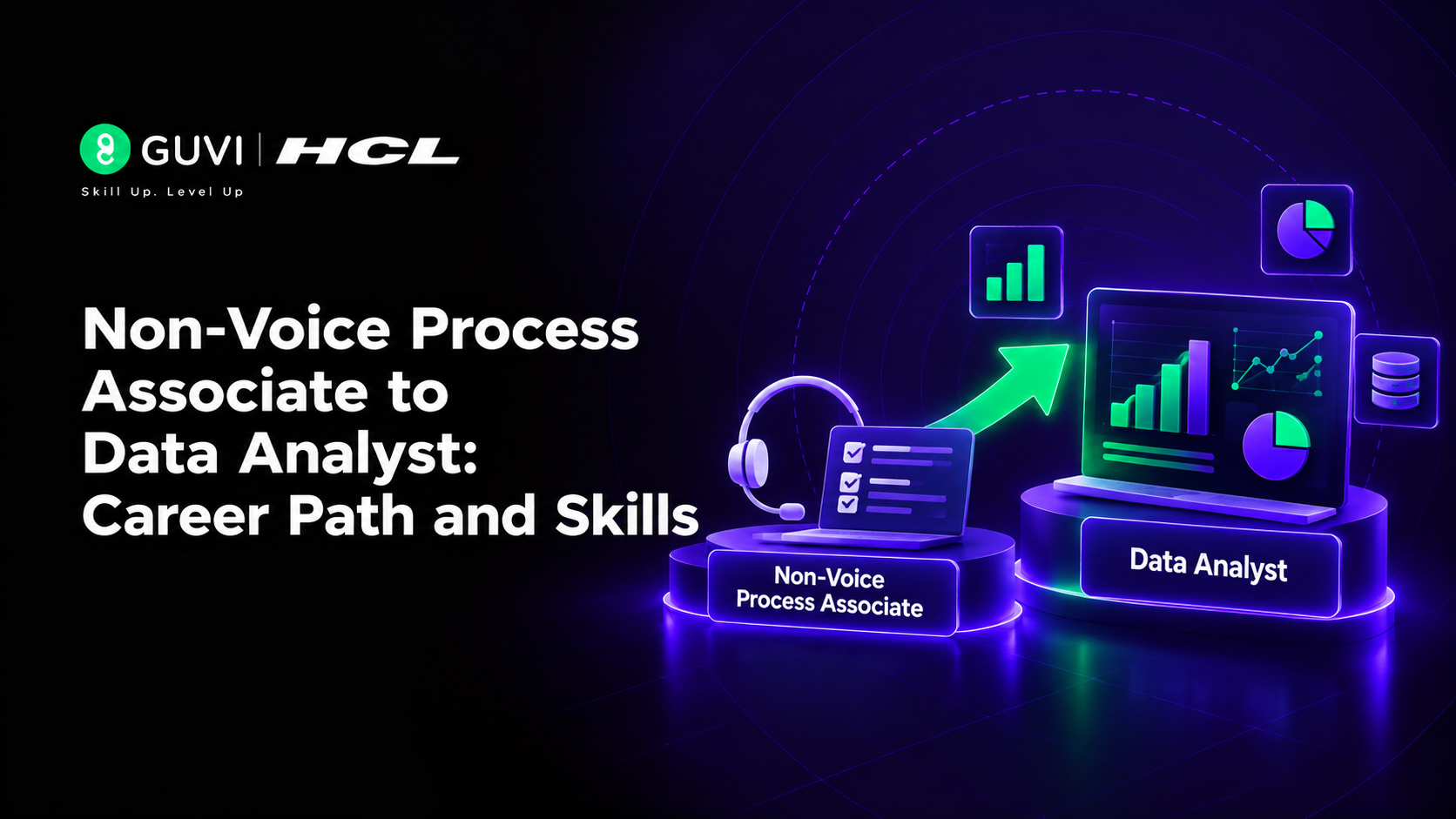
Non-Voice Process Associate to Data Analyst: Career Path and Skills

Get In Touch For Details! Request More Information
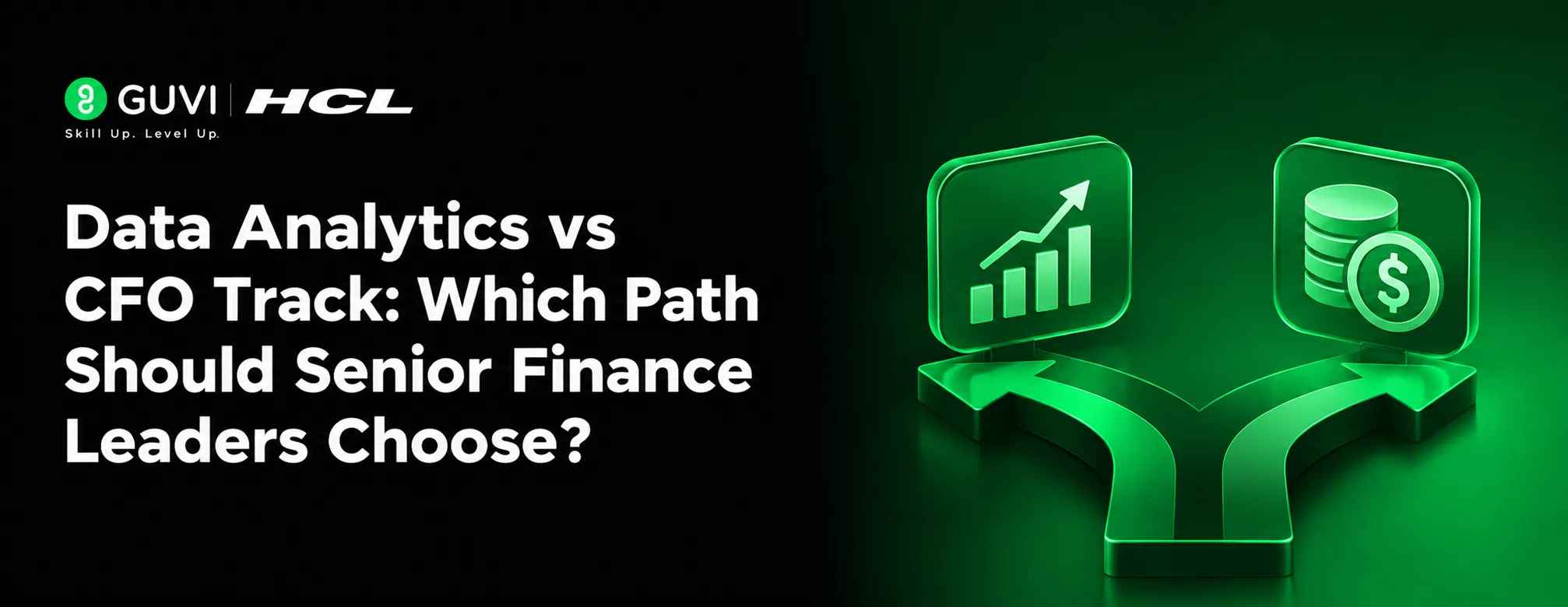
Data Analytics vs CFO Track: Which Path Should Senior Finance Leaders Choose?
Nov 02, 2026 3 Min Read 18 Views
(Last Updated)
Senior finance professionals often reach a stage where they must decide how to grow beyond traditional accounting, reporting, and financial management responsibilities. Two possible directions are advancing toward a Chief Financial Officer (CFO) position or developing deeper expertise in finance analytics. Both paths offer opportunities to influence business decisions, but they require different strengths and career priorities.
The CFO track focuses on financial leadership, business strategy, governance, and organizational performance. Finance analytics focuses on using data, technology, and analytical methods to improve forecasting, identify financial trends, and support better decisions.
For experienced finance leaders, the choice does not always have to be one or the other. Understanding how these paths differ can help you decide whether to pursue executive leadership, specialize in analytics, or combine both capabilities.
Table of contents
- TL;DR
- What Does the CFO Career Path Involve?
- What Does a Career in Finance Analytics Involve?
- CFO Track vs Finance Analytics: Key Differences
- Which Skills Should Senior Finance Leaders Develop?
- Can Finance Analytics Help You Become a CFO?
- How Should You Choose Between the Two Paths?
- A Practical Development Roadmap for Senior Finance Leaders
- Conclusion
- FAQs
- Is finance analytics a good career path for senior finance professionals?
- Does a CFO need data analytics skills?
- Can an FP&A manager become a CFO?
- Which tools should finance leaders learn for analytics?
- Is finance analytics better than traditional finance leadership?
- Can I pursue a CFO career while learning data analytics?
TL;DR
- The CFO track is suited to professionals interested in executive leadership, financial strategy, and organizational responsibility.
- Finance analytics suits leaders who enjoy data-driven forecasting, financial modeling, and performance analysis.
- CFOs need strong leadership, communication, governance, and commercial judgment.
- Finance analytics requires skills in data interpretation, advanced Excel, SQL, Power BI, and analytical modeling.
- Combining analytics with financial leadership can create opportunities to influence strategic decisions.
- Choose based on your long-term ambitions, strengths, and preferred responsibilities.
What Does the CFO Career Path Involve?
The CFO is a senior executive responsible for overseeing an organization’s financial health and supporting its long-term business strategy. The role extends beyond accounting and financial reporting to include capital allocation, risk management, budgeting, investor communication, and financial governance.
A typical progression may look like:
Financial Analyst → Finance Manager → Financial Controller → Finance Director → CFOThe exact route varies by organization. Senior professionals generally need substantial experience managing teams, budgets, financial controls, and strategic business decisions.
This path is suitable if you want to lead finance functions, influence company-wide priorities, and take accountability for financial outcomes.
What Does a Career in Finance Analytics Involve?
Finance analytics focuses on transforming financial and operational data into insights that support business decisions. Professionals examine revenue trends, cost structures, cash flow, profitability, and forecast performance to identify opportunities and risks.
Potential roles include:
- Finance Data Analyst
- Financial Planning and Analysis (FP&A) Analyst
- Finance Analytics Manager
- Business Intelligence Manager
- Finance Transformation Lead
These positions may involve building dashboards, analyzing financial performance, improving forecasting processes, and automating repetitive reporting tasks.
Unlike the traditional CFO route, finance analytics allows professionals to develop a deeper technical specialization while remaining closely connected to financial decision-making.
CFO Track vs Finance Analytics: Key Differences
| Area | CFO Track | Finance Analytics |
|---|---|---|
| Primary focus | Financial leadership and strategy | Data-driven financial insights |
| Main responsibility | Overall financial performance | Analysis, forecasting, and reporting |
| Core skills | Leadership, governance, commercial judgment | Data analysis, modeling, visualization |
| Common tools | ERP and financial management systems | Excel, SQL, Power BI, Python |
| Career direction | Executive leadership | Analytics and transformation leadership |
| Business impact | Organization-wide financial decisions | Evidence-based operational and strategic decisions |
Both paths require financial knowledge and business understanding. The difference lies in whether you want to lead the overall finance function or specialize in improving decisions through data.
Which Skills Should Senior Finance Leaders Develop?
The skills you prioritize should reflect your preferred career direction.
For the CFO track:
- Strategic financial planning and capital allocation.
- Corporate governance, compliance, and risk management.
- Leadership, negotiation, and stakeholder communication.
- Business transformation and commercial decision-making.
For finance analytics:
- Advanced Excel and financial modeling.
- SQL for extracting and analyzing financial data.
- Power BI or Tableau for dashboards and reporting.
- Python for automation and advanced analysis.
- Forecasting, scenario analysis, and statistical fundamentals.
Senior finance leaders do not necessarily need to become full-time programmers. Understanding analytical tools and knowing how to evaluate data-driven recommendations can be sufficient for many leadership responsibilities.
Finance teams can use predictive analytics to improve cash flow forecasting, identify unusual spending patterns, and evaluate potential financial risks before they affect business performance.
Can Finance Analytics Help You Become a CFO?
Absolutely. Analytical capabilities can strengthen the CFO career path by helping leaders make decisions based on evidence rather than intuition alone.
For example, a CFO with strong analytics knowledge can evaluate profitability across business units, examine cash flow scenarios, identify cost inefficiencies, and challenge assumptions behind financial forecasts. These capabilities can improve strategic discussions with CEOs, boards, and department heads.

The goal is not to replace financial judgment with technology. It is to combine financial expertise, business understanding, and reliable data to make better decisions.
How Should You Choose Between the Two Paths?
Consider the type of responsibility you want over the next five to ten years.
Choose the CFO track if you enjoy leading teams, managing financial risk, shaping business strategy, and taking responsibility for organization-wide financial outcomes.
Choose finance analytics if you prefer investigating financial patterns, improving forecasting accuracy, working with analytical tools, and building data-driven solutions.
Consider a hybrid path if you want to remain on the executive leadership track while strengthening your ability to use analytics in financial planning and business transformation.
Your current position, technical knowledge, leadership experience, and organizational opportunities should all influence your decision.
A Practical Development Roadmap for Senior Finance Leaders
Instead of making an immediate career change, begin by identifying the capabilities you need to strengthen.
- Assess your current strengths: Review your experience in financial planning, reporting, leadership, technology, and business strategy.
- Identify skill gaps: Determine whether you need stronger executive leadership capabilities or more advanced analytical knowledge.
- Take on relevant projects: Lead a financial transformation initiative, improve forecasting, or develop a performance dashboard.
- Build cross-functional exposure: Work with technology, operations, risk, and business teams to understand how financial data supports decisions.
- Review career opportunities: Compare CFO-track responsibilities with finance analytics leadership roles before committing to a specialization.
A practical project that combines financial knowledge with analytics can help demonstrate your ability to contribute beyond traditional reporting.
Conclusion
Choosing between finance analytics and the CFO career path depends on the kind of impact you want to create. If your ambition is to lead the finance function and influence organizational strategy, the CFO route may be the right direction. If you enjoy working with financial data, improving forecasting, and developing analytical solutions, finance analytics offers a valuable specialization.
These paths are not mutually exclusive. Senior finance professionals who combine leadership experience with analytical capabilities can bring a broader perspective to business decisions. Rather than viewing analytics as an alternative to financial leadership, consider it a capability that can strengthen your long-term career.
FAQs
1. Is finance analytics a good career path for senior finance professionals?
Yes. It allows experienced professionals to apply financial knowledge to forecasting, performance analysis, reporting automation, and business intelligence.
2. Does a CFO need data analytics skills?
A CFO does not need to perform every technical analysis personally, but understanding dashboards, predictive models, and analytical insights can improve financial decision-making.
3. Can an FP&A manager become a CFO?
Yes. FP&A experience can provide a strong foundation through budgeting, forecasting, financial planning, and business partnering. Additional leadership, governance, and strategic experience are generally important.
4. Which tools should finance leaders learn for analytics?
Advanced Excel and Power BI are useful starting points. SQL and Python can provide additional capabilities for working with larger datasets and automating analysis.
5. Is finance analytics better than traditional finance leadership?
Neither is universally better. Finance analytics suits professionals interested in technical specialization, while finance leadership suits those who want broader organizational responsibility.
6. Can I pursue a CFO career while learning data analytics?
Yes. You can develop analytical capabilities alongside your existing financial responsibilities. Applying analytics to budgeting, forecasting, and performance reporting can strengthen your leadership profile.
Success Stories

About the Author
HCL GUVI
This article was selected and published as part of the HCL GUVI AI Blogathon 2026, an initiative designed to encourage students, AI enthusiasts, and aspiring tech writers to simplify complex AI concepts through impactful technical content. The contest recognized high-quality, original, and insightful AI-focused blogs, with selected authors receiving publication opportunities on the HCL GUVI blog platform along with official author credits and recognition.
View all posts by HCL GUVI
Connect with me @







Did you enjoy this article?