


Career Articles
Diploma vs Degree vs Certification: What Actually Matters to Employers in 2026? - Best Guide
How to Explain Job Hopping Without Sounding Unstable - Best Guide
Why Full Stack Developers Are in High Demand in 2026?
How to Choose a Skill to Learn Next Based on Your Career Goals - Best Guide 2026


Get In Touch For Details! Request More Information
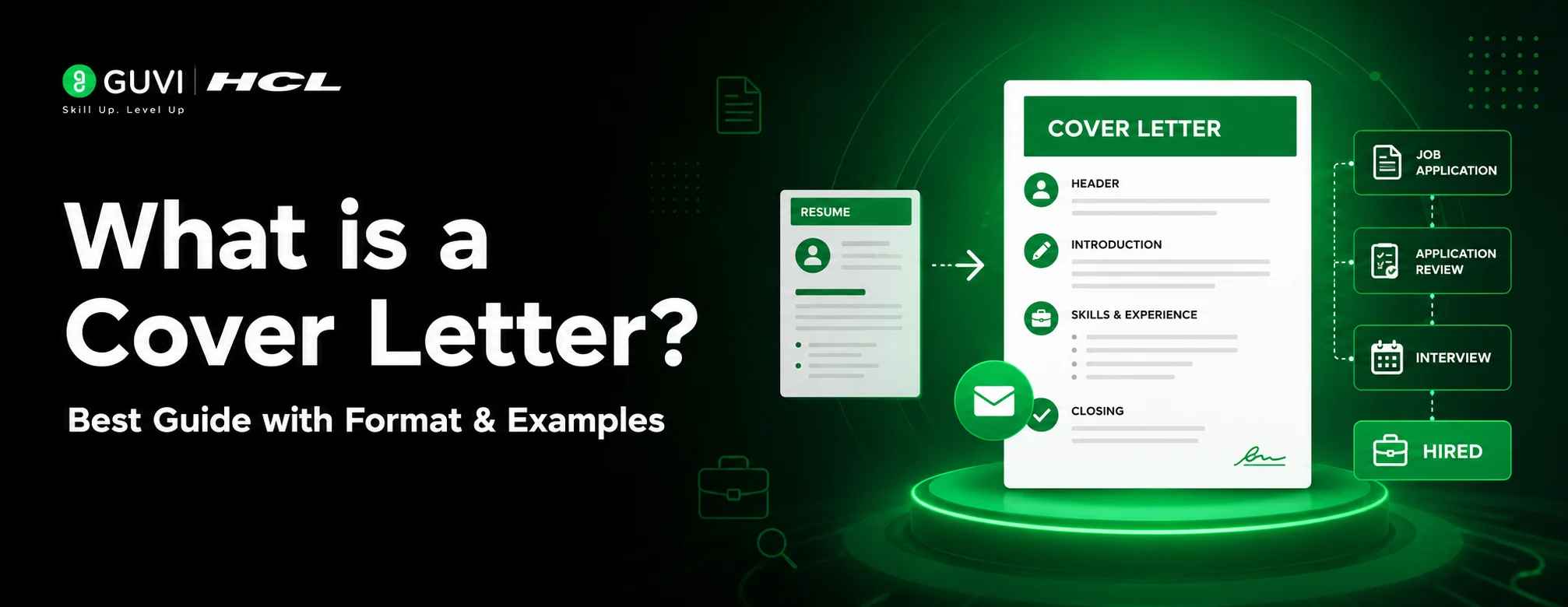
What is a Cover Letter? 2026 Best Guide with Format & Examples
Jul 07, 2026 5 Min Read 898 Views
(Last Updated)
Have you ever submitted an application and felt it did not create the right impact, even when your qualifications looked strong?
The problem may not always be your skills or qualifications. Sometimes, the receiver also wants to know why you are applying, how you fit the opportunity, and why your application should be considered over others.
Think of a cover letter as your voice before you get a direct chance to explain yourself. It answers an important question for the recruiter: “Why should this candidate be here?”
According to a Resume Genius hiring manager survey, 83% of hiring managers said they frequently read cover letters, and 94% said cover letters influence their interview decisions.
That is why sending a clear and customized cover letter can improve your chances of getting noticed.
So, let’s break down what is a cover letter is and use this simple cover letter guide to understand how to write the right one for your next application or opportunity.
Table of contents
- TL;DR Summary
- What is a Cover Letter?
- Where is a Cover Letter Used?
- What Do Companies Look for in a Cover Letter?
- Companies usually look for:
- What to Include in a Cover Letter?
- Cover Letter Template for Freshers
- Modern Cover Letter Example
- Tips for Writing a Cover Letter
- Final Thoughts
- FAQS
- What is a cover letter in simple words?
- Why is a cover letter important?
- Is a cover letter only used for job applications?
- What should be included in a cover letter?
- How long should a cover letter be?
- What is the difference between a resume and a cover letter?
- Is a cover letter necessary for freshers?
- Can I use the same cover letter for every application?
- How do I start a cover letter?
- How do I end a cover letter?
- What are the main types of cover letters?
TL;DR Summary
- A cover letter is a short one-page letter sent with a resume, application, or proposal.
- It helps answer the common question: what is a cover letter used for?
- It introduces you to the recruiter, organization, or reviewer.
- It explains why you are applying for that specific role, program, or opportunity.
- It highlights your relevant skills, experience, background, or achievements.
- It shows why you are suitable for the opportunity.
- A good cover letter should be clear, customized, professional, and focused on the value you can bring.
What is a Cover Letter?
A cover letter is a short one-page letter sent with your resume.
It gives extra details about your skills, experience, and why you are suitable for the role.
It is usually written in three to four short paragraphs.
Not every job asks for a cover letter, but sending one can show that you are serious about the opportunity and help your application stand out from other candidates.
This cover letter guide will help you understand not just what is a cover letter, but also where cover letters are used, what to include, and how to write one properly.
Where is a Cover Letter Used?
While job applications are the most common use, cover letters can also be used to introduce yourself and support any application, proposal, or formal request.
A cover letter can be used for:
- Internship applications
- College or university applications
- Scholarship applications
- Freelance project proposals
- Research position applications
Based on the purpose, cover letters can be of different types.
The infographic below shows the common types of cover letters and when to use them.
Choosing the right type helps you write a cover letter that matches your exact purpose.
Leonardo da Vinci once wrote something similar to a cover letter?
In the 1480s, he wrote to Ludovico Sforza, the ruler of Milan, explaining his skills and why he could be useful as a military engineer. It is often discussed as one of the earliest famous examples of a job application-style letter.What Do Companies Look for in a Cover Letter?
Today, companies prefer cover letters that are short, clear, and written for the specific role. A good cover letter should show that you understand the job, know a little about the organization, and can connect your skills with what they are looking for.
In simple terms, it should not repeat your resume. It should add the missing context and explain why you are a good fit.
Companies usually look for:
- Role relevance: Does the candidate clearly mention the job role and relevant skills?
- Personalization: Has the candidate customized the letter for this company?
- Clear communication: Is the cover letter easy to read and professionally written?
- Proof of skills: Does the candidate give examples from projects, internships, or work experience?
- Company understanding: Has the candidate shown basic research about the company?
- Short and focused writing: Is the letter clear without repeating the full resume?

What to Include in a Cover Letter?
A cover letter should not repeat your resume or main application completely. It should include:
- Contact details: Add your name, phone number, email address, and portfolio or LinkedIn link if needed.
- Proper greeting: Address the right person, team, or organization professionally.
- Short Introduction: Briefly mention who you are and why you are writing the cover letter.
- Relevant skills and experience: Highlight the skills, projects, work, or academic experience related to the opportunity.
- Reason for applying: Explain why you are interested in that role, program, organization, or proposal.
- How you can add value: Show how your skills, ideas, or experience can help the organization or purpose.
- Closing statement: End politely by thanking the reader and showing interest in the next step.
- Professional sign-off: Use a simple closing like “Sincerely,” “Best regards,” or “Thank you,” followed by your name.
To make this easier to understand, here is a simple visual breakdown of the basic cover letter format and where each section appears.
one job application letter reached almost 50 years late?
In 2024, Tizi Hodson, a former stuntwoman from England, received a job application letter she had sent in 1976. The letter had reportedly been stuck behind a post office drawer for decades. Even though she never got that reply on time, she went on to build an adventurous career.
Cover Letter Template for Freshers
Now that you know the basic format, the next part of this cover letter guide is a simple template you can customize for jobs, internships, scholarships, or other opportunities.
[Your Name]
[Phone Number] | [Email Address] | [City, State] | [LinkedIn/Portfolio Link]
[Date]
[Organization/Company Name]
Dear [Hiring Manager/Admissions Team/Concerned Person],
I am writing to apply for [role/program/opportunity name] at [organization/company name]. I am interested in this opportunity because [brief reason for applying].
I have experience/skills in [mention relevant skills, project, academic work, or work experience]. Through [project/internship/work/academic experience], I learned [mention relevant learning or achievement].
I believe my [skills/experience/interest] can help me contribute to [organization/company/program goal]. I would be happy to discuss my application further.
Thank you for your time and consideration.
Sincerely,
[Your Name]
Modern Cover Letter Example
Aarav Sharma
+91 98765 43210 | [email protected] | Bengaluru, India
LinkedIn: linkedin.com/in/aaravsharma
June 2, 2026
Hiring Manager
BrightTech Solutions
Dear Hiring Manager,
I am writing to apply for the Digital Marketing Associate role at BrightTech Solutions. I am interested in this opportunity because your focus on data-driven campaigns and brand growth matches my interest in SEO, content marketing, and performance analysis.
During my internship, I worked on keyword research, blog optimization, and social media content planning. I also helped improve organic traffic for selected blog pages by updating content structure, meta tags, and internal links. This experience helped me understand how content, SEO, and user intent work together to improve online visibility.
I believe my skills in SEO, content writing, Google Analytics, and campaign research can help your team create more effective marketing content. I am also eager to learn from experienced professionals and contribute to real business goals.
Thank you for considering my application. I would be happy to discuss how my skills and interests align with this role.
Sincerely,
Aarav Sharma
According to The Muse, career coach Ryan Kahn describes the main body of a cover letter as your “pitch,” where you sell yourself for the position and explain why you are qualified for it.
Tips for Writing a Cover Letter
The final part of this cover letter guide is learning how to make your letter clear, specific, and professional.
A good cover letter should be short, clear, and written for the specific opportunity. Here are some simple tips to follow:
1. Use the Right Tone
Write in a natural but professional tone. The tone can change based on where you are applying. For example, a creative company may allow a slightly friendly tone, while a legal or corporate firm may need a more formal tone.
2. Keep the Format Simple
Use a clean format with proper spacing, simple fonts, and clear paragraphs. Avoid too many colors, fancy designs, or long blocks of text.
3. Read the Requirement Carefully
Before writing, read the job description, internship details, scholarship instructions, or proposal requirements properly. This helps you understand what the organization is actually looking for.
4. Customize It for Each Application
Do not send the same cover letter everywhere. Change the content based on the role, company, college, program, or opportunity.
5. Do Not Repeat Your Resume
Your cover letter should not copy your resume line by line. Instead, use it to explain your interest, purpose, and how your skills fit the opportunity.
6. Add Proof Through Examples
Mention relevant projects, internships, achievements, work experience, academic work, or results. Real examples make your cover letter more convincing.
7. Follow the Given Instructions
Some organizations may ask you to include specific details in the cover letter. Read the instructions carefully and make sure you do not miss anything important.
8. Keep It Short and Clear
A cover letter should usually be one page. Write only what is relevant and avoid unnecessary details.
9. Proofread Before Sending
Check grammar, spelling, names, dates, and contact details before submitting. A small mistake can make your application look careless.
Final Thoughts
A cover letter is a small part of your application, but it can make a big difference when written well. It gives you space to explain your purpose, show your interest, and connect your skills with the opportunity.
Whether you are applying for a job, internship, scholarship, college program, or freelance project, your cover letter should feel clear, honest, and personal. Keep it short, avoid copying your resume, and focus on why you are the right fit.
This cover letter guide gives you the basics of what is a cover letter but the real impact comes when you customize your letter for each opportunity. A simple, specific, and well-written cover letter can make your application look more complete and professional.
FAQS
1. What is a cover letter in simple words?
A cover letter is a short formal letter sent with a resume, application, or proposal. It introduces you, explains your purpose, and shows why you are suitable for a specific role, program, or opportunity.
2. Why is a cover letter important?
A cover letter is important because it gives extra context to your application. It helps the reader understand your interest, relevant skills, and why you should be considered beyond the details mentioned in your resume or main document.
3. Is a cover letter only used for job applications?
No, cover letters are not only used for job applications. They can also be used for internships, scholarships, college applications, research positions, freelance proposals, volunteer opportunities, and other formal submissions.
4. What should be included in a cover letter?
A cover letter should include your contact details, greeting, short introduction, relevant skills or experience, reason for applying, how you can add value, closing statement, and professional sign-off.
5. How long should a cover letter be?
A cover letter should usually be one page long. It should be short, clear, and focused only on the most relevant details that support your application or request.
6. What is the difference between a resume and a cover letter?
A resume lists your education, skills, work experience, and achievements. A cover letter explains why you are applying, how your background fits the opportunity, and why the reader should consider you.
7. Is a cover letter necessary for freshers?
Yes, a cover letter is useful for freshers because it helps them explain their skills, projects, internships, academic work, and interest in the role, especially when they do not have much work experience.
8. Can I use the same cover letter for every application?
No, it is better to customize your cover letter for each application. A personalized cover letter shows that you understand the role, organization, or opportunity and are serious about applying.
9. How do I start a cover letter?
Start a cover letter with a professional greeting and a short introduction. Mention who you are, what you are applying for, and why you are interested in that specific opportunity.
10. How do I end a cover letter?
End a cover letter by thanking the reader for their time and showing interest in the next step. Use a professional sign-off such as “Sincerely,” “Best regards,” or “Thank you.”
11. What are the main types of cover letters?
The main types of cover letters are application cover letter, referral cover letter, letter of interest, and value proposition letter. Each type is used for a different purpose.
Success Stories

About the Author
Reemsha Khan
Always been a storyteller at heart. Now, I turn complex topics into simple, easy-to-understand stories through content. Hope you find it helpful.
View all posts by Reemsha Khan
Connect with me @













Did you enjoy this article?