


Electric Vehicle Articles
What is Vehicle-to-Grid Technology : How EVs Can Power the Grid
What is a Battery Management System? BMS Working, Uses & EV Role
EV Infrastructure in India: Best Components, Charging Network, Challenges & Future (2026 Guide)

Get In Touch For Details! Request More Information

Electric Vehicle Interview Questions and Answers Most Candidates Fail to Prepare For
Mar 02, 2026 7 Min Read 2122 Views
(Last Updated)
Electric vehicles are changing the automobile industry fast. More companies are making EVs every year. This means they need more people to work on these cars. If you want a job in the EV field, you need to prepare for the interview.
This guide will help you get ready. We’ll cover the most common electric vehicle interview questions. You’ll learn what answers work best. If you want to work at Tesla, Rivian, or another EV company, this guide has what you need to know.
Quick Answer
To prepare for electric vehicle interview, you should focus on core EV concepts such as batteries, charging systems, electric motors, safety, and future technologies.
And understand how lithium-ion batteries and BMS work, know the differences between Level 1, Level 2 and DC fast charging.
Table of contents
- Basic EV Concepts for Freshers and Professionals
- How Are Electric Vehicles Different from Gas Cars?
- What Problems Do Electric Vehicles Face?
- Electric Vehicle Interview Questions on EV Batteries and Battery Technology
- How Do EV Batteries Work in Electric Vehicles?
- What Is a Battery Management System?
- Electric Vehicle Interview Questions on EV Charging and Charging Infrastructure
- 5. What Are the Different EV Charging Levels (Level 1, Level 2 and DC Fast Charging)?
- What Is Vehicle-to-Grid (V2G) Technology in Electric Vehicles?
- Electric Vehicle Interview Questions on Electric Motors and Energy Systems
- How Does Regenerative Braking Work?
- Electric Vehicle Interview Questions on Future EV Technology and Innovations
- What Will Replace Today's Batteries?
- How Will EVs Affect the Power Grid?
- How to Prepare for Electric Vehicle Interview Questions and EV Job Interviews
- Final Thoughts
- Frequently asked questions
- What are the most common electric vehicle interview questions?
- What basic EV knowledge should I prepare before an interview?
- Why are electric vehicles better than traditional petrol or diesel cars?
- What are the main challenges faced by electric vehicles today?
- Why are batteries so important in electric vehicle jobs?
- How do lithium-ion batteries used in electric vehicles work?
- What is a Battery Management System (BMS) and why is it important?
- What are the different EV charging levels I should know for interviews?
- What is the difference between AC charging and DC fast charging?
- What is Vehicle-to-Grid (V2G) technology?
- How does regenerative braking improve efficiency in electric vehicles?
- What type of electric motors are commonly used in EVs?
- What future battery technologies should candidates know about?
- How will large-scale EV adoption affect the power grid?
- How can I best prepare for an electric vehicle job interview?
Basic EV Concepts for Freshers and Professionals
Interviewers start with basic questions. They want to see if you understand electric vehicles. They also want to know if you care about this field. Let’s look at the most common starter questions.
1. How Are Electric Vehicles Different from Gas Cars?
This question seems easy, but your answer matters. Don’t just say “they use electricity.” Go deeper. Talk about how electric motors work differently. They give power right away. Gas engines need to speed up first. This is why EVs can go fast so quickly.
Also mention that EVs have fewer parts. A gas car has hundreds of moving parts in the engine. An EV motor has less than 20. This means less can break. Owners spend less money fixing their cars.
Talk about energy too. EVs use energy better than gas cars. They turn 77% of electric power into movement. Gas cars only turn 12-30% of fuel into movement. The rest becomes waste heat. This makes EVs cleaner and cheaper to run.
Scenario Questions:
- A buyer is comparing an electric vehicle with a petrol car and is concerned about the higher upfront price of the EV.
- How would you explain the long-term ownership costs, maintenance savings, and real trade-offs to help them make an informed decision?
Looking to build a career in the electric vehicle industry?
The Advanced Electric Vehicle Technology Course by IIT Delhi and HCL GUVI helps you develop practical skills in batteries, BMS, powertrains, and EV charging systems.
2. What Problems Do Electric Vehicles Face?
Good candidates know both the good and bad sides. Many people worry about how far EVs can go. This is called range anxiety. Most new EVs can drive over 300 miles on one charge. But people still worry about running out of power.
Charging stations are another issue. There aren’t as many as gas stations. This is especially true in rural areas. The good news is that more charging stations open every month.
EVs also cost more to buy at first. However, they cost less to own over time. You save money on gas and repairs. Talk about these trade-offs. It shows you understand the real world, not just theory.
Scenario Questions:
A buyer is worried about range anxiety, limited charging stations, and higher upfront cost of an EV. How would you explain these challenges and help them decide if an electric vehicle is suitable for their needs?
Electric Vehicle Interview Questions on EV Batteries and Battery Technology
Batteries are the most important part of an EV. They’re also the most expensive part. Every EV interview includes battery questions. Here’s what you need to know.
3. How Do EV Batteries Work in Electric Vehicles?
Most EVs use lithium-ion batteries. These work by moving tiny particles called ions. The ions move between two sides of the battery. One side is called the anode. The other is the cathode.
When you use the battery, ions flow one way. This creates electricity that runs the motor. When you charge the battery, ions flow the other way. The battery stores energy again.
There are different types of lithium-ion batteries. Some give more power. Some last longer. Some are safer. Companies pick the type that fits their needs best. For example, Tesla uses different batteries in different cars.
Scenario Questions:
How do lithium-ion batteries store and release energy in electric vehicles, and why do manufacturers such as Tesla use different battery chemistries for different models?
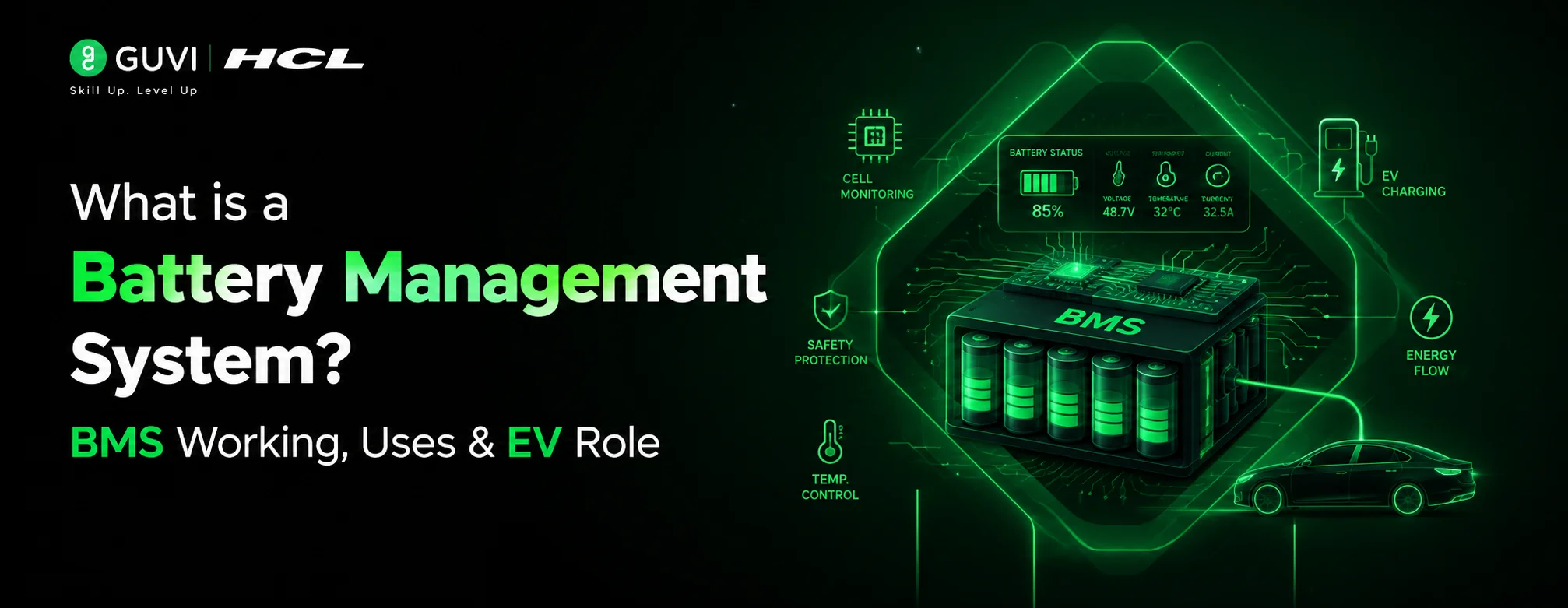
4. What Is a Battery Management System?
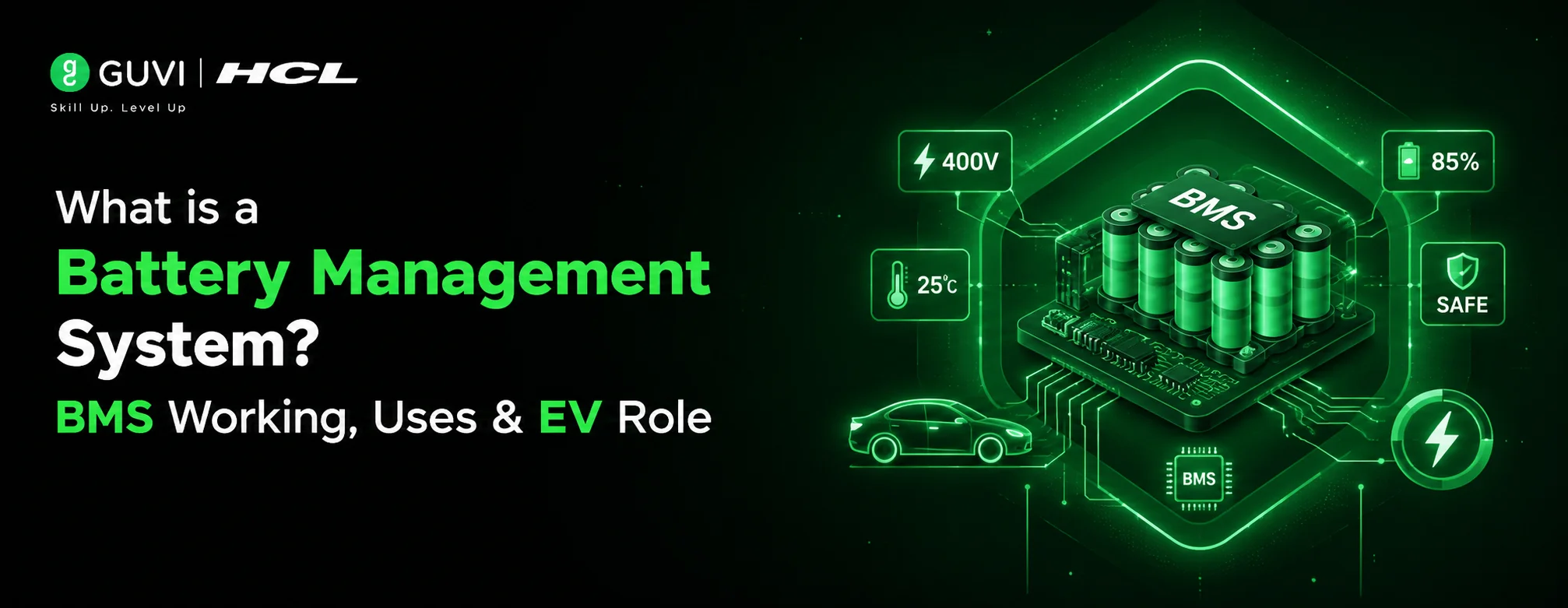
Think of this as the brain of the battery. The Battery Management System, or BMS, watches over the battery. It checks the temperature. It monitors how much power is left. It makes sure all the cells work together.
The BMS keeps the battery safe. It won’t let the battery get too hot. It won’t let it charge too much. It won’t let it drain completely. All of these things could damage the battery or cause problems.
The BMS also helps the battery last longer. It balances all the cells so they wear out evenly. Without a good BMS, EV batteries wouldn’t be safe or reliable. This is why every EV has one.
Scenario Questions:
What role does a Battery Management System (BMS) play in ensuring battery safety, performance, and long life in an electric vehicle?
Electric Vehicle Interview Questions on EV Charging and Charging Infrastructure
How you charge an EV matters to most buyers. Companies care about this a lot. Expect several questions about charging in your interview.
5. What Are the Different EV Charging Levels (Level 1, Level 2 and DC Fast Charging)?
There are three main charging levels. Each one charges at a different speed.
Level 1 uses a normal wall outlet. This is the slowest way to charge. It adds about 3-5 miles of range per hour. You can charge overnight at home. This works if you don’t drive far each day.
Level 2 uses a 240-volt outlet. This is like the outlet for a clothes dryer. It charges much faster than Level 1. You get 10-60 miles of range per hour. Most home chargers and public chargers are Level 2.
Level 3 is also called DC fast charging. These are the fastest chargers. They can add 100-200 miles in just 15-30 minutes. You find these along highways. They’re perfect for long trips.
Here’s an important detail. Level 1 and 2 use AC power. The car has a part called an onboard charger. It changes AC to DC. Level 3 chargers do this job outside the car. That’s why they can charge so much faster.
Scenario Questions:
What are the key differences between Level 1, Level 2 and DC fast charging in electric vehicles, and how does onboard AC charging differ from external DC fast charging?
6. What Is Vehicle-to-Grid (V2G) Technology in Electric Vehicles?
This is a newer idea called V2G. It lets EVs send power back to the electric grid. Normally, power only flows one way, from the grid to your car. With V2G, it can flow both ways.
Why would you want this? Imagine thousands of EVs connected to the grid. When the grid needs extra power, the EVs can help. They send some of their stored energy back. EV owners could even make money doing this.
V2G also helps with solar and wind power. These power sources aren’t always available. EVs could store extra power when the sun shines or wind blows. Then they release it when needed. This technology is still new, but it could be very important soon.
Scenario Questions:
How does Vehicle-to-Grid (V2G) technology enable electric vehicles to send power back to the grid, and how can it support renewable energy and grid stability?
Electric Vehicle Interview Questions on Electric Motors and Energy Systems
Electric motors work differently than gas engines. Understanding this difference is important for any EV job.
7. How Does Regenerative Braking Work?
This is one of the coolest EV features. When you slow down, you usually waste energy. Car brakes turn motion into heat. That heat just disappears into the air.
EVs do something smarter. When you lift your foot off the gas pedal, the motor starts working backward. It becomes a generator. The car’s movement spins the motor. The motor makes electricity. This electricity goes back into the battery.
This does two good things. First, it slows the car down. Second, it saves energy. You can get back 15-25% of the energy you used. That means you can drive farther on each charge.
There’s another benefit too. Your regular brakes don’t work as hard. They last much longer. Some EV owners use their brakes so little that the brake pads last over 100,000 miles.
Scenario Questions:
How does regenerative braking convert kinetic energy into electrical energy in an electric vehicle, and how does it improve driving range and brake life?
Electric Vehicle Interview Questions on Future EV Technology and Innovations
Interviewers want to know if you think about the future. They want people who are excited about where EVs are going. Here are questions about future technology.
8. What Will Replace Today’s Batteries?
Scientists are working on better batteries right now. The most promising type is called solid-state. These batteries don’t use liquid inside. They use solid materials instead.
Solid-state batteries could be amazing. They might hold twice as much energy. They could charge faster. They would be safer too. Many companies are trying to make them work. Toyota says they might have them ready by 2027 or 2028.

Other scientists are looking at different ideas. Some are testing batteries that use sulfur. Others are making batteries with sodium instead of lithium. Each type has pros and cons. Show you know there’s no perfect answer. Different batteries will work better for different uses.
Scenario Questions:
Which battery technologies such as solid-state, sodium-ion and lithium-sulfur are most likely to replace today’s lithium-ion batteries, and what role is Toyota expected to play in bringing solid-state batteries to market?
9. How Will EVs Affect the Power Grid?
This is a smart question that companies ask. If millions of people buy EVs, they’ll all need to charge them. That’s a lot of electricity.
The good news is that most people charge at night. At night, we use less electricity overall. Power plants that run all the time have extra power available. EVs can use this extra power.
Smart charging helps even more. Your car can wait to charge when electricity is cheapest. Some areas use more solar or wind power at certain times. Smart charging can match when your car charges with when clean energy is available. With good planning, EVs can actually help the grid work better.
Scenario Questions:
How will large-scale electric vehicle adoption affect the power grid, and how can smart charging and off-peak charging help manage the increased electricity demand?
How to Prepare for Electric Vehicle Interview Questions and EV Job Interviews
Knowing the answers is just the start. You need to prepare in other ways too. Here’s how to get ready for your EV interview
- How to Research EV Companies Before an Interview.
Each EV company is different. Tesla focuses on technology and software. Rivian makes adventure vehicles. Lucid makes luxury cars. Learn what makes your target company special. Read their recent news. Understand their goals.
- How to Stay Updated with the Electric Vehicle Industry
The EV world changes fast. New battery types come out. Charging standards change. Governments make new rules. Read EV news regularly. Follow industry websites. Join online groups where people discuss EVs.
- Why Hands-On EV Experience Helps in Interviews
If you can, test drive some electric vehicles. Visit a showroom. Go to a charging station. Real experience helps you understand what customers care about. You can talk about this experience in your interview.
- How to Show Passion for an EV Career in Interviews
EV companies want people who care about clean transportation. Talk about why EVs matter to you. Maybe you care about climate change. Maybe you love the technology. Maybe you want to be part of something new. Be honest about what excites you.
- How to Practise Electric Vehicle Interview Questions Effectively
Don’t just read about these questions. Practice answering them out loud. Time yourself. Make sure you can explain things clearly. Ask a friend to do a practice interview with you.
Final Thoughts
Electric vehicles are the future of cars. More jobs in this field open every day. Companies need engineers, technicians, salespeople, and managers. They need people who understand EVs and care about making them better.
Preparing for electric vehicle interview questions takes work. You need to learn the technology. You need to understand the industry. You need to know what challenges EVs face and how to solve them.
But this work pays off. When you walk into that interview room, you’ll feel confident. You’ll know the answers. You’ll understand the big picture. You’ll be ready to show why you’re the right person for the job.
The electric vehicle revolution is happening now. With the right preparation, you can be part of building this exciting future. Study these questions. Practice your answers. Show your passion. Your dream job in the EV industry is waiting for you.
Frequently asked questions
1. What are the most common electric vehicle interview questions?
Most EV interviews focus on basic EV concepts, battery technology, charging systems, motors, safety, and future trends. Common questions include how EVs differ from petrol cars, how batteries work, what a BMS does, how charging levels differ, and how EVs impact the power grid.
2. What basic EV knowledge should I prepare before an interview?
You should clearly understand how electric motors work, how lithium-ion batteries store energy, how charging happens, and why EVs are more energy-efficient than internal combustion vehicles. Interviewers expect you to know both advantages and limitations of electric vehicles.
3. Why are electric vehicles better than traditional petrol or diesel cars?
Electric vehicles offer instant torque, fewer moving parts, lower maintenance, higher energy efficiency, and zero tailpipe emissions. They also provide a smoother driving experience and lower running costs compared to conventional vehicles.
4. What are the main challenges faced by electric vehicles today?
The major challenges include limited charging infrastructure in some regions, higher upfront vehicle cost, battery degradation over time, and public concerns about driving range and charging speed.
5. Why are batteries so important in electric vehicle jobs?
The battery is the most expensive and critical component of an EV. It directly affects driving range, safety, vehicle performance, charging time, and overall cost. Many EV roles focus on battery design, testing, thermal management, and battery software systems.
6. How do lithium-ion batteries used in electric vehicles work?
Lithium-ion batteries store and release energy by moving lithium ions between the anode and the cathode through an electrolyte. During driving, ions move in one direction to produce electricity, and during charging they move back to store energy.
7. What is a Battery Management System (BMS) and why is it important?
A Battery Management System monitors battery temperature, voltage, current, and state of charge. It protects the battery from overcharging, overheating, and deep discharging while ensuring all cells operate safely and evenly.
8. What are the different EV charging levels I should know for interviews?
EV charging is divided into three levels:
Level 1 (slow AC charging using a wall socket),
Level 2 (faster AC charging using a 240-volt supply),
Level 3 or DC fast charging, which provides rapid charging directly to the battery.
9. What is the difference between AC charging and DC fast charging?
In AC charging, the vehicle’s onboard charger converts AC power to DC before charging the battery. In DC fast charging, this conversion happens outside the vehicle, allowing much higher charging power and significantly faster charging.
10. What is Vehicle-to-Grid (V2G) technology?
Vehicle-to-Grid technology allows electric vehicles to send stored electricity back to the power grid. It helps support grid stability, enables better use of renewable energy, and can create additional revenue opportunities for EV owners in the future.
11. How does regenerative braking improve efficiency in electric vehicles?
Regenerative braking converts the vehicle’s kinetic energy into electrical energy while slowing down. The electric motor acts as a generator and sends the recovered energy back to the battery, improving driving range and reducing brake wear.
12. What type of electric motors are commonly used in EVs?
Most EVs use permanent magnet synchronous motors or induction motors. These motors provide high efficiency, fast acceleration, and precise control, making them well suited for electric drivetrains.
13. What future battery technologies should candidates know about?
Solid-state batteries, sodium-ion batteries, and lithium-sulfur batteries are emerging technologies. These aim to improve safety, reduce cost, increase energy density, and support faster charging compared to today’s lithium-ion batteries.
14. How will large-scale EV adoption affect the power grid?
Widespread EV charging increases electricity demand, but smart charging and off-peak charging can balance the load. EVs can also support renewable energy integration and future grid services through technologies such as V2G.
15. How can I best prepare for an electric vehicle job interview?
You should research the company’s EV strategy, stay updated on industry developments, understand core EV technologies, gain hands-on experience where possible, and practise explaining technical concepts clearly. Demonstrating genuine interest in sustainable mobility and future transportation is also highly valued by employers.
Success Stories

About the Author
Salini Balasubramaniam
A curious, information-savvy writer loves to turn deep insights into authentic and engaging content that connects. With experience in writing for brands and driving audience engagement, I believe that words can make a powerful difference.
View all posts by Salini Balasubramaniam
Connect with me @







Did you enjoy this article?