Data Science Career Roadmap
A career in data science requires a combination of programming, mathematics, analytical thinking, and practical problem-solving. Employers also value professionals who can explain technical findings and connect predictions to real-world decisions.
A data science career roadmap is a structured learning plan that develops technical knowledge, practical project experience, and the ability to communicate data-driven findings.
Beginners should focus on understanding core concepts and completing meaningful projects rather than learning every available tool.
What Skills Are Required to Become a Data Scientist?
Data science combines several technical disciplines.
| Skill Area | What to Learn | Practical Application |
|---|---|---|
| Python | Variables, functions, Pandas, NumPy | Data processing |
| SQL | Joins, aggregations, window functions | Database analysis |
| Statistics | Probability, distributions, hypothesis testing | Statistical inference |
| Mathematics | Linear algebra, calculus, optimisation | Understanding algorithms |
| Machine Learning | Regression, classification, clustering | Predictive modelling |
| Data Visualisation | Matplotlib, Seaborn, dashboards | Communicating insights |
| Deep Learning | Neural networks, TensorFlow or PyTorch | Advanced modelling |
| Model Deployment | APIs, monitoring, versioning | Production applications |
Beginners do not need advanced expertise in every area before starting projects.
A strong foundation in Python, SQL, statistics, and basic machine learning provides a practical starting point.
What Is the Best Order to Learn Data Science?
A logical learning sequence follows the dependencies between concepts.
Python and SQL
Learn programming fundamentals, data structures, Pandas, and database queries.
Mathematics and Statistics
Study algebra, probability, descriptive statistics, and hypothesis testing.
Data Cleaning and EDA
Practise handling missing values, creating features, and visualising patterns.
Machine Learning
Build regression, classification, and clustering models.
End-to-End Projects
Apply the complete workflow to practical analytical problems.
Advanced Topics and Deployment
Study deep learning, APIs, monitoring, and responsible AI as required.
This sequence helps learners connect theory with practical applications.
What Are the Best Data Science Projects for Beginners?
A strong portfolio should demonstrate the ability to solve problems using data.
Rather than creating several nearly identical notebooks, develop projects that show different analytical skills.
Project 1 Sales Data Analysis
Objective: Analyse revenue, product categories, and purchasing patterns.
Skills: SQL, Pandas, descriptive statistics, visualisation.
Deliverables: Cleaned dataset, summary metrics, charts, and business findings.
Project 2 House Price Prediction
Objective: Predict property prices from numerical and categorical features.
Skills: Feature engineering, linear regression, random forest, regression metrics.
Deliverables: Predictive model, MAE or RMSE evaluation, and an explanation of major limitations.
Project 3 Customer Churn Prediction
Objective: Estimate the probability of customer cancellation.
Skills: Classification, feature scaling, model evaluation, probability interpretation.
Deliverables: Churn probabilities, precision-recall evaluation, and a proposed retention analysis.
Project 4 Customer Segmentation
Objective: Identify groups with similar purchasing behaviour.
Skills: Feature engineering, scaling, K-Means, cluster interpretation.
Deliverables: Customer segments, visualisations, and business recommendations.
Project 5 Image Classification
Objective: Classify images using a neural network.
Skills: TensorFlow or PyTorch, CNNs, validation, model evaluation.
Deliverables: Trained model, confusion matrix, and prediction examples.
How Do You Build a Strong Data Science Portfolio?
A portfolio should demonstrate the complete analytical process.
Each project should contain:
| Portfolio Component | What to Include |
|---|---|
| Problem Statement | Clearly defined objective |
| Dataset Description | Source, structure, and limitations |
| Data Cleaning | Missing-value and quality checks |
| Exploratory Analysis | Statistical findings and visualisations |
| Modelling | Algorithms and feature preparation |
| Evaluation | Appropriate metrics and validation |
| Results | Findings and practical implications |
| Documentation | Instructions for reproducing the work |
GitHub can be used to organise code, notebooks, documentation, and project dependencies.
Avoid including private datasets, credentials, or other information that should not be publicly shared.
What Should a Data Science Project README Contain?
A README explains the purpose and structure of a project.
A useful README includes:
- Project objective and problem statement
- Dataset source and required permissions
- Technologies used
- Installation and execution instructions
- Modelling approach
- Evaluation results
- Limitations and possible improvements
Clear documentation allows reviewers to understand the project without reading every line of code.
What Are the Main Career Roles in Data Science?
| Role | Primary Focus | Important Skills |
|---|---|---|
| Data Analyst | Reporting and exploratory analysis | SQL, Excel, Python, dashboards |
| Data Scientist | Statistical analysis and predictive modelling | Python, statistics, ML |
| Machine Learning Engineer | Production machine learning systems | Python, ML, APIs, MLOps |
| Data Engineer | Data pipelines and storage systems | SQL, Python, data architecture |
| Business Analyst | Requirements and business decision support | SQL, analytical thinking, communication |
| AI Engineer | AI-enabled applications and model integration | Python, ML, APIs, evaluation |
Job responsibilities vary across companies.
For example, some data scientist roles emphasise experimentation, while others focus on machine learning development or business analytics.
How Should Beginners Prepare for Data Science Interviews?
Interview preparation should cover both technical concepts and practical reasoning.
Python and SQL
Candidates should understand functions, lists, dictionaries, Pandas operations, SQL joins, aggregation, and window functions.
Statistics
Important topics include probability, conditional probability, confidence intervals, hypothesis testing, correlation, and sampling.
Machine Learning
Candidates should explain regression, classification, overfitting, regularisation, evaluation metrics, and data leakage.
Practical Case Studies
Interviewers may present business problems such as declining conversion rates or increasing customer churn.
A structured response should cover problem definition, relevant data, analysis, possible explanations, and validation.
Project Discussions
Candidates should be able to explain why particular features, algorithms, and metrics were chosen.
They should also discuss limitations, unexpected results, and improvements.
What Common Mistakes Should Beginners Avoid?
Learning Tools Without Building Projects: Technical knowledge becomes more useful through application.
Ignoring SQL: Many practical data science roles require direct database analysis.
Focusing Only on Model Accuracy: Reliable evaluation requires suitable metrics and validation methods.
Copying Projects Without Understanding Them: Candidates should understand every important step in their portfolio.
Skipping Statistics: Statistical reasoning is essential for interpreting results and uncertainty.
Overcomplicating Projects: A well-documented baseline model can demonstrate stronger analytical judgement than an unnecessarily complex system.
How Can You Continue Learning Data Science?
After completing this handbook, learners can deepen their knowledge through increasingly complex projects.
Start by analysing structured datasets using Python and SQL.
Progress to supervised learning projects with proper training, validation, and test procedures.
Explore unsupervised learning when the objective involves discovering patterns without labels.
Study deep learning and deployment when the problem requires advanced modelling or production integration.
Throughout this process, focus on reproducibility, responsible data use, and clear communication.
Data Science Tutorial for Beginners
Vaishali Ardhana

Recommended Handbooks

C++ Handbook

Python Basics Handbook

Javascript Handbook

Building a Random Joke Generator Using ReactJS

Build a Character Counter in React JS

Build Your QR Code Generator using React JS

Build a Birthday Reminder App using React JS

Building BMI Calculator Using ReactJS
Building Random Password Generator using ReactJS
Temperature Converter Project in React
Building a To-Do List App Using ReactJS
Building a Weather App Project Using ReactJS
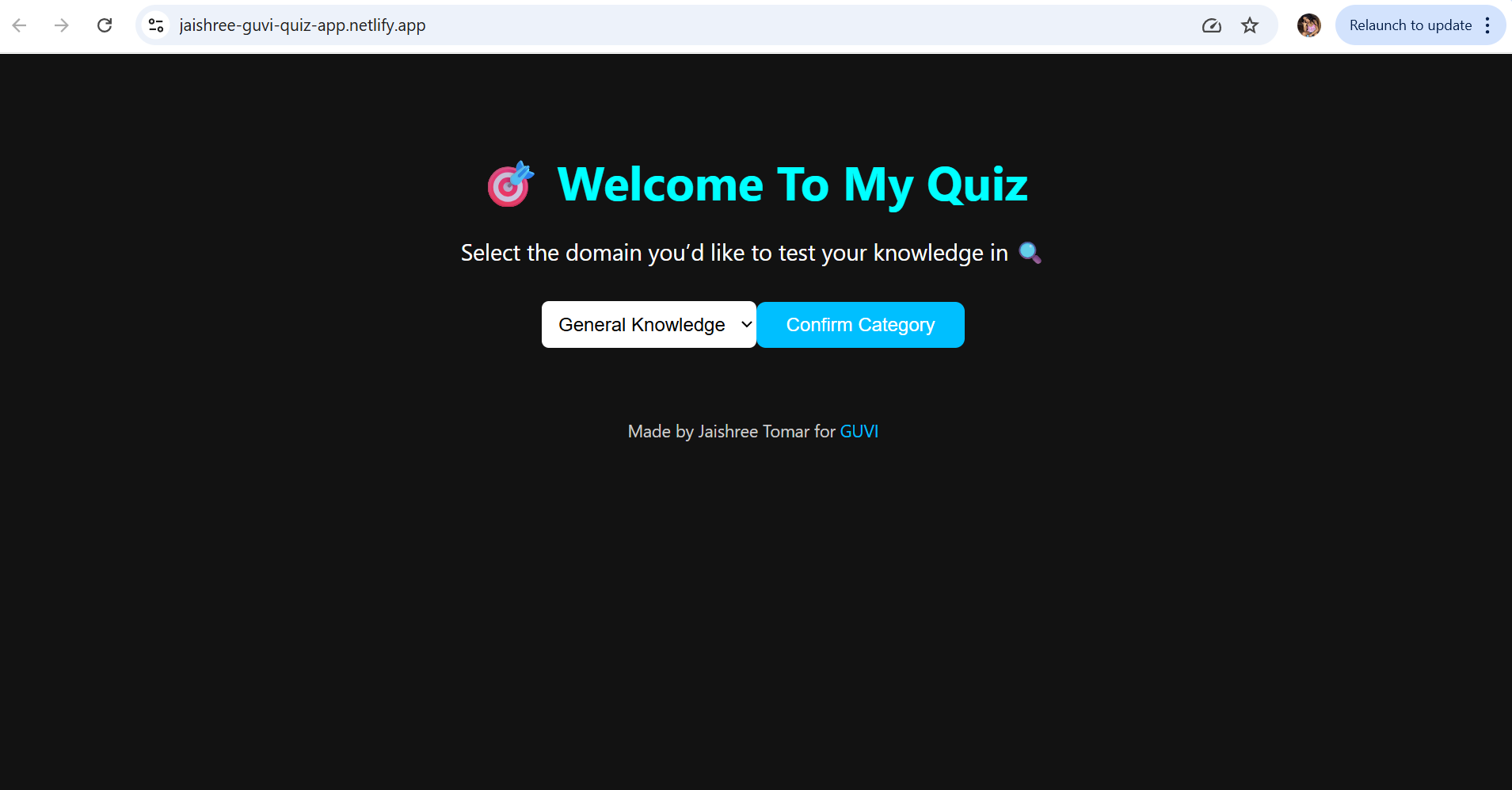
Building a Quiz App in ReactJS

Building a GenZ Carousel App in React
ReactJS Projects Handbook

Computer Networks Tutorial

Operating System Tutorial
DBMS and SQL Tutorial

Java Tutorial

C Language Tutorial

PHP Tutorial

Android Tutorial

Linux Guide Tutorial

Data Structures and Algorithms Tutorial

Computer Architecture

HTML 5 References Tutorial

Docker Tutorial

GIT (Using Github) Tutorial

Go Language Tutorial

GIT Guide

CSS Tutorial
Advanced Data Structures

Spring Framework Tutorial

Spring Boot Tutorial

Kotlin Tutorial

Apache Cordova Tutorial

Python Tutorial

SASS-SCSS Tutorial

MongoDB Tutorial

Numpy Tutorial
PL-SQL Tutorial

Python Built-in Functions Tutorial

Pandas Tutorial

Elasticsearch Tutorial

Matplotlib Tutorial

Web Scraping Tutorial

Networking with Python

Tkinter Tutorial
Java Programs Tutorial
Java Examples Tutorial

Servlet Tutorial

JSP Tutorial

Java Type Conversion Tutorial
Java 8 Tutorial

Java 9 Tutorial
Java 10 Tutorial

Java 11 Tutorial
Java Util Library Tutorial

Building a Contact Us Form in ReactJS

Building a Age Calculator App Using ReactJS

Movie Recommendation System Project Using Content-Based Filtering

Recipe Finder App using ReactJS
Sales Data Analysis Project for Beginners Using Data Science
Student Performance Analysis Project for Beginners Using Data Science

Word Counter Tool Using ReactJS

Customer Churn Prediction Project Using Classification Techniques

Basic Expense Tracker App using ReactJS

Simple Binary to Decimal Converter in React

Real-Time Unit Converter in React

House Price Prediction Using Machine Learning (XGBoost)
Weather Data Analysis and Visualization Using Python

Expandable Accordion Component using React

OTP Verification Component using React
Cricket Data Analysis Using Python

Credit Card Fraud Detection for Beginners using Data Science
Deep learning Tutorial

Software Development Life Cycle Tutorial
Stock Price Prediction for Beginners using Data Science

Apache Kafka Tutorial

Angular Tutorial

Django Tutorial

Computer Programming Tutorial

Tensorflow Tutorial

Java OOPs Concepts Tutorial

Building an Image Classification System Using CNN

News Recommendation System Using Machine Learning

Fake Review Detection System using Machine Learning

Product Feedback App Using Full Stack Development - Customer Review and Rating System
Job Portal with Applicant Tracking System Using Full Stack Development

(FalCon Store) A Modern React-Based E-Commerce App UI with Admin Dashboard

Student Management System using Python (Beginner-Friendly Project Guide)

HTML Tutorial - From Basics to Implementation
Machine Learning Tutorial

ReactJS Tutorial

Hibernate Tutorial

Data Analysis with Python Handbook
Probability and Statistics for Data Science

Artificial Intelligence Tutorial

Power BI Tutorial
R for Data Science
SQL for Data Science

Data Analytics Tutorial