


Career Articles
Product Manager Roadmap 2026: From Beginner to Industry-Ready PM
Blockchain Developer Roadmap (2026): Your Complete Step-by-Step Guide From Beginner to Job-Ready
System Design Roadmap (2026) Guide From Basics to Interviews
What Recruiters Notice First on a Technical Project Manager Resume


Get In Touch For Details! Request More Information

How to Get Into Marketing Without a Degree (What Nobody Tells You)
Jan 27, 2026 7 Min Read 562 Views
(Last Updated)
Getting into marketing without a degree is not only possible—it’s a reality for about 5% of marketing professionals who have only a high school diploma. While most articles on this topic offer vague advice like “grow your network” or “apply to many jobs”, the truth is that practical marketing skills can open doors just as effectively as formal education.
Despite what traditional career paths suggest, employers in the marketing field often prioritise candidates who demonstrate real skills over those with just academic credentials. In fact, over 80% of Climb Hire graduates find work within 12 months of completing their courses, most earning substantial salaries.
This guide will show you exactly how to get a marketing job without a degree. Furthermore, with the marketing industry projected to grow by approximately 8% from 2023 to 2033, now is the perfect time to develop the specific skills that recruiters are actually looking for. Let’s begin!
Quick Answer:
Yes, you can absolutely build a marketing career without a degree. By developing key digital marketing skills, building a portfolio, and gaining real-world experience through side projects or certifications, you can stand out to employers who value results over formal education.
Table of contents
- How to Get Into Marketing Without a Degree: Step-by-Step
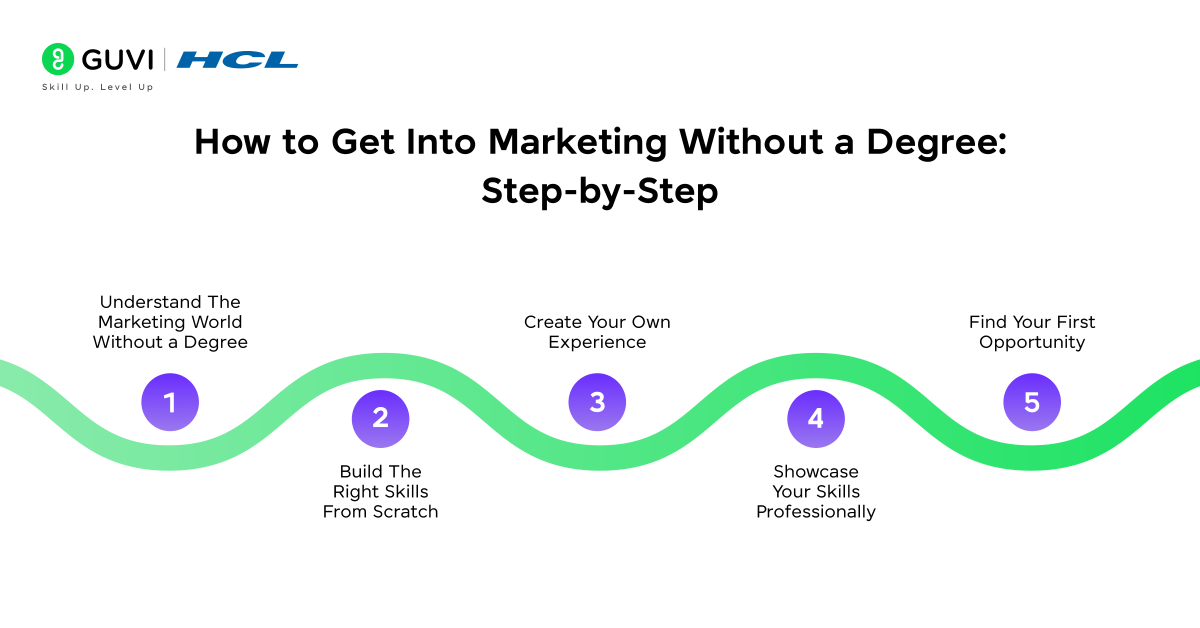
- Step 1) Understand The Marketing World Without a Degree
- Step 2) Build The Right Skills From Scratch
- Step 3) Create Your Own Experience
- Step 4) Showcase Your Skills Professionally
- Step 5) Find Your First Opportunity
- Concluding Thoughts…
- FAQs
- Q1. Is it possible to get into marketing without a degree?
- Q2. What are some essential skills for breaking into marketing?
- Q3. How can I gain marketing experience without a formal job?
- Q4. What entry-level marketing positions should I look for?
- Q5. How important are certifications for getting into marketing?
How to Get Into Marketing Without a Degree: Step-by-Step
Step 1) Understand The Marketing World Without a Degree
The marketing field has evolved to welcome professionals without traditional degrees, provided they possess the right combination of skills and determination. Breaking into marketing requires understanding what truly matters to employers and which positions offer the best entry points.
A) What employers really look for
When hiring marketing professionals, employers prioritise candidates with demonstrable skills rather than just academic credentials. According to hiring managers, the biggest skill gap in the U.S. workforce is interpersonal skills. Beyond that, several technical and workplace capabilities significantly increase your marketability:
Essential technical skills:
- Data analysis and interpretation
- Search engine optimisation (SEO)
- Social media marketing
- Graphic design abilities
- Writing and editing proficiency
Critical soft skills:
- Communication (written and verbal)
- Creativity and problem-solving
- Attention to detail
- Critical thinking
- Time management
Additionally, listening skills rank high on employers’ lists, as identifying customer needs forms a cornerstone of effective marketing. About 60% of hiring managers report that candidates often lack critical thinking and problem-solving abilities, making these skills particularly valuable differentiators.
B) Types of marketing jobs you can apply for
Several entry-level marketing positions welcome candidates without degrees. These roles provide valuable experience and serve as stepping stones to more advanced positions:
- Social Media Coordinator (Average salary: ₹3,40,000/year): Manages brand presence across social platforms
- Marketing Assistant (Average salary: ₹3,00,000/year): Supports marketing campaigns and initiatives
- SEO Specialist (Average salary: ₹4,20,000/year): Optimises website content for better search visibility
- Content Creator: Develops engaging content for various marketing channels
- Brand Representative: Represents companies at events and promotions
Other accessible roles include communications specialists, media assistants, and marketing coordinators. These positions allow you to gain practical experience while developing specialised skills that can lead to career advancement.
C) Can you get a marketing job without a degree?
The short answer is yes. Marketing is one field where real-world experience and demonstrated skills often outweigh formal education.
To position yourself effectively:
- Focus on skill development through online courses and certifications from platforms like HCL GUVI, Google Digital Garage, HubSpot Academy, and Coursera
- Create your own experience by starting side projects, volunteering for small businesses, or securing internships
- Build a portfolio showcasing your work, even if it comes from personal projects or unpaid opportunities
Many employers are becoming more open to hiring candidates with the right skills and technical knowledge, regardless of educational background. Some companies may list a degree as a requirement, yet still consider applicants who demonstrate exceptional skills and initiative.
Consequently, the path to a marketing career without a degree is challenging but absolutely achievable with the right approach and determination.

Step 2) Build The Right Skills From Scratch
Success in marketing requires practical skills that employers value. To break into this field without a degree, you must first master core skills that serve as your foundation. Let’s explore how to build these essential skills from scratch.
A) Learn SEO, social media, and email marketing
Search Engine Optimisation (SEO) forms the backbone of digital marketing. This skill involves improving website visibility in search results through relevant keywords, content optimisation, and technical improvements. Nearly 68% of online experiences begin with search engines like Google.
Social media marketing is equally crucial. With approximately 72% of the U.S. population using social media platforms, understanding how to leverage channels like Facebook, Instagram, and LinkedIn can significantly boost your marketing career. Focus on content creation, community engagement, and analytics to demonstrate your expertise.
Email marketing remains one of the most effective channels, with email users expected to reach nearly 4.5 billion by the end of 2024. Learn how to craft compelling subject lines, segment audiences, and create personalised content that drives conversions.
Other essential marketing skills to develop include:
- Content marketing and copywriting
- Basic graphic design and visual communication
- Data analysis and performance tracking
- Customer relationship management (CRM)
B) Free and paid online courses to consider
Fortunately, numerous resources can help you develop these skills:
Free Courses:
- Google Digital Garage – Fundamentals of Digital Marketing: A free, certified course covering core topics such as SEO, SEM, content strategy, and analytics — ideal for beginners looking to understand the basics of online marketing.
- HubSpot Academy: Offers free, industry-recognised certifications in content marketing, email marketing, and social media marketing. These are great resume boosters for entry-level digital marketers.
- Alison Online Marketing Courses: Free programs covering retail management, brand development, customer engagement, and social media strategies, suitable for learners seeking a broad overview.
Paid / Structured Learning Options:
- HCL GUVI’s Advanced Digital Marketing Course: This Course (in collaboration with industry experts) offers a comprehensive, job-focused curriculum with hands-on projects, mentorship, and placement support — ideal for those aiming for a professional digital marketing career.
- Google’s Digital Marketing & E-commerce Professional Certificate (Coursera): A structured, beginner-friendly program designed to make you job-ready in less than six months, with no prior degree required.
- Semrush Academy – SEO Specialisation: Paid certification courses focusing on SEO fundamentals, on-page optimisation, and technical SEO — perfect for learners who want to master search engine strategies.
C) Certifications that boost your resume
Adding the right certifications to your resume can significantly increase your employability. Consider these valuable credentials:
- HubSpot Inbound Marketing Certification is free, takes 4-5 hours to complete, and is valid for two years. It teaches content creation, SEO basics, and lead generation.
- Google Analytics Certification is free and takes about 5 hours to complete. It demonstrates your ability to collect and analyze marketing data effectively.
- Meta Certified Digital Marketing Associate showcases your proficiency in Facebook and Instagram advertising, crucial platforms for most marketing campaigns.
- For those willing to invest, Adobe Certified Professional (ACP) validates your skills in Creative Cloud apps, essential for content creation and design. It costs around USD 180 per exam and is valid for three years.
By methodically building these skills through courses and certifications, you can create a compelling marketing resume even without a traditional degree.
Step 3) Create Your Own Experience
One of the most effective ways to get into marketing without a degree is by creating your own experiences. By building practical projects, you’ll develop the real-world skills employers value most. Instead of waiting for opportunities, you can create your own marketing portfolio right now.
A) Start a blog or YouTube channel
Creating your own content shows initiative and provides tangible examples of your marketing abilities. The best marketers are skilled writers, so starting a blog demonstrates this essential skill directly. You can use free platforms like WordPress, Wix, or even LinkedIn to publish articles without any upfront costs.
When blogging, remember these key points:
- Focus on a specific niche you’re passionate about
- Use conversational, casual writing (unlike academic essays)
- Break content into short, digestible paragraphs
- Document your strategies and results for your portfolio
Alternatively, YouTube offers another powerful platform for showcasing your marketing talents. Creating a YouTube channel takes just minutes through your Google account. Your channel can focus on any topic that interests you, as the content itself is less important than demonstrating your ability to create and market it consistently.
B) Run a small ad campaign
Practical experience with paid advertising impresses potential employers, and you don’t need a massive budget to begin. Even with as little as ₹8,000 (approximately $100), you can launch meaningful campaigns.
A smart approach is to reinvest your initial budget plus 30% of revenue into subsequent campaigns. For instance, starting with ₹8,000 might generate ₹40,000 in revenue, allowing you to reinvest ₹20,000 in your next campaign. Throughout this process, track your metrics carefully to demonstrate analytical skills.
Important tips for small campaigns:
- Include prices in your ads to filter for financially qualified prospects
- Create multiple ad versions (at least 3) to test which performs best
- Document your strategies, spending, and results for your portfolio
C) Volunteer for nonprofits or friends’ businesses
Nonprofits constantly need marketing assistance but often lack the resources to hire professionals. Organisations like Catchafire connect volunteers with nonprofits seeking marketing help, allowing you to contribute remotely.
Nonprofits typically need support with:
- Content creation for case studies, brochures, and emails
- Social media marketing strategies and content calendars
- Search engine marketing (many nonprofits qualify for ₹8,00,000 Google Ad Grants)
- Event marketing for fundraisers and community activities
Beyond formal volunteering, offer your services to friends with small businesses or local community organisations. These experiences provide real-world projects for your portfolio while helping you build relationships with potential references.
Above all, remember that even “failed” projects look better on a resume than no projects at all. Starting your own marketing experiments shows initiative, resourcefulness, and practical knowledge – precisely what employers seek when hiring marketers without degrees.
Step 4) Showcase Your Skills Professionally
Your marketing skills deserve a professional showcase that makes employers take notice—even without a formal degree. In the competitive marketing field, how you present your abilities can matter more than traditional credentials.
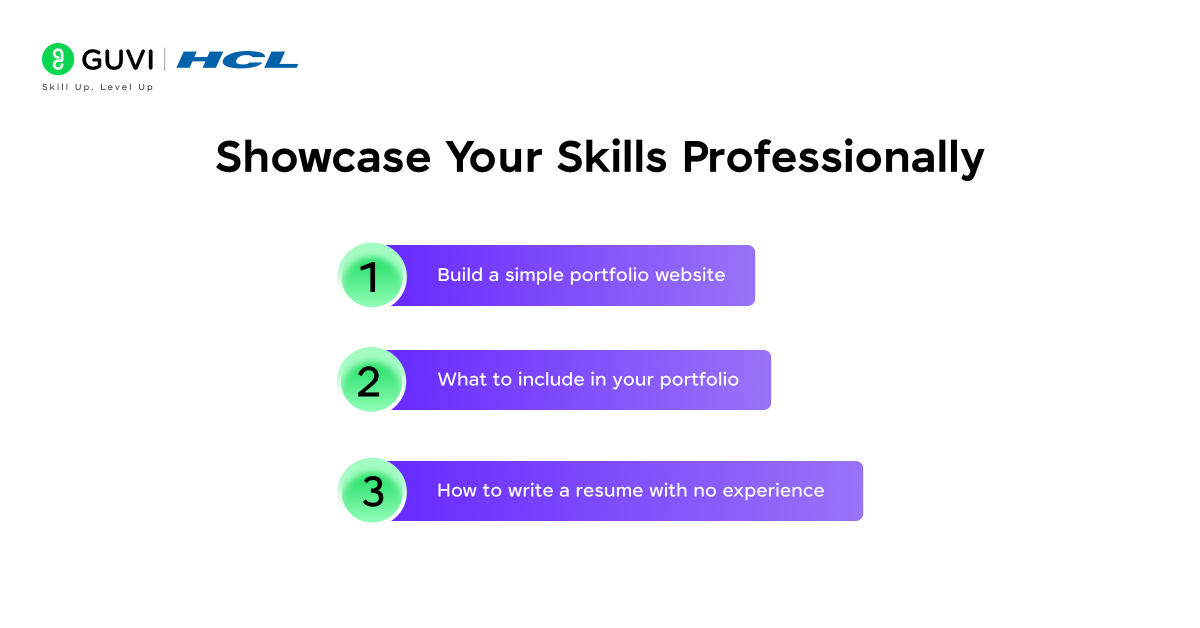
A) Build a simple portfolio website
Creating a portfolio website has never been easier with today’s user-friendly platforms. Choose from options like:
- Squarespace or Wix with ready-made templates
- WordPress for more customisation options
- Google Sites for a simple, free solution
Your portfolio website itself becomes a marketing sample, demonstrating your digital savvy and attention to detail. Keep the design clean and organise content logically to create a positive user experience. Moreover, once completed, share your portfolio link in your resume, email signature, and social media profiles for maximum visibility.
B) What to include in your portfolio
A comprehensive marketing portfolio should feature:
Essential elements:
- Professional headshot (formal or creative, depending on your target industry)
- Short biography highlighting your credentials and marketing journey
- Personal branding statement (1-2 sentences defining your unique value)
- 2-3 work samples (even from volunteer projects or personal campaigns)
- Digital resume or CV
- Testimonials from previous clients or colleagues
For beginners, focus on quality over quantity. If you’ve completed any marketing projects, even volunteer opportunities, request testimonials to build credibility. Subsequently, customise your portfolio for specific job applications, emphasising relevant skills and projects.
C) How to write a resume with no experience
When creating a resume without prior experience:
- Choose a functional format that emphasises skills over work history
- Write a compelling objective statement explaining your value and career goals
- Highlight relevant skills like SEO, social media management, or data reporting
- Include education, certifications, and Coursera courses
- Feature projects, internships, and volunteer work as your “experience”
Start each experience bullet point with a unique action verb and include measurable results whenever possible. For instance, “Increased social media engagement by 25% through strategic content planning” sounds much better than simply listing responsibilities.
D) Using LinkedIn to your advantage
LinkedIn serves as your professional calling card in the digital world:
- Customise your public profile URL for a cleaner, more professional appearance
- Add an on-brand background photo that reinforces what you do
- Optimise your headline and summary with relevant keywords
- Utilise the “Open for Business” feature if you offer marketing services
- Engage regularly with industry content to build visibility
Afterwards, connect strategically with professionals in your desired field, always including personalised notes with connection requests. In essence, your LinkedIn profile should pass the “what do they do and who do they help?” test in under five seconds.
Here are a few quick insights that reveal just how diverse and accessible the marketing world has become—no degree required:
The word “marketing” was first used in academic literature in 1902 at the University of Michigan, making it one of the earliest recognized business disciplines.
Over 60% of marketers learned their core skills through online courses, workshops, or self-study rather than traditional college programs.
Many top global CMOs (Chief Marketing Officers) — Many including at major brands like Coca-Cola and Unilever — began their careers without formal marketing degrees.
These facts highlight how marketing has evolved into a skill-driven field where creativity, adaptability, and practical experience matter more than traditional credentials.
Step 5) Find Your First Opportunity
Now that your skills and portfolio are in place, it’s time to land your first marketing opportunity. The job hunt can seem daunting, yet there are numerous pathways to break into marketing without a degree.
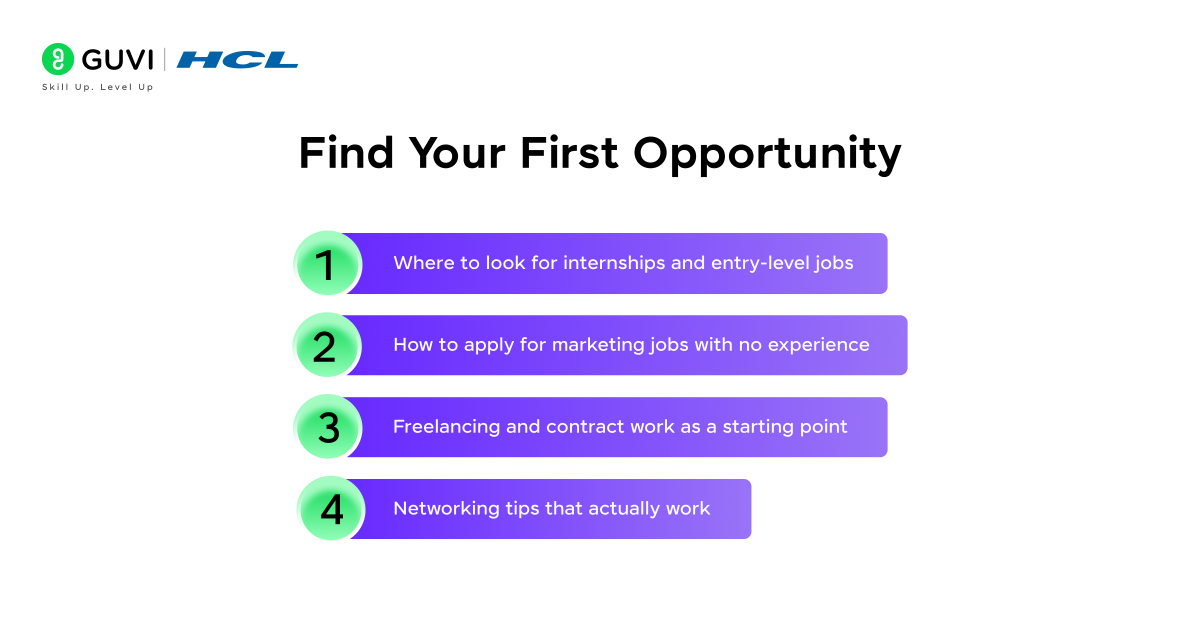
A) Where to look for internships and entry-level jobs
Finding entry-level marketing positions becomes easier when you know where to search:
Top job platforms:
- LinkedIn – Beyond job listings, it provides powerful networking opportunities
- Indeed – The largest job search engine with numerous marketing positions
- Glassdoor – Offers company insights alongside job postings
- FlexJobs – Specialises in remote marketing opportunities
For degree-free opportunities, explore company career pages directly. Many marketing firms list positions on their websites before publishing elsewhere. Another option is completing marketing apprenticeships through platforms like Acadium, where approximately 50% of mentors hire their apprentices for paid positions.
B) How to apply for marketing jobs with no experience
Initially, keep your expectations realistic—entry-level jobs are starting points for building your career. When applying:
- Tailor your application to each position using keywords from the job description
- Follow application instructions meticulously to pass initial screening
- Highlight side projects on your resume, even if they weren’t successful
- Use a simple resume design that works well with applicant tracking systems
Consider starting with internships—both paid and unpaid. Though working without pay may seem counterintuitive, the experience can be invaluable for future opportunities.
C) Freelancing and contract work as a starting point
Freelancing provides practical experience while building your portfolio. To find freelance opportunities:
- Search platforms like Upwork, Fiverr, or People Per Hour
- Reach out to local nonprofits offering your services
- Tap into your existing network for potential clients
For remote freelance work, use sites like WeWorkRemotely or FlexJobs.
D) Networking tips that actually work
Effective networking remains crucial for finding hidden opportunities:
- Research before connecting – Understand a person’s work before reaching out
- Start with small, specific asks – Request simple 30-second responses rather than demanding time commitments
- Create mutual value – Frame conversations as exchanges rather than one-sided requests
- Follow up thoughtfully – Express gratitude and keep connections updated on your progress
Ultimately, your persistence and willingness to start small often leads to bigger opportunities in marketing.
Concluding Thoughts…
Breaking into the marketing industry without a degree certainly requires determination and strategy, but it remains entirely possible with the right approach. Throughout this guide, you’ve learned how to bypass traditional educational requirements by developing practical skills that employers actually value.
The marketing world rewards results above all else. Though challenging at first, your degree-free marketing career can progress rapidly once you demonstrate real value. After all, marketing is ultimately about delivering measurable outcomes – precisely what employers seek, regardless of your educational background.
FAQs
Q1. Is it possible to get into marketing without a degree?
Yes, it’s absolutely possible to enter the marketing field without a degree. Many successful marketers have built their careers through practical experience, self-learning, and demonstrating results. Focus on developing relevant skills, creating a portfolio of work, and gaining hands-on experience through internships or freelance projects.
Q2. What are some essential skills for breaking into marketing?
Key skills for aspiring marketers include digital marketing fundamentals, social media management, content creation, data analysis, and basic design skills. Additionally, soft skills like communication, creativity, and adaptability are highly valued. Consider taking online courses or certifications to develop these skills.
Q3. How can I gain marketing experience without a formal job?
You can gain valuable marketing experience by starting your own projects, such as creating a blog or YouTube channel, running small ad campaigns, or volunteering for local businesses or nonprofits. These initiatives will help you build a portfolio and demonstrate your abilities to potential employers.
Q4. What entry-level marketing positions should I look for?
Entry-level positions to consider include social media coordinator, marketing assistant, content creator, or digital marketing specialist. These roles often provide opportunities to learn various aspects of marketing and can serve as stepping stones to more advanced positions.
Q5. How important are certifications for getting into marketing?
While not as crucial as practical experience, certifications can be beneficial, especially when starting. Popular options include Google Analytics, HubSpot Inbound Marketing, and social media platform certifications. These can demonstrate your commitment to learning and provide a foundation of knowledge in specific areas of marketing.
Success Stories

About the Author
Jaishree Tomar
A recent CS Graduate with a quirk for writing and coding, a Data Science and Machine Learning enthusiast trying to pave my own way with tech. I have worked as a freelancer with a UK-based Digital Marketing firm writing various tech blogs, articles, and code snippets. Now, working as a Technical Writer at GUVI writing to my heart’s content!
View all posts by Jaishree Tomar
Connect with me @














Did you enjoy this article?