


Interview Articles
Electric Vehicle Interview Questions and Answers Most Candidates Fail to Prepare For
What to Expect in a Flipkart Interview Experience (2026)
Apple Interview Experience for Software Developers: What to Expect


Get In Touch For Details! Request More Information
How to Answer Unexpected Interview Questions (What Recruiters Won’t Tell You)
Feb 11, 2026 5 Min Read 587 Views
(Last Updated)
Unexpected interview questions can make or break your chances of landing that dream job. In fact, research shows that 90% of top performers at work have high emotional intelligence (EQ), which is exactly what recruiters are testing when they throw curveball questions your way. These surprise questions are increasingly common, with 81% of experts saying thorough preparation is key.
You might wonder how to handle these challenging scenarios effectively. Taking a brief pause before answering demonstrates thoughtful consideration rather than rushing into a response. Furthermore, structured approaches like the STAR method have proven remarkably effective, resulting in a 20% boost in client satisfaction and a 30% increase in revenue in real workplace situations.
Throughout this guide, you’ll discover practical techniques for preparing, responding confidently, and turning these challenging moments into opportunities to showcase your problem-solving skills and grace under pressure. Let’s begin!
Quick Answer:
Unexpected interview questions are designed to reveal how you think under pressure, how quickly you adapt, and whether your natural communication style aligns with the company’s culture—far more than traditional, rehearsed questions ever could.
Table of contents
- Why Unexpected Interview Questions Are Asked
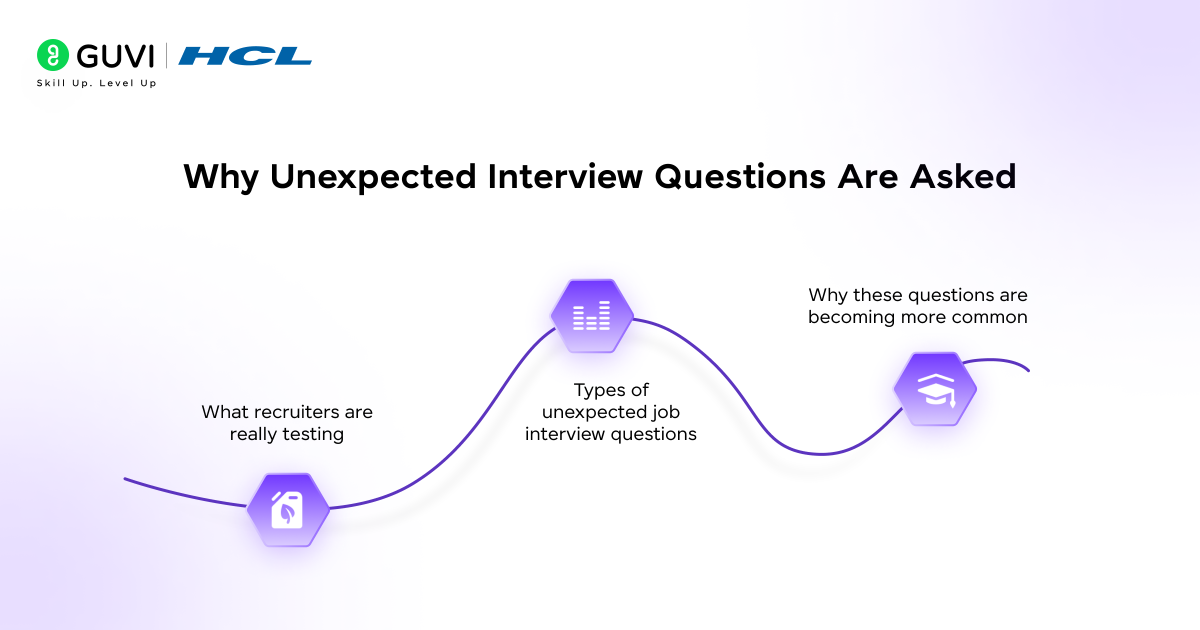
- 1) What recruiters are really testing
- 2) Types of unexpected job interview questions
- 3) Why are these questions becoming more common
- How to Prepare for Unexpected Interview Questions
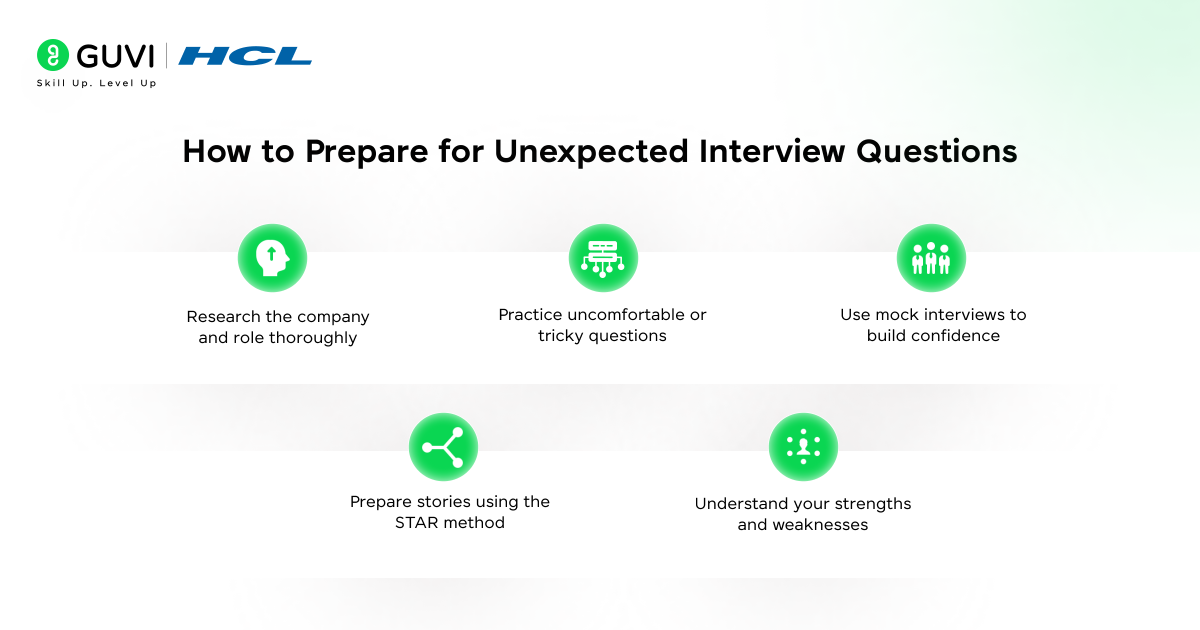
- 1) Research the company and role thoroughly
- 2) Practice uncomfortable or tricky questions
- 3) Use mock interviews to build confidence
- 4) Prepare stories using the STAR method
- 5) Understand your strengths and weaknesses
- How to Answer Unexpected Interview Questions Effectively
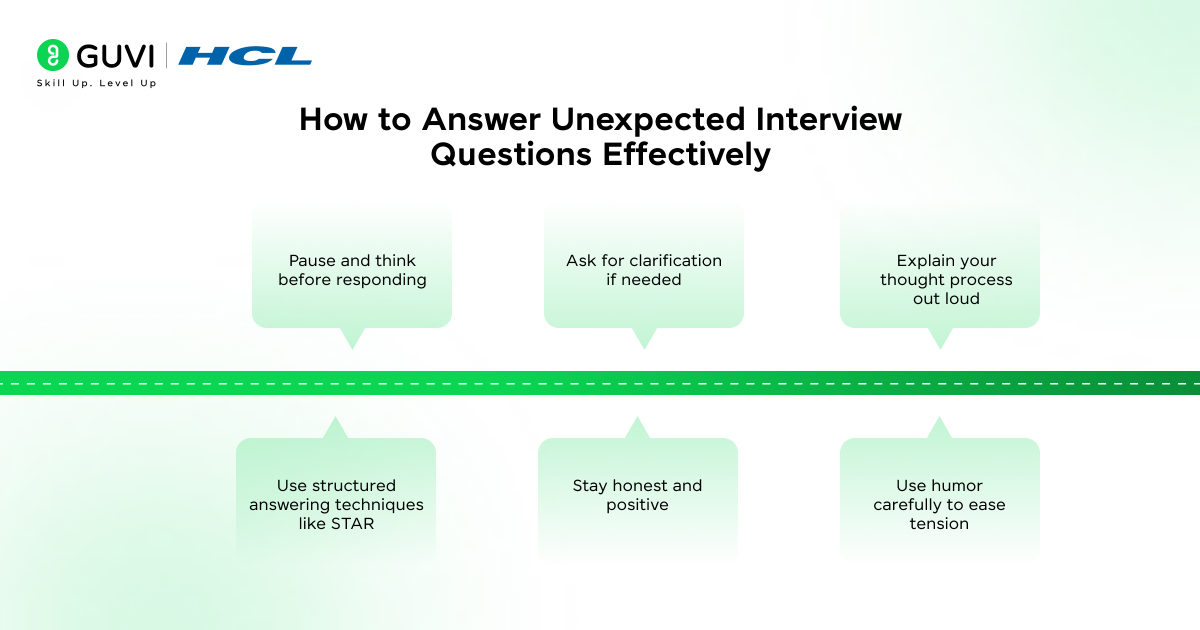
- 1) Pause and think before responding
- 2) Ask for clarification if needed
- 3) Explain your thought process out loud
- 4) Use structured answering techniques like STAR
- 5) Stay honest and positive
- 6) Use humor carefully to ease tension
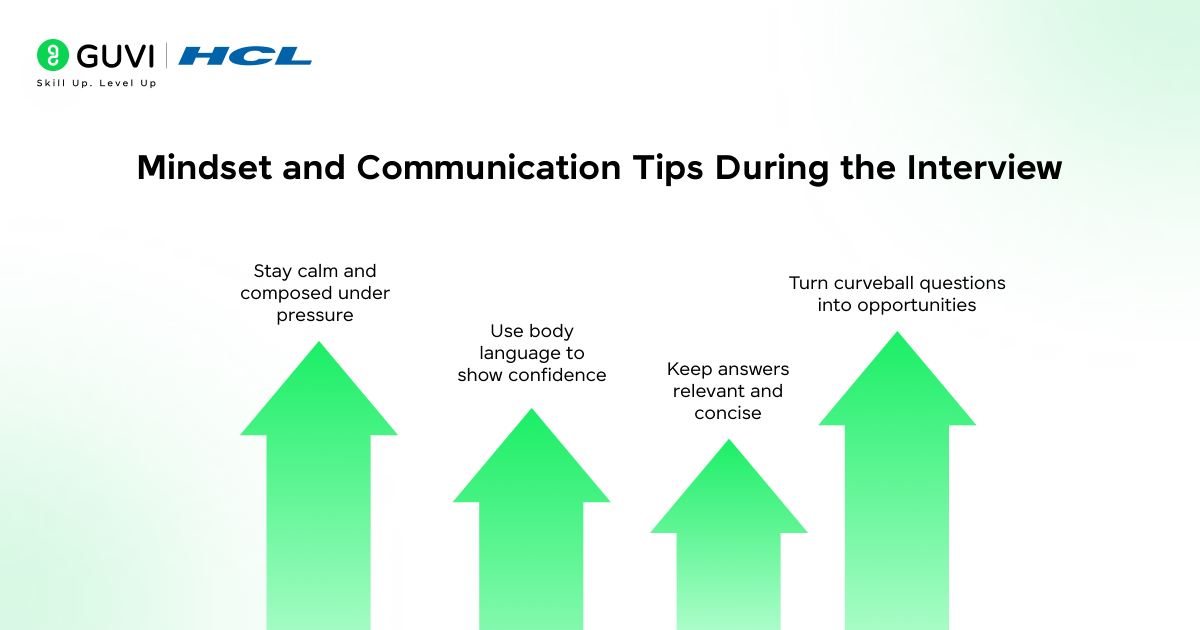
- Mindset and Communication Tips During the Interview
- 1) Stay calm and composed under pressure
- 2) Use body language to show confidence
- 3) Keep answers relevant and concise
- 4) Turn curveball questions into opportunities
- Concluding Thoughts…
- FAQs
- Q1. How can I prepare for unexpected interview questions?
- Q2. What are recruiters really looking for with unexpected questions?
- Q3. Is it okay to take a pause before answering a difficult question?
- Q4. How can I use body language to appear confident during an interview?
- Q5. What should I do if I don't understand an interview question?
Why Unexpected Interview Questions Are Asked
Ever been asked what animal you’d be during an interview? Behind these seemingly odd questions lies a deliberate strategy. Recruiters aren’t just trying to confuse you—they’re attempting to see beyond your rehearsed responses.
1) What recruiters are really testing
Beneath the surface of unexpected interview questions, recruiters are evaluating several crucial qualities. Primarily, they want to observe how you handle pressure and think on your feet. According to research, 90% of top performers at work have high emotional intelligence (EQ), making this a key trait recruiters seek to uncover.
Essentially, these questions aim to:
- Test your critical and analytical thinking abilities
- Assess your communication skills under pressure
- Evaluate your cultural fit with the company
- Observe your authentic personality traits
- Gauge your problem-solving approach
As Bob Brennan, former CEO of Iron Mountain, explains: “I want to know what makes you go”. Unusual questions help recruiters see beyond your polished exterior to determine if you’ll truly thrive in their environment.
2) Types of unexpected job interview questions
Unexpected interview questions generally fall into distinct categories, each designed to test different aspects of your character and abilities:
- Personal insight questions: “If you were a popsicle flavor, what would you be?” These reveal self-perception and values.
- Hypothetical scenarios: “What three items would you bring to a deserted island?” These show decision-making and adaptability.
- Brain teasers: “How many tennis balls could fit in a limousine?” These evaluate analytical thinking and problem-solving methodology.
- Communication challenges: “Describe the color green to someone who can’t see.” These test your ability to explain complex concepts clearly.
3) Why are these questions becoming more common
Traditional interview questions often elicit rehearsed responses, whereas unexpected questions provide deeper insights. Companies increasingly value qualities like adaptability and creative thinking that standard questions fail to reveal.
Additionally, Laszlo Bock, former Senior VP of People Operations at Google, acknowledges that while “quirky questions don’t indicate anything” specific about job performance, they do provide valuable context about a candidate’s personality and thinking style.
Companies like Airbnb and Amazon regularly employ unusual questions because they effectively demonstrate how candidates:
- React to unexpected situations (similar to workplace surprises)
- Showcase their authentic selves rather than rehearsed answers
- Demonstrate cultural alignment with the organization
- Display their unique communication style and humor
Ultimately, these questions aren’t random—they’re carefully chosen to understand how you think and what makes you unique as a potential team member.
Even the most unexpected interview questions have a purpose rooted in behavioral science. Here are a few insights you might find interesting:
The First Job Interview Happened in 1921: Thomas Edison conducted the earliest recorded structured interviews, asking candidates over 100 questions—many unrelated to the job—to test their reasoning and composure.
Tricky Questions Aren’t Random: Modern behavioral research shows that unusual questions reveal far more about a candidate’s adaptability and emotional intelligence than traditional résumé-based questions ever could.
These facts show how interviews have evolved from rigid tests to dynamic conversations that uncover how you think, react, and communicate under pressure.

How to Prepare for Unexpected Interview Questions
Preparing thoroughly is your best defense against unexpected interview questions. Top recruiters confirm that job candidates who invest time in preparation consistently outperform those who rely solely on their natural abilities.
1) Research the company and role thoroughly
- Start your preparation by conducting comprehensive research on the prospective employer. Visit their website to learn about their mission, values, and recent accomplishments. This foundational knowledge enables you to align your responses with the company’s priorities. Moreover, check the “Investor Relations” section on larger company websites for insights into business challenges and future directions.
- For startups, platforms like Crunchbase can provide valuable information about funding rounds and recent developments. Understanding company culture through social media and employee reviews helps predict what matters most to your interviewers.
2) Practice uncomfortable or tricky questions
Certain challenging questions appear frequently across interviews. Prepare thoughtful responses to questions like:
- “What is your biggest weakness?”
- “Tell me about a time you failed.”
- “Why should we hire you over other candidates?”
As you practice, focus on speaking clearly and maintaining composure. If a question catches you off-guard during the actual interview, remember it’s perfectly acceptable to pause briefly and collect your thoughts.
3) Use mock interviews to build confidence
- Mock interviews are among the most effective preparation methods. Practice with friends, family members, or professional mentors to simulate real interview conditions. These rehearsals help you become comfortable with unexpected questions and develop your ability to think quickly under pressure.
- Record your practice sessions to identify habits like excessive hand gestures or filler words that might detract from your responses.
4) Prepare stories using the STAR method
The STAR method provides an excellent framework for structuring your responses to behavioral questions. This approach helps you organize your answers into four components:
- Situation: Describe the context (20%)
- Task: Explain your responsibility (10%)
- Action: Detail your specific actions (60%)
- Result: Share the positive outcome (10%)
5) Understand your strengths and weaknesses
- Self-awareness regarding your strengths and weaknesses is crucial for interview success.
- Employers use these questions to evaluate your self-knowledge and improvement efforts.
- When discussing weaknesses, pair your acknowledgment with actions you’ve taken to improve, demonstrating both honesty and growth mindset.
How to Answer Unexpected Interview Questions Effectively
Facing an unexpected interview question can feel like stepping into quicksand. However, with the right techniques, you can transform these moments into opportunities to showcase your skills.
1) Pause and think before responding
- Taking a brief pause before answering demonstrates thoughtfulness rather than impulsiveness. This short break gives you precious seconds to gather your thoughts and formulate a better response.
- In fact, a strategic pause of 10-15 seconds is perfectly acceptable for challenging questions. As one expert notes, “I can produce a C answer immediately, a B answer after a short pause, and an A answer with more time.”
2) Ask for clarification if needed
Don’t hesitate to request clarification when faced with vague questions. Simply say, “I’d love to answer, but could you elaborate on what aspect you’d like me to focus on?” This approach shows attention to detail and ensures you’re addressing what the interviewer actually wants to know.
3) Explain your thought process out loud
Articulating your reasoning demonstrates your analytical abilities. Employers value candidates who can clearly outline their approach and engage in collaborative conversation. When sharing your thought process, adapt your level of detail based on who you’re speaking with—technical details for experts, broader strategies for others.
4) Use structured answering techniques like STAR
The STAR method provides a clear framework:
- Situation (20%): Set the context briefly
- Task (10%): Explain your responsibility
- Action (60%): Detail your specific steps
- Result (10%): Share positive outcomes
5) Stay honest and positive
Authenticity builds trust in interviews. Nevertheless, frame negative experiences positively by focusing on lessons learned and professional growth. This shows resilience and problem-solving skills without dwelling on failures.
6) Use humor carefully to ease tension
A touch of appropriate humor can build connections and ease interview tension. Yet, read the room carefully—humor is subjective and should never target sensitive topics. As research shows, even humor that isn’t laugh-out-loud funny can still positively impact perceptions of your confidence if appropriate.
Mindset and Communication Tips During the Interview
Your mental approach and communication style can determine success with unexpected interview questions. The right mindset transforms challenging moments into showcases for your abilities.
1) Stay calm and composed under pressure
When facing difficult questions, take a deep breath to activate your parasympathetic nervous system, naturally lowering your heart rate. Remember that interviewers aren’t trying to trip you up—they want to see how you handle pressure. If you need time, simply say, “That’s a great question. Let me take a moment to think about it”.
2) Use body language to show confidence
Body language accounts for 55% of what others perceive. Consider these confidence signals:
- Maintain steady eye contact to demonstrate trustworthiness
- Sit up straight with your shoulders back to project attentiveness
- Keep your hands visible on the table, available for natural gesturing
- Offer a genuine smile to create a positive environment
3) Keep answers relevant and concise
Employers hire based on feelings formed during your responses. Consequently, structure your answers using techniques like STAR to stay focused. Clear, direct responses show you can organize thoughts effectively and respect the interviewer’s time.
4) Turn curveball questions into opportunities
Unexpected questions provide chances to demonstrate your problem-solving abilities. Indeed, the only thing you truly control in any situation is yourself. Reframe challenges by asking yourself, “What opportunities could this present?”. This positive mindset showcases resilience—an essential trait employers value.
HCL GUVI’s AI Software Development Course gives you industry-ready skills in Gen-AI, full-stack development, and system design through 300+ hours of training and real projects. Its mock interviews and placement prep help you stay confident even when recruiters throw unexpected questions. A solid way to boost both your technical depth and interview performance.
Concluding Thoughts…
Unexpected interview questions ultimately serve as windows into your authentic self. Therefore, viewing them as opportunities rather than obstacles can transform your interview experience. You demonstrate valuable problem-solving abilities when you thoughtfully pause before answering and structure your responses using methods like STAR.
Each unexpected question offers a chance to differentiate yourself from candidates who might have memorized standard responses. After all, companies seek candidates who can think on their feet and adapt to unpredictable workplace situations.
Armed with these strategies, you can now approach your next interview with greater confidence. The next time an interviewer asks what type of tree you would be or how you would solve an unusual problem, you will be ready to showcase your unique qualities while maintaining your composure. Good Luck!
FAQs
Q1. How can I prepare for unexpected interview questions?
To prepare for unexpected questions, thoroughly research the company, practice answering tricky questions, participate in mock interviews, and prepare stories using the STAR method. Also, understand your strengths and weaknesses to respond confidently.
Q2. What are recruiters really looking for with unexpected questions?
Recruiters use unexpected questions to assess your ability to think on your feet, handle pressure, and showcase your authentic personality. They’re evaluating your problem-solving skills, communication abilities, and cultural fit with the company.
Q3. Is it okay to take a pause before answering a difficult question?
Yes, it’s perfectly acceptable to take a brief pause before answering a challenging question. This demonstrates thoughtfulness and allows you to gather your thoughts, potentially leading to a more articulate and well-structured response.
Q4. How can I use body language to appear confident during an interview?
To appear confident, maintain steady eye contact, sit up straight with shoulders back, keep your hands visible, and offer a genuine smile. These non-verbal cues can significantly impact the interviewer’s perception of you.
Q5. What should I do if I don’t understand an interview question?
If you don’t fully understand a question, it’s best to ask for clarification. You can say something like, “I’d love to answer, but could you elaborate on what aspect you’d like me to focus on?” This shows attention to detail and ensures you address the interviewer’s intended query.
Success Stories

About the Author
Jaishree Tomar
A recent CS Graduate with a quirk for writing and coding, a Data Science and Machine Learning enthusiast trying to pave my own way with tech. I have worked as a freelancer with a UK-based Digital Marketing firm writing various tech blogs, articles, and code snippets. Now, working as a Technical Writer at GUVI writing to my heart’s content!
View all posts by Jaishree Tomar
Connect with me @













Did you enjoy this article?