


Artificial Intelligence and Machine Learning Articles
Finance Manager to Data Analytics: Career Growth, Salary and Seniority
How to Evaluate LLM Outputs in Production Deployments
AI/ML Skills Gap 2026: Why Companies Can't Find Job-Ready Talent
20 AI/ML Interview Questions Recruiters Can Use Without a Tech Background - Best Guide


Get In Touch For Details! Request More Information

How AI Solves Everyday Problems Using Constraint Satisfaction (CSP)
Jun 12, 2026 6 Min Read 991 Views
(Last Updated)
“You can’t put the Chemistry practical and the Maths exam on the same day. The science lab is already booked. Oh, and half the class has sports training Thursday morning…”
Sound familiar? Whether it’s your school timetable, figuring out who sits where at a family function, or even solving a Sudoku puzzle on a boring afternoon, you’ve already been doing something surprisingly close to what AI calls a Constraint Satisfaction Problem, or CSP.
The funny thing is, humans solve these kinds of problems instinctively. We juggle rules, say “no, that won’t work,” backtrack, and try again. AI does the exact same thing — just a whole lot faster and more systematically.
In this blog, we will break down exactly how that works.
TL;DR Summary
- Helps you understand how a Constraint Satisfaction Problem (CSP) works in simple terms, using everyday examples like timetables and Sudoku.
- Explains important solving methods such as backtracking, constraint propagation, and heuristics, making the concepts feel practical and easy to follow.
- Shows a real Python backtracking code example with a clear explanation, making it easier to connect theory with actual implementation.
- Covers real-world applications and limitations of CSP, helping you see where it is used and where challenges can happen.
Constraint Satisfaction Problems became a major AI research area after Alan Mackworth introduced the famous AC-3 algorithm for arc consistency in 1977.
Table of contents
- What Exactly Is a Constraint Satisfaction Problem
- Component 1: Variables
- Component 2: Domains
- Component 3: Constraints
- Refer to the Example — College Event Scheduling
- How Does AI Actually Solve the Problems?
- Backtracking — Trial and Error, but Smart
- Constraint Propagation — Don't Even Try Dead Ends
- Heuristics — Working Smarter, Not Harder
- Real Code Example
- Explanation:
- Real-world Applications of CSP
- Healthcare Scheduling
- Traffic Signal Systems
- Airline Scheduling
- Robotics Planning
- Limitations of CSP
- High Time Complexity
- Difficult for Large Problems
- Depends on Problem Setup
- Not Good for Best Solution
- Sometimes No Solution Exists
- Conclusion
- FAQs
- Why doesn’t AI check every possible option at once?
- How is CSP different from normal AI problem-solving?
- Why is backtracking still efficient if it goes backwards?
- What happens if two constraints clash?
- Why does AI solve the hardest variable first?
- Is CSP used only for scheduling problems?
What Exactly Is a Constraint Satisfaction Problem
Okay, let’s not go full textbook here. Think of a CSP in AI as a puzzle with three ingredients:
Component 1: Variables
The things you’re trying to figure out. Like: which subject goes in which time slot?
Component 2: Domains
The list of options for each variable. Like: Monday 9 am, Monday 11 am, Tuesday 10 am…
Component 3: Constraints
The rules that prohibit certain combos. Like: no two subjects can share the same room at the same time.
That’s literally it. A CSP is just: “Here are the things I need to assign, here are the options, and here are the rules.” The job of the AI is to find an assignment that satisfies every single rule at once.
Begin your AI journey with our free and insightful resource: AI/ML Email Course
Refer to the Example — College Event Scheduling
Imagine your college is hosting a two-day tech fest. You have five events: a Hackathon, a Quiz, a Robotics show, an AI talk, and a Cultural night. You have three halls and two days.
The constraints? The Hackathon needs the biggest hall. The AI talk and the Quiz can’t happen at the same time because many students want to attend both. The Cultural Night must be on Day 2.
Now — how do you schedule all five events without any clash? That’s a CSP right there.
We’ll use this example throughout the blog to connect all the dots.
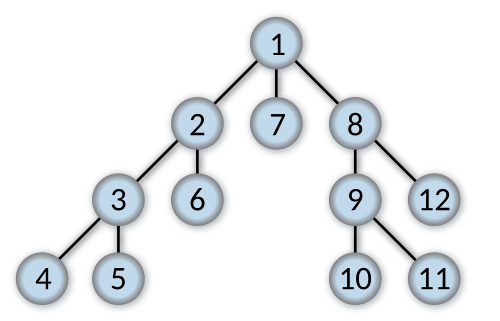
Fig 1: A branching tree showing how variables (nodes) connect to their possible domain values — the structure AI navigates when solving a CSP.
How Does AI Actually Solve the Problems?
Now here’s where it gets interesting. AI doesn’t magically find the answer. It tries, fails, adjusts, and tries again — kind of like how you’d solve a Sudoku. There are three main tricks it uses, and honestly, they’re more intuitive than they sound.
1. Backtracking — Trial and Error, but Smart
Backtracking is the foundation of CSP algorithms. Think of it like exploring a maze. You walk down one path, hit a dead end, come back to the last turn, and try a different direction.
In our college event example, say the AI assigns the Hackathon to Hall A, Day 1. Then it tries to assign the Quiz — but wait, Hall A is taken. So it puts the Quiz in Hall B. Then the Robotics show — both halls are now booked for the same time. Conflict! The AI backtracks, undoes the last choice, and tries again with a different option.
The key insight is: backtracking doesn’t just give up. It goes back to exactly the point where things went wrong, not all the way to the start. That’s what makes backtracking in AI efficient instead of chaotic.
“Backtracking is basically what you do when you solve Sudoku — you pencil something in, realise it breaks a rule three moves later, erase it, and try something else.”
2. Constraint Propagation — Don’t Even Try Dead Ends
Backtracking alone can be slow if the problem is big. So AI gets smarter with something called constraint propagation — which is a fancy way of saying: “before trying something, check if it’s even worth trying.”
A simple way I personally understood this is to imagine you’ve already put Maths in the 9 am slot. You don’t even need to try Physics at 9 am anymore — cross it off immediately. That’s forward checking. You’ve just eliminated a whole branch of bad choices without ever going down it.
Two ideas make this happen:
A. Forward Checking
After you assign a value to one variable, immediately look at the remaining variables and cross off any options that are now impossible. If you schedule the AI Talk for Tuesday, 10 am, forward checking instantly removes Tuesday, 10 am, from the Quiz’s available slots.
B. Arc Consistency (AC-3)
This takes it further. It examines pairs of variables and ensures that every value of one variable has at least one compatible value in the other. If the Robotics show has only one slot left, and that slot conflicts with the Cultural night’s only available time, arc consistency catches this before you even try — and signals that the current path is a dead end. In simple terms, it’s about making sure future choices remain possible before you commit to anything now.
3. Heuristics — Working Smarter, Not Harder
Heuristics are rules of thumb that help the AI choose the best option to try first, so it can reach a solution faster.
MRV (Minimum Remaining Values): Always tackle the hardest variable first. If the Hackathon has only two possible slots left, but the Cultural night has seven, deal with the Hackathon first. Why? Because if that’s going to cause a conflict, you’d rather know now than after making ten other choices.
Least Constraining Value: When you do pick a value, choose the one that keeps the most options open for the other variables. Don’t paint yourself into a corner unnecessarily.
Together, these heuristics don’t change what the AI is doing — they just change the order in which it does things. And that order makes a massive difference in speed.
Real Code Example
Python Backtracking
# Simple CSP: Assign time slots to events with no conflicts

events = ["Hackathon", "Quiz", "Robotics", "AI_Talk", "Cultural"]

# Available time slots (domain)
slots = ["Mon_10", "Mon_2", "Tue_10", "Tue_2", "Wed_10"]

# Constraint: these pairs cannot share the same slot
conflicts = [("Quiz", "AI_Talk"), ("Hackathon", "Robotics")]

def is_valid(assignment, event, slot):
    # Check if this slot is already taken by another event
    if slot in assignment.values():
        return False
    # Check conflict pairs
    for (e1, e2) in conflicts:
        if event == e1 and e2 in assignment:
            if assignment[e2] == slot:
                return False
        if event == e2 and e1 in assignment:
            if assignment[e1] == slot:
                return False
    return True

def backtrack(assignment):
    # All events assigned — we're done!
    if len(assignment) == len(events):
        return assignment

    # Pick the next unassigned event
    unassigned = [e for e in events if e not in assignment]
    event = unassigned[0]

    # Try each available slot
    for slot in slots:
        if is_valid(assignment, event, slot):
            assignment[event] = slot          # Try this assignment
            result = backtrack(assignment)   # Recurse
            if result:
                return result
            del assignment[event]             # Backtrack if needed

    return None  # No valid assignment found

solution = backtrack({})
print("Schedule:", solution)

Explanation:
This code solves a CSP (Constraint Satisfaction Problem) by assigning time slots to events while adhering to certain rules. The events are Hackathon, Quiz, Robotics, AI_Talk, and Cultural. The available slots are Mon_10, Mon_2, Tue_10, Tue_2, and Wed_10. Some events have conflicts, such as the Quiz and AI_Talk, and the Hackathon and Robotics, so they cannot be scheduled in the same slot.
The is_valid() function checks if a slot can be given to an event. First, it makes sure the slot is not already used by another event. Then it checks the conflict pairs. For example, if a quiz is being assigned, it checks whether AI_Talk already has that same slot. If any rule breaks, it returns False; otherwise, it returns True.
The backtrack() function is the main solving part. It first checks if all events are assigned. If yes, the schedule is complete. If not, it picks the next unassigned event and tries each slot in turn, using is_valid() to test whether the slot is safe.
If a slot is valid, it assigns it and calls the function again for the remaining events. If that choice causes a problem later, it removes the assignment and tries the next slot. This is called backtracking—try, check, go deeper, and if it fails, come back and try again until a valid schedule is found.
Real-world Applications of CSP
These are the following real-world applications of CSP:
1. Healthcare Scheduling
Hospitals use CSP to assign doctors, nurses, and operating rooms to patient schedules. Constraints include: a surgeon can’t be in two ORs at once, certain procedures need specific equipment, and staff need rest hours between shifts.
CSP ensures everyone is in the right place at the right time — literally a matter of life and death.
2. Traffic Signal Systems
Smart city traffic lights use constraint-based AI to coordinate signals across intersections. The constraint: signals at crossing roads can’t be green simultaneously.
The goal is to minimise overall waiting time. CSP models help optimise entire traffic networks in real time.
3. Airline Scheduling
Airlines deal with thousands of variables: which crew flies which route, which plane gets which gate, layover durations, rest regulations, and aircraft maintenance windows.
CSP tools crunch all these constraints to build schedules that actually work — often saving millions of dollars in operational costs.
4. Robotics Planning
A robot arm assembling a product has strict constraints: don’t collide with your own joints, respect the order of assembly steps, and stay within reach limits.
CSP planners map out valid movement sequences before the robot takes a single step — making industrial robots both safe and efficient.
Limitations of CSP
1. High Time Complexity
CSP can become very slow when the number of variables and constraints increases. More possibilities mean more checking, which takes more time to find a solution.
2. Difficult for Large Problems
If the problem is too large, such as school timetables or employee scheduling, CSP becomes harder to solve. Backtracking may take too long in such cases.
3. Depends on Problem Setup
CSP works well only when variables, domains, and constraints are clearly defined. If the problem is not set properly, finding the solution becomes difficult.
4. Not Good for Best Solution
A basic CSP only finds a valid solution, not necessarily the best one. If we need the cheapest or fastest option, extra methods are needed.
5. Sometimes No Solution Exists
If the rules are too strict, there may be no possible solution at all. In that case, some constraints must be changed or removed.
Build practical skills in data, automation, and intelligent systems with HCL GUVI’s Intel & IITM Pravartak Certified AI/ML course, covering Python, SQL, real-world projects, expert guidance, flexible classes, and placement support to help you move into high-demand roles. Join us today and transform your future!
Conclusion
The next time someone hands you a timetable and says, “figure out what’s clashing,” — you’re literally doing AI. Constraint Satisfaction Problems sit at the heart of how intelligent systems reason, plan, and make decisions in the real world.
What makes CSP special is that it’s not just a clever algorithm. It’s a framework for thinking — one that mirrors human common sense, but scales to complexity that would overwhelm any human scheduler. From hospital rosters to Mars rover planning, the Constraint Satisfaction Problem in AI is quietly powering the world.
And the best part? The concepts aren’t that far from how you already think. You’re already halfway there.
I’m Roshini J, a second-year CSE student specializing in AI and ML at Sri Sai Ram Engineering College, Chennai with a deep interest in AI, cybersecurity, blockchain, and sustainable technologies, and I enjoy working on innovative projects that aim to solve real-world challenges through intelligent systems.
FAQs
Why doesn’t AI check every possible option at once?
Checking every option takes too much time in big problems. AI uses smarter methods to avoid clearly wrong choices.
How is CSP different from normal AI problem-solving?
CSP focuses on rules and restrictions. It finds a solution in which all conditions are satisfied simultaneously.
Why is backtracking still efficient if it goes backwards?
It returns only to the point where the mistake happened, not to the start. This saves time.
What happens if two constraints clash?
If rules are too strict, no valid solution is possible. Some constraints must be changed.
Why does AI solve the hardest variable first?
It helps find conflicts early and avoids wasting time on easier parts first.
Is CSP used only for scheduling problems?
No, it is also used in robotics, traffic systems, healthcare, and puzzle-solving, such as Sudoku.
Success Stories

About the Author
HCL GUVI
This article was selected and published as part of the HCL GUVI AI Blogathon 2026, an initiative designed to encourage students, AI enthusiasts, and aspiring tech writers to simplify complex AI concepts through impactful technical content. The contest recognized high-quality, original, and insightful AI-focused blogs, with selected authors receiving publication opportunities on the HCL GUVI blog platform along with official author credits and recognition.
View all posts by HCL GUVI
Connect with me @












Did you enjoy this article?