


Ethical Hacking Articles
Best Ethical Hacking Courses with Certificates
10 Best Ethical Hacking Project Ideas [With Source Code]
A Compelling Ethical Hacker Resume: 10 Tips and Tricks to Follow


Get In Touch For Details! Request More Information
Top 40 Ethical Hacking Interview Questions and Answers
Dec 31, 2025 7 Min Read 7494 Views
(Last Updated)
The best way to test a defense mechanism is by ethically identifying the vulnerabilities. That is where ethical hacking comes in. Ethical hacking is a dynamic field requiring a solid understanding of both the fundamentals and advanced tactics.
If you’re preparing for an interview, this guide can help you navigate various levels of ethical hacking interview questions and answers, ranging from freshers to advanced ethical hacking roles.
Quick Answer
For ethical hacking interviews, questions often cover types of testing, penetration testing steps, tools like Nmap and Metasploit, common vulnerabilities such as SQL injection and XSS, security measures like firewalls and VPNs, and basics of Linux commands, scripting, and incident response.
Table of contents
- Top 30 Ethical Hacking Interview Questions and Answers
- Fresher Level Questions
- Intermediate Level Questions
- Advanced Level Questions
- Scenario-Based Ethical Hacking Questions
- 💡 Did You Know?
- Conclusion
Top 30 Ethical Hacking Interview Questions and Answers
Most people get scared when they appear for an interview. Well, the fear is inevitable but you can gain a lot of self-confidence by preparing the questions and answers.
This section covers some of the best ethical hacking interview questions and answers that can help you crack your dream ethical hacking job!
Fresher Level Questions
1. What is ethical hacking, and how does it differ from malicious hacking?
Ethical hacking involves authorized practices to identify security vulnerabilities in a system, allowing companies to strengthen defenses. Unlike malicious hackers, ethical hackers work legally with consent to protect data and infrastructure.
2. Can you explain the five basic stages of ethical hacking?
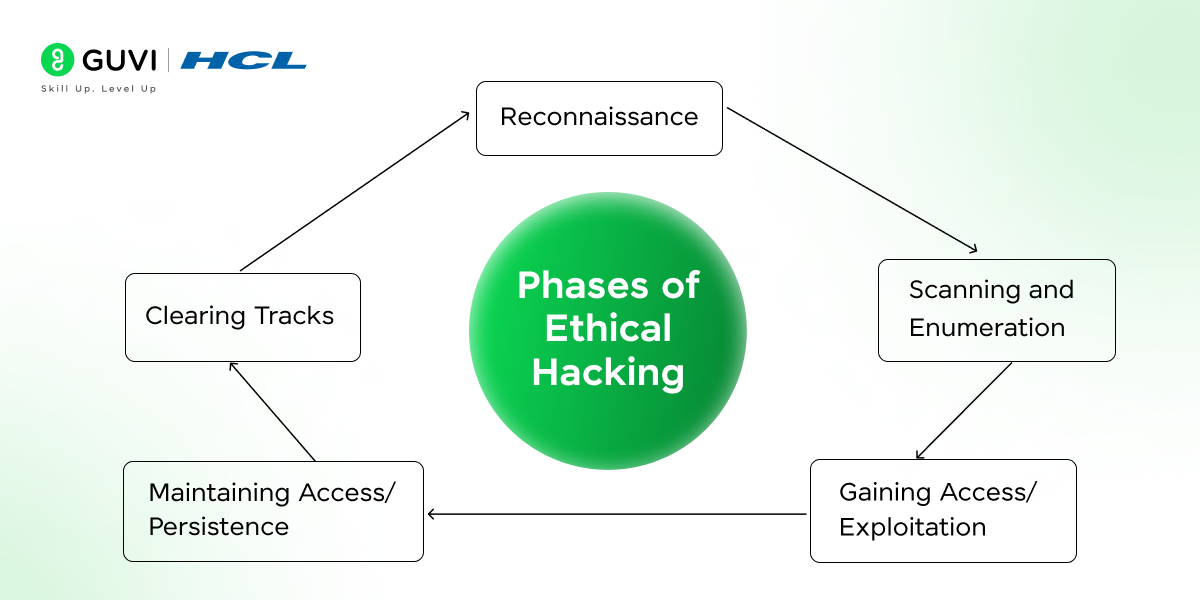
The five basic stages of ethical hacking include:
- Reconnaissance: Gathering information about the target.
- Scanning: Identifying open ports and vulnerabilities.
- Gaining Access: Using exploits to enter the system.
- Maintaining Access: Ensuring continued access if needed.
- Covering Tracks: Removing traces of the hack to prevent detection.
3. What are some common tools used by ethical hackers?
Some popular tools include Nmap (network scanning), Wireshark (packet analysis), Metasploit (exploitation framework), and Burp Suite (web vulnerability scanning).
4. What is a vulnerability assessment?
Vulnerability assessment is the process of scanning and identifying potential vulnerabilities in a system without exploiting them. This helps prioritize security issues for remediation.
5. Coding Question: Write a simple Python script to scan for open ports on a specified IP.
Python

import socket

def scan_ports(ip):

    for port in range(1, 1025):

        sock = socket.socket(socket.AF_INET, socket.SOCK_STREAM)

        sock.settimeout(0.5)

        if sock.connect_ex((ip, port)) == 0:

            print(f"Port {port} is open.")

        sock.close()

scan_ports("127.0.0.1")
6. What is the difference between encoding, encryption, and hashing?
Encoding is transforming data into a different format for safe transmission; encryption secures data so only authorized users can decode it, while hashing produces a fixed-length value, or “hash,” that represents the data. Hashing is one-way, while encoding and encryption are reversible with the correct key or method.
7. What are white hat, black hat, and gray hat hackers?
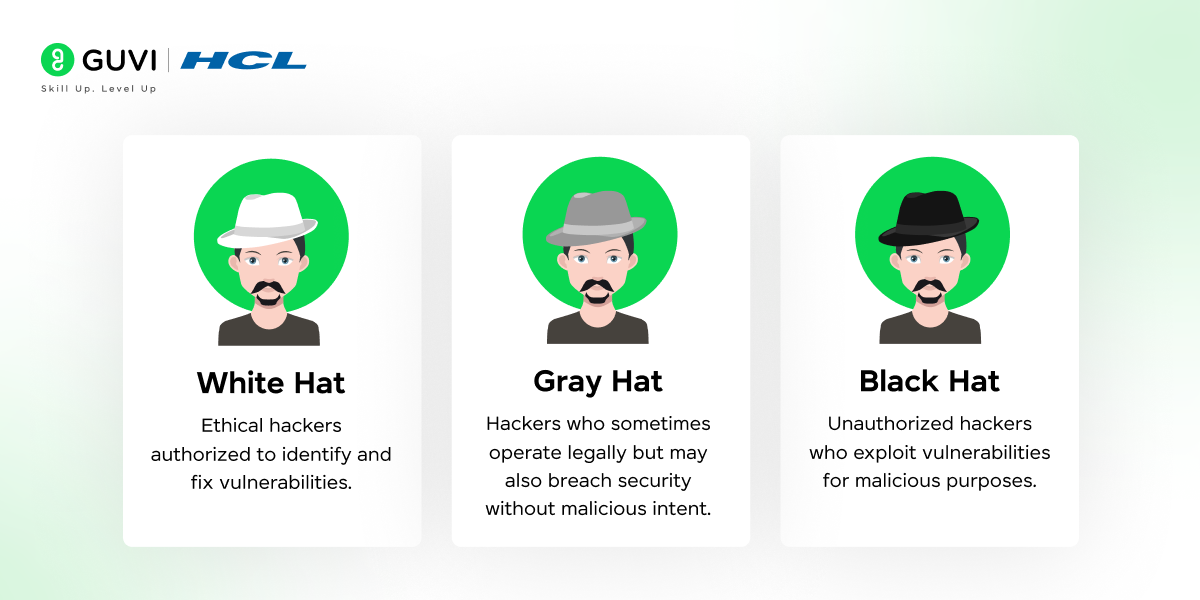
- White Hat: Ethical hackers authorized to identify and fix vulnerabilities.
- Black Hat: Unauthorized hackers who exploit vulnerabilities for malicious purposes.
- Gray Hat: Hackers who sometimes operate legally but may also breach security without malicious intent.
8. What is a Trojan Horse, and how does it differ from other types of malware?
A Trojan Horse is a type of malware disguised as legitimate software. Unlike viruses, which self-replicate, or worms, which spread independently, Trojans rely on users to execute them, allowing attackers to gain unauthorized access or control over the system.
9. What is two-factor authentication, and why is it important in cybersecurity?
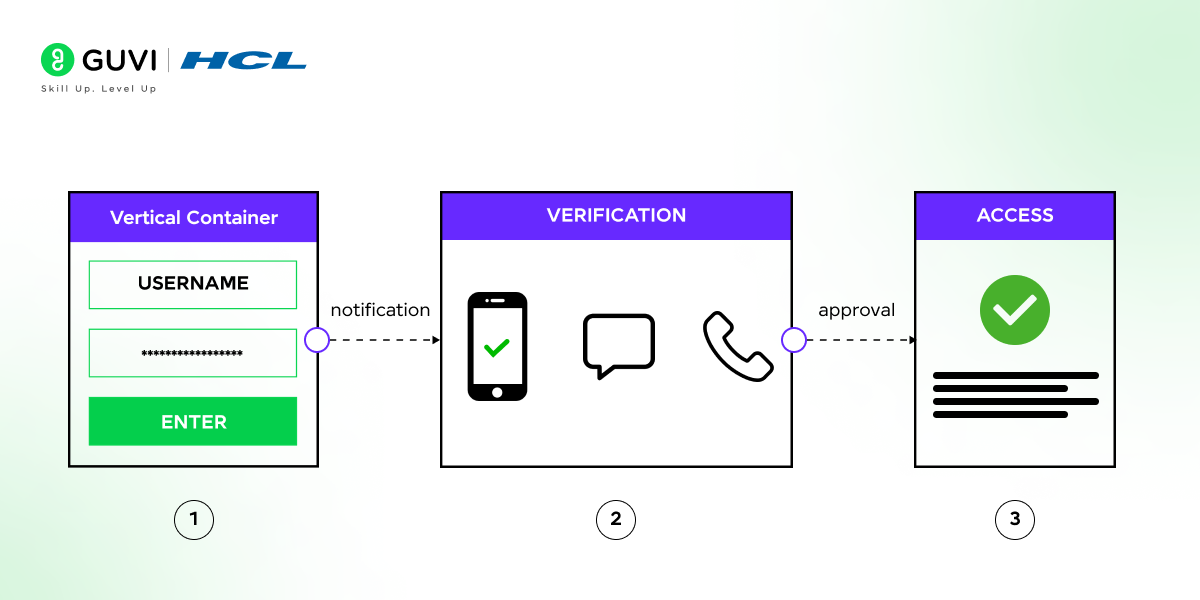
Two-factor authentication (2FA) is a security process that requires two forms of identification. It adds an extra layer of security, making it harder for attackers to access accounts even if they have the password.
10. Coding Question: Write a Python function to check if a password meets basic security standards.
Python

import re

def is_secure_password(password):

    if len(password) < 8:

        return "Password too short"

    if not re.search("[a-z]", password):

        return "Password should include lowercase letters"

    if not re.search("[A-Z]", password):

        return "Password should include uppercase letters"

    if not re.search("[0-9]", password):

        return "Password should include numbers"

    if not re.search("[!@#$%^&*()_+]", password):

        return "Password should include special characters"

    return "Password is secure"

print(is_secure_password("Ethical123!"))
Intermediate Level Questions
11. What is the difference between penetration testing and vulnerability assessment?
Vulnerability assessment is identifying vulnerabilities, while penetration testing is actively exploiting them to determine the extent of the potential damage and to test defenses.
12. Explain the concept of SQL injection and how to prevent it.
SQL injection occurs when attackers insert malicious SQL code into queries, potentially accessing or manipulating data. Preventive measures include using prepared statements, parameterized queries, and sanitizing inputs.
13. How does Cross-Site Scripting (XSS) work?
XSS exploits vulnerabilities in web applications by injecting malicious scripts. This can allow attackers to steal session cookies, redirect users, or deface websites.
14. What is a Man-in-the-Middle (MitM) attack?
In a MitM attack, the attacker intercepts and possibly alters communication between two parties without their knowledge, allowing access to sensitive data. Encryption is a common defense against such attacks.
15. Explain the concept of cryptography in cybersecurity.
Cryptography involves encrypting data to protect it from unauthorized access. It’s fundamental for data security, with techniques like symmetric and asymmetric encryption used for secure communications.
16. Coding Question: Write a script to generate a simple hash for a string in Python.
Python

import hashlib

def generate_hash(text):

    result = hashlib.sha256(text.encode())

    return result.hexdigest()

print(generate_hash("ethicalhacking"))
17. What is DNS Spoofing, and how can it be prevented?
DNS Spoofing, or DNS cache poisoning, is a technique where attackers manipulate DNS records, redirecting users to malicious sites. Prevention methods include DNSSEC (Domain Name System Security Extensions) and using encrypted DNS requests.
18. How does ARP Spoofing work, and what is its impact on network security?
ARP Spoofing involves sending falsified ARP (Address Resolution Protocol) messages to link an attacker’s MAC address to an IP address, redirecting traffic to the attacker’s machine. This can lead to data interception or denial of service. Countermeasures include using static ARP entries and network monitoring.
19. What is a honeypot in cybersecurity?
A honeypot is a decoy system set up to attract attackers, allowing security teams to monitor attack methods and gather intelligence without risking actual systems. Honeypots help improve defense strategies by observing attackers’ techniques in real-time.
20. Coding Question: Write a Python program to implement a simple brute-force attack on a password-protected zip file.
Python

import zipfile

def brute_force_zip(zip_file, password_list):

    with zipfile.ZipFile(zip_file, 'r') as zfile:

        for password in password_list:

            try:

                zfile.extractall(pwd=password.encode())

                print(f"Password found: {password}")

                return True

            except:

                pass

    print("Password not found.")

    return False

passwords = ["12345", "password", "secure123"]

brute_force_zip("protected.zip", passwords)
Advanced Level Questions
21. What are some advanced tactics you would use to bypass a firewall?
Techniques include IP spoofing, using open ports to avoid blocked ones, encrypting payloads to bypass detection, or tunneling traffic through allowed services like DNS or HTTP.
22. How do you secure a server against DDoS attacks?
Key measures include rate limiting, using anti-DDoS services, implementing WAF (Web Application Firewall), and configuring load balancing to distribute traffic across multiple servers.
23. What is an Advanced Persistent Threat (APT)?
APTs are prolonged, targeted cyber attacks aimed at stealing sensitive information. They often go undetected for long periods, with attackers using advanced techniques to evade detection.
24. Explain what Buffer Overflow is and how it’s exploited.
Buffer Overflow happens when data exceeds memory limits, potentially allowing attackers to inject malicious code. Defense methods include proper validation, using safe functions, and employing ASLR (Address Space Layout Randomization).
25. What is zero-day exploitation, and how can organizations protect against it?
Zero-day refers to an undiscovered vulnerability that hackers exploit before a patch is available. Regular security updates, intrusion detection systems, and monitoring are vital for zero-day defense.
26. Coding Question: Demonstrate a simple encryption and decryption process in Python using the cryptography library.
Python

from cryptography.fernet import Fernet

key = Fernet.generate_key()

cipher = Fernet(key)

text = "SensitiveData".encode()

encrypted = cipher.encrypt(text)

print(f"Encrypted: {encrypted}")

decrypted = cipher.decrypt(encrypted)

print(f"Decrypted: {decrypted.decode()}")
27. What is the OSI model, and why is it important in cybersecurity?
The OSI (Open Systems Interconnection) model is a framework that categorizes network functions into seven layers (from Physical to Application). Understanding these layers helps cybersecurity professionals identify where specific security measures should be applied and how attacks might exploit each layer.
28. Explain the concept of session hijacking and how it can be prevented.
Session hijacking occurs when an attacker takes control of a user’s session, typically by stealing a session cookie, allowing unauthorized access. Preventive measures include using secure cookies, implementing SSL/TLS, and monitoring for unusual session activity.
29. What is a reverse shell, and when might it be used in ethical hacking?
A reverse shell allows an attacker to execute commands on a target machine by having the target initiate a connection back to the attacker’s system. Ethical hackers may use reverse shells in penetration tests to gain access to a system and demonstrate its vulnerabilities.
30. Coding Question: Write a Python script that implements a basic Caesar Cipher for encryption and decryption.
Python

def caesar_cipher(text, shift, mode='encrypt'):

    result = ""

    for char in text:

        if char.isalpha():

            shift_char = shift if mode == 'encrypt' else -shift

            new_char = chr((ord(char) - 65 + shift_char) % 26 + 65) if char.isupper() else chr((ord(char) - 97 + shift_char) % 26 + 97)

            result += new_char

        else:

            result += char

    return result

encrypted = caesar_cipher("EthicalHacking", 3, 'encrypt')

print(f"Encrypted: {encrypted}")

print(f"Decrypted: {caesar_cipher(encrypted, 3, 'decrypt')}")
Scenario-Based Ethical Hacking Questions
31. How would you handle finding a vulnerable web application during a penetration test?
If you find a vulnerable web application, you would first examine the vulnerability to understand what it affects and how it could be exploited. You document all observations clearly, noting the steps to reproduce the issue and its potential risks. Then you report this to the client or supervisor and suggest practical ways to fix it, such as updating the software, changing configurations, and strengthening access controls. Throughout testing, you ensure that the application continues to function and that no damage occurs.
32. What steps would you take if you notice unusual network traffic that might indicate a breach?
Upon noticing unusual network traffic, you analyze logs and monitor systems to identify patterns or anomalies. You determine whether the activity is malicious and assess the severity of its impact. You take steps to contain any threats, secure affected systems, and record all findings. You also advise the client on ways to improve monitoring, such as adjusting firewall rules, setting up alerts, and reviewing access points, to prevent similar issues in the future.
33. How would you respond if a client asks you to perform a penetration test without prior authorization from the system owner?
You refuse the request because performing tests without proper authorization is illegal. Ethical hacking always requires written consent from the system owner. You explain to the client the risks involved, including legal consequences and potential harm to systems, and emphasize that testing can only be conducted once formal permission is granted.
34. What would you do if, during a social engineering test, an employee gives you sensitive information?
You would never misuse the information. Instead, you document the incident and report it to the client to demonstrate where employees might be vulnerable. You explain how social engineering attacks could succeed in real scenarios and recommend staff training, awareness programs, and clear reporting procedures to reduce the likelihood of employees falling for such attacks.
35. How would you handle discovering a SQL injection vulnerability in a client’s database?
You document the SQL injection vulnerability and explain how it could be exploited without compromising actual data. You advise the client to implement parameterized queries, validate inputs, and follow secure coding practices. After remediation, you retest to ensure the vulnerability is fixed. You also suggest monitoring the database for unusual activity and conducting periodic security checks to prevent future issues.
36. What would you do if you accidentally lock yourself out of critical systems while testing a client’s network?
You immediately inform the client or supervisor and follow authorized procedures to regain access safely. You document the incident, including what caused the lockout, and evaluate how to prevent it in the future. You may recommend backup access methods or procedural adjustments to ensure critical systems remain accessible during testing, while making sure no disruption occurs to the client’s operations.
37. How would you address a situation where you find that a company is using weak passwords across multiple accounts?
You safely demonstrate the risks of weak passwords without exposing real credentials. You explain how attackers could exploit them and suggest creating stronger passwords, enforcing multi-factor authentication, and educating employees about secure password practices. Additionally, you advise the client to implement regular password audits and monitoring to detect compromised or weak credentials over time.
38. What steps would you take if a system you are testing uses outdated software with known vulnerabilities?
You identify and document the outdated software and explain the potential ways attackers could exploit it. You advise the client to apply updates, patches, or configuration changes. You may demonstrate the risk in a safe, controlled way to help them understand the severity without causing harm. You also recommend establishing a process for regular software updates and vulnerability management.
39. How would you approach testing a cloud environment that you are unfamiliar with?
You first understand the cloud setup, services in use, and access permissions. Then, you plan your tests carefully, using cloud-native tools and best practices to avoid affecting live systems. You document all findings, highlight risks, and provide actionable recommendations for improving cloud security, such as proper access control, logging, monitoring, and configuration management.
40. How would you test both a client’s internal and external networks effectively?
You start with external testing to identify vulnerabilities exposed to outside attackers, then move to internal testing to simulate insider threats. You focus on critical systems and high-risk assets, documenting all findings in detail. You provide clear recommendations for remediation, including patch management, network segmentation, user access controls, and staff awareness, and verify that the suggested fixes effectively address the risks.
If you want to learn more about Ethical Hacking and its best practices, consider enrolling in HCL GUVI’s Ethical Hacking Course which teaches everything you need and will also provide an industry-grade certificate!
💡 Did You Know?
- Ethical hackers follow the same methodologies as malicious hackers but work legally to find vulnerabilities.
- The term “ethical hacking” was popularized in 1995 by EC-Council.
- Ethical hacker interviews often include questions based on real-world security breaches to test practical problem-solving skills.
Conclusion
In conclusion, these questions cover different aspects of ethical hacking, from basic concepts to complex coding challenges.
Preparing for each level will help you develop a well-rounded understanding of ethical hacking and make you more versatile during interviews. Remember, strong fundamentals combined with technical skills can set you apart as an ethical hacker.
Success Stories

About the Author
Jebasta
I translate the language of data into stories that anyone can understand. As a writer with a data science background, I simplify analytics, AI, and decision-making so beginners and enthusiasts can confidently explore the world of data.
View all posts by Jebasta
Connect with me @













Did you enjoy this article?