


Digital Marketing Articles
Best SEO Automation Tools in 2026: 12 Tools That Save 15+ Hours a Week
My Digital Marketing Interview Experience: What They Don't Tell You [2026]
8 Best Career Change Options for Content Writers
CPM in Digital Marketing: Calculation, Costs & Strategies in 2025


Get In Touch For Details! Request More Information
Digital Marketing for Startups and Small Businesses
Sep 15, 2025 10 Min Read 2481 Views
(Last Updated)
Starting a business is exciting, but reaching customers without a clear strategy can feel overwhelming. Many startups struggle because they cannot afford expensive billboards or television ads. Digital marketing changes that reality. It offers cost-effective ways to build awareness, attract leads, and convert customers.
This guide explains what digital marketing is, why it matters for small businesses, and the key elements that drive growth. You will also find real case studies showing how startups have achieved measurable success through digital strategies.
Businesses that post blogs regularly generate 67% more leads compared to those that do not.
Nearly 49% of consumers rely on influencers for purchase decisions—making influencer marketing a key growth tool for startups.
Email marketing delivers an average return of $36 for every $1 spent, making it one of the most cost-effective strategies for small businesses.
Table of contents
- What Is Digital Marketing?
- Top Benefits of Digital Marketing for Startups and Small Businesses
- Cost-Effective Marketing Approach
- Measurable Results for Every Activity
- Precise Audience Targeting
- Increased Customer Interaction
- Flexibility Across Different Channels
- Stronger Brand Visibility
- Essential Elements of Digital Marketing for Startups and Small Businesses
- Search Engine Optimization (SEO)
- Social Media Marketing
- Content Marketing
- Email Marketing
- Search Engine Marketing (SEM) and PPC Ads
- Local SEO and Google Business Profile
- Influencer Marketing
- Conversion Rate Optimization (CRO)
- Marketing Automation and CRM Tools
- Analytics and Performance Tracking
- Video Marketing
- Reputation Management
- Paid Social Media Advertising (PPC on Social Platforms)
- Retargeting Campaigns
- Affiliate Marketing
- Real Case Studies of Digital Marketing Success for Startups and Small Businesses
- Case Study 1: iAdvize (SaaS Startup Using CRM & Automation)
- Case Study 2: TrekkSoft (Travel Tech Startup Leveraging Content Marketing)
- Case Study 3: Daniel Wellington (Influencer Marketing Driving Global Growth)
- Conclusion
- FAQs
- How much budget should a startup allocate to digital marketing?
- Which is better for a startup: SEO or paid advertising?
- How often should businesses post on social media?
- Do small businesses need a website if they use social media?
- How soon can a startup see results from digital marketing?
What Is Digital Marketing?

Digital marketing refers to the use of online channels to promote products or services. It involves strategies that help businesses reach customers through websites, search engines, social media, email, and paid advertising. Unlike traditional marketing, digital platforms provide measurable results and better audience targeting.
Digital marketing bestows an affordable way to build brand awareness and drive sales for startups and small businesses. It provides opportunities to compete with larger companies by using data-driven approaches.
Also Read: 10 Best Digital Marketing Projects in 2025
Top Benefits of Digital Marketing for Startups and Small Businesses
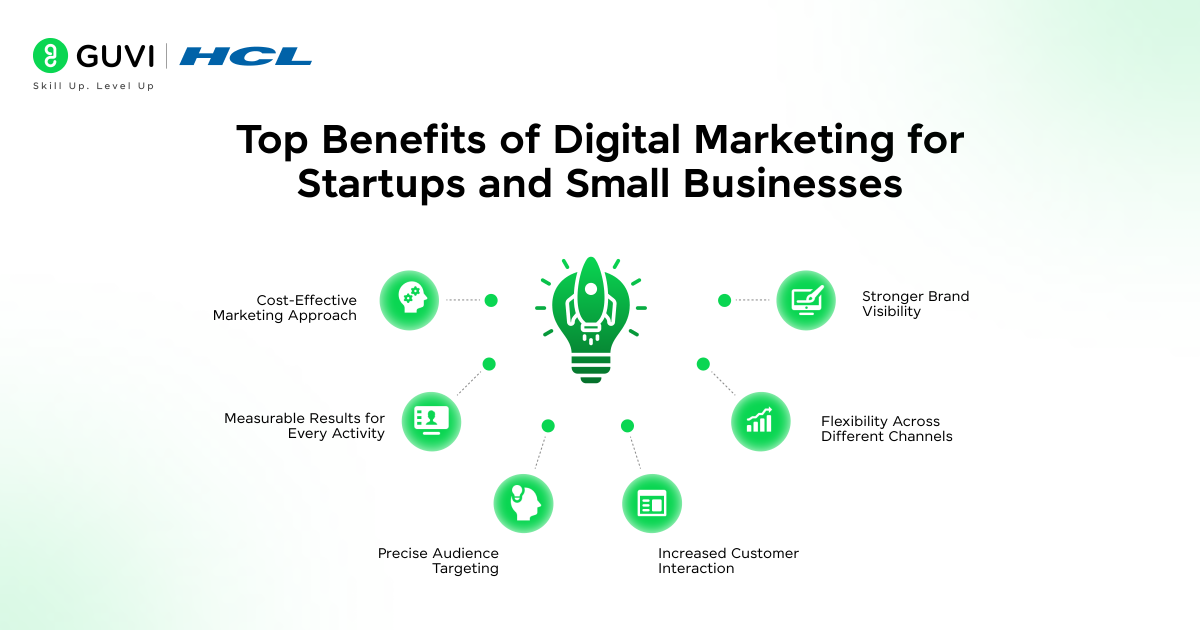
Here are the top benefits of digital marketing that help startups and small businesses grow faster and compete effectively.
1. Cost-Effective Marketing Approach
Digital marketing offers affordable options compared to traditional advertising. Startups can run campaigns with smaller budgets and still achieve good reach. Paid advertising platforms allow spending limits that match business capacity.
2. Measurable Results for Every Activity
Businesses can track campaign performance in real time. Data analytics tools show data on clicks and conversions. They also reveal the impact on overall revenue. This level of clarity helps in adjusting strategies quickly.
3. Precise Audience Targeting
Digital channels allow businesses to select who sees their content. Targeting can focus on demographics such as age and location. Focusing on interests is also equally important to reach the right customers.
4. Increased Customer Interaction
Social media and blogs help businesses communicate directly with customers. Email campaigns create another way to maintain personal connections. Conversations happen quickly through comments and direct messages. These interactions create stronger relationships and improve trust.
5. Flexibility Across Different Channels
Startups can choose from several online platforms to promote their brand. Campaigns can run on social media and search engines. Email campaigns provide another channel for consistent engagement. This flexibility makes it easier to find which platform produces the best results.

6. Stronger Brand Visibility
A consistent online presence increases recognition. Businesses that post blogs and share videos reach more potential customers. They also benefit from active profiles on social media, which build credibility and support long-term growth.
Essential Elements of Digital Marketing for Startups and Small Businesses
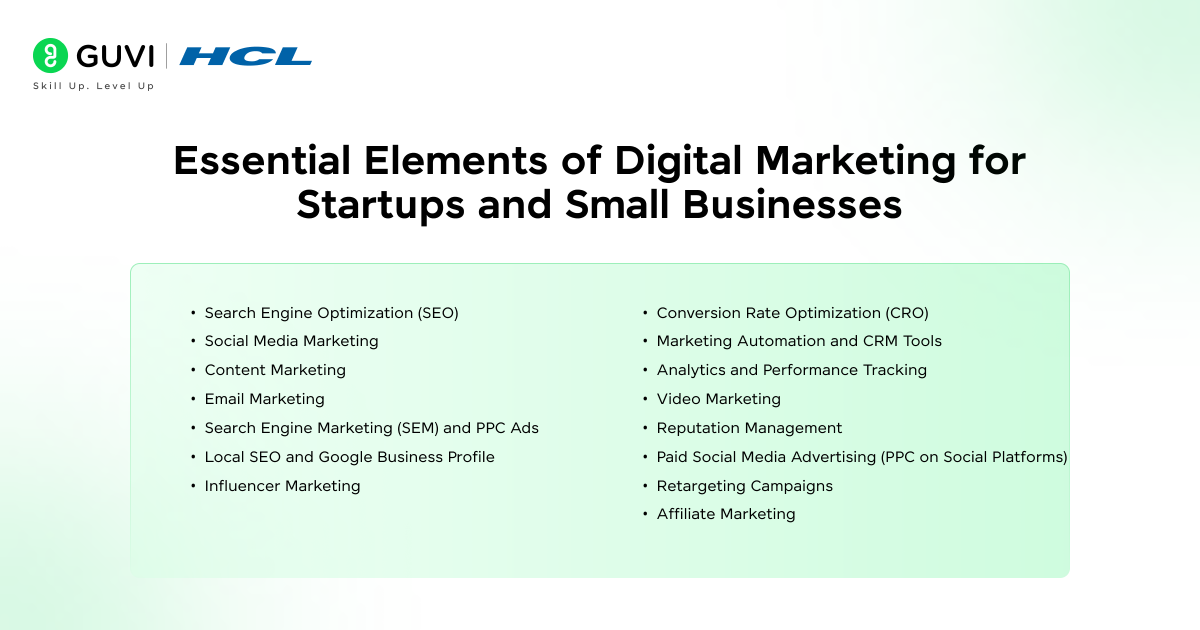
Here are the key elements of digital marketing that every startup and small business should focus on to build visibility and grow effectively.
1. Search Engine Optimization (SEO)
SEO improves your website ranking on search engines. Higher rankings help potential customers find your business. For startups, SEO offers an affordable method to attract visitors and build long-term credibility.
Key Features
- Meta tags that describe content accurately and influence click-through rates
- On-page optimization with structured headings and descriptive alt text
- Off-page techniques that include backlinks from reputable sources
- Keyword research that targets audience search intent
- A website structure that organizes content logically for easy navigation
- Pages that load quickly and display well on mobile devices
Steps to Implement
- Identify keywords using tools such as Google Keyword Planner or Ahrefs.
- Add optimized titles, meta descriptions, and headings to your pages.
- Link related content internally to improve user experience.
- Acquire backlinks by guest posting on industry blogs or creating shareable resources.
- Improve loading speed by compressing images and activating caching features.
- Test your website design on multiple devices to confirm mobile compatibility.
Top Tools
- Ahrefs: Supports keyword research and backlink tracking. Provides insights for competitor analysis and content gaps.
- SEMrush: Offers site audits and competitive benchmarking. Helps refine both SEO and PPC strategies.
- Yoast SEO: A WordPress plugin that checks meta tags, readability, and on-page SEO elements in real time.
- Google Search Console: Monitors indexing issues and search visibility. Delivers performance data for keywords and pages.
2. Social Media Marketing
Social media marketing helps brands build visibility on platforms where their audience spends time. It allows startups to increase brand awareness and build trust. It further helps engage directly with customers without large budgets.
Key Features
- Platform selection based on audience behavior and demographics
- Consistent content strategy aligned with brand voice
- Interactive engagement through polls, contests, and Q&A sessions
- Paid advertising with precise targeting options
- Analytics to measure engagement and reach
- Community development through active participation
Steps to Implement
- Choose platforms that your target audience prefers.
- Plan a monthly content calendar that includes images, videos, and written posts.
- Maintain a consistent tone across all platforms to strengthen brand identity.
- Respond quickly to comments and messages to build stronger relationships.
- Launch targeted ad campaigns with small budgets before scaling.
- Monitor analytics each week to measure engagement and adjust strategies.
Top Tools
- Buffer: Schedules posts across multiple platforms and tracks engagement performance.
- Hootsuite: Automates publishing and provides detailed analytics for social campaigns.
- Canva: Creates professional graphics and templates for posts, ads, and stories without advanced design skills.
- Meta Business Suite: Manages ads, monitors performance, and simplifies campaign reporting for Facebook and Instagram.
3. Content Marketing
Content marketing focuses on creating material that informs and engages the audience. Startups can use this approach to attract potential customers and strengthen credibility.
Key Features
- Strategy designed around customer questions and interests
- Publishing schedule aligned with business goals
- Blog articles and visual formats that offer lasting value
- Keyword optimization for search engines
- Distribution plans that share content through multiple channels
Steps to Implement
- Research topics that address common questions from your audience.
- Develop an editorial calendar for blog posts, videos, and graphics.
- Write original and well-researched articles with actionable advice.
- Optimize headlines and body text for relevant keywords.
- Promote content through email newsletters and social platforms.
- Track metrics such as page views and social shares to improve future pieces.
Top Tools
- Grammarly: Improves grammar, tone, and clarity in blog and email content.
- BuzzSumo: Identifies trending topics and helps research high-performing content ideas in your niche.
- Trello: Organizes editorial calendars and assigns content tasks to team members.
- Google Docs: Enables collaborative writing and maintains version history for easy editing.
4. Email Marketing
Email marketing offers a direct and cost-effective way to maintain communication with customers. It helps businesses nurture leads and encourage repeat sales without large expenses.
Key Features
- Subscriber lists collected through transparent methods
- Segmentation that groups users by behavior or interests
- Personalized content that addresses user preferences
- Responsive design for desktop and mobile screens
- Analytics that track open rates and click-through rates
- Automated campaigns for the timely delivery of targeted messages
Steps to Implement
- Build your subscriber list with sign-up forms and lead magnets such as discounts or guides.
- Segment contacts into categories like new subscribers or returning customers.
- Write an email copy that includes clear subject lines and strong calls to action.
- Personalize content using details such as the recipient’s name or purchase history.
- Test email formatting on different devices before sending campaigns.
- Review analytics to adjust timing and improve subject lines for better results.
Top Tools
- Mailchimp: Automates email campaigns and includes templates for quick design.
- ConvertKit: Specializes in email funnels and subscriber segmentation for targeted campaigns.
- Sendinblue: Combines email and SMS marketing in one platform with personalization features.
- HubSpot Email Marketing: Integrates with CRM and provides advanced analytics for optimization.
5. Search Engine Marketing (SEM) and PPC Ads
Search engine marketing uses paid ads to target people who search for products or services like yours. This method delivers quick visibility and measurable results. It suits startups that need immediate leads or sales.
Key Features
- Keyword targeting for users with purchase intent
- Budget flexibility suitable for small businesses
- Multiple ad formats including text, video, and image ads
- Advanced targeting by location and device type
- Performance data that tracks conversions and ROI
Steps to Implement
- Define objectives such as lead generation or increasing website traffic.
- Research keywords with strong commercial intent using reliable tools.
- Write concise ad copies that emphasize benefits and include a call to action.
- Create landing pages that match ad content and encourage conversions.
- Set daily or monthly budgets based on campaign goals.
- Analyze campaign reports and optimize bids to improve results.
Top Tools
- Google Ads: Runs highly targeted search and display campaigns with flexible budgets.
- Microsoft Advertising: Expands reach through Bing with cost-effective ad opportunities.
- SpyFu: Reveals competitor keywords and PPC strategies for informed bidding.
- Optmyzr: Optimizes campaigns through automated bid adjustments and actionable insights.
6. Local SEO and Google Business Profile
Local SEO helps businesses reach customers in specific areas. It supports small companies that depend on regional traffic and in-person visits.
Key Features
- Verified Google Business Profile with accurate details
- Customer reviews that improve trust and influence rankings
- Local keywords integrated into website content
- Directory listings that strengthen local presence
- Mobile optimization for searchers using smartphones
Steps to Implement
- Claim and verify your Google Business Profile through Google.
- Add accurate information, including address, hours, and high-resolution photos.
- Request positive reviews from satisfied customers after each transaction.
- Include city or region-specific keywords in your web pages and meta descriptions.
- Submit your business to directories such as Yelp and relevant industry listings.
- Update business details regularly to maintain accuracy.
Top Tools
- Google Business Profile Manager: Updates business information and tracks engagement on local searches.
- Moz Local: Ensures listing accuracy and strengthens local search presence across directories.
- BrightLocal: Conducts local SEO audits and provides rank tracking for specific regions.
- Whitespark: Builds citations and monitors reviews to improve local visibility.
7. Influencer Marketing
Influencer marketing involves collaborating with individuals who have a dedicated audience. This method helps startups gain credibility and extend reach without the cost of large campaigns. Micro-influencers are often the best fit because they have strong engagement rates within smaller communities.
Key Features
- Access to niche audiences through trusted voices
- Flexible budget options compared to celebrity endorsements
- Opportunities for authentic brand storytelling
- Partnerships that can include reviews or co-created content
Steps to Implement
- Identify influencers who share values similar to your brand and have an audience aligned with your target market.
- Analyze engagement rates rather than focusing only on follower count.
- Reach out with a clear proposal that outlines collaboration benefits.
- Decide on the format of collaboration such as sponsored posts, product reviews, or joint content.
- Provide guidelines to maintain consistency with your brand message.
- Track campaign performance using metrics such as engagement and referral traffic.
Top Tools
- Upfluence: Helps identify influencers based on engagement metrics and audience match.
- AspireIQ: Manages influencer relationships and campaign performance in one dashboard.
- Heepsy: Filters influencers by location, industry, and audience demographics.
- Tagger: Provides data-driven recommendations for influencer partnerships and ROI tracking.
8. Conversion Rate Optimization (CRO)
CRO focuses on improving the percentage of website visitors who take a desired action such as purchasing a product or signing up for a newsletter. For startups, this ensures that existing traffic generates maximum value.
Key Features
- Clear and visible calls to action across all pages
- Simple checkout processes that reduce drop-offs
- Use of A/B testing to evaluate design and content changes
- Social proof elements like customer reviews and testimonials
Steps to Implement
- Review your website analytics to identify pages with low conversion rates.
- Add strong call-to-action buttons that stand out visually.
- Simplify forms and reduce unnecessary fields to speed up sign-ups or purchases.
- Display trust indicators such as secure payment icons and customer feedback.
- Conduct A/B tests for elements like headlines and button placements.
- Analyze test results and apply winning variations site-wide.
Top Tools
- Hotjar: Offers heatmaps and session recordings for understanding visitor behavior.
- Crazy Egg: Provides scroll maps, click tracking, and simple A/B testing.
- Unbounce: Creates conversion-focused landing pages with built-in optimization features.
- Optimizely: Enables complex A/B and multivariate testing for improving page performance.
9. Marketing Automation and CRM Tools
Automation allows startups to manage repetitive marketing tasks efficiently. CRM tools help organize customer data and maintain strong relationships with leads and existing clients.
Key Features
- Automated workflows for emails and follow-up messages
- Tools for scheduling social media posts in advance
- Lead tracking and segmentation capabilities
- Analytics dashboards for performance monitoring
Steps to Implement
- Choose tools that fit your budget, such as Mailchimp for email automation or HubSpot for CRM.
- Create workflows for tasks like welcome emails and abandoned cart reminders.
- Segment customers into groups based on purchase history or engagement level.
- Schedule social posts to maintain consistency across channels.
- Set up notifications for sales teams to follow up with leads promptly.
- Review reports to identify automation gaps and make improvements.
Top Tools
- HubSpot CRM: Tracks leads, automates workflows, and offers integrated analytics.
- ActiveCampaign: Focuses on email automation with advanced segmentation capabilities.
- Zapier: Connects different tools and automates repetitive tasks without coding.
- Salesforce: Delivers advanced CRM features and powerful reporting for growing businesses.
10. Analytics and Performance Tracking
Analytics help businesses measure success and refine strategies. Accurate tracking allows startups to make informed decisions that reduce wasted resources.
Key Features
- Website traffic analysis through tools like Google Analytics
- Conversion tracking for forms, purchases, and downloads
- Social media insights for engagement and reach
- Campaign-level data for advertising channels
Steps to Implement
- Install Google Analytics and set up goals for conversions and key actions.
- Add tracking pixels from ad platforms to monitor campaign performance.
- Review traffic sources to understand which channels drive the most value.
- Analyze bounce rates to improve pages with high exits.
- Create monthly reports that summarize progress against goals.
- Use insights to reallocate budgets toward top-performing channels.
Top Tools
- Google Analytics 4 (GA4): Tracks conversions and user engagement across devices.
- Google Data Studio: Creates custom dashboards for data visualization.
- Kissmetrics: Measures customer lifetime value and identifies behavior trends.
- Mixpanel: Specializes in event-based analytics for SaaS and mobile apps.
11. Video Marketing
Video content is an effective way to explain products and build stronger connections with customers. Startups benefit from video because it improves engagement and increases shareability on social platforms.
Key Features
- Product demonstrations that highlight benefits clearly
- Customer testimonial videos that build trust
- Short-form content suited for platforms like TikTok and Instagram Reels
- Educational videos that position your brand as an expert
Steps to Implement
- Define the purpose of your video, whether it is for education or product promotion.
- Write a script that keeps messaging concise and focused on benefits.
- Record with good lighting and clear audio, even if you use basic equipment.
- Edit videos to include captions and branded elements.
- Publish on platforms where your audience is most active.
- Monitor metrics like view time and shares to improve future videos.
Top Tools
- Adobe Premiere Pro: Provides advanced editing features for professional-quality videos.
- Camtasia: Simplifies screen recording and editing for tutorials and demos.
- Animoto: Converts photos and clips into short videos with customizable branding.
- InVideo: Offers ready-to-use templates for social media video content.
12. Reputation Management
A strong reputation builds trust and influences purchasing decisions. Managing feedback and public perception is essential for startups that rely on customer confidence.
Key Features
- Monitoring of brand mentions across social media and review platforms
- Prompt responses to negative comments or complaints
- Collection of positive testimonials for marketing use
- Strategies for encouraging satisfied customers to share feedback
Steps to Implement
- Set alerts with tools such as Google Alerts to track brand mentions.
- Respond to customer inquiries and reviews within a short time frame.
- Thank customers for positive feedback and feature their testimonials on your site.
- Address negative feedback with polite and solution-oriented messages.
- Encourage satisfied customers to leave reviews on Google and industry directories.
- Review reputation reports monthly to identify recurring issues.
Top Tools
- Google Alerts: Tracks brand mentions and sends alerts for specific keywords.
- Reputation.com: Manages reviews and improves brand perception across multiple channels.
- Birdeye: Collects customer feedback and performs sentiment analysis.
- Mention: Monitors conversations about your brand on social media and forums.
13. Paid Social Media Advertising (PPC on Social Platforms)
Paid social media ads help startups reach specific audiences quickly. They allow businesses to promote content to users based on their demographics and interests. This method is effective for generating leads and driving website traffic without waiting for organic reach.
Key Features
- Advanced targeting that includes location and behavior filters
- Multiple ad formats such as images, videos, and carousel ads
- Budget control with options to start small and scale gradually
- Performance analytics for tracking conversions and engagement
Steps to Implement
- Select a social platform based on your audience preferences such as Facebook, Instagram, or LinkedIn.
- Define clear goals such as lead generation or website visits.
- Create visually appealing ads with strong headlines and clear calls to action.
- Set a daily or campaign-based budget that matches your resources.
- Monitor results using platform analytics and adjust targeting for better ROI.
Top Tools
- Meta Ads Manager: Handles Facebook and Instagram ad creation and optimization.
- LinkedIn Campaign Manager: Targets professionals for B2B marketing campaigns.
- AdEspresso: Simplifies ad testing and performance tracking for smaller businesses.
- TikTok Ads Manager: Runs short-form video ads designed for younger audiences.
14. Retargeting Campaigns
Retargeting focuses on users who have visited your website but did not complete an action such as a purchase. This strategy reminds potential customers about your products and encourages them to return.
Key Features
- Display ads that reach visitors across different websites and platforms
- Personalized messages based on previous interactions
- Flexible budget options for small businesses
- Reporting tools to measure campaign success
Steps to Implement
- Install tracking pixels on your website from platforms like Facebook or Google.
- Segment audiences based on actions such as viewing a product page or abandoning a cart.
- Design ads that highlight the benefit of completing the purchase.
- Offer incentives such as discounts for returning customers.
- Review analytics weekly to optimize ad placements and improve conversions.
Top Tools
- Google Ads Remarketing: Targets previous visitors with tailored ads on Google Display Network.
- AdRoll: Runs retargeting ads across multiple platforms with AI-driven optimization.
- Criteo: Delivers personalized product recommendations for eCommerce brands.
- Perfect Audience: Provides easy-to-manage retargeting campaigns for startups.
15. Affiliate Marketing
Affiliate and performance marketing use third-party partners to promote your products in exchange for a commission on sales. It helps startups expand reach without heavy upfront advertising costs.
Key Features
- Partnerships with bloggers, influencers, and content creators
- Commission-based model that limits financial risk
- Performance tracking through affiliate links and dashboards
- Access to audiences that trust the affiliate’s recommendations
Steps to Implement
- Define commission rates and clear terms for affiliates.
- Choose a platform or network to manage partnerships and track performance.
- Provide affiliates with banners, images, and other promotional materials.
- Monitor clicks and sales regularly to evaluate performance.
- Build strong relationships with top affiliates to drive consistent results.
Top Tools
- ShareASale: Connects brands with a wide network of affiliate publishers.
- CJ Affiliate: Offers access to global affiliate programs and robust tracking features.
- Refersion: Manages affiliate partnerships and simplifies commission payments.
- Impact: Provides automated workflows for affiliate onboarding and reporting.
Take your startup or small business to the next level with our comprehensive Digital Marketing Course designed to help you master strategies that drive real results. Learn SEO, social media marketing, PPC, content marketing, and advanced analytics from industry experts, all with hands-on projects and real-world case studies. Enjoy the flexibility of a self-paced curriculum, expert mentorship, and lifetime access to resources that keep you ahead in the digital space. Start your journey today and become the digital strategist your business needs!
Real Case Studies of Digital Marketing Success for Startups and Small Businesses
Case Study 1: iAdvize (SaaS Startup Using CRM & Automation)
iAdvize is a conversational marketing SaaS company that wanted to boost website traffic and shorten sales cycles. After adopting HubSpot, the company achieved substantial growth. Website visits increased 3×, sales leads grew 4×, and the average sales cycle time was reduced by 50 percent.
Key Features
- CRM integration for centralizing customer and lead data
- Automated workflows for lead nurturing and sales alignment
- Content strategy to drive inbound growth
- Real-time analytics for decision-making
Steps Taken
- Integrated HubSpot CRM to align marketing and sales teams.
- Automated email workflows to move leads faster through the funnel.
- Published optimized content, such as blogs and guides, to increase traffic.
- Analyzed conversion data and pipeline stages with HubSpot dashboards.
- Adjusted follow-up strategies to maintain faster deal closures.
Case Study 2: TrekkSoft (Travel Tech Startup Leveraging Content Marketing)
TrekkSoft, a travel software startup, needed a strategy to generate high-quality leads in a competitive market. Using HubSpot and inbound marketing, TrekkSoft saw organic traffic increase by 400 percent. Social media leads rose 12×, and the company achieved an overall lead growth of 376 percent within one year.
Key Features
- Blog-driven inbound marketing with SEO focus
- Landing pages optimized for lead capture
- Social media campaigns to boost reach and engagement
- Analytics for tracking conversion performance
Steps Taken
- Developed an editorial calendar for SEO-friendly blogs targeting travel operators.
- Created gated content, such as downloadable guides for lead generation.
- Used HubSpot forms and landing pages to capture contact information.
- Shared blog and resource links on social channels to increase organic engagement.
- Monitored performance data to identify high-converting topics and refine campaigns.
Case Study 3: Daniel Wellington (Influencer Marketing Driving Global Growth)
Daniel Wellington began as a small Swedish watch company in 2011. Instead of traditional ads, the brand focused on influencer marketing and user-generated content. Within 3 years, the company sold 1 million watches and generated revenue of about $228 million. Instagram’s partnerships with influencers played a major role in achieving these numbers.
Key Features
- Influencer partnerships targeting fashion and lifestyle audiences
- User-generated content strategy to build trust and authenticity
- Personalized discount codes for influencer followers
- Visual storytelling through Instagram posts and hashtags
Steps Taken
- Selected micro-influencers with strong engagement in target markets.
- Offered free products and personalized discount codes to encourage authentic promotion.
- Reposted influencer photos on the brand’s official Instagram account to create social proof.
- Created branded hashtags to grow organic reach and encourage customer sharing.
- Scaled influencer collaborations based on performance and audience response.
Conclusion
Digital marketing has become the foundation for business growth. It helps startups compete with larger companies and reach audiences without draining resources. The strategies outlined in this guide provide a roadmap for building visibility and generating revenue.
Start with one element, such as SEO or social media. Build consistency before adding more channels. The key is to keep learning and adapting based on measurable results. A focused approach will help your business grow faster and stronger in a competitive market.
FAQs
1. How much budget should a startup allocate to digital marketing?
The budget depends on business size, goals, and target audience. Many small businesses start by allocating 5 to 10 percent of their revenue to marketing. Digital channels allow you to begin with small amounts and scale as results improve.
2. Which is better for a startup: SEO or paid advertising?
Both have value, but the choice depends on your timeline. SEO builds long-term traffic and authority, while paid ads generate quick visibility. Many startups use paid campaigns in the beginning and then invest in SEO for sustainable growth.
3. How often should businesses post on social media?
The frequency depends on the platform and audience engagement. A good starting point is three to five posts per week on major platforms like Facebook and Instagram. Concentrate on quality over quantity to keep followers interested.
4. Do small businesses need a website if they use social media?
Yes. Social media helps reach and engage customers, but a website adds credibility and serves as a central hub for information. It is also essential for SEO and supports paid advertising campaigns more effectively.
5. How soon can a startup see results from digital marketing?
The timeline varies by strategy. Paid ads can deliver traffic within hours of launching a campaign. SEO and content marketing take longer, often three to six months, to show measurable growth. Consistent effort speeds up progress.
Success Stories

About the Author
Vaishali
I'm a seasoned writer with four years of experience across technical, non-technical, and just about every genre or niche you can imagine. Adaptable and curious, I enjoy exploring new topics and making information engaging and easy to understand. Fueled by a steady stream of tea, I approach each project with creativity, reliability, and genuine enthusiasm for storytelling.
View all posts by Vaishali
Connect with me @










Did you enjoy this article?