


Artificial Intelligence and Machine Learning Articles
Claude for Building a Personal Wikipedia or Knowledge Base
Using Claude to Write Case Studies from Customer Interviews


Get In Touch For Details! Request More Information
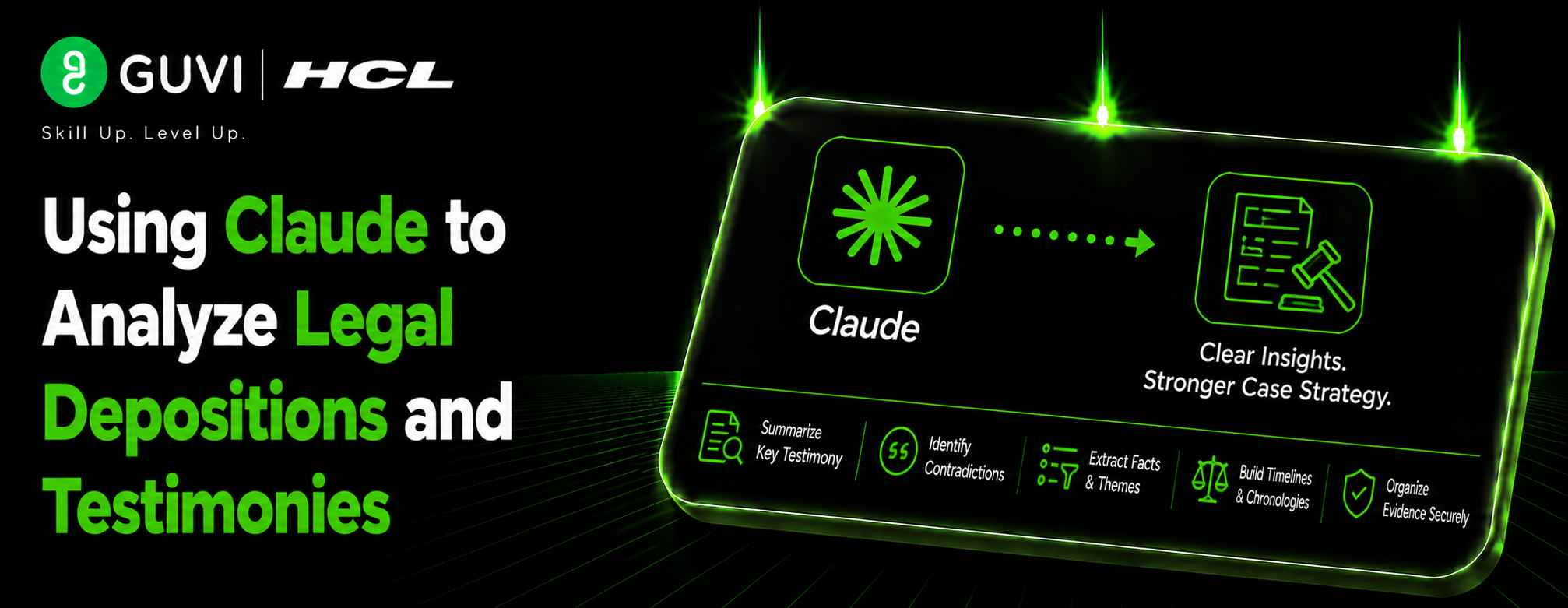
Using Claude to Analyze Legal Depositions and Testimonies
Aug 20, 2026 3 Min Read 16 Views
(Last Updated)
Legal professionals spend countless hours reviewing depositions, witness statements, and court testimonies to identify key facts, inconsistencies, and evidence. Claude to analyze legal depositions by organizing large legal documents, generating deposition summaries, and supporting testimony review through AI-assisted document analysis.
Table of contents
- TL;DR
- Direct Answer
- Why Legal Document Analysis Matters
- How Claude Improves Legal Analysis
- Generates Deposition Summaries
- Organizes Testimony Review
- Extracts Key Legal Information
- Best Practices for Deposition Analysis
- Review Complete Testimonies
- Identify Key Facts
- Compare Multiple Testimonies
- Verify Critical Information
- Using Claude for Testimony Review
- Witness Statement Summaries
- Timeline Creation
- Theme Identification
- Case Preparation
- Benefits of Legal AI
- Faster Document Review
- Improved Organization
- Better Collaboration
- Easier Knowledge Management
- Which Legal Professionals Should Use Claude?
- Law Firms
- Corporate Legal Teams
- Paralegals
- Legal Researchers
- Compliance and Regulatory Teams
- Tasks You Can Automate with Claude
- Document Review
- Legal Research
- Case Preparation
- What AI Should Not Replace
- Best Practices
- Conclusion
- FAQs
- How does Claude help with legal analysis?
- Can Claude generate deposition summaries?
- What is Legal AI?
- Can Claude compare witness testimonies?
- Is AI suitable for legal document analysis?
- Can corporate legal teams use Claude?
- Why is testimony review important?
TL;DR
- Claude analyzes lengthy legal documents efficiently.
- AI generates structured deposition summaries.
- Testimony review becomes faster and more organized.
- Legal AI improves document analysis workflows.
- Human oversight remains essential for legal decisions.
Data Point: According to Thomson Reuters’ Future of Professionals Report, legal professionals expect generative AI to significantly improve productivity by reducing the time spent on document review, drafting, and legal research.
Direct Answer
| Claude supports legal analysis by reviewing legal documents, generating deposition summaries, organizing testimony review, and identifying important facts across lengthy case files. Through Legal AI, law firms and legal teams can improve document analysis, reduce manual review time, and organize complex information more efficiently while ensuring that attorneys retain responsibility for legal interpretation and decision-making. |
Why Legal Document Analysis Matters
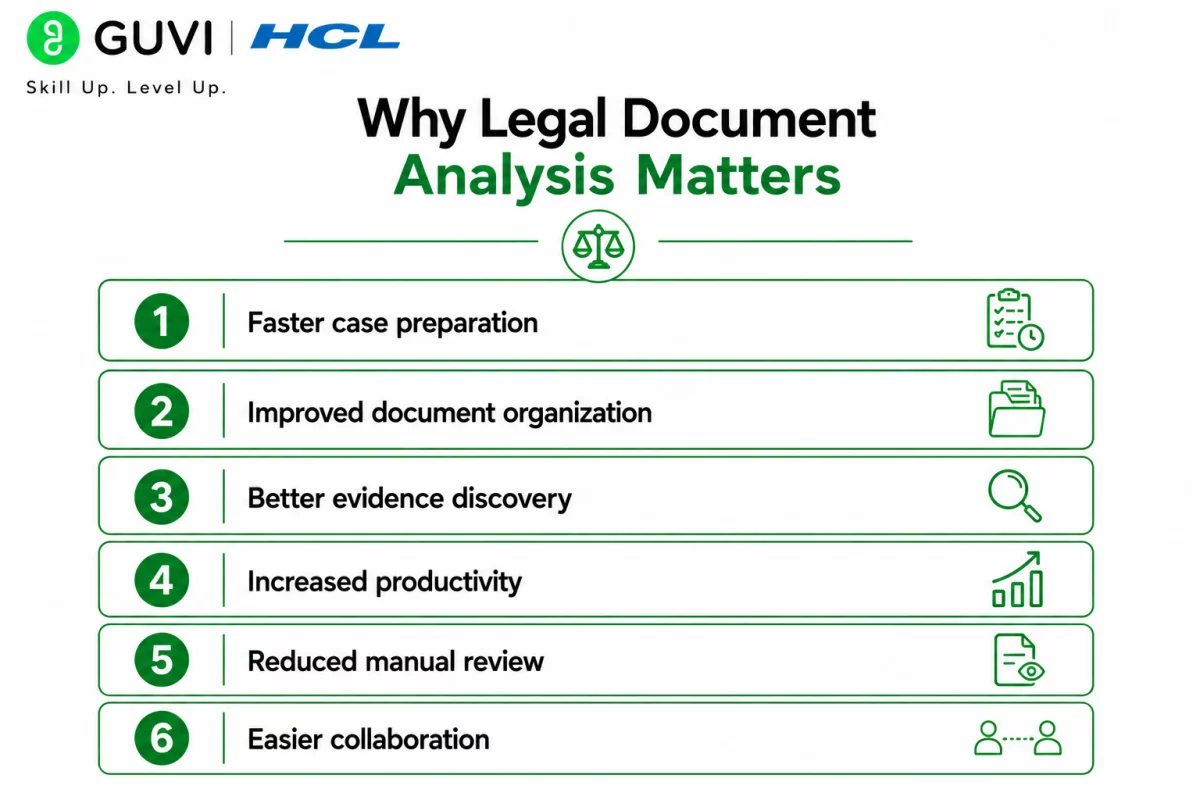
Legal cases often involve thousands of pages of depositions, witness statements, contracts, and supporting evidence. Reviewing these documents manually is time-consuming and increases the risk of overlooking important information.
Benefits include:
- Faster case preparation
- Improved document organization
- Better evidence discovery
- Increased productivity
- Reduced manual review
- Easier collaboration
How Claude Improves Legal Analysis
Claude helps legal professionals process complex documents while preserving important context.
Generates Deposition Summaries
Claude condenses lengthy depositions into structured summaries that highlight key statements, timelines, and significant facts.
Organizes Testimony Review
Claude categorizes witness testimonies, identifies recurring themes, and structures information for easier analysis.
Extracts Key Legal Information
Claude identifies names, dates, events, legal issues, and supporting evidence from large document collections.
Legal professionals often spend a significant amount of time reviewing documents before hearings or trials. AI-assisted document analysis can help organize information, summarize lengthy testimonies, and highlight relevant facts, allowing legal teams to spend more time on legal strategy and client representation.
Best Practices for Deposition Analysis
Accurate deposition summaries require careful organization and verification.
Review Complete Testimonies
Analyze the entire deposition rather than isolated excerpts to preserve legal context.
Identify Key Facts
Highlight important events, timelines, admissions, and factual statements relevant to the case.
Compare Multiple Testimonies
Review witness statements together to identify agreements, differences, and potential inconsistencies.
Verify Critical Information
Always confirm AI-generated summaries against the original legal documents before relying on them.
Using Claude for Testimony Review
Claude supports multiple stages of testimony review throughout legal proceedings.
Witness Statement Summaries
Generate concise summaries that capture the essential points of each witness’s testimony.
Timeline Creation
Organize testimony chronologically to understand the sequence of events more clearly.

Theme Identification
Identify recurring topics, disputed facts, and common evidence across multiple depositions.
Case Preparation
Prepare organized summaries that help legal teams review evidence more efficiently before hearings or trials.
Benefits of Legal AI
AI-powered legal analysis improves productivity while reducing repetitive document review tasks.
Faster Document Review
Summarize hundreds of pages significantly faster than manual review.
Improved Organization
Structure legal information into searchable categories and logical sections.
Better Collaboration
Enable attorneys, paralegals, and legal analysts to review AI-generated summaries together.
Easier Knowledge Management
Maintain organized case files, searchable notes, and structured legal documentation.
Legal professionals interested in using analytics, structured data, and AI-assisted decision support to improve operational efficiency can strengthen their expertise through HCL GUVI’s Business Analytics Course.
Which Legal Professionals Should Use Claude?
Claude is valuable for legal professionals who manage large volumes of case documents, depositions, and witness testimonies. It helps organize information, accelerate document review, and improve overall workflow efficiency.
Law Firms
Law firms can summarize depositions, review witness statements, organize case files, and prepare legal documentation more efficiently.
Corporate Legal Teams
In-house legal departments can analyze contracts, review internal investigations, and organize litigation documents while maintaining structured records.
Paralegals
Paralegals can generate deposition summaries, organize supporting evidence, prepare case timelines, and reduce repetitive document review tasks.
Legal Researchers
Researchers can summarize legal materials, identify relevant facts, compare testimonies, and organize case-related information for attorneys.
Compliance and Regulatory Teams
Compliance professionals can review investigation reports, organize regulatory documentation, and summarize complex legal records for internal reviews.
Tasks You Can Automate with Claude
Claude supports several repetitive tasks involved in legal document analysis and testimony review.
Document Review
- Deposition summaries
- Witness statement summaries
- Legal document organization
- Timeline creation
- Evidence categorization
Legal Research
- Case note summaries
- Legal research summaries
- Document comparison
- Fact extraction
- Key issue identification
Case Preparation
- Hearing preparation notes
- Chronological event summaries
- Client meeting summaries
- Investigation documentation
- Internal legal reports
The HCL GUVI’s Artificial Intelligence eBook introduces the fundamentals of generative AI, prompt engineering, machine learning, and intelligent automation. It helps learners understand how AI supports document analysis, workflow automation, and knowledge management while promoting responsible AI adoption across professional industries.
What AI Should Not Replace
AI should not replace:
- Legal advice
- Attorney-client decision-making
- Court representation
- Legal interpretation
- Final evidence evaluation
- Judicial decision-making
- Regulatory compliance reviews
- Professional ethical judgment
Human oversight ensures legal work remains accurate, compliant, and contextually appropriate.
Warning: AI-generated legal summaries should always be reviewed by qualified legal professionals. Verify facts, witness statements, timelines, legal citations, and case details against the original documents. Claude can assist with document organization and analysis but should not be relied upon as a substitute for professional legal advice or independent legal review.
Best Practices
- Review original legal documents alongside AI-generated summaries.
- Verify all names, dates, and legal references.
- Use AI to support—not replace—legal research.
- Organize documents into structured case files.
- Compare multiple testimonies for consistency.
- Protect confidential legal information using secure workflows.
- Maintain human review before making legal decisions.
Conclusion
Claude enhances legal analysis by streamlining legal document analysis, generating accurate deposition summaries, and organizing testimony review more efficiently. By reducing repetitive document review and improving information organization, Legal AI enables legal professionals to focus on case strategy and client representation while maintaining essential human oversight for interpretation, compliance, and legal decision-making.
FAQs
1. How does Claude help with legal analysis?
Claude reviews legal documents, summarizes depositions, organizes testimony, extracts key facts, and helps legal teams manage large volumes of case information more efficiently.
2. Can Claude generate deposition summaries?
Yes. Claude can produce structured deposition summaries that highlight important statements, timelines, participants, and relevant facts from lengthy transcripts.
3. What is Legal AI?
Legal AI refers to the use of artificial intelligence to assist with legal tasks such as document analysis, research, summarization, contract review, and workflow automation.
4. Can Claude compare witness testimonies?
Yes. Claude can identify common themes, highlight inconsistencies, compare statements, and organize testimony for easier review by legal professionals.
5. Is AI suitable for legal document analysis?
Yes. AI can significantly reduce the time required to organize and summarize legal documents, but all outputs should be verified by qualified legal professionals.
6. Can corporate legal teams use Claude?
Absolutely. Corporate legal departments can use Claude for contract summaries, compliance documentation, investigation reports, litigation support, and internal legal workflows.
7. Why is testimony review important?
Testimony review helps legal teams identify critical facts, evaluate witness statements, understand timelines, detect inconsistencies, and prepare stronger legal arguments supported by organized evidence.
Success Stories

About the Author
HCL GUVI
This article was selected and published as part of the HCL GUVI AI Blogathon 2026, an initiative designed to encourage students, AI enthusiasts, and aspiring tech writers to simplify complex AI concepts through impactful technical content. The contest recognized high-quality, original, and insightful AI-focused blogs, with selected authors receiving publication opportunities on the HCL GUVI blog platform along with official author credits and recognition.
View all posts by HCL GUVI
Connect with me @










Did you enjoy this article?