


Career Articles
Accountant vs Data Analyst Salary in India After Switching Careers - Best Guide
Finance Managers: Could Data Science Be Your Next Career Move?
Insurance Claims Executive to Data Analyst: Is It a Good Switch?
Banking Executive (Loans, KYC) to Data Analyst: Skills and Career Path

Get In Touch For Details! Request More Information

Can Mechanical Engineer Become Software Engineer? Yes — Here is How (2026)
Sep 02, 2026 8 Min Read 16244 Views
(Last Updated)
Table of contents
- TL;DR Summary
- Can a Mechanical Engineer Become a Software Engineer?
- How to Become a Software Engineer after Mechanical Engineering?
- Apply for Jobs
- Practice Coding / Join Bootcamps
- Pursue Programming Jobs
- Bonus Degree
- Mechanical Engineer to Software Engineer Transition Roadmap
- Step 1: Learn Programming Fundamentals
- Step 2: Learn Data Structures and Algorithms
- Step 3: Learn Web Development Basics
- Step 4: Learn Backend and Databases
- Step 5: Build 2–3 Real Projects
- Step 6: Learn Git, GitHub, and Deployment
- Step 7: Prepare for Interviews
- Mechanical Skills That Transfer to Software Engineering
- Best Programming Language for Mechanical Engineers to Learn First
- Python: Best for Absolute Beginners
- JavaScript: Best for Web Development
- Java: Best for Enterprise Software Roles
- Simple Recommendation
- Skills Needed to Become a Software Engineer After Mechanical Engineering
- Programming Skills
- Web Development Skills
- Database Skills
- Git and GitHub
- Debugging Skills
- Communication Skills
- Salary Change: Mech Engineer (3yr) vs Software Engineer (1yr Switch)
- What This Means Practically
- Projects Mechanical Engineers Can Build to Enter Software
- Beginner Projects
- Mechanical Background-Based Projects
- Full-Stack Projects
- Common Mistakes Mechanical Engineers Make While Switching to Software
- Learning Too Many Languages at Once
- Watching Tutorials Without Building Projects
- Ignoring Data Structures and Algorithms
- Not Explaining the Career Switch Clearly
- Applying Too Early Without a Portfolio
- Learn Coding with HCL GUVI as a Core Engineering Graduate
- What else is needed to become a Software Engineer?
- Build a Skillful Portfolio
- Build your Network
- Conclusion
- FAQs
- Can a mechanical engineer become a software engineer?
- How can a mechanical engineer switch to software engineering?
- Which programming language is best for mechanical engineers?
- Is coding difficult for mechanical engineers?
- Do mechanical engineers need a computer science degree to become software engineers?
- How long does it take for a mechanical engineer to become a software engineer?
- What software jobs are good for mechanical engineers?
- Can mechanical engineers get into full-stack development?
- Will salary increase after switching from mechanical to software?
- What projects should mechanical engineers build for software roles?
TL;DR Summary
A mechanical engineer can become a software engineer by learning programming, data structures, web development basics, databases, Git, projects, and interview preparation. Mechanical engineering skills like problem-solving, maths, CAD logic, simulation thinking, and system design can help in software roles. Python is the easiest first language for many mechanical engineers, while JavaScript is better if you want to enter web development. With 6–12 months of consistent learning and 2–3 strong projects, the transition becomes practical.
Yes, a mechanical engineer can become a software engineer in 2026, even without a computer science degree. The transition is possible if you build strong programming fundamentals, learn data structures, practise real projects, and understand how software teams build applications.
Mechanical engineers already have useful strengths like problem-solving, logical thinking, maths, simulation experience, design thinking, and analytical reasoning. These skills can transfer well into software development when combined with coding practice.
Many professionals today become a software engineer without a degree in computer science by proving their coding ability through projects, practical skills, and interview performance.
This guide explains the mechanical engineer to software engineer transition roadmap, the best programming language to learn first, salary differences, transferable skills, project ideas, and how HCL GUVI can help core engineering graduates start coding with structure.
Can a Mechanical Engineer Become a Software Engineer?
Yes, a mechanical engineer can become a software engineer. Most software companies focus more on skills, projects, coding ability, problem-solving, and interview performance than on your original engineering branch.
A mechanical background is not a disadvantage if you can prove that you understand programming, software development, debugging, databases, APIs, and project building.
You do not need to go back and do another bachelor’s degree in computer science. But you do need a structured learning path, consistent coding practice, and a portfolio that shows your software skills.
How to Become a Software Engineer after Mechanical Engineering?
Career transitions are cool & safe when you know the right way & right options to follow. Here are the 4 important steps for you to consider:
Before diving into the next section, ensure you’re solid on full-stack development essentials like front-end frameworks, back-end technologies, and database management. If you are looking for a detailed Full Stack Development career program, you can join HCL GUVI’s Full Stack Development Course with Placement Assistance. You will be able to master the MERN stack (MongoDB, Express.js, React, Node.js) and build real-life projects.
Additionally, if you want to explore JavaScript through a self-paced course, try HCL GUVI’s JavaScript certification course.
1. Apply for Jobs
The STEM fields are common in any engineering stream, & in recent years, many engineering colleges have included basic programming languages like Matlab, Python, Java & C++ in their course curriculum. While Matlab & Python are widely adopted even in mechanical engineering as their usage is found in device simulation, numerical analysis, automation of tasks, etc.
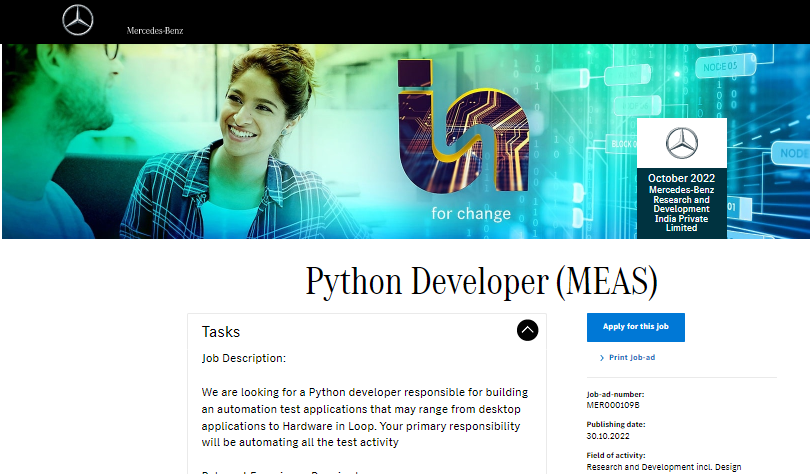
When it comes to usefulness, Python is more flexible & dynamic than Matlab. Using this familiarity with programming concepts, you can brush up & practice further with Python to apply for the Python developer job role without any hesitation.
World famous companies like Mercedez Benz & Boeing have revealed their requirements seeking mechanical engineers who can code. Hence, an advantage to pursuing a core job with lucrative packages is ON for mechanical engineers.
If you’re not getting hired right away at such companies, then you got to proceed further with the next right step to make a career transition.
2. Practice Coding / Join Bootcamps
The chances of getting rejected after applying for an IT/Software job are mainly due to a lack of skillset & relevant certifications. The process of attaining new skills never goes out of trend. Mechanical engineering graduates may not demonstrate strong expertise in programming but they are expected to possess a strong fundamental grip on coding concepts.
This basic programming knowledge can be learned easily online. Self-paced programming courses are one good way to make the first move to learn programming. Python programming, Matlab & Robotic Process Automation are some of the top-picked courses that are suggested for mechanical engineering students/graduates.
Besides, career-making bootcamps are an alternative way to pursue domain-specific jobs in the software industry.
3. Pursue Programming Jobs
Are you aware of this fact? A Programmer is different from a Software Engineer. Precisely, a programmer focuses on a single stage in the development cycle, While a software engineer covers the development process from start to end.
The main point of investing your time in programming is to groom yourself for software engineering jobs. Better Practice coding to ace programming!
Getting started with programming jobs will build your career portfolio with the basic prerequisites that evolve into essential software engineering skills over your work experience.
4. Bonus Degree
Going back to educate yourself to secure a next-level degree like a ‘Master’s Degree’ in Computer Science or Software Engineering is yet another option. Yes! you can do this even if your bachelor’s degree is in Mechanical Engineering.
For this very reason, studying MS abroad has become popular. And basically, this is best suitable for candidates who are ready to spend more time & money, just to widen the scope of getting hired as a software engineer.
Mechanical Engineer to Software Engineer Transition Roadmap
A mechanical engineer to software engineer transition becomes easier when you follow a step-by-step roadmap instead of learning random tools. Start with programming fundamentals, then move to web development, databases, projects, GitHub, and interview preparation.
Step 1: Learn Programming Fundamentals
Start with one beginner-friendly language and understand the basics properly.
Focus on:
- Variables
- Data types
- Loops
- Conditions
- Functions
- Arrays
- Strings
- Objects
- Error handling
- Basic problem-solving
The goal is not to memorize syntax. The goal is to understand how to break a problem into smaller logical steps.
For a broader learning journey, you can also follow a detailed software development roadmap
Step 2: Learn Data Structures and Algorithms
Data structures and algorithms help you solve coding problems in interviews.
Start with:
- Arrays
- Strings
- Linked lists
- Stacks
- Queues
- Hash maps
- Recursion
- Sorting
- Searching
- Basic time complexity
Do not jump directly into hard coding problems. Build your base with easy and medium-level problems first.
Step 3: Learn Web Development Basics
Most mechanical engineers switching to software start with web development because it gives visible project output.
Learn:
- HTML
- CSS
- JavaScript
- Responsive design
- React basics
- APIs
- Forms
- Authentication basics
Once you understand frontend basics, you can move to backend development.
You should also understand what React is in software development before using it to build reusable components and interactive frontend applications.
Step 4: Learn Backend and Databases
Backend development helps you understand how applications store data and process requests.
Learn:
- Node.js or Java basics
- Express.js or Spring Boot basics
- REST APIs
- SQL
- MongoDB
- Authentication
- Server-side logic
- API testing
Understanding the differences between MongoDB and SQL will help you choose the right database based on the structure, scale, and requirements of your application.
This will help you build full-stack projects instead of only frontend pages.
After learning Node.js fundamentals, explore the best Node.js frameworks used to build APIs, backend services, and full-stack applications.
Step 5: Build 2–3 Real Projects
Projects are very important for a non-CS candidate. They show that you can apply coding skills to real problems.
Good project ideas include:
- Job application tracker
- Inventory management system
- Mechanical parts catalogue app
- Maintenance request dashboard
- CAD file management portal
- Expense tracker
- E-commerce product page
- Student learning dashboard
Mechanical engineers can also build software projects related to manufacturing, automobile, maintenance, inventory, or design workflows.
Step 6: Learn Git, GitHub, and Deployment
Recruiters should be able to see your work.
Learn:
- Git basics
- GitHub repositories
- README writing
- Project deployment
- Version control
- Branching basics
A clean GitHub profile can make your transition look more serious.
Step 7: Prepare for Interviews
Interview preparation should include both coding and project explanation.
Prepare:
- Coding problems
- OOP concepts
- DBMS basics
- JavaScript or chosen language basics
- Project architecture
- Resume explanation
- HR questions about career switch
Your answer to “Why did you switch from mechanical to software?” should be confident, clear, and skill-based.
AFTER ROAD MAP ADD A SKILL TABLE
Mechanical Skills That Transfer to Software Engineering
Mechanical engineers already use several skills that map well to software engineering. The main difference is that software uses code to solve problems, while mechanical engineering often uses physical systems, models, calculations, and design tools.
| Mech Skill | Transferable to Software? | How it Maps |
| Problem-solving | Yes | Helps break software problems into smaller logical steps |
| Maths and analytical thinking | Yes | Useful for algorithms, data analysis, simulations, and logic building |
| CAD and design thinking | Yes | Helps understand structure, design flow, and system planning |
| Simulation experience | Yes | Maps to testing, debugging, and predicting software behavior |
| MATLAB or Python exposure | Yes | Helps start programming faster |
| Attention to detail | Yes | Useful for debugging, clean code, and testing |
| Mechanical system understanding | Partly | Useful in IoT, robotics, automation, automotive software, and manufacturing tech |
| Project documentation | Yes | Helps create clear GitHub README files and technical documentation |
| Team-based project work | Yes | Maps to agile teams, collaboration, and product development |
| Manufacturing/process knowledge | Yes | Useful for software roles in Industry 4.0, ERP, automation, and digital manufacturing |
The best way to use your mechanical background is to connect it with software projects. For example, instead of building a generic todo app only, you can build a maintenance tracker, spare parts inventory system, or production dashboard.
Familiarity with commonly used software development tools can improve your coding, testing, collaboration, version control, and deployment workflow.
Best Programming Language for Mechanical Engineers to Learn First
The best programming language for mechanical engineers depends on the software career path they want to enter. For most beginners, Python is the easiest first language because it is simple, readable, and useful in automation, data analysis, simulation, scripting, and AI-related workflows.
But if your goal is web development or full-stack development, JavaScript is also important because it is used to build interactive websites, frontend apps, and backend applications with Node.js.
Python: Best for Absolute Beginners
Python is a good first language for mechanical engineers because many students may already have seen MATLAB or numerical computing.
Learn Python first if you want to explore:
- Automation
- Data analysis
- Scripting
- AI/ML basics
- Simulation-related coding
- Backend basics
- Problem-solving
JavaScript: Best for Web Development
JavaScript is the best choice if you want to become a frontend or full-stack developer.
Learn JavaScript if you want to build:
- Websites
- Web apps
- Dashboards
- Forms
- E-commerce pages
- Full-stack MERN projects
- Interactive UI projects
Java: Best for Enterprise Software Roles
Java is useful if you want to work in enterprise software, backend development, banking applications, or large-scale systems.
Learn Java if your target roles include:
- Java developer
- Backend developer
- Spring Boot developer
- Software engineer in IT services
- Enterprise application developer
If you choose Java for backend development, learn how Java APIs allow applications to exchange data and connect different software services.
Simple Recommendation
| Goal | Best First Language |
| Absolute beginner | Python |
| Web development | JavaScript |
| Full-stack development | JavaScript + Node.js |
| Enterprise backend | Java |
| Data/AI path | Python |
| Coding interviews | Python, Java, or JavaScript |
For most mechanical engineers switching to software, a practical path is: Python for logic building → JavaScript for web development → one full-stack project path.

Replace the existing Apply for Jobs section WITH THIS SECTION BELOW
Skills Needed to Become a Software Engineer After Mechanical Engineering
Before applying for software engineering roles, mechanical engineers should build a strong foundation in coding, software development, and project building.
Programming Skills
Start with one programming language and learn it properly. You should be able to write basic programs, solve logic problems, use functions, handle errors, and work with data structures.
Web Development Skills
Web development is one of the most practical paths for career switchers. Learn HTML, CSS, JavaScript, React, Node.js, Express.js, and databases if you want to enter full-stack development.
Database Skills
Software applications need data storage. Learn SQL basics first, then explore MongoDB if you are learning the MERN stack.
Git and GitHub
Git and GitHub show that you can manage code like a software developer. Add all your projects with clean README files, screenshots, and setup instructions.
Debugging Skills
Software engineers spend a lot of time debugging. Learn how to read errors, use browser DevTools, test APIs, and fix issues step by step.
Learning debugging in software development will help you identify errors, trace their causes, test possible fixes, and improve application reliability.
Communication Skills
Your transition story matters. You should be able to explain why you moved from mechanical engineering to software and how your mechanical background helps your problem-solving ability.
ADD THIS SALARY CHANGE SECTION
Salary Change: Mech Engineer (3yr) vs Software Engineer (1yr Switch)
Salary after switching from mechanical engineering to software depends on your skills, company type, location, projects, and interview performance. Do not assume that switching automatically means a high salary from day one.
For a realistic comparison, a mechanical engineer with around 3 years of experience may earn differently depending on industry, city, and role. A software engineer with 1 year of post-switch experience may also fall into different salary bands depending on whether they join an IT services company, startup, product company, or GCC.
Glassdoor India reports software engineer salaries in India commonly ranging from around ₹4.45 LPA at the 25th percentile to ₹11.8 LPA at the 75th percentile, with an average around ₹7 LPA as of July 2026.
Before applying, understand common software developer roles and responsibilities, including writing code, reviewing requirements, fixing bugs, testing features, documenting work, and collaborating with teams.
SOURCES TO BE ADDED
| Career Stage | Typical Salary Range in India | Notes |
| Mechanical Engineer with 3 years experience | ₹4–8 LPA | Can be higher in design, automotive, manufacturing, oil & gas, aerospace, or data centre roles |
| Software Engineer after 1 year switch | ₹4.5–10 LPA | Depends strongly on coding skills, projects, company type, and interview performance |
| Strong switcher with full-stack projects | ₹6–12 LPA | Possible if portfolio, DSA, and project explanation are strong |
| Product/startup/GCC role | ₹8 LPA+ | Needs stronger coding, problem-solving, and project depth |
What This Means Practically
A mechanical engineer may not always get an immediate salary jump after switching. In some cases, the first software role may be similar to or slightly better than the current mechanical salary.
The bigger advantage is long-term growth. Software roles can scale faster when you build strong skills in full-stack development, cloud, AI tools, system design, and product engineering.
Important note:
Salary numbers change by company, city, market conditions, and individual skill level. Use this table as a planning reference, not a fixed promise.
Projects Mechanical Engineers Can Build to Enter Software
Projects help mechanical engineers prove that they can code, build applications, and solve real problems.
Start with simple projects, then move to full-stack applications.
Beginner Projects
- Calculator app
- Todo list
- Expense tracker
- Portfolio website
- Unit converter
- Resume builder
- Basic inventory tracker
Mechanical Background-Based Projects
These projects help you connect your mechanical knowledge with software:
- Machine maintenance tracker
- Spare parts inventory system
- Manufacturing defect log dashboard
- CAD file management portal
- Vehicle service booking app
- Production shift tracker
- Equipment downtime monitoring dashboard
Full-Stack Projects
Once you learn frontend, backend, and databases, build:
- Job application tracker
- E-commerce product app
- Student dashboard
- Admin panel
- CRM dashboard
- Booking system
- Learning management system
For every project, add a GitHub README with the problem statement, features, tech stack, screenshots, setup steps, and live demo link.
BEFORE CTA ADD COMMON MISTAKE SECTN.
Common Mistakes Mechanical Engineers Make While Switching to Software
1. Learning Too Many Languages at Once
Many learners try Python, Java, JavaScript, C++, and SQL together. This creates confusion and slows progress.
Fix this by choosing one main language first and using it to build logic and projects.
2. Watching Tutorials Without Building Projects
Watching videos can help, but it does not prove that you can code.
Fix this by building small projects after every major concept.
3. Ignoring Data Structures and Algorithms
Some switchers focus only on web development and skip problem-solving. This becomes a challenge during coding interviews.
Fix this by practising arrays, strings, hash maps, recursion, sorting, and searching regularly.
4. Not Explaining the Career Switch Clearly
Recruiters may ask why you moved from mechanical engineering to software. A vague answer can reduce confidence.
Fix this by explaining your interest in problem-solving, automation, software products, and long-term tech growth.
5. Applying Too Early Without a Portfolio
Applying without projects makes it harder to prove your skills as a non-CS candidate.
Fix this by building at least 2–3 solid projects before applying seriously.
Learn Coding with HCL GUVI as a Core Engineering Graduate
Switching from mechanical engineering to software becomes easier when you follow a structured learning path instead of learning random topics from different places.
HCL GUVI’s coding and Full Stack Development programs are designed to help learners build programming fundamentals, web development skills, backend logic, databases, GitHub projects, and interview confidence through a guided path.
If you are from a core engineering background, HCL GUVI can help you move step by step from basic coding to real-world software projects.
What else is needed to become a Software Engineer?
The upcoming two points might sound negligible but following these will drastically catalyze your chances of securing a job.
Build a Skillful Portfolio
A portfolio is a career enhancer for professionals & even for freshers as it is a collection of records that exhibits your skills, accomplishments, experiences, and technical strength. It helps you highlight yourself in the competing world by displaying some of your best work, & innovative projects.
Recruiters hunt thousands of candidates to fill the limited vacancies of their company with talented resources as their employees. A well-exhibited portfolio will make you appear like a master with a masterpiece of your talent to the recruiters.
Build your Network
Networking on sites like LinkedIn will make you go places. You need to interact with people who belong to your professional & career interests. Connecting with experienced professionals will not only bust many myths associated with your career but will also help you groom for the industry.
Conclusion
A mechanical engineer can become a software engineer in 2026 with the right roadmap, consistent coding practice, and project-based learning. Your mechanical background already gives you problem-solving, analytical thinking, and system understanding. Now you need to add programming, data structures, web development, databases, GitHub, and interview preparation. Start with one language, build 2–3 practical projects, document your work, and apply for roles that match your current skill level. The transition is not instant, but it is completely possible with structured effort.
FAQs
1. Can a mechanical engineer become a software engineer?
Yes, a mechanical engineer can become a software engineer by learning programming, data structures, web development, databases, projects, and interview skills. A computer science degree is helpful but not mandatory for many entry-level software roles.
2. How can a mechanical engineer switch to software engineering?
Start with one programming language, learn data structures, build web development skills, practise coding problems, create projects, upload them to GitHub, and prepare for interviews.
3. Which programming language is best for mechanical engineers?
Python is the easiest first language for most mechanical engineers. JavaScript is better if you want to enter web development or full-stack development.
4. Is coding difficult for mechanical engineers?
Coding may feel difficult at first because it needs a different style of thinking. But mechanical engineers already have problem-solving and analytical skills, which can help them learn programming with practice.
5. Do mechanical engineers need a computer science degree to become software engineers?
No, a computer science degree is not always required. Many companies consider skills, projects, coding ability, and interview performance, especially for entry-level software roles.
6. How long does it take for a mechanical engineer to become a software engineer?
Most learners need 6–12 months of consistent study and project practice. The timeline depends on your current coding knowledge, daily practice time, and target role.
7. What software jobs are good for mechanical engineers?
Good software paths include frontend developer, backend developer, full-stack developer, Python developer, automation engineer, data analyst, IoT developer, and software tester.
8. Can mechanical engineers get into full-stack development?
Yes, mechanical engineers can enter full-stack development by learning HTML, CSS, JavaScript, React, Node.js, databases, APIs, Git, and deployment.
9. Will salary increase after switching from mechanical to software?
Salary may increase over time, but the first software role may not always give a big jump. Growth depends on your skills, projects, company type, and interview performance.
10. What projects should mechanical engineers build for software roles?
Mechanical engineers can build projects like inventory trackers, maintenance dashboards, job trackers, CAD file management systems, vehicle service apps, and full-stack web applications.
Success Stories

About the Author
Reemsha Khan
Always been a storyteller at heart. Now, I turn complex topics into simple, easy-to-understand stories through content. Hope you find it helpful.
View all posts by Reemsha Khan
Connect with me @


Did you enjoy this article?
Comments















Was interesting going through this article I now have a clue on how to switch between these engineering discipline