


Software Development Articles
My Google SDE Interview Experience: From Rejection to Selection [2026 Success Story]
Apple Interview Experience for Software Developers: What to Expect
Decoding Differences between Network OS and Distributed OS
Operating System Examples: Top OS Types, Features, and Uses Explained

Get In Touch For Details! Request More Information
Best Operating System for Mobile
Feb 26, 2026 6 Min Read 10556 Views
(Last Updated)
Have you ever noticed how two smartphones with similar specifications can perform so differently? One feels smooth and responsive, while the other lags or drains battery quickly. The difference lies in the mobile operating system — the core software that controls everything from your apps to your device’s performance and security. It’s the silent engine that determines how efficiently your phone works and how enjoyable your experience is.
In this blog, we’ll explore the best operating system for mobile, including Android, iOS, HarmonyOS, and KaiOS. You’ll discover how each of these systems works, their unique strengths, and where they fit best for different types of users. Whether you’re a tech enthusiast, a student, or someone planning to buy a new phone, understanding these differences will help you make more informed decisions.
By the end of this read, you’ll not only know which operating system suits your preferences but also gain valuable insights into how these systems influence speed, usability, and innovation in the mobile world. This knowledge can also serve as a strong foundation if you plan to explore careers in app development, software engineering, or mobile technology in the future.
Table of contents
- Importance of a Mobile Operating System
- Key Features of a Good Mobile Operating System
- Popular Mobile Operating Systems
- Android
- iOS
- HarmonyOS
- KaiOS
- Other Notable and Past Mobile Operating Systems
- Comparing the Top Mobile Operating Systems
- How to Choose the Best Operating System for Mobile
- The Future of Mobile Operating Systems
- Real-World Applications of Mobile OS
- Conclusion
- FAQs
- Which mobile OS is most secure?
- Why do Android phones slow down over time?
- Can I install a different OS on my phone?
- Which OS is best for app developers?
- Will HarmonyOS replace Android?
Importance of a Mobile Operating System
A mobile operating system serves as the link between your smartphone’s hardware and the user. It ensures that every function — from launching apps to connecting to the internet — works smoothly and efficiently. Here are some of the key reasons why it plays such an essential role:
- Efficient Resource Management: The OS allocates memory, processes, and battery power effectively so your device runs smoothly without unnecessary lag.
- Smooth Application Performance: It ensures apps open quickly, run without crashing, and interact well with the system.
- Enhanced Security: Protects user data through encryption, app permissions, and regular security patches.
- User-Friendly Interface: Provides an intuitive design that helps users navigate easily and enjoy a better smartphone experience.
- Regular Updates: Keeps your device up to date with new features, performance improvements, and bug fixes.
- Seamless Connectivity: Manages Wi-Fi, Bluetooth, mobile data, and other communication systems efficiently.
- Compatibility with Latest Apps: Supports continuous innovation by enabling new apps and technologies to run smoothly.
Key Features of a Good Mobile Operating System
Before diving into the top mobile operating systems, it’s important to understand what makes one truly great. A strong OS does more than just run apps — it creates a seamless experience that balances performance, security, and usability. Here are the key features that define a good mobile operating system:
- User Interface (UI): Should be clean, responsive, and easy to navigate, allowing users to interact effortlessly with their devices.
- App Compatibility: Must support a wide variety of applications, tools, and services without performance issues.
- Performance: Ensures fast processing, smooth multitasking, and efficient use of hardware resources.
- Security: Protects user data with encryption, permissions control, and frequent security updates.
- Regular Updates: Offers consistent software upgrades that introduce new features, fix bugs, and improve stability.
- Ecosystem Integration: Connects seamlessly with other devices and platforms such as laptops, wearables, and smart home systems.
When these features work together, they define how effectively a mobile OS delivers a smooth, secure, and enjoyable experience for users.
Take your ChatGPT skills to the next level at absolutely no cost!
Through HCL GUVI’s Bharat AI Initiative, powered by OpenAI, you can now learn advanced ChatGPT skills, like better prompting techniques, in English, Hindi, Tamil, Telugu, and Marathi.
Popular Mobile Operating Systems
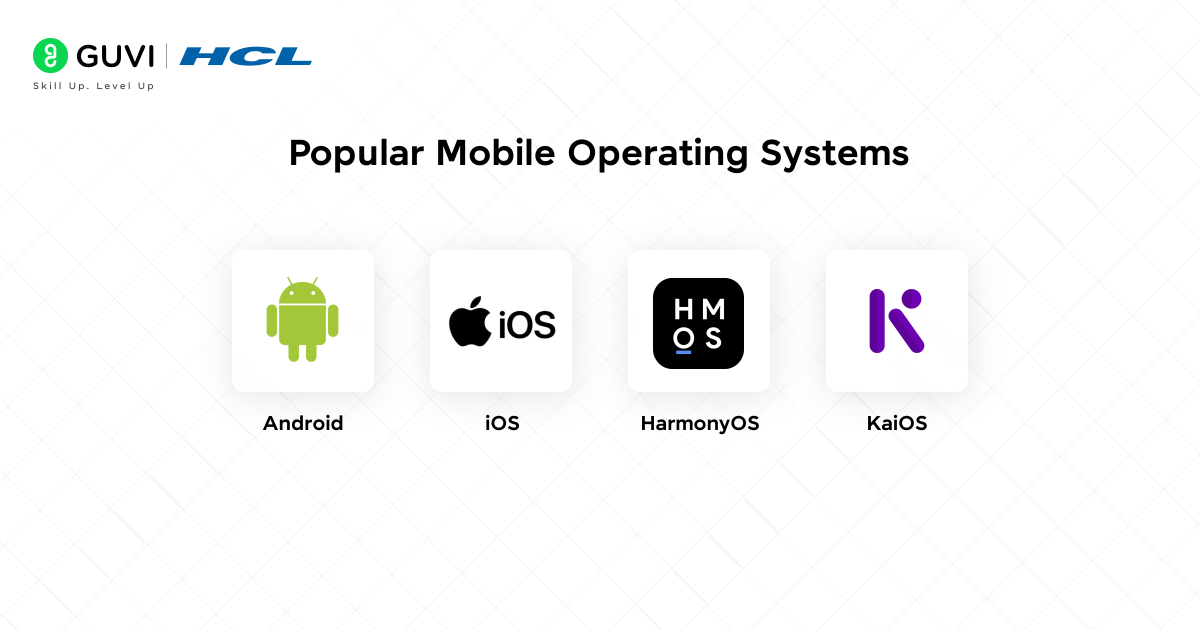
Smartphones around the world run on different operating systems, each offering unique features, performance levels, and user experiences. In this section, we’ll explore the most popular and emerging mobile operating systems — including Android, iOS, HarmonyOS, KaiOS, and a few lesser-known ones that have made their mark in mobile technology.
Here’s a quick overview of what we’ll cover:
- Android – The world’s most used and customizable OS
- iOS – The premium and performance-focused Apple ecosystem
- HarmonyOS – Huawei’s multi-device, connected platform
- KaiOS – Smart functionality for feature phones
- Other notable and past mobile operating systems like Tizen, Ubuntu Touch, and Windows Phone

1. Android
Android, developed by Google, dominates the global smartphone market with more than 70% share. It powers millions of devices across brands like Samsung, OnePlus, Xiaomi, and Realme.
Why Android stands out:
- Open-source and customizable: Users can modify themes, launchers, and system settings freely.
- Wide hardware range: Available on devices from budget-friendly phones to premium flagships.
- App availability: Access to millions of apps on the Google Play Store.
- Integration with Google services: Seamlessly connects with Gmail, Maps, Drive, and more.
Example:
If you use a Samsung Galaxy or Redmi phone, you’re experiencing Android’s flexibility and performance firsthand. You can personalize the interface with widgets, icons, and layouts that suit your preferences.
Limitations:
- Inconsistent updates across brands.
- Security varies depending on manufacturer’s policies.
- Some devices may slow down over time.
Ideal for:
Users who value customization, affordability, and flexibility.
2. iOS
Apple’s iOS is known for its smooth performance, robust security, and polished user experience. It’s exclusive to iPhones and tightly integrated with Apple’s ecosystem, including Macs, iPads, and Apple Watches.
Why iOS excels:
- Consistent performance: Works seamlessly across all supported devices.
- Enhanced privacy and security: Strong encryption and app permissions.
- Optimized app ecosystem: Many developers design apps for iOS first.
- Regular updates: All users receive updates simultaneously.
Example:
When using an iPhone, every interaction — from gestures to animations — feels fluid because Apple controls both hardware and software.
Limitations:
- Limited customization options.
- Higher device cost.
- Apps can only be installed via the App Store.
Ideal for:
Users who prioritize simplicity, reliability, and premium performance.
3. HarmonyOS
Developed by Huawei, HarmonyOS is built to connect multiple devices — smartphones, tablets, smart TVs, and IoT gadgets — into one unified system.
Why HarmonyOS is innovative:
- Cross-device collaboration: Offers a smooth experience across all Huawei devices.
- Performance efficiency: Designed for speed and low latency.
- Expanding ecosystem: Especially strong in regions where Huawei dominates.
Example:
If you own a Huawei phone, smartwatch, and TV, HarmonyOS enables easy file sharing and screen mirroring with minimal delay.
Limitations:
- Limited adoption outside Huawei’s ecosystem.
- Smaller app store compared to Google Play or App Store.
Ideal for:
Users within the Huawei ecosystem who prefer seamless device integration.
4. KaiOS
KaiOS is a lightweight operating system designed for feature phones that bring smart capabilities to affordable devices.
Why KaiOS matters:
- Built for low-cost devices: Runs efficiently on phones with limited hardware.
- Smart features on a budget: Supports apps like WhatsApp, YouTube, and Google Assistant.
- Battery-efficient: It consumes less power and storage than Android.
Example:
Devices like JioPhone in India run on KaiOS, giving millions of users access to the internet and essential apps at an affordable price.
Limitations:
- Limited app selection.
- Basic multitasking capabilities.
Ideal for:
Users who need simple, cost-effective smart features.
5. Other Notable and Past Mobile Operating Systems
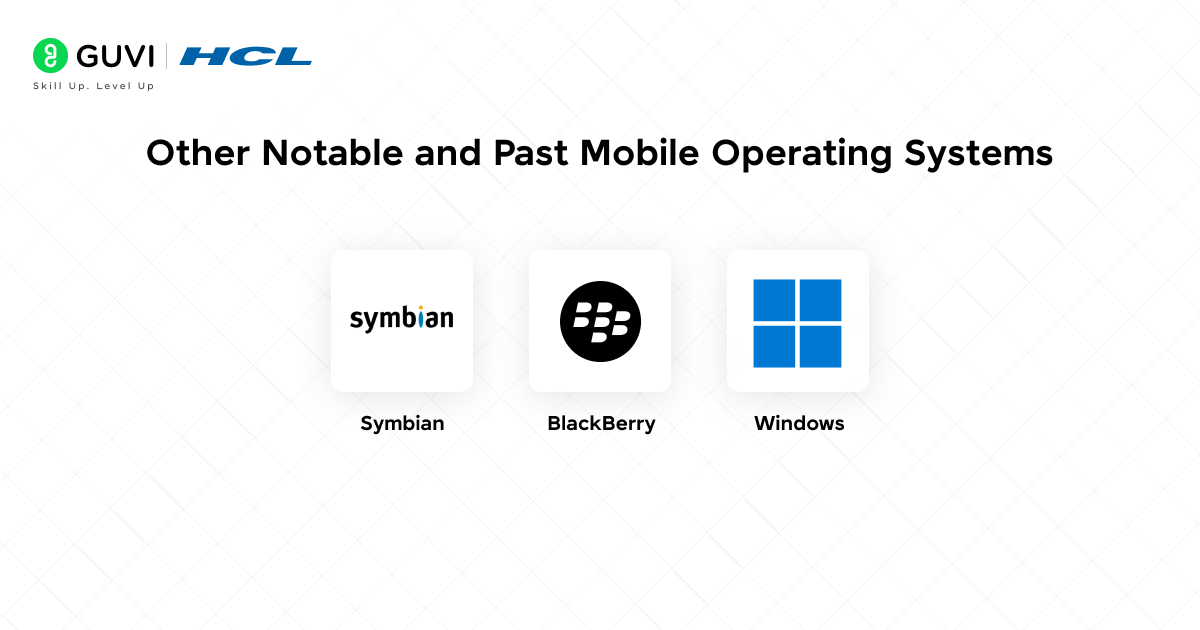
While Android and iOS dominate the global smartphone market, several other operating systems have contributed to mobile innovation — even if they’re now limited to niche devices or discontinued.
- Tizen (Samsung): Found in Samsung smartwatches, smart TVs, and a few older smartphones.
- Wear OS (Google): Focused on wearable devices like smartwatches.
- Ubuntu Touch (UBports): An open-source, Linux-based OS for developers and privacy-focused users.
- Sailfish OS (Jolla): A secure, Linux-based system used in some European and Russian devices.
- Windows Phone (Microsoft): Once a strong competitor, now discontinued.
- BlackBerry OS: Popular for business use in the 2000s, now obsolete.
- Symbian OS (Nokia): One of the first mobile OS platforms, replaced by Android.
- Firefox OS (Mozilla): Experimented with web-based apps; discontinued in 2016.
- Palm OS / webOS: Early smartphone OS; webOS now used in LG smart TVs.
Take your ChatGPT skills to the next level at absolutely no cost!
Through HCL GUVI’s Bharat AI Initiative, powered by OpenAI, you can now learn advanced ChatGPT skills, like better prompting techniques, in English, Hindi, Tamil, Telugu, and Marathi.
Comparing the Top Mobile Operating Systems
| Feature | Android | iOS | HarmonyOS | KaiOS |
| Customization | Very High – offers launchers, themes, and UI tweaks | Limited – mostly fixed Apple interface | High – secure within the Huawei ecosystem | Low – minimal customization |
| Security | Moderate to High – depends on brand updates | Very High – strong privacy and encryption | Large and diverse via the Google Play Store | Basic – limited protection features |
| Device Range | Budget to Premium across multiple brands | Only Premium (Apple devices) | Mid-range to High-end Huawei devices | Budget and feature phones |
| App Ecosystem | Huawei users want seamless device connectivity | Curated and optimized via App Store | Growing but limited app selection | Limited – supports essential apps only |
| Performance | Varies by device; smooth on high-end phones | Consistent and optimized | Stable within Huawei devices | Basic performance for everyday tasks |
| Updates | Vary by manufacturer | Regular and unified for all users | Controlled by Huawei; region-based | Occasional updates |
| User Experience | Flexible and highly customizable | Smooth, reliable, and elegant | Unified across devices | Simple and functional |
| Ecosystem Integration | Strong Google integration (Gmail, Drive, etc.) | Excellent Apple ecosystem (Mac, iPad, Watch) | Designed for Huawei’s multi-device setup | Minimal; limited to KaiOS-compatible apps |
| Best For | Users who value flexibility and variety | Users who prefer privacy and consistency | Huawei users wanting seamless device connectivity | First-time users or those on a budget |
How to Choose the Best Operating System for Mobile
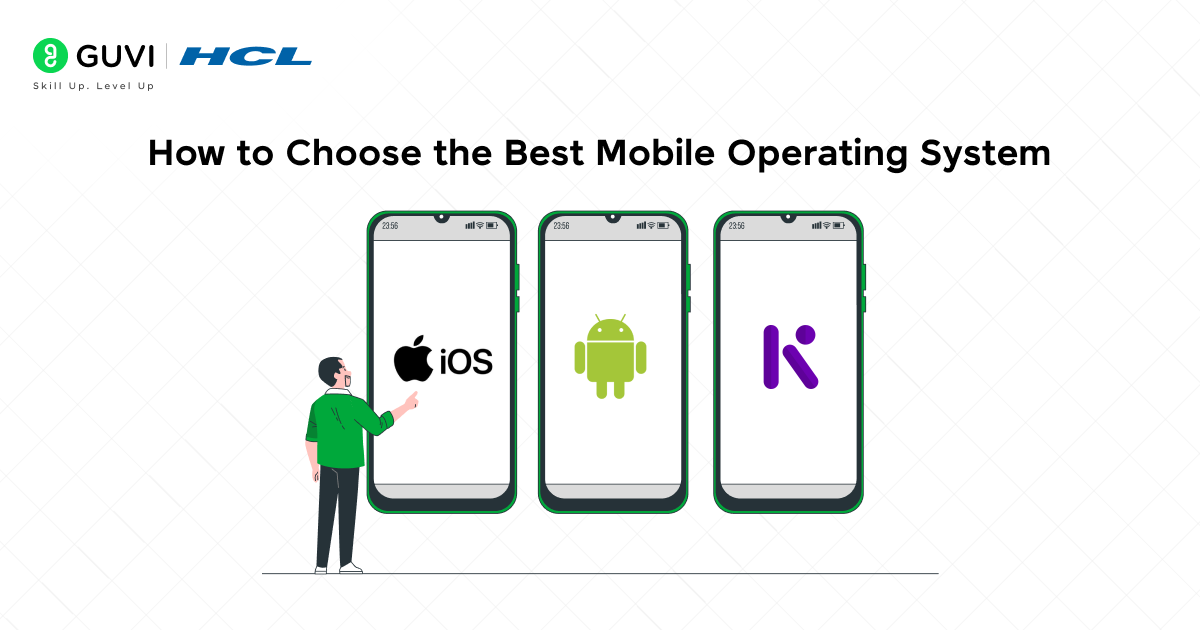
Selecting the right mobile operating system depends on your needs, preferences, and budget. Each OS offers a unique balance of performance, customization, and ecosystem benefits — so the best one for you is the one that aligns with your lifestyle and goals.
- Go for Android if you enjoy personalizing your device, exploring endless app options, and want choices across different price ranges.
- Pick iOS if you prefer a smooth, secure, and consistent experience with excellent long-term support.
- Choose HarmonyOS if you already use Huawei devices and want seamless integration across phones, TVs, and wearables.
- Opt for KaiOS if you need essential smart features, internet access, and apps on an affordable, battery-efficient phone.
Your ideal OS is the one that matches how you use your smartphone — whether that’s for creativity, productivity, or staying connected on a budget.
The Future of Mobile Operating Systems
Mobile operating systems are entering an exciting new era shaped by AI, edge computing, and the Internet of Things (IoT). As technology becomes more connected and intelligent, future mobile OS versions will go beyond just running apps — they’ll anticipate user needs, manage multiple devices effortlessly, and ensure stronger digital safety.
Here’s what the next generation of mobile operating systems will focus on:
- AI-driven intelligence: Smarter automation, predictive actions, and personalized user experiences.
- Seamless connectivity: Integration across smartphones, smart homes, cars, and wearable devices for a unified experience.
- Enhanced privacy and digital well-being: Stronger data protection, transparent permissions, and mindful usage tools.
- Cloud-based performance: Faster updates, better storage management, and effortless syncing across multiple devices.
With emerging players like HarmonyOS and other Linux-based systems steadily improving, the dominance of Android and iOS could soon face real competition. This growing diversity in mobile operating systems promises users more innovation, choice, and control over how they experience technology in the years ahead.
Take your ChatGPT skills to the next level at absolutely no cost!
Through HCL GUVI’s Bharat AI Initiative, powered by OpenAI, you can now learn advanced ChatGPT skills, like better prompting techniques, in English, Hindi, Tamil, Telugu, and Marathi.
Real-World Applications of Mobile OS
Mobile operating systems are at the heart of how we interact with technology every day — from sending messages to controlling smart homes. They extend far beyond smartphones, powering an interconnected world where devices communicate seamlessly to make life easier and smarter.
Here are some key real-world applications of popular mobile operating systems:
- Android: Powers not just smartphones, but also cars (Android Auto), smart TVs, tablets, and even smart refrigerators, making it one of the most versatile systems globally.
- iOS: Drives Apple’s ecosystem by enabling features like health tracking through the Apple Watch, smart home control via HomeKit, and synchronized experiences across iPhones, iPads, and Macs.
- HarmonyOS: Connects Huawei’s ecosystem of devices — from phones and wearables to smart TVs and IoT gadgets — offering a unified digital experience.
- KaiOS: Plays a vital role in bridging the digital divide by bringing internet access, social apps, and smart features to users in rural and developing regions at affordable costs.
For students, developers, and tech enthusiasts, understanding how these systems interact and communicate forms a strong foundation for careers in mobile app development, embedded systems, and UI/UX design — all of which shape the future of digital innovation.
For those inspired to explore how these systems work behind the scenes,HCL GUVI’s Mobile Development Course is a perfect starting point. It helps you learn to build Android and iOS applications from scratch, with hands-on guidance in regional languages—making mobile OS concepts come alive through real-world projects.
Conclusion
Choosing the best mobile operating system depends on your personal preferences, budget, and usage needs. Android stands out for its customization and range of devices, iOS excels in security and seamless performance, while HarmonyOS and KaiOS cater to more specific audiences with unique goals — from cross-device integration to affordable smart access.
Each system brings its own strengths to the table, but understanding how they function gives you the power to make smarter tech choices. Whether you’re a learner, developer, or simply a curious user, exploring how mobile operating systems work can open doors to innovation and a deeper understanding of the technology that connects our world.
FAQs
1. Which mobile OS is most secure?
iOS is generally considered the most secure due to its closed ecosystem and strict app policies. However, Android’s security has improved significantly with each version.
2. Why do Android phones slow down over time?
This happens due to cached files, outdated updates, or excessive background apps. Regular maintenance and timely software updates can help improve performance.
3. Can I install a different OS on my phone?
Technically yes, but it’s complex and not recommended for beginners as it can void warranties or cause compatibility issues.
4. Which OS is best for app developers?
Android offers flexibility and a larger user base, while iOS ensures consistent performance and better revenue potential.
5. Will HarmonyOS replace Android?
HarmonyOS shows promise, especially in Huawei’s ecosystem, but it still has a long way to go before challenging Android or iOS globally.
Success Stories

About the Author
Jebasta
I translate the language of data into stories that anyone can understand. As a writer with a data science background, I simplify analytics, AI, and decision-making so beginners and enthusiasts can confidently explore the world of data.
View all posts by Jebasta
Connect with me @












Did you enjoy this article?