


Artificial Intelligence and Machine Learning Articles
Build an AI Travel Assistant With Google Agent Development Kit (ADK)
Build an LLM Evaluation Framework: A Complete Guide
Building a Language Model Application with LangChain: A Beginners Guide 2026


Get In Touch For Details! Request More Information
10 Best AI Search Engines To Try in 2026
Feb 19, 2026 7 Min Read 9507 Views
(Last Updated)
Remember when looking for something online meant opening about ten different tabs just to find one useful answer? We’ve all been there, juggling multiple sources, skimming endless web pages, and still ending up with half-baked information. However, in 2026, thanks to artificial intelligence, searching the web feels entirely different.
These latest AI search engines do not just bring you results, but they also understand your intent. They consider multiple pieces of information in real time, they can summarise long articles, and they present you with systematised answers that make sense. They can also engage in natural conversation, generate images, or read something and extract meaningful information in seconds.
Whether you are looking up a simple question, researching a topic, or comparing products, the experience is easier and human than ever. In this blog, we will go through the 10 best AI search engines to try in 2026, what makes them powerful, where they shine, and why they’re transforming how we find information online.
Table of contents
- What Makes a Great AI Search Engine?
- The Top 10 Best AI Search Engines in 2026
- Perplexity AI
- Microsoft Bing with Copilot / Bing AI
- Google Gemini
- You.com
- Phind.com
- Komo Search
- Andi Search
- Exa.ai
- Brave Search with Leo
- ChatGPT
- Wrapping it up…
- FAQs
- What is an AI search engine?
- Are AI search engines better than Google?
- Do AI search engines provide real-time data?
- Are AI search engines safe to use?
- Can AI search engines replace human researchers?
What Makes a Great AI Search Engine?
Before we begin the list, it is important to explain the criteria. In 2026, a high-quality AI search engine will be assessed based on more than its ability to answer questions. Here are some key differentiation points of high-quality AI search engines:
- Accuracy & Depth of the Answers: Did it provide factually well-researched and detailed answers?
- Reasoning and Synthesis of Information: Did it pull information from multiple sources and present conclusions that are logical and summarised?
- Multimodal Capabilities: To what degree did it understand audio, video, images and content (beyond text)?
- User Experience/Conversational Flow: Was the interface user-friendly? Did it feel like a conversation?
- Transparency of Sources: Did it make efforts to show where information comes from, to verify or confirm fact-checking?
- Unique Functions: Did it provide anything unique outside of answering questions such as image generation, data analysis or multi-step tasks?
The Top 10 Best AI Search Engines in 2026
1. Perplexity AI
Perplexity AI has rapidly become a fan favorite and a benchmark for what a modern AI search engine should be. It strikes a near-perfect balance between the conversational ease of a chatbot and the rigorous sourcing of a traditional search engine.
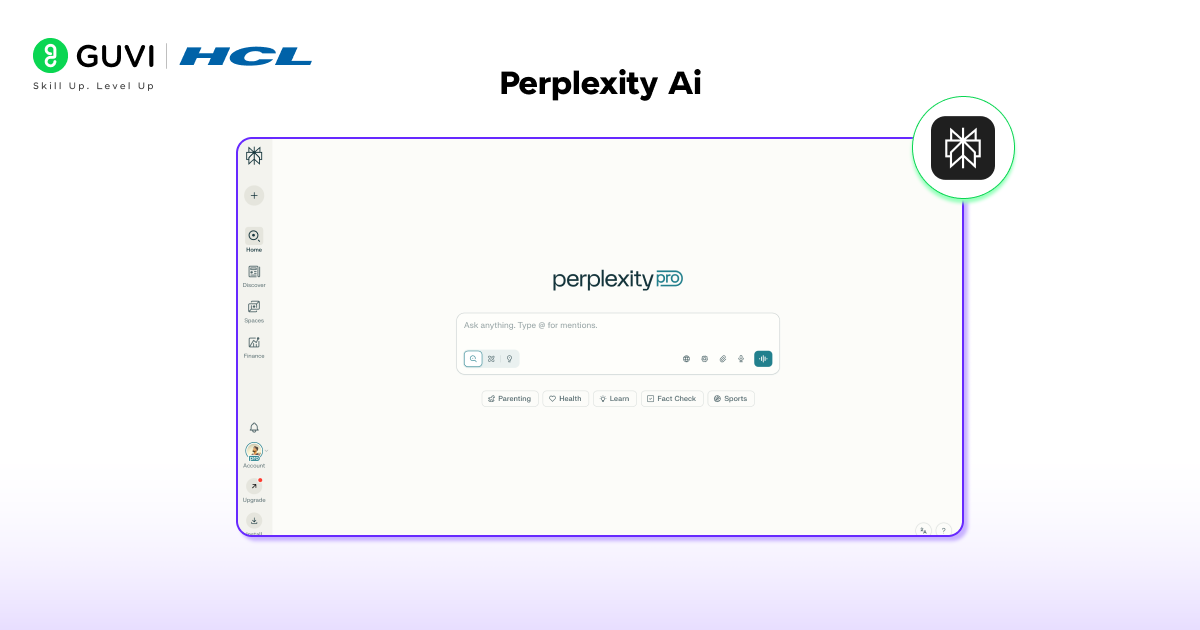
Key Features:
- Conversational Search: You can ask complex, follow-up questions in a natural, flowing dialogue.
- Excellent Sourcing: Every claim in its answer is backed by cited sources, which you can click to verify instantly.
- Focus Options: You can narrow your search to academic papers, news, YouTube videos, or general web results.
- Copilot Mode: A premium feature that acts as an AI research assistant, asking you clarifying questions to deliver a more targeted and comprehensive result.
- File Upload: Analyze and ask questions about uploaded PDFs, images, and documents.
Additional:
- Best For: Researchers, students, and professionals who need accurate, sourced information quickly.
- Official Link: Perplexity AI
- Paid or Free: Free (with a Pro plan)
- Paid version price: Approx. ₹1,600/month (USD $40 for the Pro plan)
- Company: Perplexity Labs
Why it’s a Top ‘Best AI Search Engine’ in 2026: Perplexity eliminates the guesswork of traditional search. It’s designed for the user who values the facts and context over speed alone. Its consistent commitment to transparency through sourcing makes it one of the most trustworthy AI Search Engines available.
2. Microsoft Bing with Copilot / Bing AI
Microsoft Copilot, powered by some of OpenAI’s most advanced models (for example, GPT-4 turbo). This is more than just a chat-based search engine; it’s a personalized AI companion that travels with you everywhere.
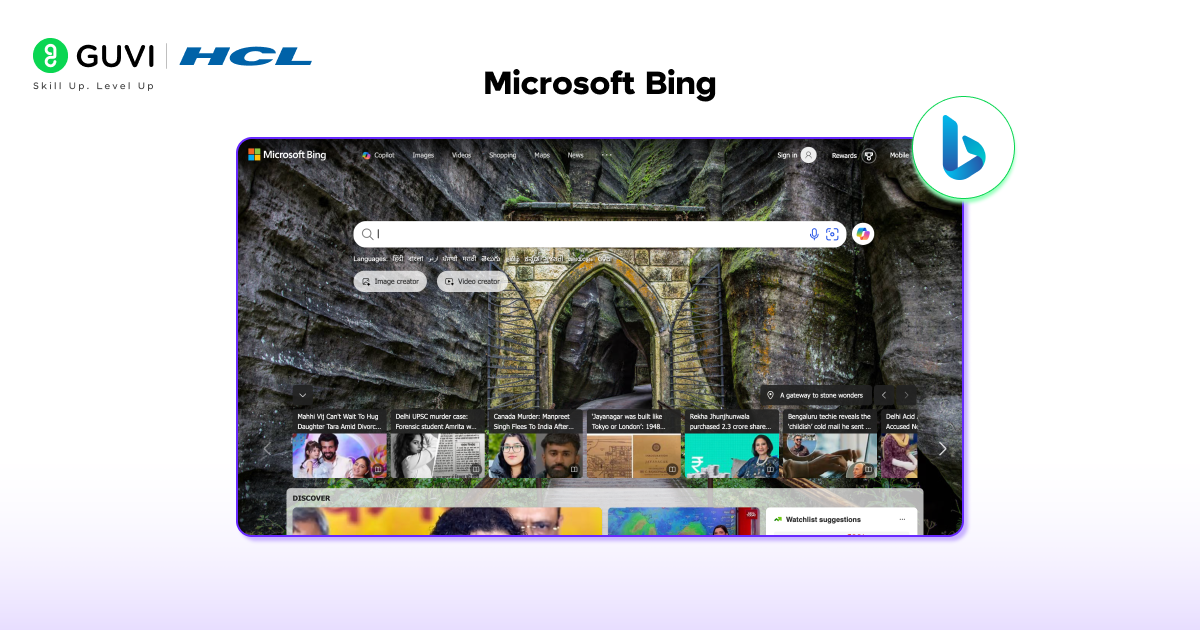
Key Features:
- Multiple Conversation Styles: Select from Creative, Balanced, or Precise to adjust the tone and depth of responses
- DALL-E 3 Image Generation: Directly generate high-quality images from within the chat, a feature seamlessly built into the search experience.
- Long Context Window: The tool can analyze and summarize any number of VERY long documents or articles for you; just provide a link or upload the content.
- Microsoft Embedded: Easily summarize an email in Outlook, analyze data in Excel, or generate a draft document in Word using simple prompts.
Additional:
- Best For: Everyday users, creatives, and those who are deeply integrated into the Windows OS, Edge browser, and Microsoft 365 suite.
- Official Link: Microsoft Bing
- Paid or Free: Freemium / Paid option “Copilot Pro”
- Paid version price: ~ ₹2,000 per user per month for Copilot Pro
- Company: Microsoft
Why it’s a Top ‘Best AI search engine’ in 2026: Its strength is the versatility and integration. For millions of Windows users, Copilot is not an application they ‘go to’, it’s a tool that’s always there, ready to help with everything from a simple web query to a complex creative task.

3. Google Gemini
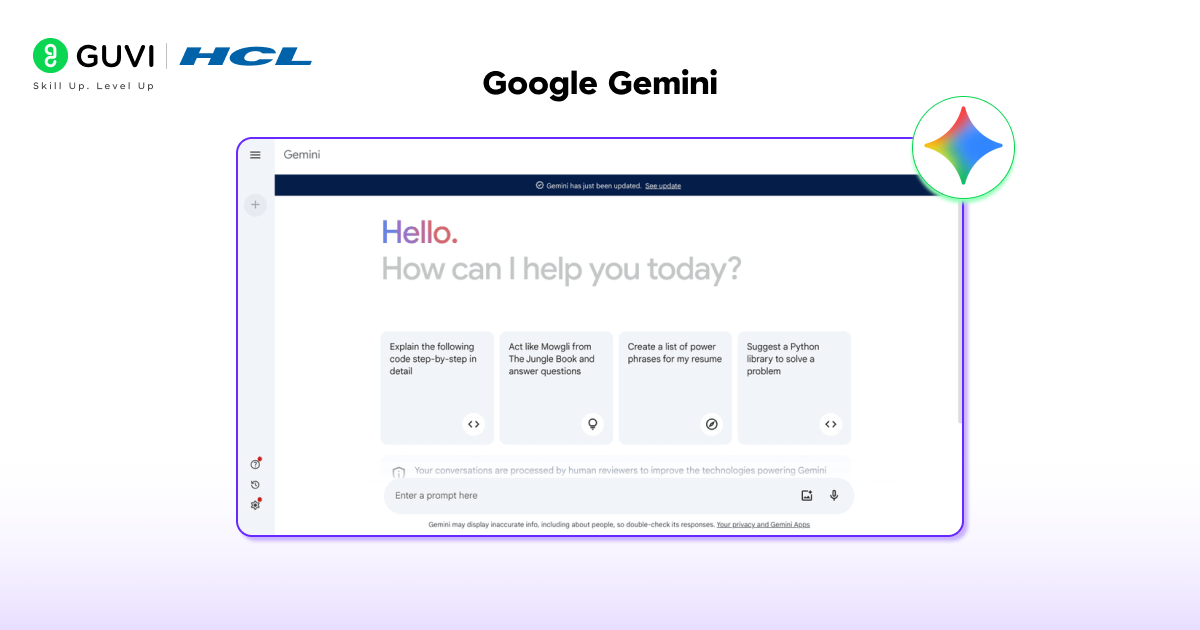
Google originated in search, and the new AI, Gemini (formerly Bard), is a direct response to the new era. By integrating its Gemini professional and ultra-models with the Google search engine, Google has created a massive information retrieval engine.
Also read: Gemini vs ChatGPT: Which AI Chatbot is better? a detailed comparison of the two biggest AI models powering modern search engines.
Key Features:
- The “Google It” Button: A simple yet very effective tool; it takes a conversational response and performs a traditional Google search, enabling you to access the best of both worlds.
- Broad multimodality: From day one, Gemini was designed to be natively multimodal, effortlessly understanding the text, images, audio, and video.
- Integration with Google Apps: You can easily retrieve information from your Gmail, Google Docs, Drive, and Maps to personalize your information. (“Summarize the main points from the document shared in my Drive yesterday.”)
- Real-time data access: Utilizes Google’s primary strength of indexing the internet in real-time to gain information about news and events.
Additional:
- Best For: Accessing the combined capabilities of Google’s knowledge graph and cutting-edge AI.
- Official link: Gemini
- Paid or Free: Free in basic mode
- Paid version price: For Google’s related AI Pro tiers: ~ ₹1,950 per month for the AI Pro plan
- Company: Google
Why it is a top “best AI search engine” in 2026: While others can perform well in certain areas, Google’s overall size, the accuracy of its knowledge graph, and the integration with its ecosystem makes Gemini the default and powerful information retrieval engine
Get your Free copy of HCL Guvi’s Generative AI eBook your quick guide to the AI revolution!
4. You.com
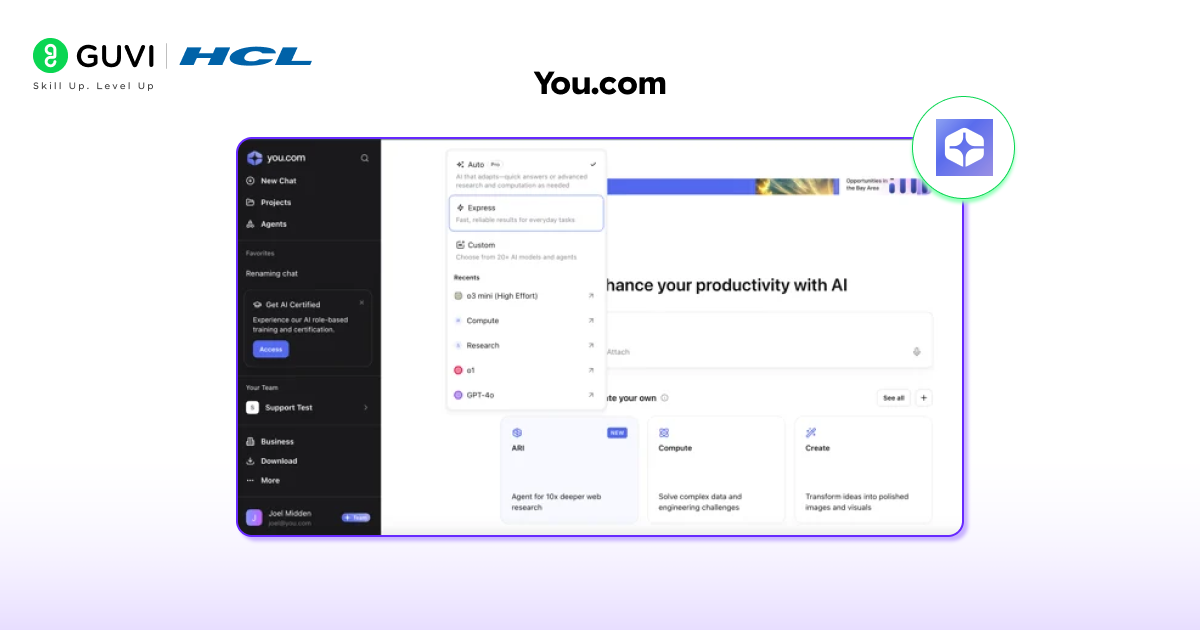
You.com is a unique AI search engine that offers “AI Apps”. It acts as a search dashboard and allows you to enable or disable specific sources or apps, like Reddit, Wikipedia, or its own image generation, by default to be included in your search results.
Key Features:
- AI Apps: Choose which sources you want the AI to prioritize or only when answering.
- Privacy-Conscious: You.com has an impressive focus on user privacy and promises not to track or sell your search data.
- Code-Oriented Searching: Great for developers with apps specific to searching Stack Overflow, GitHub, and related resources.
- Chat and Image Modes: Easily switch back and forth between a conversational and visual, image creation experience.
Additional:
- Best For: Individuals looking to customize their AI search experience to include apps and sources they use and trust.
- Official Link: You.com
- Paid or Free: Freemium (Free tier + Pro / paid tiers)
- Paid version price: Pro plan costs USD $15/month (~ ₹1,200–₹1,300)
- Company: SuSea, Inc
Why it’s a Top 2026 ‘Best AI Search Engine’: It empowers the user. If you want your AI search to include perspectives from databases, academic or specific social media platforms, You.com gives you control and makes it a highly personalized experience.
Enrol in HCL GUVI’s Free 5-Day AI & Machine Learning Email Series and discover how AI search engines, deep learning, and generative models actually work. Get daily hands-on lessons, practical projects, and expert insights right in your inbox.
5. Phind.com
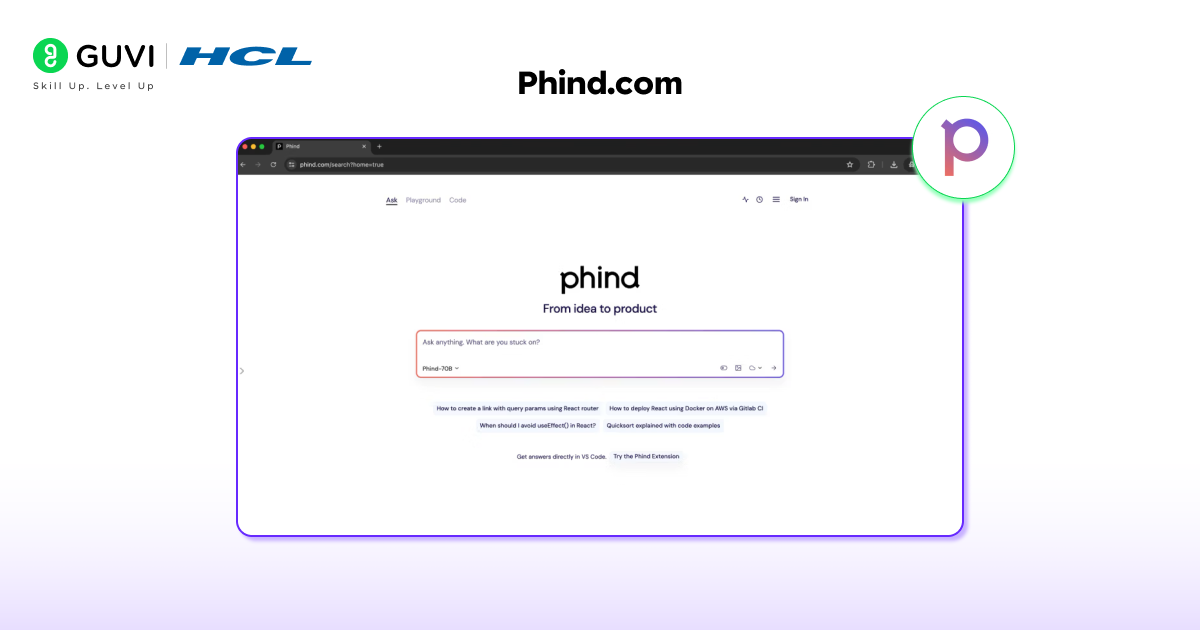
“Phind.com” is a specialty AI search engine – specifically designed to deliver accurate technical responses quickly. It is like having a senior developer on demand 24/7.
Key Features:
- Very Fast Technical Answers: You get well-explained, step-by-step replies when asking things like troubleshooting coding errors, architecture, or framework-specific issues.
- Strict Linking Sources: It always links to any official documentation, Stack Overflow posts, or reputable tutorials used to respond to you.
- Context Venerating: It can recognize when you reference a code snippet you provided in your query.
- Model Selection: It will sometimes hash out the results based on your selection of different AIs (like theirs, or GPT-4), etc.
Additional:
- Best For: Software developers, programmers, and tech problem-solvers.
- Official link: Phind.com
- Paid or Free: Freemium / Paid tiers
- Paid version price: Contact for pricing / not publicly disclosed
- Company: Hello Cognition
Why it is a top 2026 ‘Best AI search engine’: For its target audience, it is arguably unmatched. It bypasses the fluff and delivers concrete, actionable technical information faster and more reliably than general-purpose AI Search Engines.
- The first AI-powered search engines appeared over a decade ago, but in 2026, they can summarize, reason, and converse like a human assistant.
- Google Gemini can analyze text, images, audio, and video simultaneously — a true multimodal search tool.
- Perplexity AI not only answers questions but also cites every source, making research faster and more reliable.
- Some AI search engines like You.com and Brave Leo prioritize privacy, meaning your searches aren’t tracked or stored.
6. Komo Search
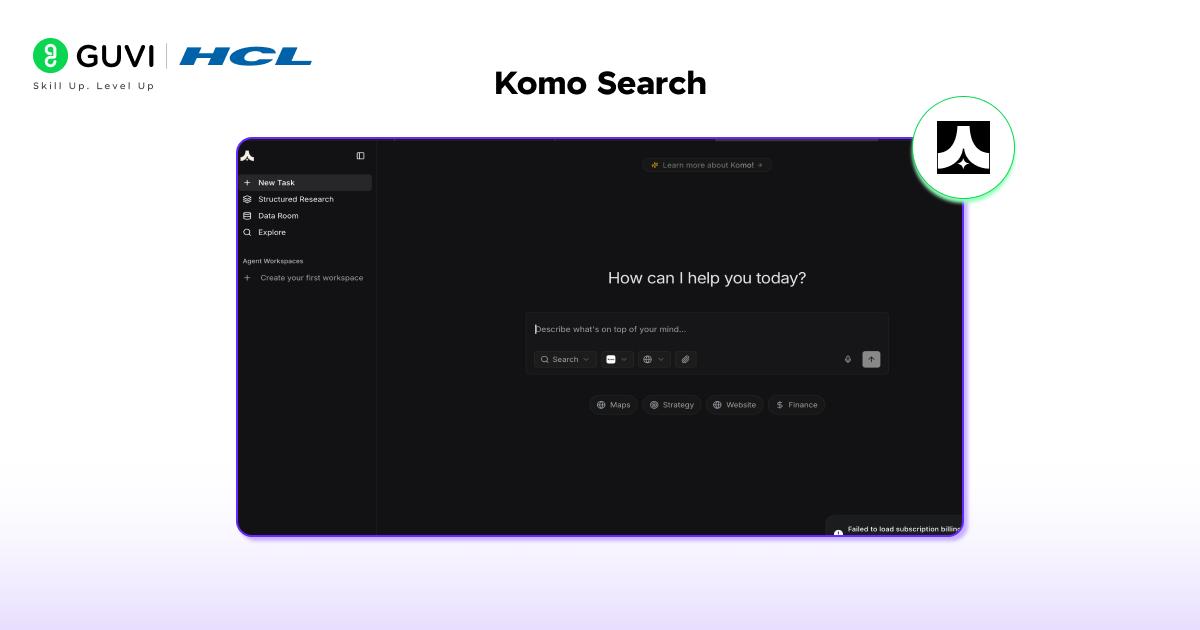
Komo Search emphasizes a peaceful and distraction-free search experience. It allows you to pursue your interests without the distraction of ads or tracking.
Key Features:
- Clean Simple Interface: Built for focus, Komo removes distractions from the search process.
- Strong Privacy Promises: Komo states that it does not save personal information or search history.
- Explore and Chat Modes: Komo features the “Explore” mode for the traditional quick answer search and the “Chat” mode for conversations that require a deeper effort.
- Related Visual Journey: Komo approaches information from a more visual perspective, which extends the experience of curiosity and discovery.
Additional:
- Best For: Users who prefer a Free, clean interface for privacy-driven exploration.
- Official link: Komo
- Paid or Free: Free
- Company: Komo
Why it is a top 2026 ‘Best AI search engine’: In a world of data monetization, the users’ approach to enjoying a relaxing experience of the web in a private manner is a refreshing alternative.
7. Andi Search
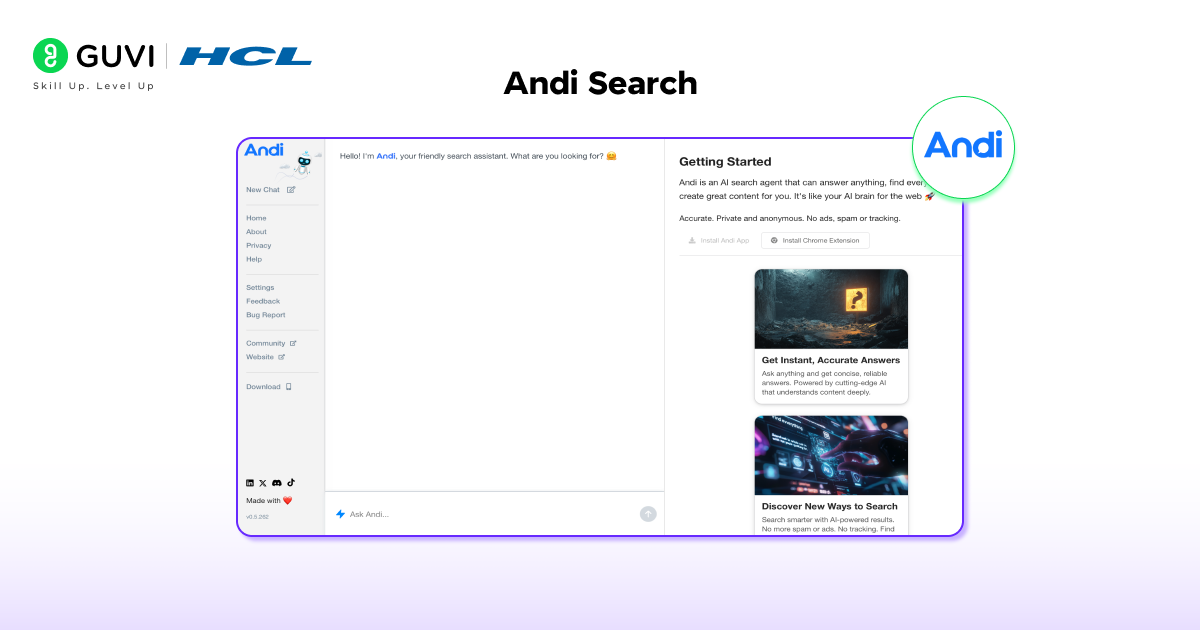
Andi is based on a “Less is more” principle. Andi focuses on answering your question as simply as it can, relying on many sources, to act against misinformation and make sense of things.
Key Features:
- Summarization-first: Instead of a list of links or a long chat history, Andi value the clear summary in the results at the top of it’s results.
- Generative answers: It doesn’t just copy-paste, but rather, it synthesizes text and creates a new coherent answer.
- Privacy-first: Like Komo, it does not track users or queries.
- Easy to use: It’s stupid simple, no buttons to configure, and no settings to put into modes.
Additional:
- Best for: Students and fact-checkers seeking a simple, summarization-focused tool.
- Official Link: Andi Search
- Paid or Free: Freemium
- Company: Andi
Why it is a top 2026 ‘Best AI search engine’: Its simplicity is its superpower. For quick, factual queries where you just want a verified answer without the extra steps, Andi is a brilliant and efficient choice.
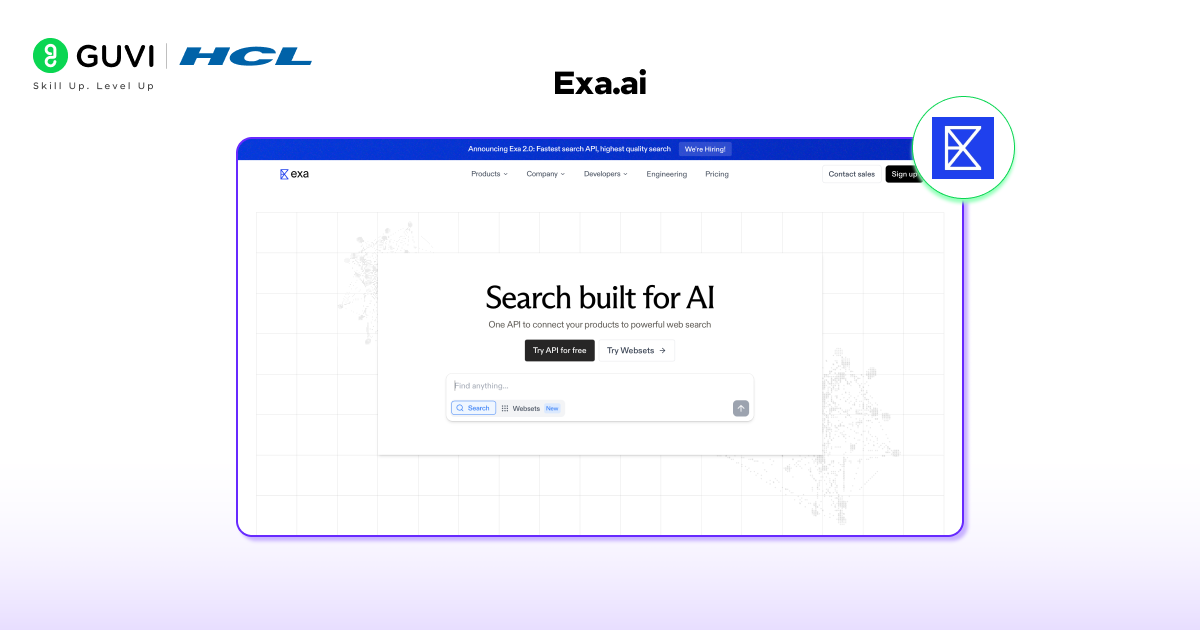
8. Exa.ai
Exa.ai works on a slightly different premise. It’s not actually a chatbot; it is a retrieval engine designed to truly comprehend a webpage’s content. You could search for “a cynical critique of modern technolog,y” and Exa would find the blog posts that embody that tone and concept, not just the web pages containing the words “cynical” and “technology.”
Key Features:
- Content-Based Search: Search webpage contents based on effective meaning, conceptual abstraction, and writing style.
- Powerful filters: Filter results by date, domain, article length, and the presence of these items: code snippets, images, etc.
- API-First: Even though it has a web interface, the real power of Exa is triggered through its API. Developers can build a potent semantic search into their own application.
Additional:
- Best For: Content curators, writers, and researchers searching for a concept, not just keywords.
- Official Link: Exa.ai
- Paid or Free: Free/Paid
- Paid version price: Contact for pricing / not publicly disclosed
- Company: Exa Labs Inc
Why it is a top 2026 ‘Best AI search engine’: Exa represents a subsequent layer of intelligent search. This is for when searching by keyword is insufficiently precise, and you need to characterize a “needle in a haystack” based on its essential features, not its labels.
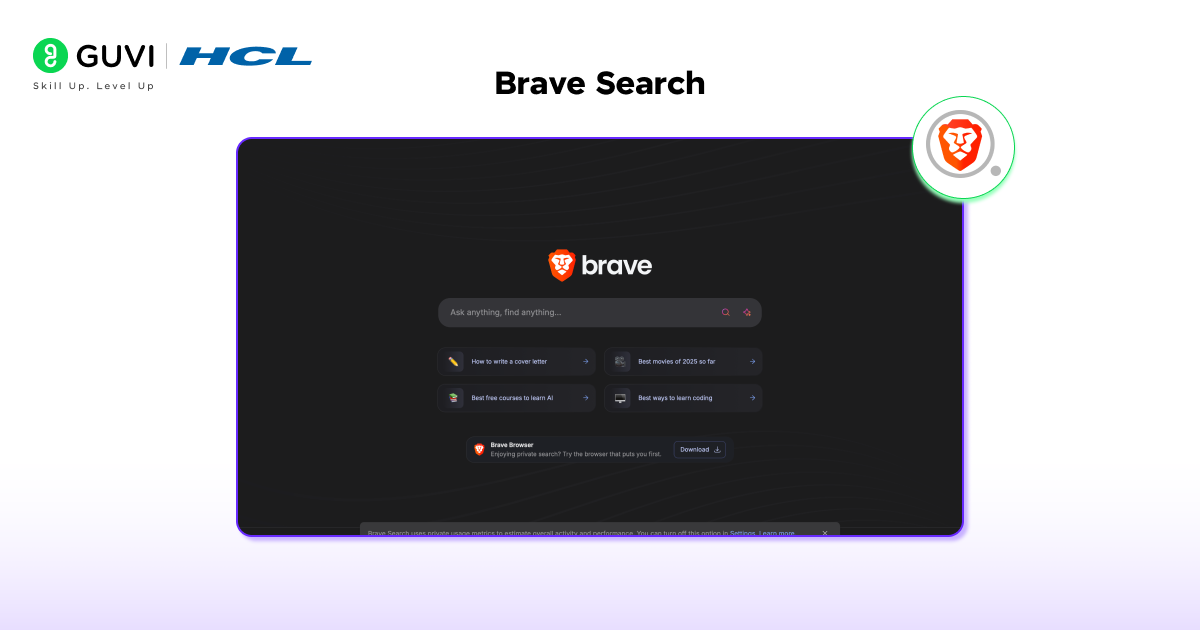
9. Brave Search with Leo
Brave Search has established itself as a viable, independent alternative to Google. With the introduction of Leo, its native AI assistant, it has become a fully-featured contender in the AI search space.
Key Features:
- Independent Index: Brave Search runs on its own index of the web, reducing reliance on other tech giants.
- Privacy by Default: As with all Brave products, Leo does not require an account and your conversations are not stored or used for training.
- Summarize and Q&A: Can summarize search results pages or answer questions directly within the browser.
- Free and Premium Tiers: Offers a capable Free version and a premium subscription for higher-rate limits and access to more advanced models.
Additional:
- Best For: Users of the Brave browser who want an independent, privacy-respecting AI search.
- Official Link: Brave Search
- Paid or Free: Freemium (free tier + premium)
- Paid version price: ₹250 per month ( $3.00/month)
- Company: Brave Software
Why it is a top 2026 ‘Best AI search engine’: For the privacy-conscious user who doesn’t want to compromise on AI features, Brave Leo offers a powerful, integrated solution that aligns with a philosophy of web independence.
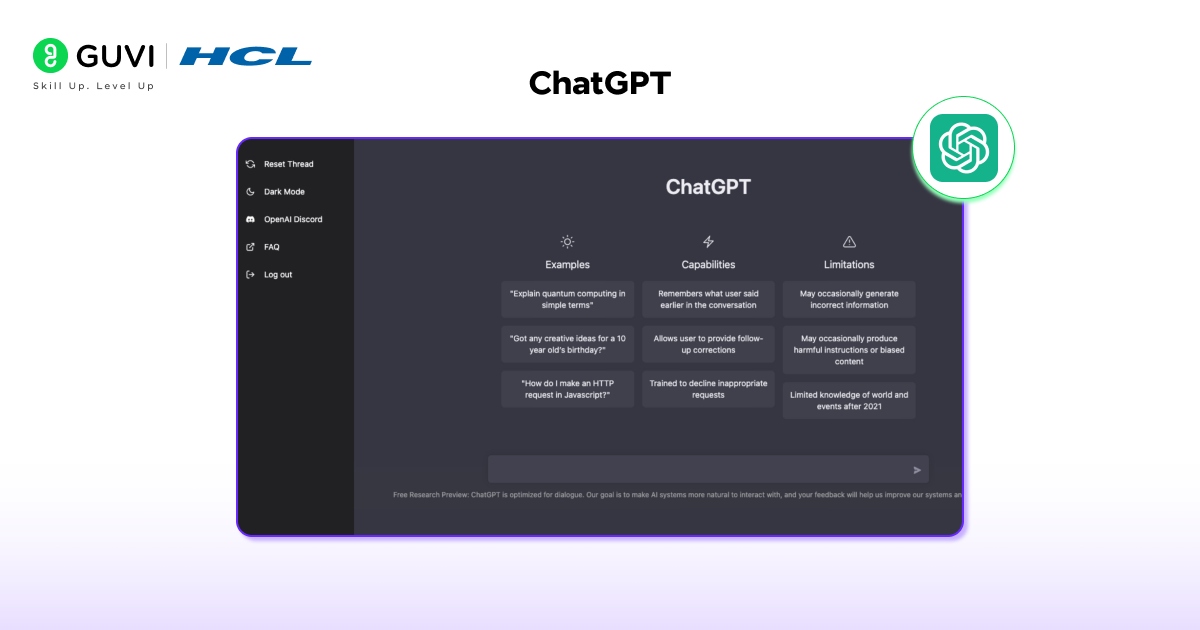
10. ChatGPT
While OpenAI’s ChatGPT began as a pure chatbot, its integration with web browsing (via Bing) transforms it into a formidable AI search engine. Nonetheless, the best feature about ChatGPT is its ability to understand and retain context for long, complex conversations.
Also read: What is ChatGPT, DALL·E, and Generative AI? Explore how these models are reshaping content creation and innovation.
Key Features:
- Deep Contextual Memory: ChatGPT can remember and reference information from long before in very long conversations.
- Custom GPTs: Users can create or utilize a pre-built GPT, a specialized ChatGPT made for a very specific task like travel planning, research, or creative writing, and that Custom GPT can utilize web search, as well.
- Advanced Reasoning: ChatGPT is exceptionally good at breaking apart complex problems, generating ideas, and writing in whatever you want or need it to style and tone.
- Analysis of Files: ChatGPT can read and analyze data from uploaded files (PDFs, CSVs, Word docs) and learn from that data, placing it back into the conversation context to combine with all web real-time information.
Additional:
- Best For: Creative idea generation, complex multi-step tasks, and users who want an AI in the form of a chatbot only.
- Official Link: ChatGPT
- Paid or Free: Free tier + paid plans (e.g. ChatGPT Plus / Pro)
- Paid version price:
- Company: OpenAI
Why it is a top 2026 ‘Best AI search engine’: ChatGPT is especially valuable when your “search” actually entails a difficult multi-prong project that requires brainstorming, drafting, and then synthesis. Its conversational features and customization abilities truly set ChatGPT apart from the other options.
Join HCL GUVI’s AI & Machine Learning Program, co-designed by IIT-M Pravartak, and gain hands-on experience in creating intelligent systems like AI search engines, chatbots, and recommendation models. Learn from industry mentors, work on real-world projects, and fast-track your AI career today!
Wrapping it up…
In 2026, we are not merely content consumers; we are conversant partners with machines that can assist us to dig, synthesize, reason, and filter information all in human language. There is still an onus on us to use the AI tools wisely: check the sources, be skeptical, and combine them with original research. None of these tools replaces human judgment, but the best enhance it.
These AI search engines are a meaningful step toward the future where technology is less of a tool and more of a thinking partner. Each time we engage with the model, it learns to better understand context, refine results, and respond to individual preferences. What used to take hours of searching a manual process can take only moments with accuracy, clarity, and creativity.
Don’t be afraid to experiment. Try a few of these tools and discover which ones feel right in your workflow.
FAQs
1. What is an AI search engine?
An AI search engine uses artificial intelligence to figure out the user’s intent and provide straightforward, conversational responses instead of web links.
2. Are AI search engines better than Google?
Google and AI search tools like Perplexity and Gemini offer different experiences. AI search tools summarize and reason, while Google focuses on presenting a list of results. Many users will use both AI search engines and Google.
3. Do AI search engines provide real-time data?
Yes. AI engines like Gemini and Perplexity use information from the internet in real-time and can display up-to-date and accurate answers.
4. Are AI search engines safe to use?
Most AI search engines are safe, particularly those that focus on privacy, such as Komo, Brave Leo, or You.com, which don’t track searches.
5. Can AI search engines replace human researchers?
No. While AI search engines will help quicker and smarter research, human judgment is often needed to verify facts.
Success Stories

About the Author
Vishalini Devarajan
An Aerospace Engineer turned content writer, I focus on making complex concepts easy to understand through well-structured, reader-friendly blogs. Whether it’s a technical topic or a non-technical one, I love creating content that is clear, engaging, and impactful.
View all posts by Vishalini Devarajan
Connect with me @












Did you enjoy this article?