


Interview Articles
InfyTQ Interview Experience 2026: Process, Questions, Preparation & Tips
Deloitte NLA Interview Experience 2026: Rounds, Questions and Preparation - Best Guide
Capgemini Exceller Interview Questions 2026: Coding, Technical, HR, and AI Prep - Best Guide
Wipro Elite NTH Interview Experience 2026: What Candidates Say


Get In Touch For Details! Request More Information
Why YouTube Tutorials Aren’t Enough for Interview Success (And What Actually Works)
Feb 23, 2026 4 Min Read 1296 Views
(Last Updated)
Many candidates rely heavily on YouTube tutorials when preparing for interviews, believing that watching explanations, solutions and quick tips is enough to guarantee success. While these videos make concepts feel easy and familiar, they do not recreate the real pressure, unexpected questions, decision-making speed, or communication clarity required in an actual interview. This creates a performance gap where you understand the answer on screen, but struggle to deliver it confidently in front of an interviewer.
This blog explains why YouTube tutorials alone are not enough, what critical interview skills they fail to develop, and how you can fill those gaps with methods that build real-world interview readiness. It is especially helpful for job seekers, fresh graduates, career switchers, and professionals preparing for competitive interviews. By reading this, you will know exactly what works, what doesn’t, and how to move from passive viewing to active, results-driven preparation.
Quick Answer
YouTube tutorials are great for learning concepts, but they cannot teach pressure handling, spontaneous thinking, decision making, or real-world communication. Real interview success comes from active practice, simulated pressure, and scenario-based training.
Table of contents
- Why YouTube Tutorials Alone Don’t Prepare You for Real Interviews
- They Teach Knowledge But Not Performance
- They Don’t Simulate Unpredictability
- They Promote Passive Learning, Not Skill Building
- What Actually Works (Beyond YouTube)
- Practicing Under Realistic Interview Pressure
- Building Spontaneous Thinking Instead of Scripts
- Strengthening Communication Under Stress
- Practicing Adaptive Thought Flow
- Enhancing Listening Skills For Better Responses
- Developing Emotional Steadiness
- Conclusion
- FAQs
- Why aren’t YouTube tutorials enough for interview preparation?
- How can I prepare for real interview pressure?
- Are mock interviews useful?
- How do I stay calm during an interview?
- Can over-preparing harm interview performance?
Why YouTube Tutorials Alone Don’t Prepare You for Real Interviews
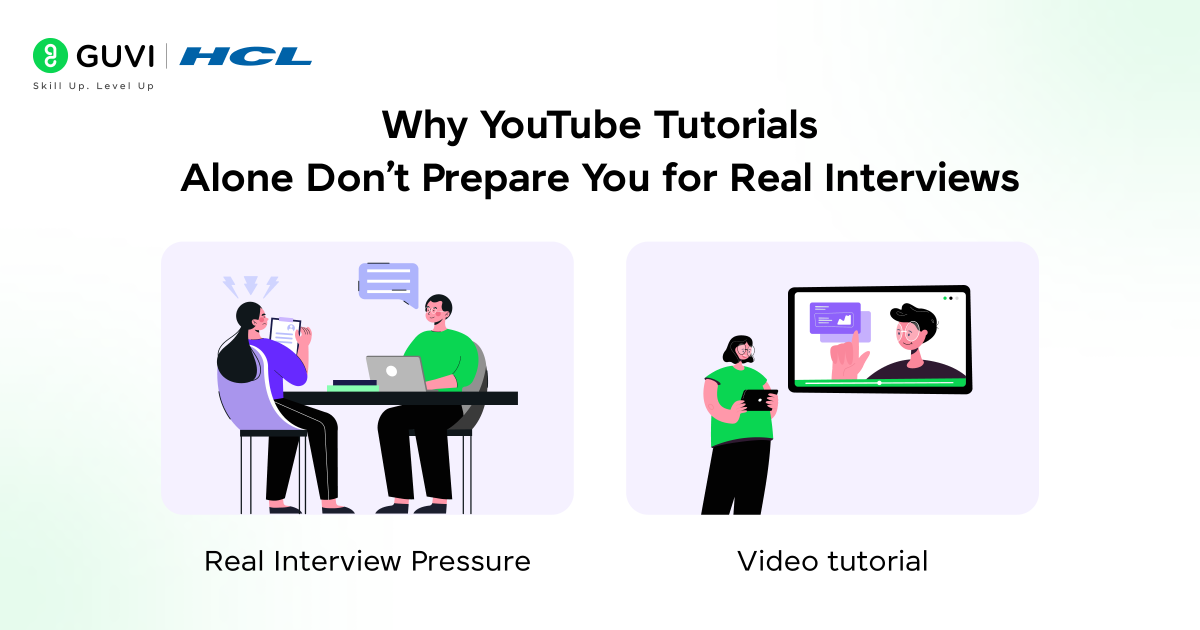
Preparing for interviews through YouTube often feels productive, but it doesn’t build the real-world performance skills needed in high-pressure interview settings. These videos simplify concepts, show polished answers, and make learning feel easy but interviews test your composure, thinking speed, and communication under stress. This section explains exactly why tutorials fall short and what alternative methods strengthen your interview readiness.
1. They Teach Knowledge But Not Performance
Watching tutorials helps you understand concepts, but interviews judge how well you perform those answers when it truly matters. The comfort of watching a video cannot replicate the pressure of sitting in front of an interviewer, thinking on your feet, or dealing with unexpected questions.
- They Reduce Anxiety Artificially – Videos feel predictable, so you don’t experience real interview tension.
- They Don’t Show Communication Flaws – You never hear your own hesitation, pacing issues, or filler words.
- They Create False Confidence – You feel prepared while watching, but lose confidence under real pressure.
Tip: Record yourself answering top interview questions so you can see your tone, clarity, and confidence.
Example: Someone may know the perfect “Tell me about yourself” answer, but freeze when asked unexpectedly because they never practiced it in a live setting.
2. They Don’t Simulate Unpredictability
Real interviews involve unpredictability, like pauses, follow-up questions, redirections, and interruptions; none of which happen on YouTube. Interviews test your thinking depth, adaptability, and reaction time, which passive watching cannot build.
- No Real Back-And-Forth Conversation – Tutorials cannot challenge your answers or push you deeper.
- No Interruptions Or Redirections – Interviewers often change direction suddenly to test your clarity.
- No Silence Or Pressure Moments – Awkward pauses in real interviews can make candidates nervous.
Tip: Practice with a friend who intentionally asks surprise follow-up questions.
Example: You may rehearse a STAR story perfectly, but struggle when the interviewer asks, “Can you be more specific?”
3. They Promote Passive Learning, Not Skill Building
Watching feels like learning, but interviews demand active skills like speaking clearly, thinking quickly, structuring stories, and managing nerves. Passive learning cannot build these performance muscles.
- You Absorb But Don’t Apply – You understand answers but cannot express them fluently.
- Real Growth Comes From Speaking Practice – Talking out loud builds confidence and clarity.
- Knowledge Doesn’t Equal Performance – Many candidates know the answer, but cannot deliver it under pressure.
Tip: For every tutorial you watch, speak three related answers aloud to build real interview stamina.
Example: Knowing the STAR method is easy, but telling a paced, confident STAR story requires repeated verbal practice.
Do check out –15 Common Job Interview Mistakes to Avoid
What Actually Works (Beyond YouTube)
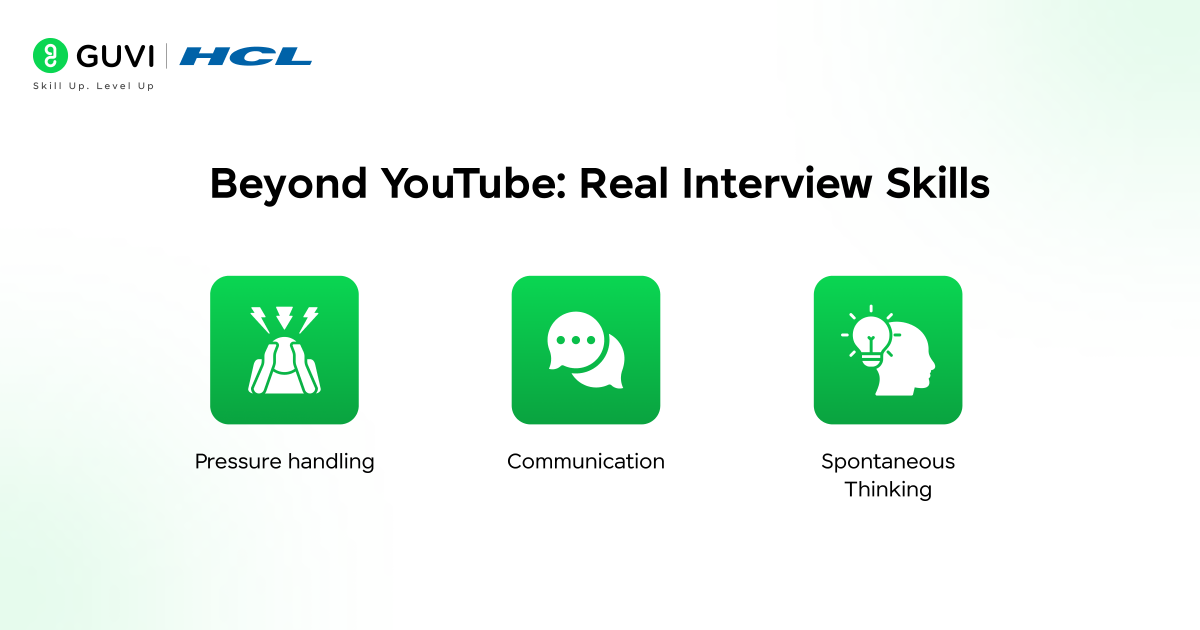
Real interview success comes from practicing the skills that YouTube cannot teach, such as handling pressure, thinking spontaneously, and communicating clearly under stress. The following methods strengthen the performance side of interview preparation, helping you build real confidence instead of passive familiarity.
1. Practicing Under Realistic Interview Pressure
Interviews create pressure that affects your voice, clarity, and decision-making. YouTube removes all discomfort, so you never learn how your mind behaves under stress. Practicing in a realistic, uncomfortable setup helps train your brain to perform even when the stakes feel high.
- Practice With A Timer – Mimics urgency and helps you manage time better.
- Ask Unfamiliar People For Mock Interviews – Talking to strangers simulates real interviewer dynamics.
- Add Unpredictable Follow-Ups Or Pauses – Prepares you for interruptions and silent pressure moments.
Tip: Stand while answering during mock interviews to improve posture, voice projection, and confidence.
Example: A candidate who practices time-bound answers often performs better because they learn to structure responses quickly under pressure.
2. Building Spontaneous Thinking Instead of Scripts
Memorized answers sound robotic and fall apart when the interviewer changes the question. Real interviews reward structured thinking, quick reactions, and adaptability skills that grow only through spontaneous practice.
- Use Frameworks, Not Scripts – Structures like STAR or PREP guide your answer without memorizing lines.
- Train Your Mind To Think Fast – Builds quick decision-making for unexpected questions.
- Answer Unprepared Questions Regularly – Teaches you to stay calm even when you don’t know what’s coming.
Tip: Do daily 30-second spontaneous speaking drills by picking random questions and answering immediately.
Example: Someone familiar with the STAR method can still struggle if their script breaks, but a person trained in spontaneous storytelling adapts smoothly.

3. Strengthening Communication Under Stress
Interviewers judge not just what you say but how clearly and confidently you say it. Stress often makes candidates speak fast, ramble, or lose structure. Practicing communication under pressure helps you stay composed and sound more professional.
- Maintain Slow, Steady Speech – Shows confidence and keeps your thoughts organized.
- Use Short Pauses Wisely – Helps you reset and avoid rushing through answers.
- Control Your Tone – Prevents you from sounding nervous or uncertain.
Tip: Practice deep breathing before answering to calm your mind and stabilize your voice.
Example: Candidates who pause for a second before responding often give clearer, more confident answers.
4. Practicing Adaptive Thought Flow
Interviewers often test your ability to shift direction or switch examples mid-answer. Building this flexible thinking ensures you remain composed even when the conversation changes suddenly.
- Reframe Answers Quickly – Learn to adjust when the interviewer says, “give another example.”
- Switch Scenarios On The Spot – Strengthens mental agility.
- Handle Multi-Layered Questions – Helps you break complex questions into simple parts.
Tip: Practice answering a question in three different ways to build adaptability.
Example: When asked to explain a challenge, an adaptable candidate can instantly provide an alternate scenario without hesitation.
5. Enhancing Listening Skills For Better Responses
Strong answers come from understanding the question deeply. Many candidates listen partially and rush to respond. Training your listening skills helps you answer with accuracy and relevance.
- Listen Fully Before Speaking – Reduces misunderstandings.
- Identify Key Words Quickly – Helps you structure responses faster.
- Clarify When Needed – Shows maturity and confidence.
Tip: Practice repeating the question in your own words before answering.
Example: Candidates with strong listening skills avoid going off track during situational questions.
6. Developing Emotional Steadiness
Interviews challenge your confidence, your composure, and your ability to stay calm under evaluation. Emotional steadiness helps you manage pressure gracefully.
- Stay Neutral To Difficult Questions – Prevents anxiety spikes.
- Reset Mentally Between Questions – Keep your mind clear.
- Maintain Consistent Confidence Throughout – Leaves a positive final impression.
Tip: Use short mental resets such as a deep breath or a two-second pause.
Example: Candidates who stay emotionally steady often handle tough follow-ups better than those who rely only on memorized answers.
Do check out HCL GUVI’s Interview Preparation Course, designed to help you build confidence, handle pressure, and perform better in real interviews. It includes mock interviews, communication practice, and feedback-driven improvement to make you truly interview-ready.
Conclusion
Mastering interview performance goes far beyond watching YouTube tutorials. While videos help you understand concepts, they cannot teach you how to manage pressure, respond to unpredictable questions, or communicate with confidence during a real interview. True interview success comes from developing performance skills — the ability to think clearly, stay composed, and deliver strong answers when the stakes feel high.
To take these learnings to the next level, focus on building active practice habits such as high-pressure mock interviews, spontaneous answer drills, and communication training under stress. Combine these techniques with the knowledge you gain from tutorials, and you develop the mental sharpness and emotional steadiness needed to excel. When you balance understanding with real-world practice, you transform into a candidate who can perform with confidence in any interview setting.
FAQs
1. Why aren’t YouTube tutorials enough for interview preparation?
They provide information but do not help you practice real-time performance skills such as emotional control, spontaneous thinking, communication clarity, and handling pressure.
2. How can I prepare for real interview pressure?
Simulate unpredictable situations, practice with unfamiliar interviewers, use timers, and include intentional silent moments or follow-up questions during practice.
3. Are mock interviews useful?
Yes, they are effective when they include realistic pressure, thinking challenges, and emotional discomfort. Without these elements, mock interviews stay too easy and do not prepare you for real situations.
4. How do I stay calm during an interview?
Use controlled breathing, structure your answers before speaking, slow your pace, and shift your mindset to focus on clarity instead of perfection.
5. Can over-preparing harm interview performance?
Yes, because heavily memorized answers can fall apart when the interviewer twists the question or asks for more detail, which may create confusion or nervousness.
Success Stories

About the Author
Jebasta
I translate the language of data into stories that anyone can understand. As a writer with a data science background, I simplify analytics, AI, and decision-making so beginners and enthusiasts can confidently explore the world of data.
View all posts by Jebasta
Connect with me @









Did you enjoy this article?