


Career Articles
Capgemini Exceller Technical Assessment 2026: AI + Technical - Best Guide
Cognizant GenC Elevate Exam Pattern & Syllabus for Freshers 2026 - Best Guide
Capgemini Exceller Placement Papers and Solutions 2026 - Best Guide
How to Pass the Accenture Recruitment Process 2026/27: The Complete Guide


Get In Touch For Details! Request More Information

How to Change Career Paths When You Have No Idea What to Switch To: A Complete Guide for Confused Professionals
Jul 06, 2026 6 Min Read 1569 Views
(Last Updated)
How do you choose a new career path when you feel lost and unsure where to turn next? Many professionals reach a stage where their work feels overwhelming, and their motivation wanes, creating a subtle discomfort that grows over time. A sense of pressure builds because you want change, yet every option feels uncertain, and every decision feels too important. Confusion grows stronger when you compare your current reality with possibilities that seem distant or unclear.
A clearer direction forms once you slow down, reflect on what matters to you, and allow your thoughts to settle into something more grounded. A shift begins with steady steps that help you understand what aligns with your strengths and your needs.
Keep reading to gain practical steps that will guide your career transition with confidence:
Table of contents
- Why You Don’t Know What Career to Choose (and Why That’s Okay)
- Common Reasons for Career Confusion
- How Expectations Influence Your Choices?
- Psychology Behind Career Decision Paralysis
- Step-by-Step Career Change Guide for Professionals Who Feel Lost
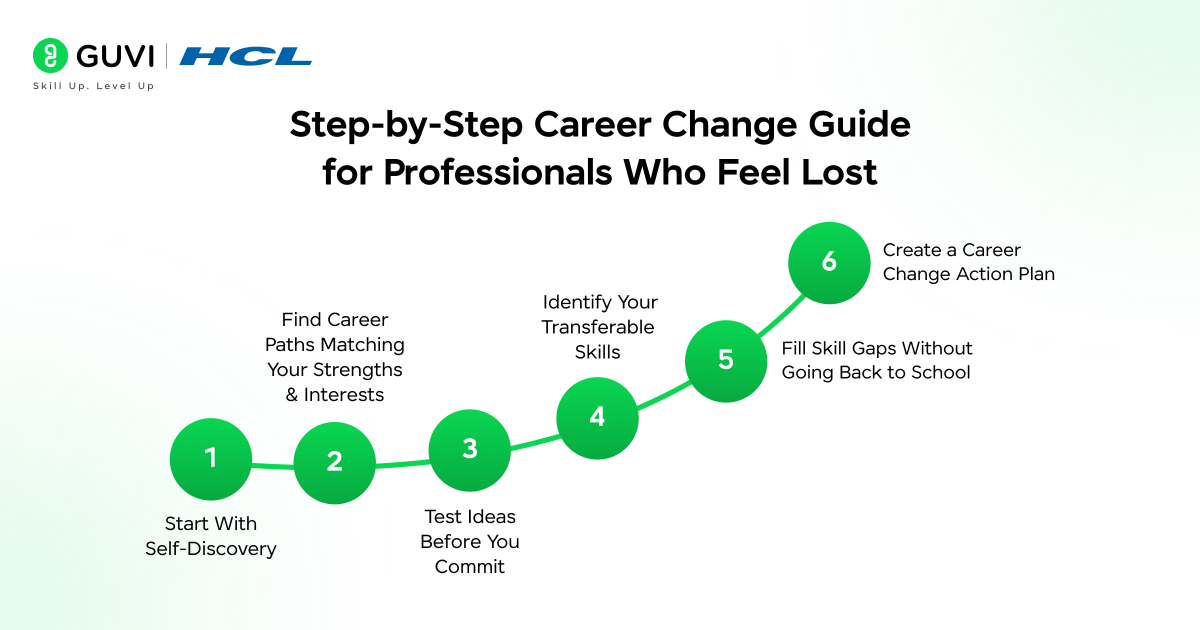
- Step 1: Start With Self-Discovery
- Step 2: Find Career Paths That Match Your Strengths and Interests
- Step 3: Test Ideas Before You Commit
- Step 4: Identify Your Transferable Skills
- Step 5: Fill Skill Gaps Without Going Back to School
- Step 6: Create a Career Change Action Plan
- Real-Life Success Stories
- Jeff Bezos
- Dwayne Johnson
- Vera Wang
- Tips to Overcome the Emotional Side of Career Change
- Conclusion
- FAQs
- How can I explore new fields without leaving my job right away?
- What can I do if my goals feel unclear even after research?
- How can I stay consistent during a long transition?
Why You Don’t Know What Career to Choose (and Why That’s Okay)
Many professionals feel uncertain about career transitions because burnout can dull motivation and create a sense of pressure that clouds their judgment. Here are the key elements that contribute to career confusion:
Common Reasons for Career Confusion
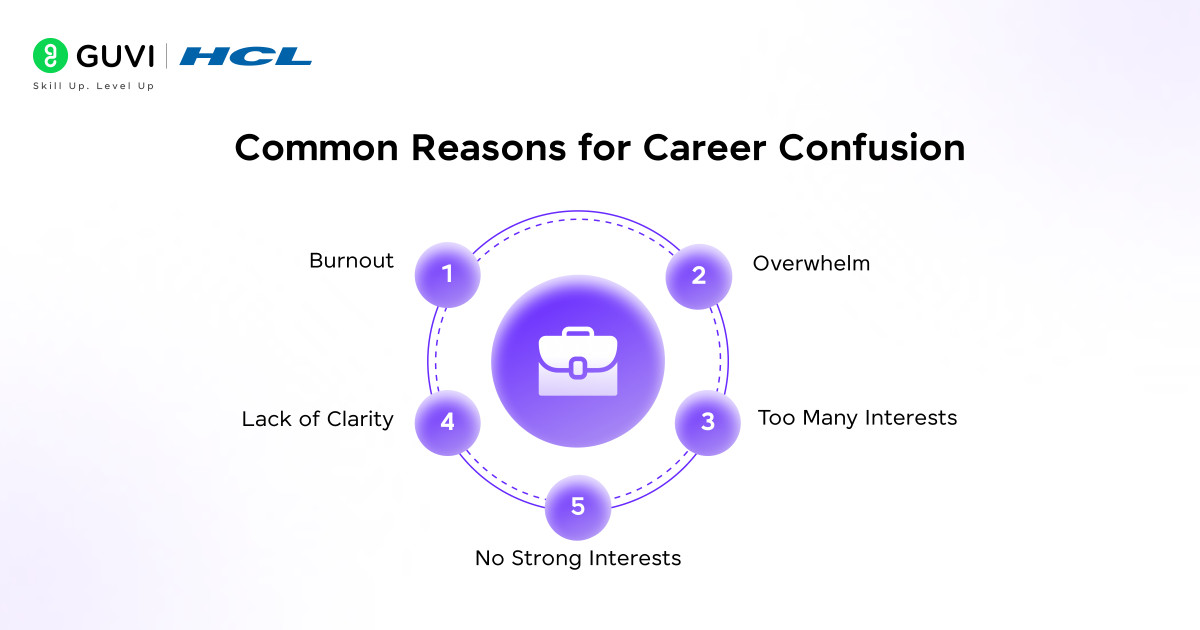
- Burnout: Prolonged exhaustion weakens your ability to picture yourself in a new path and reduces confidence in your choices.
- Overwhelm: Too much information at once creates mental pressure that slows decision-making.
- Lack of Clarity: Unclear goals or uncertain strengths make options feel distant and hard to evaluate.
- Too Many Interests: Multiple directions pull your attention in different ways, which can feel difficult.
- No Strong Interests: A sense of disconnect forms when nothing stands out enough to guide your next step.
How Expectations Influence Your Choices?
- Societal Pressure: External standards push you toward roles that appear stable or impressive, even when they do not match your needs.
- Sunk-Cost Pull: Years invested in one field create internal pressure to remain, which slows your ability to consider new paths.
Psychology Behind Career Decision Paralysis
- Fear of Choosing Wrong: Concern about long-term consequences can interrupt your confidence. This pressure grows when you consider a big shift, such as a change career from marketing to data science. The path feels unfamiliar, which makes every choice feel heavier.
- Overthinking Patterns: Trying to examine every possibility at once weakens clarity and leads to hesitation.
- Conflicting Priorities: A pull between responsibility and personal desire disrupts your sense of direction and makes any choice feel heavier.
Also, Read: How to Successfully Change Careers at 30: A Step-by-Step Guide
Step-by-Step Career Change Guide for Professionals Who Feel Lost
Step 1: Start With Self-Discovery
Understanding yourself forms the foundation of a strong career shift because your values, strengths, and interests shape every choice that follows. A clear picture of who you are gives direction to your decisions and reduces the pressure that comes from guessing your way forward. This stage works as a grounding point that steadies your thoughts before you explore any job titles.
Identify Your Core Values
- Exercises to Pinpoint Values: A simple values list can help you select qualities such as fulfillment, flexibility and impact. Ranking them helps you see what supports long-term satisfaction. Reflecting on moments where you felt proud or at ease can also reveal meaningful patterns.
- Why Values Predict Long-Term Fit: A role aligns with you when it supports what you care about. Misalignment creates tension, which grows stronger with time. Values guide you toward choices that feel stable and genuine.
Assess Your Strengths and Natural Talents
- Career Strengths Assessment Tools: Tests such as CliftonStrengths, VIA and High-5 provide structured insight into your abilities. These tools help you understand where your natural talent shows up.
- Analyzing Strengths From Past Successes: Reviewing past achievements helps you see repeated themes. These themes highlight strengths that appear across different situations.
Map Your Interests and Curiosities
- Interests Versus Passions: Interests provide gentle direction. Passions carry stronger emotions yet are harder to identify. Interests give you a steady way forward without pressure.
- Using Micro-Interests to Spark Direction: Small curiosities offer clues when no strong passion stands out. These clues guide you toward areas worth exploring.
Step 2: Find Career Paths That Match Your Strengths and Interests
A sense of direction becomes clearer once you compare your qualities with paths that match them. This stage shifts your search from confusion to structure.
Use Career Exploration Frameworks
- Ikigai: Helps you reflect on what you are good at, what you care about and which opportunities support your future.
- The Hedgehog Concept: Guides you toward work that aligns with your strengths and builds steady momentum.
- The Zone of Genius: Highlights tasks that feel natural because they align with your strongest abilities.
Explore Popular Career Pivots for Mid-Career Professionals
- Tech-Adjacent Roles: Positions such as project coordination, user research, or product design offer strong paths for anyone searching for a career change to tech.
- Creative Careers: Roles in design, writing or brand strategy support expression and originality.
- Healthcare and Human Services: Administrative, support and patient-focused roles provide meaningful and stable options.
- Remote-Friendly and Freelance Paths: Writing and consulting roles offer flexibility.
- High-Paying No-Degree Roles: Sales, operations, and certain technical roles provide high income without new academic degrees.
Also, Read: 7 Best Tech Jobs for Career Switchers and How to Get Them!
Tools to Generate Career Ideas
- O*NET: Offers detailed explanations of duties, skills and work styles.
- LinkedIn Career Explorer: Shows transition possibilities based on your current skills.
- How to Analyze Job Descriptions for Fit
Comparing responsibilities with your strengths: helps you see which roles feel natural and which ones create strain.
Step 3: Test Ideas Before You Commit
This stage helps you gain clarity through real experience rather than long periods of thought. Small tests reduce pressure and reveal what fits you.
The Power of Career Experiments
- Job Shadowing: Observing a typical workday helps you understand the environment and pace.
- Micro-Projects: Small tasks show how you respond to relevant work.
- Volunteering: Short assignments introduce you to new spaces with low risk.
- Freelancing Test Runs: Project-based work reveals how you perform under real conditions.
- Informational Interviews: Asking targeted informational interview questions gives you practical insights from people already in the field.
Using Low-Risk Experiments to Validate Fit
- What to Look For: Notice how each activity feels and whether it creates energy or strain.
- Red Flags and Deal-Breakers: Pay attention to environments or tasks that conflict with your values.
- Comparing Paths Objectively: Reflecting on each experiment helps you see which direction supports your growth.
Step 4: Identify Your Transferable Skills
Transferable skills act as a bridge between your past and your future, and they support you as you shift from non-tech to tech with steady confidence. These skills show that your experience carries real value even when your new path looks different from your previous roles.
Common Transferable Skills: Communication, organization, analysis, creativity, leadership and problem solving appear across many industries and support strong transitions.
How to Reframe Your Experience: Presenting your experience through skills rather than duties helps you make it relevant to a new field. This approach strengthens your confidence.
Examples of Resume Language
- Before: Managed customer calls
After: Strengthened customer relationships through solution-focused communication - Before: Completed monthly reports
After: Analyzed key data to support team decisions
Step 5: Fill Skill Gaps Without Going Back to School
Career shifts often require new knowledge, and you gain steadier progress when you build skills through smaller commitments that fit your pace and capacity.
Fast and Affordable Upskilling Options
- Bootcamps: Offer focused training for specific roles.
- Short Certifications: Strengthen your credibility in targeted areas.
- Online Courses by HCL GUVI: Provide flexible learning that fits your schedule.
- Apprenticeships: Combine hands-on experience with guided support.
When to Consider a Degree: A degree becomes useful when your target field requires it as a formal entry point. Some roles value skills over credentials, which makes a degree unnecessary. Evaluating cost, time and expected outcomes helps you choose wisely.

Step 6: Create a Career Change Action Plan
A steady career shift becomes more manageable once your next steps are organized into simple actions that guide your progress with clarity and purpose. Below are the core parts of this plan:
- Setting a 90-Day Career Clarity Roadmap:
Break your transition into three focused 30-day phases. The first month centers on self-discovery and clarifying what you truly want. The second month could focus on career exploration, narrowing a few paths that match your strengths. The final month may involve testing your ideas through small actions, conversations, or projects. - Building a Skill-Building Schedule: Create a weekly plan that includes short learning sessions, practice tasks, and small milestones. You can divide your schedule into theory (courses and reading), application (mini-projects, portfolio tasks), and reflection (tracking improvement and identifying gaps).
- Creating a Connection-Building Strategy: Conversations with professionals support networking for career change and help you understand real expectations.
- Tracking Your Progress With Milestones: Small checkpoints help you measure growth and maintain motivation.
Feeling stuck but ready to start fresh? Join HCL GUVI’s Zen Class, an IITM Pravartak-certified career transition program designed to help professionals shift into high-demand tech roles like Data Science, Full Stack Development, and AI, all with mentor-led training, hands-on projects, and 100% placement support.
Real-Life Success Stories
Jeff Bezos

Jeff Bezos built a stable career in finance as a senior executive at an investment firm. He performed well and followed a clear upward path, yet a growing interest in the online marketplace began to influence his thinking. The internet was still in its early stages and the idea of leaving a secure role created tension, especially after years invested in the corporate world.
His turning point came during a personal reflection where he compared the comfort of staying with the regret he might feel later if he ignored an idea that felt meaningful. He made a steady plan, left his role and began working on an online bookstore that started in his garage. His early steps required patience, outreach and trial, and each milestone helped him strengthen the foundation for Amazon.
Dwayne Johnson

Dwayne Johnson grew up with deep roots in professional wrestling, and he trained with the intention of building a lifelong career in the sport. Injuries and setbacks interrupted his early path, and he struggled to find a stable footing after disappointment in football. He entered wrestling and succeeded, yet he sensed that his long-term direction needed a new focus.
Acting felt uncertain because he lacked experience, yet he pursued small roles that allowed him to test his fit. His early performances helped him see that his presence, timing and storytelling skills worked well on screen. Each project strengthened his confidence and opened new opportunities. His consistent growth led him to become one of the most recognized names in entertainment.
Vera Wang

Vera Wang built the early part of her career as a competitive figure skater and later moved into journalism at Vogue. She worked hard to grow within the magazine yet reached a point where she no longer felt aligned with the direction of her role. A career shift felt risky because she had already invested years into publishing, and the fashion industry appeared out of reach.
Her turning point came when she allowed herself to explore her long-standing interest in design more closely. This interest guided her toward a bridal design opportunity, and she created her first wedding gown at the age of forty. The experience showed her that she could use her editorial eye, creative judgment and understanding of style in a completely new field. Her first boutique opened soon after, and her designs grew into one of the most recognized names in fashion.
Tips to Overcome the Emotional Side of Career Change
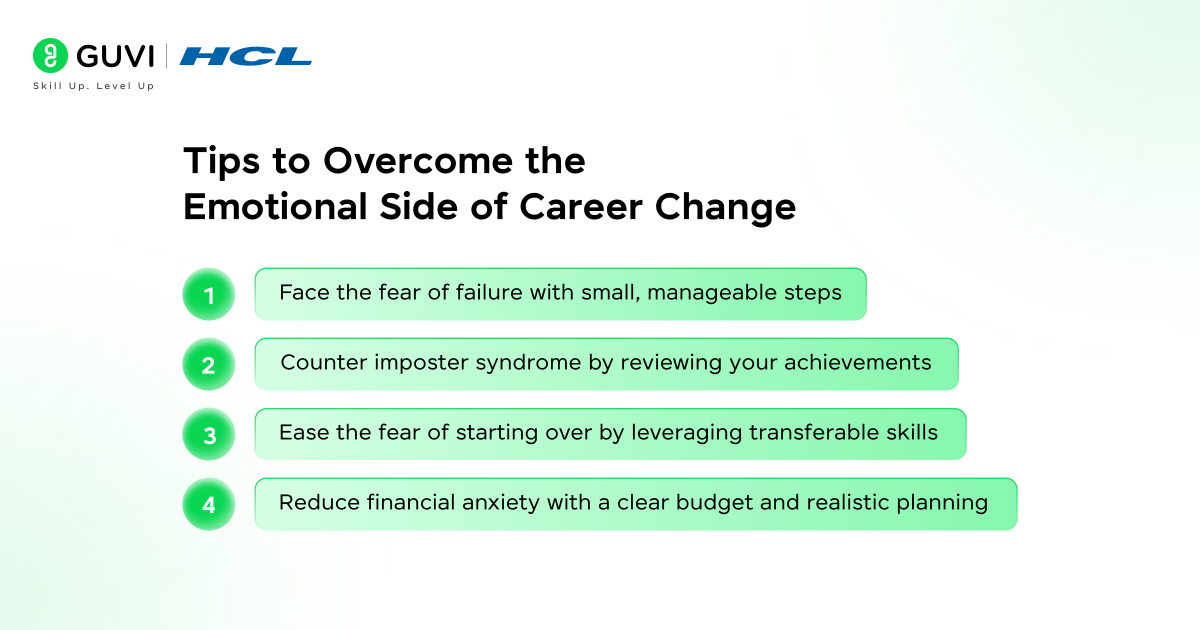
- Fear of Failure: You can build confidence by focusing on small steps that reduce pressure and give you useful feedback. Each step helps you see progress, which makes the overall shift feel less intimidating and more achievable.
- Imposter Syndrome: You can ease self-doubt by reviewing your past achievements and identifying patterns in your strengths. These patterns remind you that you carry real skill and consistency, even in a field that feels new.
- Fear of Starting Over: A new beginning feels heavy because you think about everything you built in your previous career. You can feel grounded again once you recognize that you are not returning to zero. Your habits, discipline and transferable skills shorten your learning curve and help you adjust more easily than you expect.
- Managing Financial Anxiety: Career changes often influence money decisions, and financial worry can limit your willingness to move forward. You can create stability by setting a clear budget, researching realistic salary ranges and planning your timeline. Practical preparation reduces uncertainty and helps you feel grounded.
If you’re ready for a meaningful career change but don’t know where to begin, HCL GUVI’s Zen Class Program helps you take that next step with confidence. This IITM Pravartak-certified program offers mentor-led training, real-world projects, and 100% placement support to help professionals transition smoothly into high-demand tech roles, whether in data science, full stack development, or AI. Discover a structured way to build new skills, gain clarity, and restart your career with purpose and stability.
Conclusion
Career change becomes clearer once you slow down, understand your strengths, and take steady action toward a direction that feels more aligned. You can build clarity through reflection, practical tests and consistent learning. Each step helps you replace uncertainty with structure and purpose. A new path forms gradually, and your progress grows stronger as you stay patient with yourself and remain open to possibilities that match your needs.
FAQs
1. How can I explore new fields without leaving my job right away?
You can start with small projects, short courses or volunteer tasks that help you experience a field before you make a major decision.
2. What can I do if my goals feel unclear even after research?
You can focus on short experiments that reveal what feels comfortable and what creates discomfort. These experiences often show direction more clearly than long reflection.
3. How can I stay consistent during a long transition?
You can set weekly actions, track small wins and review your progress regularly. These habits create momentum and help you move forward with confidence.
Success Stories

About the Author
Vaishali
I'm a seasoned writer with four years of experience across technical, non-technical, and just about every genre or niche you can imagine. Adaptable and curious, I enjoy exploring new topics and making information engaging and easy to understand. Fueled by a steady stream of tea, I approach each project with creativity, reliability, and genuine enthusiasm for storytelling.
View all posts by Vaishali
Connect with me @













Did you enjoy this article?