


Artificial Intelligence and Machine Learning Articles
AI/ML Skills Gap 2026: Why Companies Can't Find Job-Ready Talent
20 AI/ML Interview Questions Recruiters Can Use Without a Tech Background - Best Guide
How Industry-Backed AI/ML Bootcamps Are Changing the AI/ML Hiring Pipeline - Best Guide 2026
From IT Support to AI Engineer: A Realistic Career Switch Guide 2026
Get In Touch For Details! Request More Information

What Is Agentic AI? Benefits, Applications & How It Works
Oct 27, 2025 5 Min Read 2714 Views
(Last Updated)
What if artificial intelligence could make decisions and coordinate complex tasks without constant human oversight? This question captures the essence of agentic AI, a frontier that pushes AI beyond static models and rigid automation. Agentic AI systems are not limited to prediction or classification. They operate with goals, interpret their environment, reason through alternatives, and adapt based on feedback.
To explore how agentic AI works, its benefits, real-world applications, and the challenges it must overcome, continue reading this blog.
- The global agentic AI market is expected to grow from about USD 5.2 billion in 2024 to nearly USD 196.6 billion by 2034.
- In 2024, the U.S. enterprise agentic AI market was valued at approximately USD 769.5 million, projected to reach USD 6,557.1 million by 2030.
- By 2028, 33% of enterprise software applications are forecasted to embed agentic AI, up from less than 1% in 2024, enabling about 15% of daily decisions to be made autonomously.
Table of contents
- What is Agentic AI?
- Top Benefits of Agentic AI
- Continuous Context-Aware Adaptation
- Strategic Goal Alignment
- Efficient Orchestration of Complex Systems
- Extension of Human Cognitive Capacity
- Built-In Mechanisms for Accountability
- Best Applications of Agentic AI
- Precision Medicine and Clinical Decision Support
- Autonomous Research and Scientific Discovery
- Financial Risk Analysis and Market Strategy
- Defense and Security Operations
- Complex Supply Chain Management
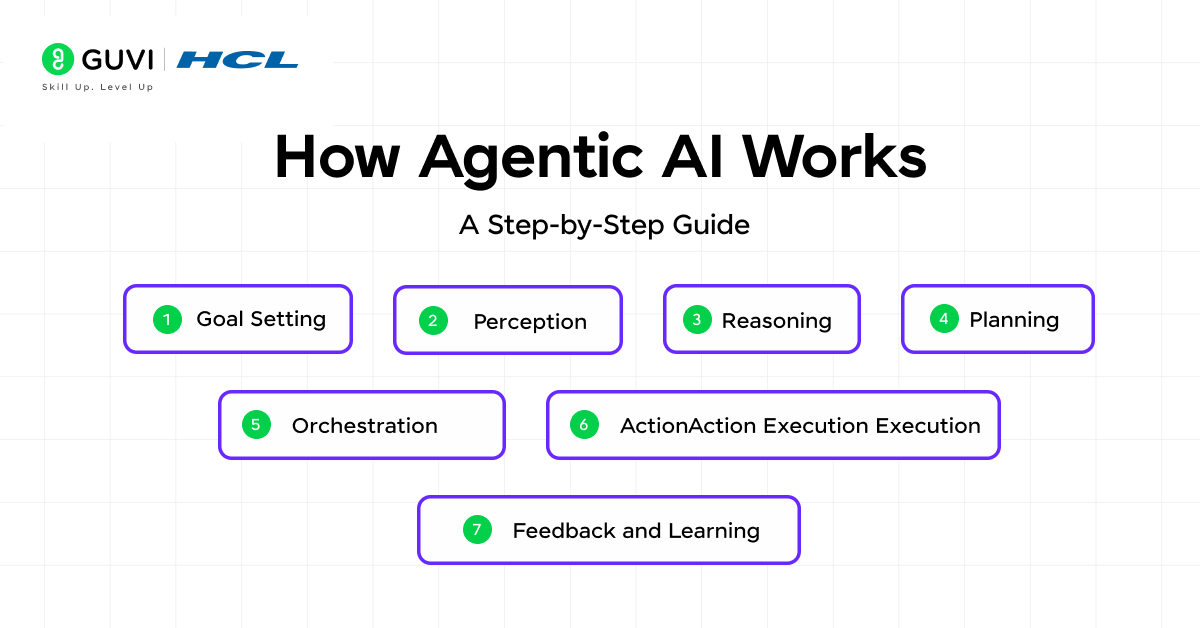
- How Agentic AI Works: A Step-by-Step Guide?
- Goal Setting
- Perception
- Reasoning
- Planning
- Orchestration
- Action Execution
- Feedback and Learning
- Real-World Examples of Agentic AI in Action
- Why Agentic AI Matters in Modern AI Development?
- Key Challenges of Agentic AI and Practical Solutions
- Data Quality and Reliability
- Goal Alignment with Human Intent
- Computational Complexity
- Feedback Integration and Learning Loops
- Security and Vulnerability
- Conclusion
- FAQs
- Is Agentic AI different from autonomous AI?
- Why is Agentic AI important for businesses?
- What industries benefit most from Agentic AI?
- How does Agentic AI support ethical decision-making?
- What challenges limit the adoption of Agentic AI?
What is Agentic AI?
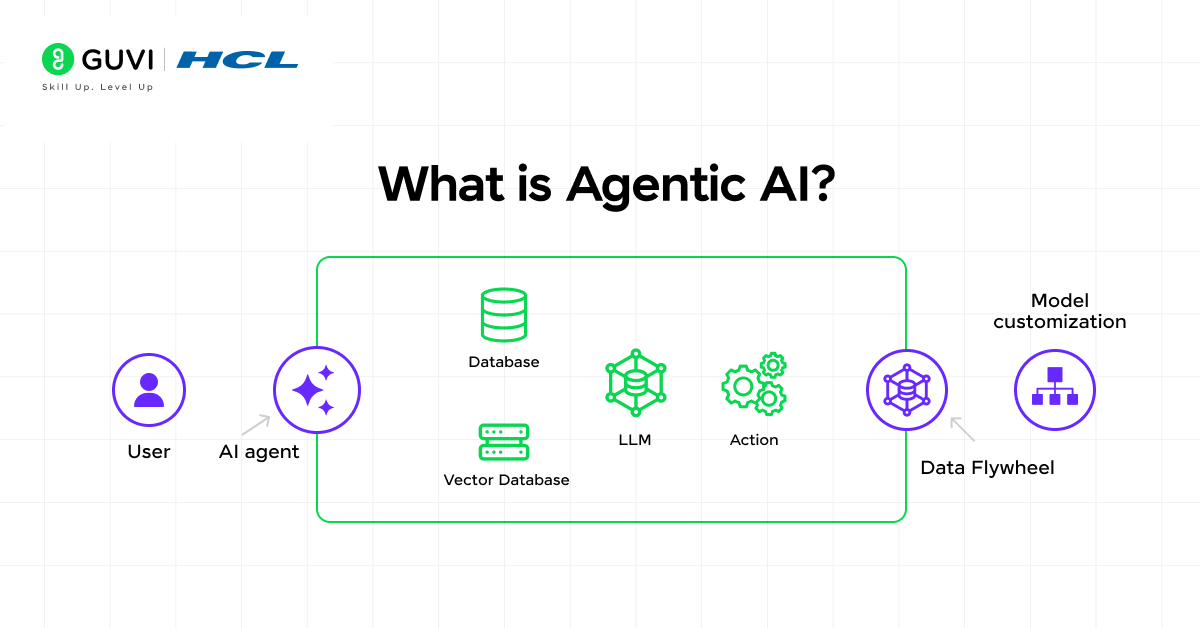
Agentic AI refers to artificial intelligence systems that can operate with a degree of autonomy while pursuing defined goals. These systems are designed to assess environments. They make context-aware decisions and adapt their strategies in real time. Agentic AI systems do this by combining reasoning, planning, and feedback loops that allow them to evaluate outcomes and refine their actions.
Top Benefits of Agentic AI
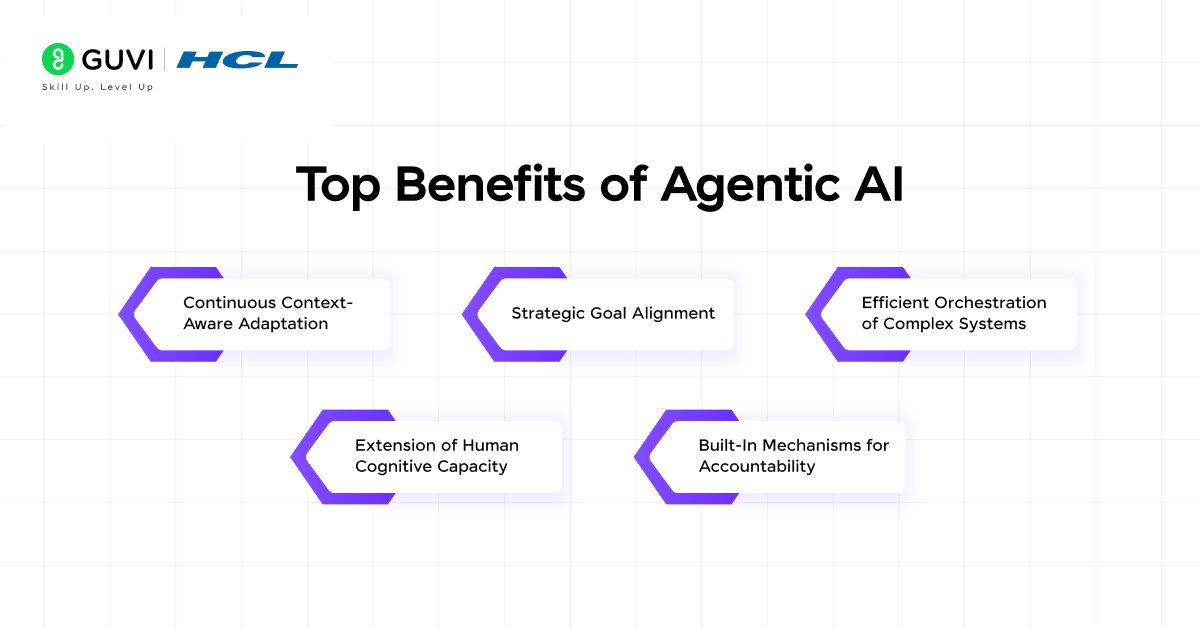
1. Continuous Context-Aware Adaptation
Agentic AI does not just follow preset instructions. It evaluates feedback from its environment and adjusts its reasoning in real time. This adaptability allows it to maintain relevance even when conditions shift. This benefit is extensively critical in domains like cybersecurity and supply chain optimization.
2. Strategic Goal Alignment
Unlike traditional Artificial Intelligence models that focus on isolated predictions, agentic systems operate with a structured understanding of objectives. They can weigh trade-offs, select among competing strategies, and sustain progress toward long-term goals. This gives organizations a more reliable way to translate abstract priorities into operational outcomes.
3. Efficient Orchestration of Complex Systems
Agentic AI excels at coordinating multi-step processes where dependencies and timing matter. For example, in autonomous research workflows, it can plan experiments, analyze results, and decide the next step without waiting for human input. This orchestration reduces latency in decision cycles and accelerates innovation.
4. Extension of Human Cognitive Capacity
Agentic AI acts as a reasoning partner rather than replacing human judgment. It surfaces context-rich insights and anticipates consequences of different choices, which enriches the depth and speed of human decision-making. This creates a multiplier effect in areas like policy design and operational management.
5. Built-In Mechanisms for Accountability
Well-designed agentic AI integrates constraints that reflect ethical standards and organizational rules. Across different AI use cases, this approach prevents drift from human intent and supports transparent evaluation of how and why a decision was made. It achieves this by embedding guardrails directly into its decision loops, which keeps actions aligned with ethical standards and organizational objectives.
Best Applications of Agentic AI
1. Precision Medicine and Clinical Decision Support
Agentic AI analyzes patient histories and genomic data to generate treatment paths that evolve as new evidence emerges. In oncology, it can detect early resistance to a therapy and recommend alternate regimens without waiting for physician reprogramming. This reduces treatment delays and improves patient outcomes by aligning medical actions with fast-changing clinical realities.
2. Autonomous Research and Scientific Discovery
Agentic AI manages iterative experimentation in materials science and pharmaceuticals. It evaluates initial results and formulates refined hypotheses. This shortens discovery cycles for areas like battery chemistry or drug compounds, where thousands of variables create complexity that static models cannot handle effectively.
3. Financial Risk Analysis and Market Strategy
Agentic AI integrates signals from pricing data and regulatory changes into a continuous decision framework. Trading systems can adjust strategies in real time to minimize exposure during volatility while exploiting profitable opportunities. This offers financial institutions a way to operate responsibly in markets where microsecond delays can affect outcomes.
4. Defense and Security Operations
In defense, agentic AI coordinates autonomous systems such as surveillance drones or robotic patrols. It reallocates resources and identifies emerging threats without requiring constant operator input. This application reduces human decision lag in environments where seconds can determine mission success or failure.
5. Complex Supply Chain Management
Global supply networks face risks from weather disruptions and geopolitical instability. Agentic AI creates and evaluates contingency plans and adjusts production timetables in real time. This orchestration preserves continuity where traditional optimization models break down due to unforeseen disruptions.
How Agentic AI Works: A Step-by-Step Guide?
1. Goal Setting
Agentic AI begins with objectives established through human direction or embedded organizational frameworks. These goals act as guiding constraints that determine how the system evaluates and prioritizes future actions.
2. Perception
The system then collects data from its environment through sensors, APIs, or stored records. This data is processed into structured representations, giving the AI a contextual map that aligns its decisions with real-world conditions.
3. Reasoning
Once perception provides context, the system engages in reasoning. It evaluates possible choices, anticipates outcomes, and identifies strategies that satisfy its defined objectives. Reasoning links raw data with actionable insights.
4. Planning
After reasoning generates viable strategies, planning organizes them into structured sequences. The AI accounts for dependencies, timing, and resource limits to create a roadmap from the current state to the desired outcome.
5. Orchestration
When multiple processes or subsystems are involved, orchestration coordinates them into a unified workflow. This step ensures that actions from different modules or agents operate in harmony. For example, an agent managing supply chains may orchestrate inventory control, transportation scheduling, and supplier communication simultaneously, preventing conflicts and delays.
6. Action Execution
With orchestration in place, the system translates plans into concrete actions delivered through interfaces, APIs, or physical systems. Each action remains connected to prior reasoning and orchestration, so execution follows a coherent path rather than isolated commands.
7. Feedback and Learning
Finally, outcomes are evaluated against the original goals. Feedback loops refine the AI’s internal models, highlight errors, and improve future performance. This feedback ensures the cycle remains adaptive and continuously aligned with its objectives.
Real-World Examples of Agentic AI in Action
- AlphaFold in Protein Structure Prediction
DeepMind’s AlphaFold demonstrates agentic behavior by autonomously reasoning through vast molecular data to predict 3D protein structures. It evaluates alternatives, tests confidence scores, and refines predictions without constant human adjustment. The outcome has reshaped biology by reducing a task that once took years of lab work into hours of computational cycles.

- NASA’s Mars Rover Autonomy
Rovers like Perseverance operate with limited communication delays from Earth. They use agentic AI to analyze terrain, plan driving routes, and avoid hazards without waiting for mission control. This autonomy allows the rover to explore environments safely and continue scientific experiments even when direct supervision is impossible.
- Robo-advisory Financial Systems
In modern finance, AI-driven advisory platforms adjust investment portfolios by monitoring real-time market conditions and client constraints. These systems act with a degree of agency, rebalancing holdings when risks rise or opportunities open, which allows investors to maintain strategies aligned with both personal goals and regulatory compliance.
Why Agentic AI Matters in Modern AI Development?
The growing importance of agentic AI can be understood through its ability to address gaps left by traditional systems and to support organizations in complex decision environments:
- Beyond Narrow AI Limitations: Traditional AI and machine learning models are often restricted to single tasks such as classification or prediction. Agentic AI differs because it can set goals, reason through options, and adapt strategies when conditions shift, which makes it suitable for environments where static models fail.
- Scalability Across Workflows: Businesses need more than isolated models. Agentic AI orchestrates workflows and coordinates multiple processes simultaneously. This turns AI into an active operational participant rather than a passive tool.
- Real-Time Decision-Making: Industries like finance, logistics, and medicine require rapid adaptation. Agentic AI evaluates changing data streams, updates its reasoning, and executes decisions without waiting for human intervention, which reduces latency in critical processes.
Agentic AI is shaping the future, and you can be part of it. Our AI & ML Course with Intel Certification helps you learn Python, machine learning, deep learning, and real-world AI applications with projects, expert mentors, and certification. Enroll today and start your journey into Artificial Intelligence!
Key Challenges of Agentic AI and Practical Solutions
1. Data Quality and Reliability
Agentic AI depends on high-quality inputs to reason effectively. Collected data often contains duplicates and missing values. They are also filled with uncertain and inconsistent formats, which weakens the accuracy of the models.
Solution: Automated data validation and preprocessing pipelines detect irregularities early and standardize inputs, creating a cleaner foundation for reasoning and keeping decisions aligned with reality.
2. Goal Alignment with Human Intent
An agent may optimize outcomes that look efficient mathematically but conflict with ethical standards or organizational values. This misalignment can lead to decisions that appear rational to the system but harmful in practice.
Solution: Embedding constraints and reward mechanisms that reflect human priorities directly into the reasoning layer, supported by regular auditing, strengthens the connection between programmed goals and real-world intent.
3. Computational Complexity
Reasoning and planning across multiple objectives require significant resources. Large search spaces slow response times, which undermines the ability of the system to adapt in real time.
Solution: Advanced pruning techniques and hierarchical planning models narrow decision spaces without sacrificing outcome quality, which reduces computation overhead and maintains responsiveness.
4. Feedback Integration and Learning Loops
Feedback loops are essential for improvement, yet they can introduce instability if signals are noisy or delayed. A system that reacts to misleading feedback risks reinforcing errors.
Solution: Layered evaluation mechanisms filter out unreliable signals before they reach the reasoning core, which creates stable learning while allowing rapid adaptation when valid changes occur.
5. Security and Vulnerability
Agentic systems that operate autonomously face risks of adversarial inputs or malicious interference. A manipulated data stream can push the AI toward unsafe decisions.
Solution: Redundant input channels and adversarial training limit exposure to manipulation and strengthen resilience across critical applications.
Conclusion
Agentic AI represents a shift from narrow and task-driven systems to intelligent agents capable of setting goals and learning from feedback. Its applications already extend across medicine, finance, defense, supply chains, and research, where adaptability and accountability are critical. As organizations continue to integrate agentic AI, its role will move beyond automation toward shaping decision-making processes that are faster and aligned with human values.
FAQs
Is Agentic AI different from autonomous AI?
Yes. Autonomous AI often refers to systems that operate independently in a narrow setting, while agentic AI combines autonomy with reasoning, goal-setting, planning, and feedback cycles that allow it to adapt across complex environments.
Why is Agentic AI important for businesses?
Businesses face unpredictable conditions in areas like logistics, finance, and customer service. Agentic AI helps by orchestrating workflows, adjusting strategies in real time, and keeping actions aligned with organizational goals.
What industries benefit most from Agentic AI?
Healthcare, finance, defense, manufacturing, and cybersecurity are among the leading sectors using agentic AI because they require adaptive decision-making under uncertainty.
How does Agentic AI support ethical decision-making?
Agentic AI can be built with embedded constraints, oversight mechanisms, and transparent feedback loops. This allows organizations to audit decisions and verify that actions align with human intent and regulatory standards.
What challenges limit the adoption of Agentic AI?
High-quality data, computational complexity, security risks, and goal alignment are major barriers. Solutions include stronger data validation, hierarchical planning, adversarial testing, and regular audits to maintain responsible performance.
Success Stories

About the Author
Vaishali
I'm a seasoned writer with four years of experience across technical, non-technical, and just about every genre or niche you can imagine. Adaptable and curious, I enjoy exploring new topics and making information engaging and easy to understand. Fueled by a steady stream of tea, I approach each project with creativity, reliability, and genuine enthusiasm for storytelling.
View all posts by Vaishali
Connect with me @










Did you enjoy this article?