


Artificial Intelligence and Machine Learning Articles
Finance Manager to Data Analytics: Career Growth, Salary and Seniority
How to Evaluate LLM Outputs in Production Deployments
AI/ML Skills Gap 2026: Why Companies Can't Find Job-Ready Talent
20 AI/ML Interview Questions Recruiters Can Use Without a Tech Background - Best Guide


Get In Touch For Details! Request More Information
How Artificial Intelligence in Digital Marketing Transforms Strategies?
Sep 22, 2025 6 Min Read 4210 Views
(Last Updated)
Digital marketing has never stood still. Search engines forced businesses to rethink visibility. Social platforms turned conversations into a brand’s lifeline. Each shift raised the bar for customer engagement. Today, AI in digital marketing represents the most profound change yet. It is not just adding new tools to a marketer’s kit. It is restructuring the entire process of how strategies are built and customer relationships are managed.
Traditional approaches relied on intuition and static reports. Decisions were made based on historic data that often became outdated before action could occur. In contrast, AI-driven marketing operates in real time. It learns continuously from user behavior and shapes campaigns that feel relevant at every step of the journey. For businesses competing in crowded markets, this ability is more than an advantage; it has become essential for survival.
Let us uncover more about the significance of Artificial Intelligence in digital marketing:
Companies using AI for customer segmentation see conversion rates climb by an average of 14%, with customer lifetime value also increasing by around 12%.
AI adoption in marketing brings substantial returns—businesses using AI tools report an average 44% increase in ROI compared to traditional methods.
According to SurveyMonkey, nearly 88% of marketers rely on AI in their daily work—for content generation, insights tracking, and faster strategic decision-making.
Table of contents
- What AI Means for Digital Marketing?
- Why Are Businesses Prioritizing AI?
- Technologies Behind AI in Digital Marketing
- Core Applications of AI in Digital Marketing
- Benefits of AI-Driven Marketing
- Challenges and Risks in AI Adoption
- Best Practices for Using AI in Marketing
- Case Studies: How Leading Brands Use AI in Digital Marketing
- Case Study 1: Coca-Cola Uses AI for Dynamic Creative Optimization
- Case Study 2: Starbucks Boosts Customer Loyalty Through AI Recommendations
- Case Study 3: Netflix Uses AI to Personalize Streaming Experience
- Future Trends Shaping AI in Digital Marketing
- Conclusion: Making AI a Strategic Priority
- FAQs
- 1: How does AI impact customer behavior analysis?
- 4: Does AI affect voice search optimization?
- 5: What role does AI play in marketing attribution?
What AI Means for Digital Marketing?
AI in digital marketing refers to systems that analyze data and guide decisions without requiring constant human input. AI models study how customers interact across multiple channels and predict what they are likely to do next. They also automate actions like bidding on ads, scheduling messages, and personalizing content.
The difference lies in scale and speed. A marketer can manually review a few segments and plan a campaign. AI reviews millions of signals and adjusts campaigns in seconds. This does not remove the need for human creativity; instead, it strengthens creative work with insights grounded in data. Marketing becomes less about trial and error and more about continuous improvement.
Why Are Businesses Prioritizing AI?
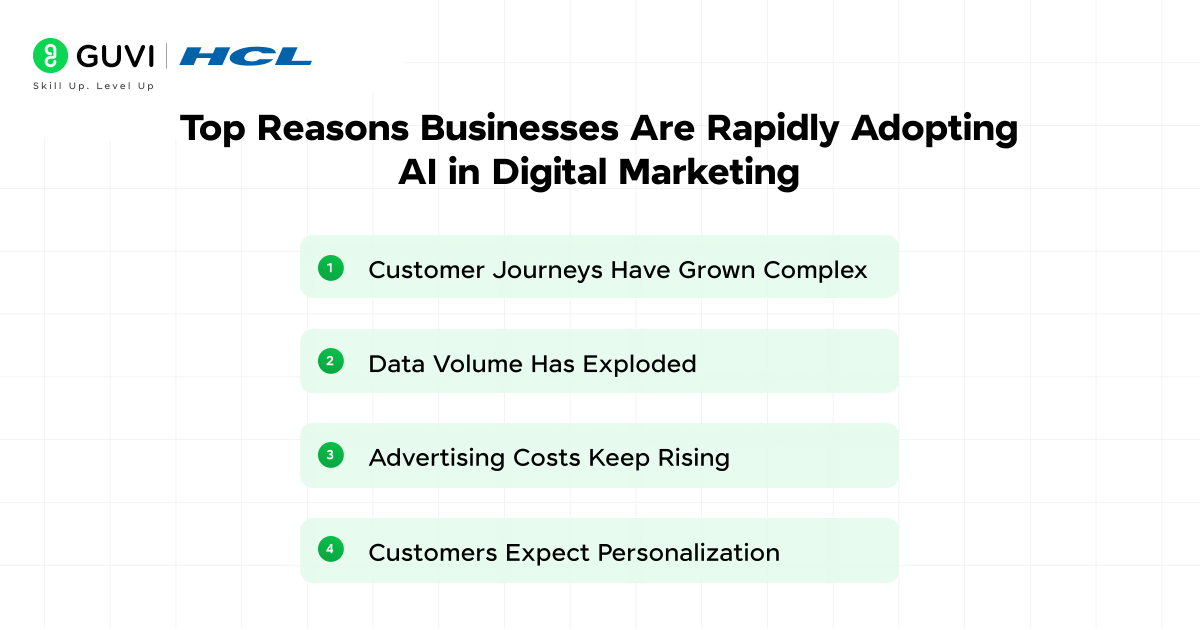
The following are the main factors driving rapid AI adoption across industries:
- Customer Journeys Have Grown Complex
A typical buying decision no longer follows a straight path. A shopper might browse on a phone and finalize the order on a desktop site. Tracking these steps manually creates blind spots. AI in digital marketing closes that gap by linking interactions into a single profile. Marketers can then deliver messages that reflect where the customer is in the decision process.
- Data Volume Has Exploded
Every campaign generates clicks and engagement metrics. Social platforms and websites add to this stream of information. Processing it manually would take weeks and still leave gaps. AI tools analyze these data points instantly and translate them into forecasts, recommendations, and actions.
- Advertising Costs Keep Rising
Customer acquisition costs have increased as competition for attention grows. AI in digital marketing helps businesses spend smarter by identifying audiences that show strong intent and adjusting bids automatically. Marketing budgets stretch further because waste is reduced.
- Customers Expect Personalization
Generic messages feel out of place in a world where brands collect so much information. Consumers want content that reflects their interests and timing that matches their habits. AI in digital marketing delivers this level of personalization at scale, which further makes engagement feel natural rather than forced.
Technologies Behind AI in Digital Marketing
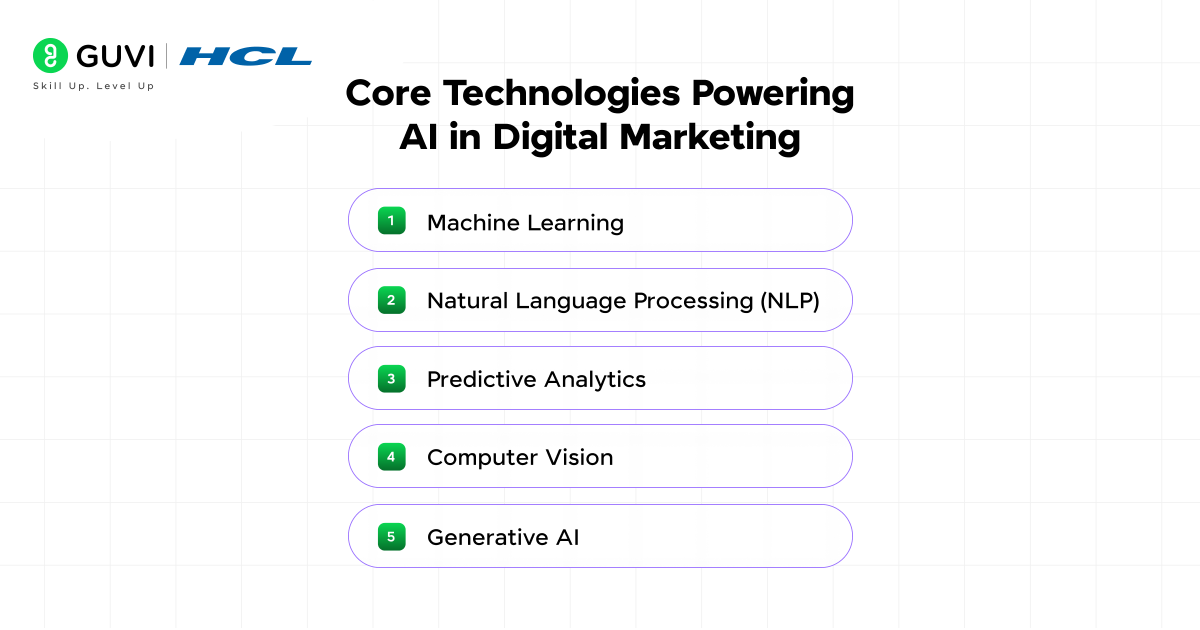
Here are the core technologies that make AI-driven marketing possible and effective:
- Machine Learning
Machine learning powers the proficiency of systems to learn from data without being explicitly programmed. In marketing, it identifies user patterns and predicts behavior. For example, recommendation engines on streaming platforms use machine learning models to analyze what users have watched and suggest content they are likely to enjoy next.
- Natural Language Processing (NLP)
NLP enables machines to understand and interpret human language. Marketers use NLP in chatbots, voice search optimization, and sentiment analysis. These tools allow brands to respond to customer questions. They help create better ad copy and understand the tone of customer feedback across social media.
- Predictive Analytics
Predictive and data analytics uses historical data and real-time signals to forecast future outcomes. Businesses rely on this technology to predict churn risk and anticipate seasonal product demand. It allows marketing teams to plan proactive strategies rather than reacting to problems.
- Computer Vision
Computer vision allows AI systems to process and analyze visual information. In marketing, it supports visual search features that let customers find products by uploading images. It also assists in automated ad creation by optimizing imagery for performance across different platforms.
- Generative AI
Generative AI creates original content such as text and even video. It speeds up creative workflows by producing ad copies and design variations in seconds. Generative models reduce production time and help scale campaigns faster while human review remains critical for brand voice.
Core Applications of AI in Digital Marketing
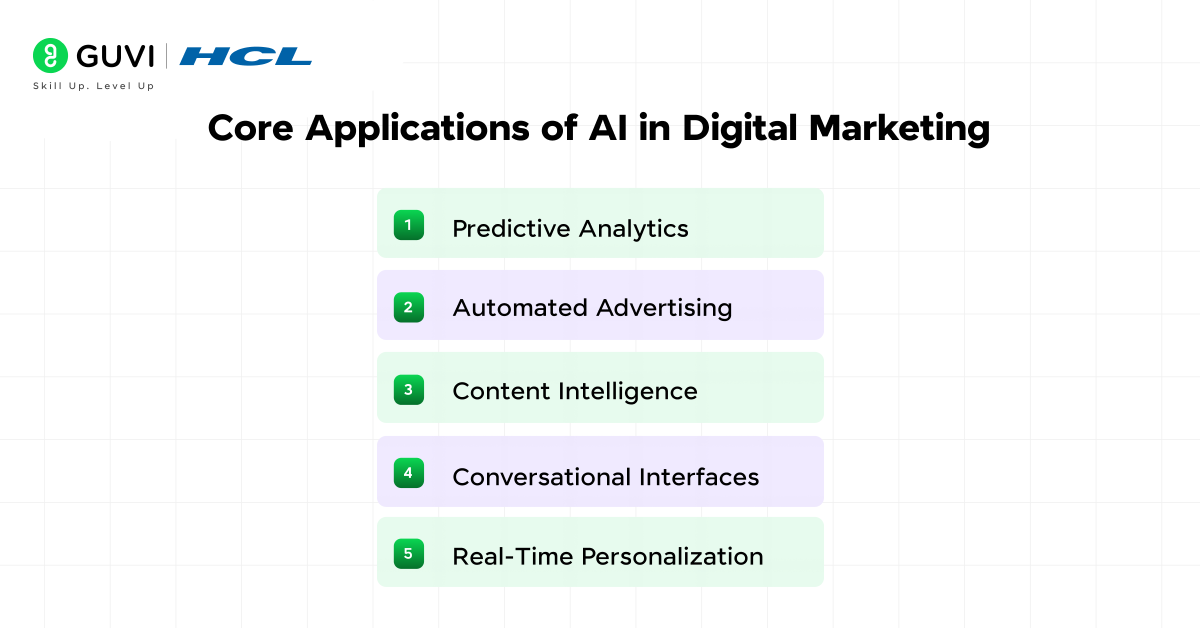
Here are the practical ways AI enhances marketing across channels and functions:
- Predictive Analytics
Predictive AI models review past performance and current signals to forecast outcomes. Subscription-based companies use these models to identify customers at risk of churn and launch retention campaigns before cancellations occur. Retailers rely on them to anticipate demand, ensuring popular products remain in stock during seasonal peaks.
- Automated Advertising
Ad management is one of the most visible use cases for AI. Platforms now handle real-time bidding, shifting budgets toward ads that deliver conversions and away from those that underperform. This automation allows campaigns to stay competitive without constant manual oversight.
- Content Intelligence
AI systems analyze content trends and performance patterns. They recommend blog topics based on what audiences are searching for and suggest structure improvements for better readability. These insights reduce guesswork and allow teams to focus on quality rather than endless trial and error.
- Conversational Interfaces
AI-powered chatbots handle simple queries instantly. They guide users through basic steps and escalate complex issues to human agents. This speeds up response time and frees customer service teams to focus on higher-value interactions. Data from these conversations also supports personalization in future campaigns.
- Real-Time Personalization
AI in digital marketing customizes interactions across channels. Websites adapt product recommendations as users browse. Emails change timing and subject lines based on when recipients usually engage. Ads adjust creative elements according to recent behavior. This constant refinement keeps experiences relevant.
Ready to master the future of marketing? Enroll in our comprehensive Digital Marketing Course and learn to create data-driven campaigns, leverage AI-powered strategies, and optimize for maximum ROI. Gain hands-on experience with SEO, social media, PPC, and analytics while working on real-world projects guided by industry experts. Start today and transform your career in digital marketing!
Benefits of AI-Driven Marketing
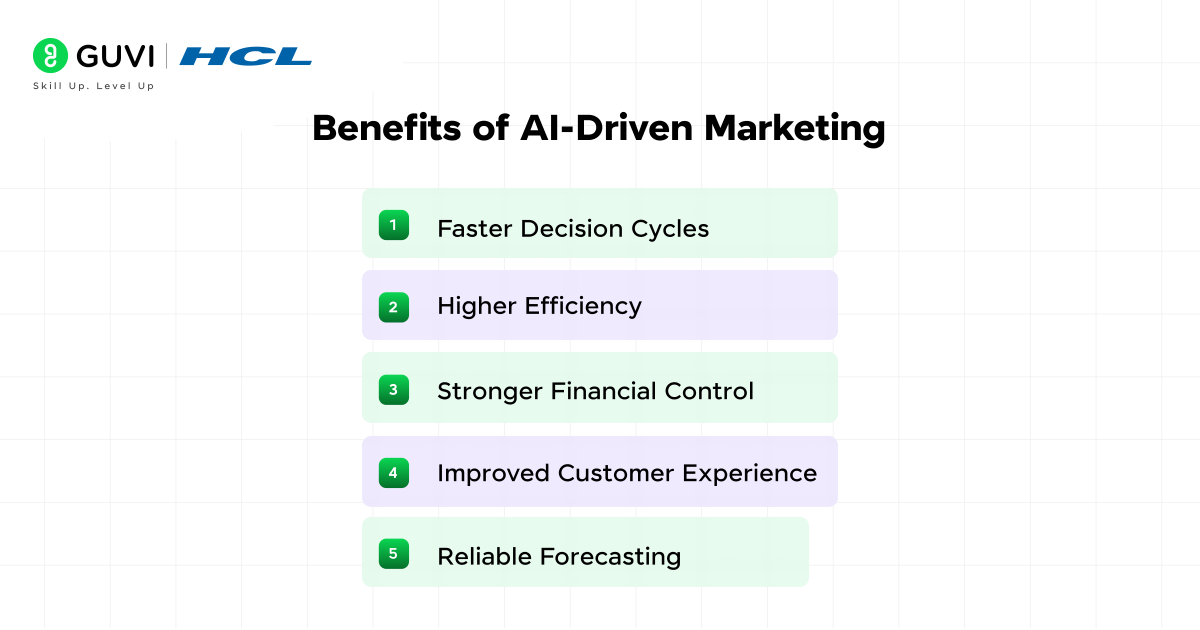
Here are the major advantages organizations report after implementing AI in their strategies:
- Faster Decision Cycles
AI reduces the delay between analysis and action. Insights arrive in real time. It allows businesses to pivot immediately when a trend emerges. This agility helps maintain a competitive edge in markets that change quickly.
- Higher Efficiency
Automation takes over repetitive tasks such as bid adjustments and A/B testing. Marketing teams can shift focus to creative development and strategy, leading to better use of resources.
- Stronger Financial Control
Budgets move toward campaigns that produce results. Spending on low-quality placements decreases because AI monitors performance continuously and reallocates funds with precision.
- Improved Customer Experience
AI tailors messages to individual needs and behaviors. Customers receive content that feels helpful rather than intrusive. This builds trust and raises engagement levels over time.

- Reliable Forecasting
Marketers gain projections that cover revenue and conversion trends. They can also evaluate campaign performance with greater accuracy, which improves planning for future initiatives.
Challenges and Risks in AI Adoption
Here are the areas businesses must manage to avoid setbacks when deploying AI tools:
- Data Privacy and Compliance
AI systems rely on customer data, which means compliance with regulations such as GDPR and CCPA is non-negotiable. Brands must offer clear consent options and communicate how data is used.
- Over-Automation
AI should enhance workflows, not remove human oversight. Customers notice when interactions feel overly mechanical. Sensitive conversations and creative decisions still require human judgment.
- Algorithmic Bias
Models trained on incomplete or skewed data can deliver biased recommendations. Regular audits and diverse data sets help reduce this risk and maintain fairness.
- Resource Barriers
Advanced AI tools require investment and expertise. Smaller organizations often start with narrow applications such as email optimization before moving to predictive analytics or cross-channel automation.
Best Practices for Using AI in Marketing
Here is how businesses can integrate AI into their strategies without losing control:
- Begin with One Use Case
Start small to build trust in the technology. Paid ads, email personalization, or chatbot deployment are good entry points because results are measurable.
- Maintain Data Integrity
AI performance depends on input quality. Implement consistent tagging and event tracking. Clean data ensures accurate predictions and reduces model drift.
- Combine AI and Human Oversight
AI handles scale, but humans provide context and creativity. This partnership produces campaigns that perform well while staying aligned with brand voice.
- Measure Incrementally
Run controlled tests to prove value. Compare AI-driven campaigns with traditional methods and track improvements in cost per lead, engagement, or revenue.
Case Studies: How Leading Brands Use AI in Digital Marketing
Here are real-world examples showing how major companies apply AI in digital marketing to improve personalization and overall marketing performance:
Case Study 1: Coca-Cola Uses AI for Dynamic Creative Optimization
Coca-Cola wanted to modernize its digital campaigns by moving away from static ads that delivered the same message to every viewer. The brand adopted an AI-powered creative optimization system that analyzed audience engagement patterns in real time. The system tracked metrics such as view time and interaction rates and then selected the best-performing creative elements for each audience segment.
This approach allowed Coca-Cola to display tailored video ads during peak engagement windows. The platform also rotated design elements and calls-to-action based on user response. As a result, campaign engagement rates increased and cost efficiency improved. Coca-Cola reported stronger brand recall and a measurable lift in conversions across multiple regions after adopting this strategy.
Case Study 2: Starbucks Boosts Customer Loyalty Through AI Recommendations
Starbucks faced the challenge of keeping customer engagement high in its mobile loyalty program. The company used an AI-driven personalization engine within its app to deliver individualized drink suggestions, promotional offers, and push notifications. The system relied on purchase history, location patterns, and real-time context such as local weather to generate these recommendations.
This predictive capability created relevant customer interactions. A user who typically ordered iced beverages received a promotion on cold drinks during warm afternoons. Regular buyers of specialty coffee were presented with early access to seasonal flavors. These improvements increased order frequency and expanded loyalty program participation. Starbucks also observed higher spend per customer as recommendations matched preferences more accurately.
Case Study 3: Netflix Uses AI to Personalize Streaming Experience
Netflix built its reputation on offering content that feels curated for each user. This experience relies heavily on AI models that process viewing behavior and historical ratings. The platform’s recommendation system predicts what subscribers are most likely to watch next and updates suggestions after every interaction.
These models also influence marketing emails and notifications, which highlight titles aligned with individual tastes. Personalization extends to artwork selection on thumbnails, which changes based on a user’s viewing patterns. The outcome is improved retention and longer viewing sessions. Netflix attributes a significant share of engagement growth to this recommendation framework, proving that real-time personalization can keep customers active for extended periods.
Future Trends Shaping AI in Digital Marketing
Following are developments that will influence marketing over the next five years:
- Real-Time Customer Journeys
Websites and mobile apps will adapt layouts and offers instantly based on micro-signals such as scrolling behavior or session duration.
- Conversational Search and Voice Commerce
AI will help brands optimize for natural language queries as voice assistants continue to expand their role in shopping and information retrieval.
- Transparency and Explainability
Businesses will adopt AI models that show how decisions are made. It further improves accountability and trust among users.
- Privacy-First Personalization
Techniques such as federated learning will allow AI to analyze user behavior without moving raw data, reducing compliance risks and building confidence.
Conclusion: Making AI a Strategic Priority
Artificial intelligence has shifted digital marketing from reactive adjustments to proactive and data-driven strategies. AI in digital marketing supports personalization and budget efficiency. Creativity still matters, but now it works alongside intelligence that processes signals faster than any human team could manage.
The most effective path forward is incremental. Begin with a single high-impact use case. Keep data clean. Test for measurable improvements before scaling. Brands that combine AI’s analytical power with human judgment will achieve not only better performance today but also long-term resilience in a competitive market.
FAQs
1: How does AI impact customer behavior analysis?
AI in digital marketing helps marketers understand buying patterns by analyzing browsing activity and engagement signals in real time. This insight enables businesses to predict future purchases and shape campaigns that match user intent more accurately.
2: Can AI improve ROI on influencer marketing?
Yes. AI tools can identify influencers with the highest audience relevance by scanning engagement metrics and follower authenticity. This data-driven selection improves campaign reach and lowers the risk of partnering with low-impact creators.
3: How is AI changing visual content creation?
AI-powered design platforms generate image variations, edit videos, and suggest layouts based on brand guidelines. These tools speed up production cycles and maintain consistency across digital campaigns without requiring extensive manual design work.
4: Does AI affect voice search optimization?
AI in digital marketing plays a key role in preparing websites for voice search by analyzing natural language patterns and structuring content to answer conversational queries. This adjustment improves visibility in voice-driven results, which are becoming more common with smart assistants.
5: What role does AI play in marketing attribution?
AI-driven attribution models provide a clear view of which channels and touchpoints contribute most to conversions. They replace outdated last-click models with multi-touch insights, helping marketers allocate budgets more effectively.
Success Stories

About the Author
Vaishali
I'm a seasoned writer with four years of experience across technical, non-technical, and just about every genre or niche you can imagine. Adaptable and curious, I enjoy exploring new topics and making information engaging and easy to understand. Fueled by a steady stream of tea, I approach each project with creativity, reliability, and genuine enthusiasm for storytelling.
View all posts by Vaishali
Connect with me @









Did you enjoy this article?