


Uncategorised Articles
The Weekly Client Check-In: A Template for Forward Deployed Engineers
Q-Learning Explained: A Beginner's Guide


Get In Touch For Details! Request More Information

Create Personalised Bedtime Stories Using ChatGPT in Minutes
Jun 16, 2026 3 Min Read 1015 Views
(Last Updated)
Bedtime Stories using ChatGPT: A fun and creative way to do Storytelling. Curiosity and temperament lay their foundations in the tales told for centuries around bonfires as bedtime stories. They inspire readers to ponder, question ideas and empathise with characters/situations more authentically.
A quality story not only amuses but also intrigues and stimulates one’s mind. It supports formulating questions and looking beyond the obvious. In moments, ChatGPT lets you create fun, unique stories that engage your readers.
Table of contents
- Quick TL;DR Summary
- Quick Tips to Improve Your Stories
- Essential Story Details You Need for Writing Better Bedtime Stories
- Characters
- Setting
- Plot
- Tone
- Step-by-Step Guide to Create Bedtime Stories using ChatGPT
- Step 1 (Provide Story Inputs – Essential Elements)
- Step 2 (Generate the Story)
- Step 3 (Refine the Story – Optional but Important)
- Conclusion
- FAQs
- How can I start creating a story using ChatGPT?
- What should I include in my prompt for better stories?
- How can I improve my story if I don’t like the result?
- Why is it important to include a setting in the prompt?
- How does adding a tone improve the story?
- What happens if you skip giving proper details in the prompt?
Quick TL;DR Summary
- This blog helps you clearly understand how to create structured stories using ChatGPT by giving proper inputs, prompts, and simple steps for better results.
- It shows how to improve your stories by refining prompts, adding details, and experimenting with different ideas to make storytelling more engaging and creative.
- It guides you step by step in generating, refining, and enhancing stories so you can easily create unique, interesting, and well-structured content every time.
Quick Tips to Improve Your Stories
- Use clear, detailed prompts
- Give simple and direct instructions so ChatGPT understands easily
- Add emotions to make it more engaging
- Keep instructions simple and clear
- Refine and improve your prompt each time
Essential Story Details You Need for Writing Better Bedtime Stories
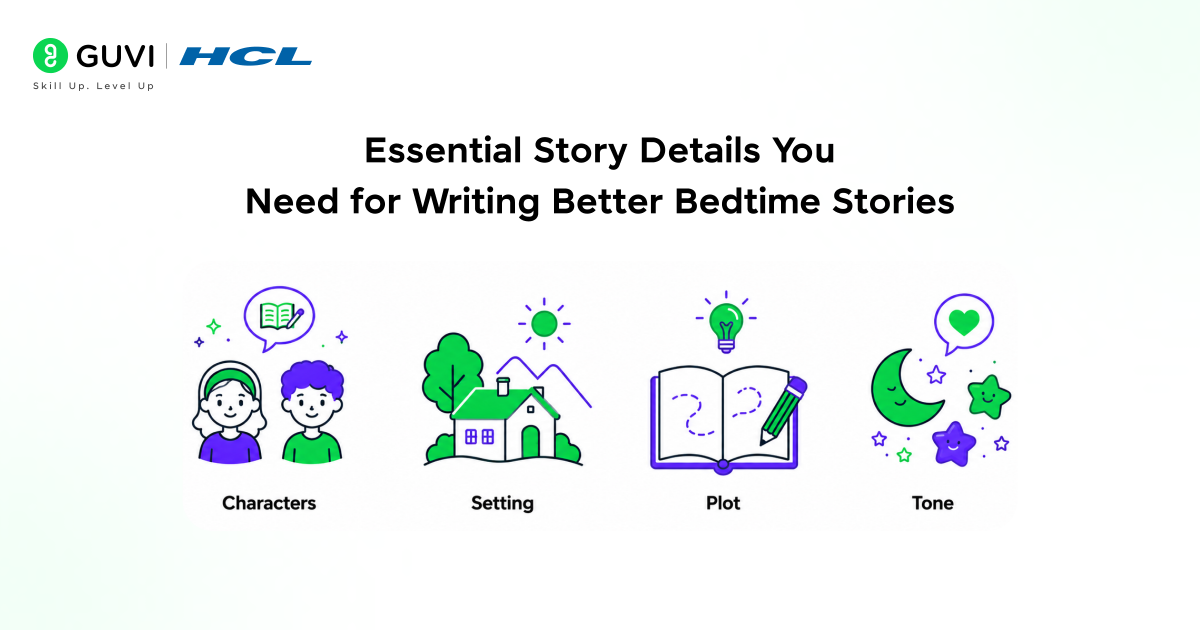
These are the essential elements you need to have before creating a story:
1. Characters
Characters are the individuals or creatures in your story. Such creations can be of animals, objects, or even fantasy. Well-built characters make the story relatable to the reader, thus standing out from the rest.
Example:
A young ice cream seller boy named Ravi in Pondicherry and a playful stray dog.
2. Setting
Setting (Every story is set in a specific place and time). It could be a forest, a city, a school or even a fantasy world. The story’s backdrop and tone are established in this environment.
Example:
A sunny beach road in Pondicherry near colourful houses and a busy market.
3. Plot
The plot of the story is a series of events. It explains what happens from start to finish by addressing an issue and its solution. Having a distinct storyline keeps the story flowing and the reader on track.
Example:
Ravi sells ice cream every day, loses his money, and later finds help from the dog to get it back.
4. Tone
Tone is the General Feel of the story. It could be fun, truthful and also delightful in some other way. It shapes the story emotionally, and for the reader, it makes a lot of difference.
Example:
A warm, cheerful, and slightly emotional tone that reflects a simple and kind daily life.
Start your AI/ML journey today with a free resource—learn smarter with real, practical lessons that actually build skills: AI/ML Email Course
Step-by-Step Guide to Create Bedtime Stories using ChatGPT
These are the steps to create Bedtime Stories Using ChatGPT easily and effectively:
Step 1 (Provide Story Inputs – Essential Elements)
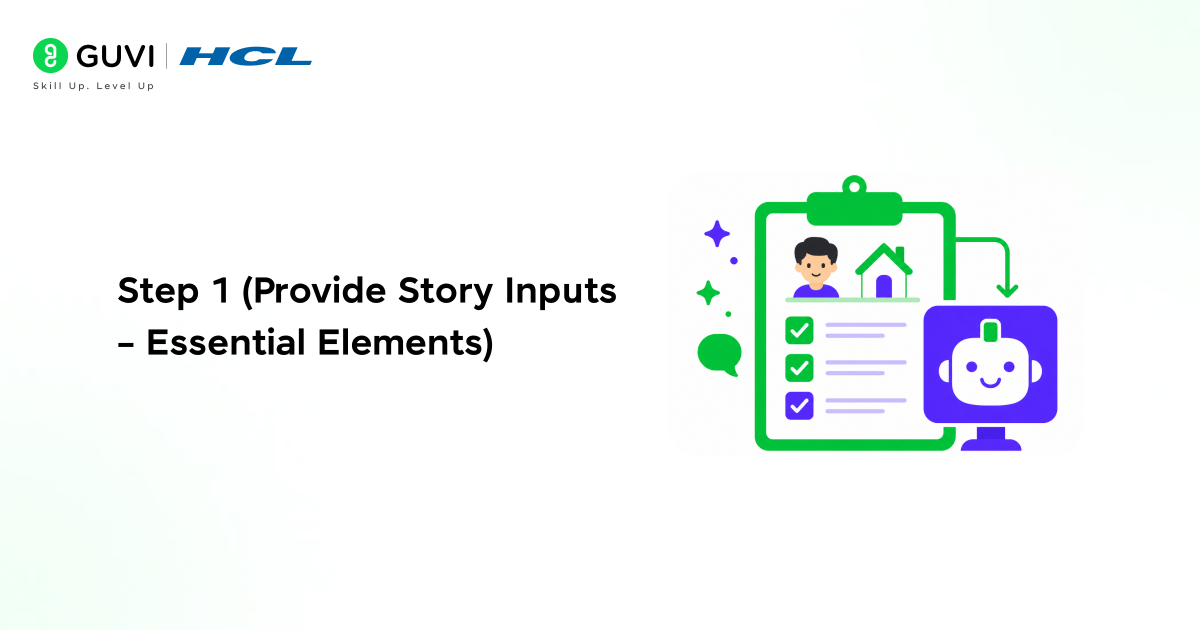
In this step, you provide ChatGPT with the essential details, such as the characters to use in the scenario, the plot setting, and your tone. You then tell it to go over each of those elements, carefully examine and understand them before creating the story.
Prompt Example:
“Here are the story details:
Characters: A young ice cream seller boy named Ravi in Pondicherry and a stray dog.
Setting: A sunny beach road in Pondicherry near colourful houses.
Plot: Ravi sells ice cream every day and later faces a small problem.
Tone: Warm, cheerful, and slightly emotional.
Please analyse and understand these elements carefully.”
GPT Response:
Got it! I have carefully understood all the given elements, including characters, setting, plot, and tone. I will use them to create a well-structured and engaging story for you.

Step 2 (Generate the Story)

After this, you feed the details into ChatGPT and ask it to create a story based on that, along with the style, length, etc.
Prompt Example:
“Now generate a 5 to 6 minute easy-to-read story in a peaceful and engaging tone based on the given details.”
GPT Response:
Ravi walked along the bright streets of Pondicherry, calling out with a smile as he sold his ice cream. The sun shone gently, and the sound of the waves made everything feel calm.
Children gathered around him, happily choosing their favourite flavours. But suddenly, Ravi noticed something missing that made his heart feel a little uneasy…
Step 3 (Refine the Story – Optional but Important)

If you consider the output unsatisfactory, you can refine it further by fine-tuning your prompt. The story can be polished by adding a different angle or a small clinch here and there.
Prompt Example:
“Improve the story by adding a surprising twist where Ravi faces an unexpected situation and introducing a new mysterious character who helps him in a subtle way. Keep the twist engaging, but do not reveal it directly.”
GPT Response:
Ravi stood quietly, trying to understand what had just happened, when a stranger appeared nearby. The stranger seemed different from the others, and something about him felt unusual.
Ravi didn’t know it yet, but this meeting would change his day in a surprising way…
Also Read: Brand Storytelling in the Digital Age
Start your journey into AI with HCL GUVI’s Intel & IITM Pravartak Certified AI/ML Course, built to make you job-ready in just 4–6 months. Learn from industry experts and Intel engineers through live training, gain hands-on experience with 20+ projects and 1 capstone, and master skills such as Python, Machine Learning, and Generative AI. With 1:1 doubt support, flexible weekday/weekend batches, and access to 1000+ hiring partners, this course gives you everything needed to move confidently toward a successful AI career.
Conclusion
Creating Bedtime Stories Using ChatGPT becomes simple when you follow the right approach. As long as you can provide unambiguous inputs, sensible steps and rephrase your prompts well, you have no problem with stories that are both engaging and creative. Always experiment, always work to improve your prompts, and try new ideas to make every story even better than the last.
FAQs
How can I start creating a story using ChatGPT?
Give clear details like characters, setting, plot, and tone, then ask ChatGPT to analyse them before generating the story.
What should I include in my prompt for better stories?
Mention length, tone, style, and any twists or extra characters for better results.
How can I improve my story if I don’t like the result?
Refine your prompt by adding details, changing tone, or introducing new elements.
Why is it important to include a setting in the prompt?
It helps ChatGPT build the background and make the story feel more realistic and clear.
How does adding a tone improve the story?
It sets the story’s mood, making it feel more engaging and better suited to the reader.
What happens if you skip giving proper details in the prompt?
The story may become unclear or less structured, with fewer engaging elements.
Success Stories














Did you enjoy this article?