


Electric Vehicle Articles
What is Vehicle-to-Grid Technology : How EVs Can Power the Grid
What is a Battery Management System? BMS Working, Uses & EV Role
EV Infrastructure in India: Best Components, Charging Network, Challenges & Future (2026 Guide)


Get In Touch For Details! Request More Information
What are Autonomous Electric Vehicles? An Informative Guide
Apr 04, 2026 5 Min Read 1223 Views
(Last Updated)
The automotive industry is undergoing one of the biggest transformations in its history. Two technologies are driving this change: vehicle electrification and autonomous driving. When these two innovations come together, they create what we call Autonomous Electric Vehicles (AEVs).
Autonomous electric vehicles are not just cars powered by electricity. They are intelligent mobility systems capable of sensing their surroundings, making decisions, and navigating roads with minimal or no human intervention.
If you already understand the basics of electric vehicles (EVs) and artificial intelligence, this article will help you connect the dots. In this article, we will explore how autonomous electric vehicles work, the technologies behind them, their benefits, challenges, and what the future holds.
Quick Answer:
Autonomous Electric Vehicles (AEVs) are vehicles powered by electricity that can drive themselves using artificial intelligence, sensors, and advanced software to navigate roads with minimal or no human input. They combine electric mobility with autonomous driving technology to create safer, smarter, and more sustainable transportation systems.
Table of contents
- Understanding Autonomous Electric Vehicles
- Key Characteristics of Autonomous Electric Vehicles
- Why Autonomous Electric Vehicles Matter?
- Environmental Sustainability
- Safer Roads
- Smart Cities and Mobility
- Technological Convergence
- How Autonomous Electric Vehicles Work?
- Electric Powertrain
- Autonomous Driving System
- Core Technologies Behind Autonomous Electric Vehicles
- Sensors
- Artificial Intelligence and Machine Learning
- High-Performance Computing Systems
- Connectivity and Communication
- Levels of Vehicle Autonomy
- Level 0 – No Automation
- Level 1 – Driver Assistance
- Level 2 – Partial Automation
- Level 3 – Conditional Automation
- Level 4 – High Automation
- Level 5 – Full Automation
- Advantages of Autonomous Electric Vehicles
- Reduced Traffic Accidents
- Improved Energy Efficiency
- Reduced Traffic Congestion
- Enhanced Accessibility
- Lower Environmental Impact
- Challenges Facing Autonomous Electric Vehicles
- Technological Complexity
- Battery Limitations
- Safety and Reliability
- Cybersecurity Risks
- Regulatory and Legal Issues
- Applications of Autonomous Electric Vehicles
- Robotaxis
- Public Transportation
- Logistics and Delivery
- Smart Mobility Services
- The Future of Autonomous Electric Vehicles
- Final Thoughts
- FAQs
- What is an autonomous electric vehicle?
- How do autonomous electric vehicles work?
- Are autonomous electric vehicles safe?
- What are the benefits of autonomous electric vehicles?
- Are autonomous electric vehicles available today?
Understanding Autonomous Electric Vehicles
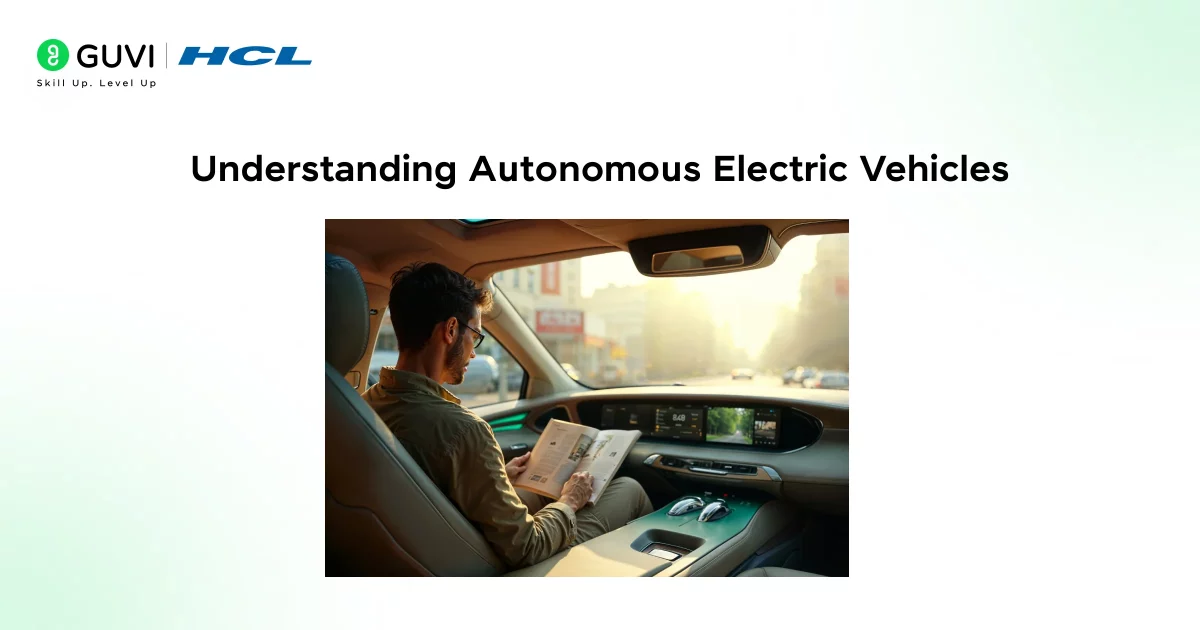
An Autonomous Electric Vehicle (AEV) combines two major technological advancements:
- Electric propulsion – vehicles powered by batteries and electric motors instead of internal combustion engines.
- Autonomous driving systems – AI-driven systems that allow vehicles to drive themselves without continuous human control.
Electric vehicles use electric motors powered by large battery packs, which must be recharged through charging infrastructure instead of using gasoline or diesel.
Autonomous vehicles, on the other hand, are equipped with sensors, cameras, radar, and advanced software that allow them to detect objects, understand road conditions, and drive safely with little or no human intervention.
When these technologies merge, the result is a vehicle that is both environmentally friendly and intelligent.
Key Characteristics of Autonomous Electric Vehicles
An autonomous electric vehicle typically has the following features:
- Battery-powered propulsion system
- Self-driving capability using AI and sensors
- Real-time decision-making algorithms
- Continuous connectivity and data exchange
- Advanced safety and driver-assistance systems
Together, these components create a new category of mobility that is reshaping transportation worldwide.
If you are concerned about the mobility and safety of autonomous electric vehicles, then read the blog – How Artificial Intelligence is Redefining Mobility and Safety?
Why Autonomous Electric Vehicles Matter?
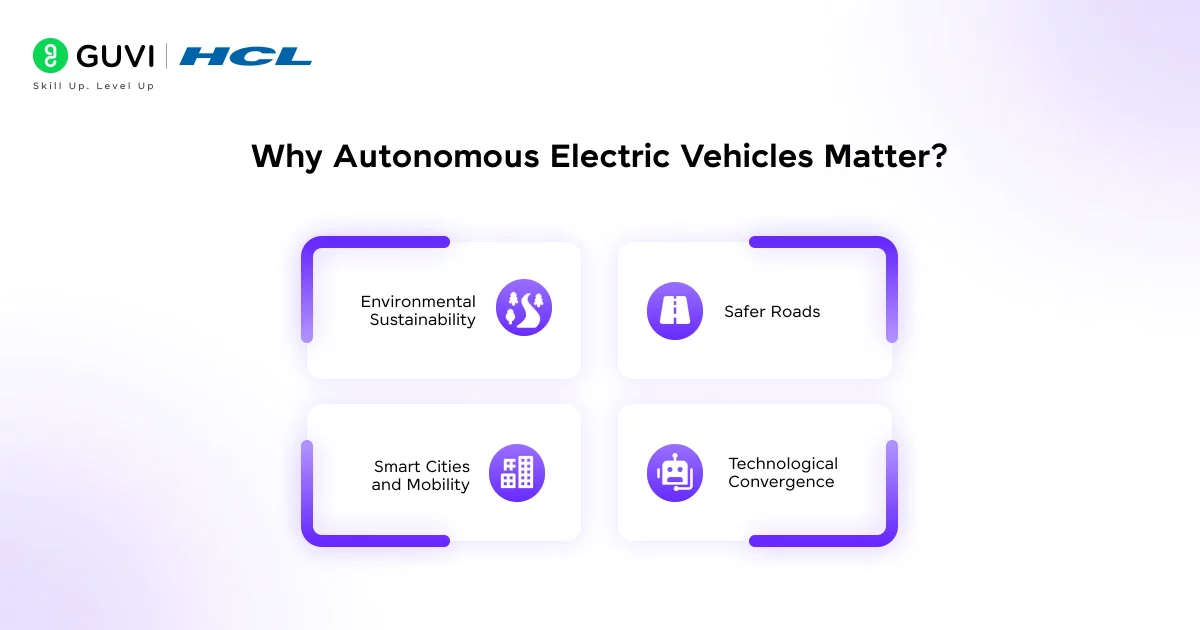
Several global trends drive the shift toward autonomous electric vehicles:
1. Environmental Sustainability
Transportation is one of the largest contributors to greenhouse gas emissions. Electric vehicles reduce dependence on fossil fuels and can significantly lower emissions when powered by renewable energy sources.
2. Safer Roads
Human error is responsible for the majority of traffic accidents. Autonomous driving systems aim to reduce accidents by relying on sensors, real-time data analysis, and precise control mechanisms.
3. Smart Cities and Mobility
Autonomous electric vehicles play a key role in the development of smart cities, enabling optimized traffic management, shared mobility services, and intelligent transportation networks.
4. Technological Convergence
The rise of AI, machine learning, IoT, cloud computing, and 5G has made autonomous mobility technically feasible.
As these technologies mature, autonomous electric vehicles are expected to become a cornerstone of future transportation systems.
How Autonomous Electric Vehicles Work?
To understand autonomous electric vehicles, you need to look at two separate systems working together:
- The electric powertrain
- The autonomous driving system
Electric Powertrain
In electric vehicles, energy stored in a battery pack powers an electric motor that drives the wheels. Unlike internal combustion engines, electric motors deliver instant torque and higher efficiency.
Key components include:
- Battery pack
- Electric motor
- Power inverter
- Charging system
- Battery management system (BMS)
The powertrain is responsible for propulsion, energy management, and vehicle efficiency.
Autonomous Driving System
The autonomous system acts as the vehicle’s brain.
It performs three main tasks:
- Perception – sensing and understanding the environment
- Decision-making – analyzing data and planning actions
- Control – executing steering, braking, and acceleration
AI algorithms process massive amounts of data from sensors to identify road signs, pedestrians, vehicles, and obstacles in real time.
This entire process happens continuously while the vehicle is moving.
Core Technologies Behind Autonomous Electric Vehicles
Autonomous electric vehicles rely on a complex combination of hardware and software technologies.
1. Sensors
Sensors allow the vehicle to perceive its surroundings.
Common sensors include:
- LiDAR (Light Detection and Ranging) – creates high-resolution 3D maps of the environment
- Radar – detects objects and measures distance
- Cameras – identify traffic lights, signs, and pedestrians
- Ultrasonic sensors – detect nearby obstacles
These sensors work together through a process called sensor fusion, which combines data from multiple sources to build an accurate understanding of the environment.
2. Artificial Intelligence and Machine Learning
AI algorithms analyze sensor data and enable the vehicle to make driving decisions.
Common AI applications in autonomous vehicles include:
- Object detection
- Lane recognition
- Path planning
- Traffic prediction
- Collision avoidance
AI processes massive datasets in real time to ensure safe and efficient driving.
3. High-Performance Computing Systems
Autonomous vehicles generate enormous amounts of data.
A high-performance onboard computer processes this data and runs AI models that control vehicle behavior.
Some autonomous vehicles can generate terabytes of data per hour of driving, requiring advanced computing hardware and edge AI systems.
4. Connectivity and Communication
Autonomous electric vehicles often rely on connectivity technologies such as:
- Vehicle-to-Vehicle (V2V) communication
- Vehicle-to-Infrastructure (V2I) communication
- Cloud-based data processing
These technologies help vehicles share traffic data, road conditions, and navigation information.
Levels of Vehicle Autonomy
Not all autonomous vehicles are fully self-driving.
The Society of Automotive Engineers (SAE) defines six levels of vehicle autonomy.
Level 0 – No Automation
The human driver controls all driving tasks.
Level 1 – Driver Assistance
Basic assistance such as adaptive cruise control or lane keeping.
Level 2 – Partial Automation
The vehicle can control steering and acceleration, but the driver must remain attentive.
Level 3 – Conditional Automation
The vehicle can drive itself under certain conditions, but the driver must take control when required.
Level 4 – High Automation
The vehicle can operate autonomously in specific environments or regions.
Level 5 – Full Automation
The vehicle is completely autonomous and does not require a driver.
Most autonomous electric vehicles currently operate between Level 2 and Level 4 autonomy.
Advantages of Autonomous Electric Vehicles
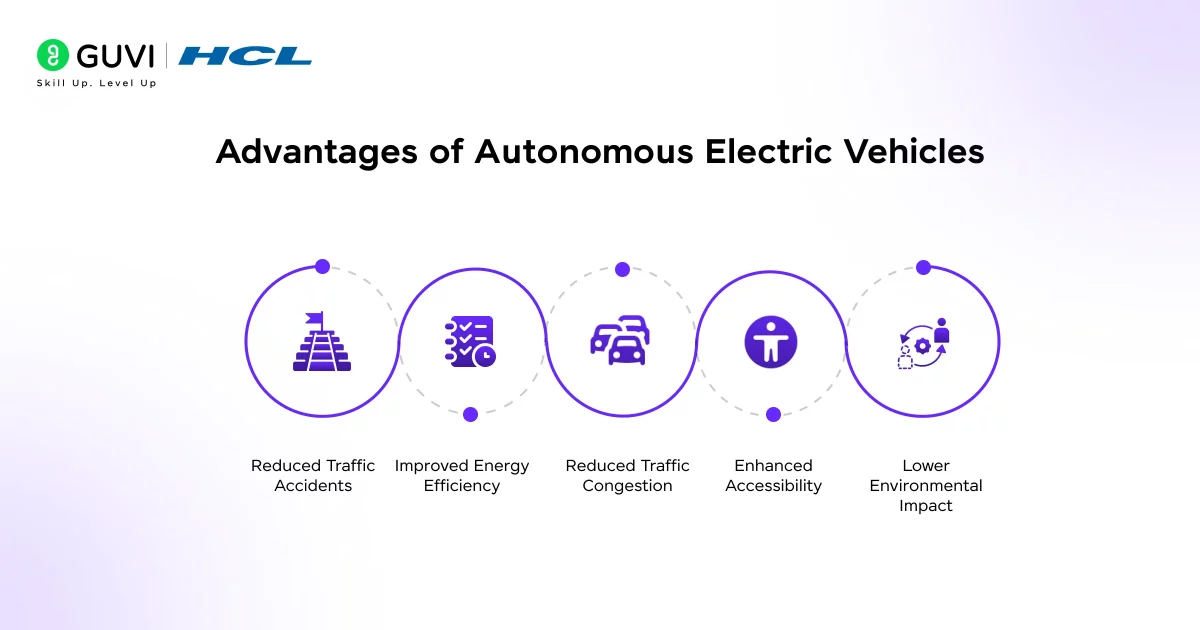
Autonomous electric vehicles offer several benefits that could transform transportation systems.

1. Reduced Traffic Accidents
Autonomous systems eliminate many human errors such as distraction, fatigue, and impaired driving.
AI-powered systems continuously monitor road conditions and react faster than humans in many scenarios.
2. Improved Energy Efficiency
Electric vehicles are inherently more energy-efficient than gasoline vehicles.
Autonomous driving can further improve efficiency by optimizing acceleration, braking, and route planning.
3. Reduced Traffic Congestion
Autonomous vehicles can communicate with each other and coordinate movement, reducing unnecessary braking and congestion.
4. Enhanced Accessibility
Autonomous electric vehicles can improve mobility for:
- Elderly individuals
- People with disabilities
- Non-drivers
This makes transportation more inclusive and accessible.
5. Lower Environmental Impact
Electric propulsion reduces emissions and air pollution, making cities cleaner and healthier.
Challenges Facing Autonomous Electric Vehicles
Despite their promise, autonomous electric vehicles still face several challenges.
1. Technological Complexity
Autonomous driving requires extremely reliable systems capable of operating in unpredictable environments.
AI must handle complex situations such as:
- Adverse weather conditions
- Unpredictable human behavior
- Road construction and detours
2. Battery Limitations
Electric vehicle batteries still face limitations related to:
- Driving range
- Charging time
- Cost
Researchers continue to work on improving battery technology to overcome these challenges.
3. Safety and Reliability
Ensuring the safety of autonomous vehicles remains a major challenge.
Systems must operate flawlessly even in rare edge-case scenarios.
4. Cybersecurity Risks
Autonomous vehicles are connected systems, making them potential targets for cyberattacks, raising cybersecurity concerns.
Manufacturers must implement strong cybersecurity measures to protect vehicle systems.
5. Regulatory and Legal Issues
Governments and regulators are still developing laws for autonomous vehicles.
Questions remain regarding:
- Liability in accidents
- Data privacy
- Safety certification
Here are a few fascinating facts about autonomous electric vehicles:
Applications of Autonomous Electric Vehicles
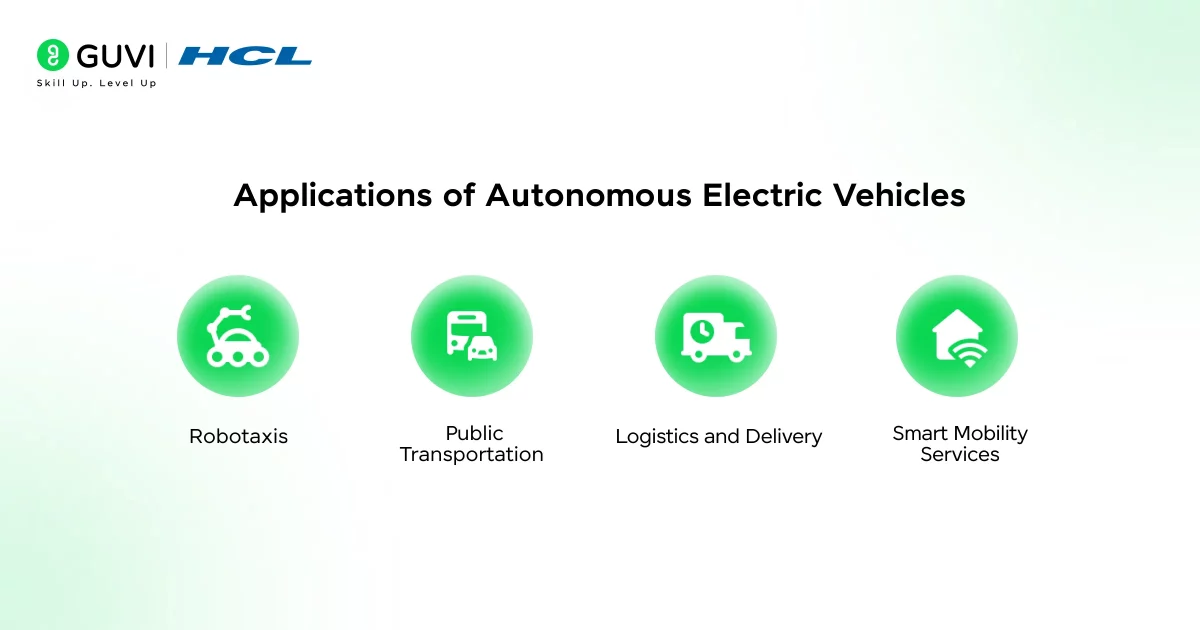
Autonomous electric vehicles are being deployed across several sectors.
1. Robotaxis
Companies are developing autonomous ride-hailing services where vehicles operate without human drivers.
2. Public Transportation
Autonomous electric buses and shuttles are being tested in smart cities worldwide.
3. Logistics and Delivery
Self-driving electric trucks and delivery vehicles can improve efficiency in logistics networks.
4. Smart Mobility Services
Autonomous electric vehicles can support shared mobility models such as:
- Car sharing
- Autonomous ride pooling
- On-demand transportation
These applications could significantly reduce the number of privately owned vehicles.
The Future of Autonomous Electric Vehicles
The future of transportation will likely revolve around three major trends:
- Electrification
- Autonomy
- Connectivity
Autonomous electric vehicles sit at the intersection of these trends.
Advancements in AI, edge computing, and sensor technology will continue to improve autonomous driving capabilities. At the same time, improvements in battery technology and charging infrastructure will make electric vehicles more practical and accessible.
Industry experts believe that autonomous electric vehicles will play a key role in sustainable mobility ecosystems, smart cities, and next-generation transportation networks.
However, achieving fully autonomous vehicles at scale will require continued progress in technology, regulation, and public acceptance.
If you’re serious about learning how advancements in AI impact real-world scenarios, don’t miss the chance to enroll in HCL GUVI’s Intel & IITM Pravartak Certified Artificial Intelligence & Machine Learning course, co-designed by Intel. It covers Python, Machine Learning, Deep Learning, Generative AI, Agentic AI, and MLOps through live online classes, 20+ industry-grade projects, and 1:1 doubt sessions, with placement support from 1000+ hiring partners.
Final Thoughts
Autonomous electric vehicles represent a powerful convergence of artificial intelligence, robotics, and sustainable energy. By combining electric propulsion with self-driving capabilities, these vehicles have the potential to transform how people and goods move around the world.
For you as a learner or technology enthusiast, understanding autonomous electric vehicles means understanding the intersection of multiple fields, including AI, robotics, computer vision, embedded systems, and energy technology.
While the technology is still evolving, one thing is clear: autonomous electric vehicles are not just a futuristic concept anymore. They are already shaping the next generation of mobility.
FAQs
1. What is an autonomous electric vehicle?
An autonomous electric vehicle (AEV) is a self-driving vehicle powered by electricity instead of fuel. It uses sensors, AI, and software to detect surroundings and navigate roads with little or no human input.
2. How do autonomous electric vehicles work?
They combine an electric powertrain with AI-driven autonomous systems. Sensors like cameras, LiDAR, and radar collect environmental data, which AI processes to control steering, braking, and acceleration.
3. Are autonomous electric vehicles safe?
AEVs are designed to reduce accidents caused by human error using advanced sensors and real-time decision-making systems. However, safety still depends on reliable AI systems, proper regulations, and real-world testing.
4. What are the benefits of autonomous electric vehicles?
They reduce carbon emissions, improve road safety, and optimize traffic flow. AEVs can also make transportation accessible for elderly people, individuals with disabilities, and non-drivers.
5. Are autonomous electric vehicles available today?
Some vehicles with partial self-driving features already exist, operating between Level 2 and Level 4 automation. Fully autonomous Level 5 vehicles are still under development and testing.
Success Stories

About the Author
Lukesh S
A professional content writer who has experience in freelancing and now working as a Technical Content Writer at HCL GUVI having sound knowledge in Blog Writing and Creative Writing!
View all posts by Lukesh S
Connect with me @











Did you enjoy this article?