


Electric Vehicle Articles
What is Vehicle-to-Grid Technology : How EVs Can Power the Grid
What is a Battery Management System? BMS Working, Uses & EV Role
EV Infrastructure in India: Best Components, Charging Network, Challenges & Future (2026 Guide)


Get In Touch For Details! Request More Information
What is Electric Vehicle Battery Technology
Mar 02, 2026 6 Min Read 1487 Views
(Last Updated)
The rise of electric vehicles has put battery technology in the spotlight like never before. Electric vehicle battery technology decides how far an EV can travel, how fast it charges, how safe it is, and how much it costs. As electric vehicles become more common, understanding the role of EV batteries is essential for anyone curious about the future of mobility.
This blog breaks down electric vehicle battery technology in a simple and easy-to-understand way. It explains how EV batteries work, the different types of batteries used, recent advancements, key challenges, and the future of electric vehicle battery systems.
Quick Answer
Electric vehicle battery technology mainly uses lithium-based batteries to store and supply energy for running the vehicle. These batteries control an electric vehicle’s range, charging time, performance, and overall lifespan. Ongoing advancements like fast charging and solid-state batteries are making EVs more efficient and reliable.
Table of contents
- Electric Vehicles And EV Batteries
- How Electric Vehicle Batteries Work
- Key Components Of EV Battery Systems
- Battery Cells
- Battery Modules And Battery Pack
- Battery Management System
- Thermal Management System
- Power Electronics
- High-Voltage Wiring And Connectors
- Charging Interface
- Types Of Electric Vehicle Batteries
- Lithium-Ion Battery
- Lithium Iron Phosphate Battery
- Nickel-Metal Hydride Battery
- Solid-State Battery
- Lead-Acid Battery
- Advancements In EV Battery Technology
- Challenges In EV Battery Technology
- 💡 Did You Know?
- Conclusion
- FAQs
- What is the most commonly used battery in electric vehicles?
- How long do electric vehicle batteries last?
- Are EV batteries safe to use?
- Can EV batteries be recycled?
- Do EV batteries lose capacity over time?
Electric Vehicles And EV Batteries
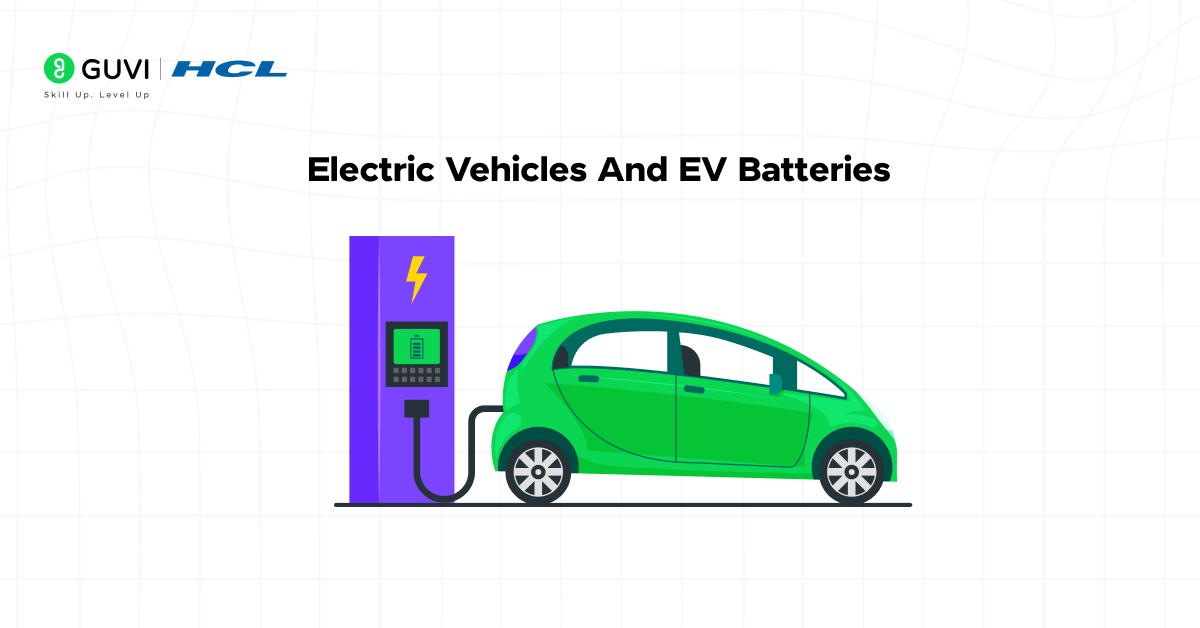
Before diving into electric vehicle battery technology, it is important to understand what an electric vehicle is and why its battery plays such a crucial role. Electric vehicles use electricity instead of fuel to run, making them cleaner, quieter, and more energy efficient than traditional vehicles. As the shift toward sustainable transportation grows, electric vehicles are becoming more common across the world.
The battery is the heart of every electric vehicle. It stores electrical energy and powers the motor, directly influencing the vehicle’s range, performance, charging time, and overall cost. Because of this, electric vehicle battery technology determines how practical, affordable, and reliable an EV is for everyday use.
How Electric Vehicle Batteries Work
Electric vehicle batteries work by storing electrical energy and supplying it to the motor whenever the vehicle is running. Most EVs use large battery packs made up of thousands of small cells that work together to generate power through chemical reactions. This process converts stored energy into electricity that drives the vehicle forward.
When an electric vehicle accelerates, energy flows from the battery to the motor. During braking, regenerative braking systems capture unused energy and send it back to the battery, improving efficiency. A battery management system continuously monitors temperature, voltage, and charge levels to ensure safety, performance, and long battery life.
Key Points:
- Energy Storage: EV batteries store electrical energy that powers the motor.
- Cell-Based Design: Thousands of battery cells work together inside a single battery pack.
- Regenerative Braking: Recovering energy during braking helps improve driving range.
- Battery Management System: Ensures safe charging, discharging, and temperature control.
Do check out HCL GUVI’s Advanced Electric Vehicle Technology Course to gain deeper, practical knowledge in electric vehicle battery technology. This program aligns well with the concepts covered in this blog and helps you build industry-ready EV skills for the electric mobility domain.
Key Components Of EV Battery Systems
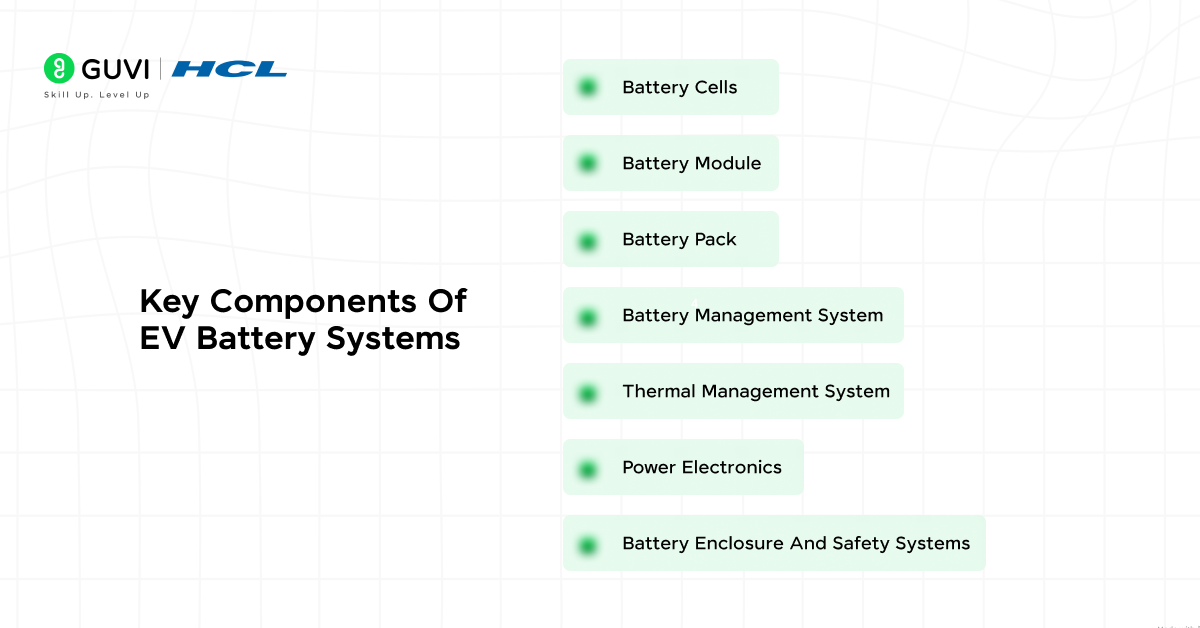
An electric vehicle battery system is a combination of multiple components that work together to store energy, deliver power, and maintain safety. These components ensure that the battery operates efficiently under different driving and charging conditions. Understanding these parts gives a clearer picture of how electric vehicle battery technology functions as a complete system.
Key Components Covered In This Section
- Battery Cells
- Battery Module
- Battery Pack
- Battery Management System
- Thermal Management System
- Power Electronics
- Battery Enclosure And Safety Systems
1. Battery Cells
Battery cells are the smallest and most fundamental units of an EV battery system. Each cell stores chemical energy and converts it into electrical energy when the vehicle operates. Thousands of cells are combined to generate sufficient power for driving an electric vehicle.
Key Points:
- Primary Energy Storage: Cells store the electrical energy used by the EV
- Chemical Reaction Based: Energy is released through controlled electrochemical reactions
- High Energy Density: Designed to store more energy in a compact size
- Cell Chemistry: Performance depends on materials like lithium, nickel, and iron
- Heat Sensitivity: Cells must operate within a safe temperature range
2. Battery Modules And Battery Pack
Battery modules are formed by grouping multiple battery cells together in a fixed structure. These modules help organize cells, simplify wiring, and improve heat management. If a module fails, it can often be repaired or replaced without changing the entire battery pack, making maintenance easier.
Key Points:
- Cell Organization: Modules group cells for structured arrangement
- Main Power Unit: The battery pack supplies energy to the motor
- Structural Support: Designed to handle vibration and impact
- Weight Distribution: Placement improves vehicle stability
- Safety Housing: Protects cells from physical damage
3. Battery Management System
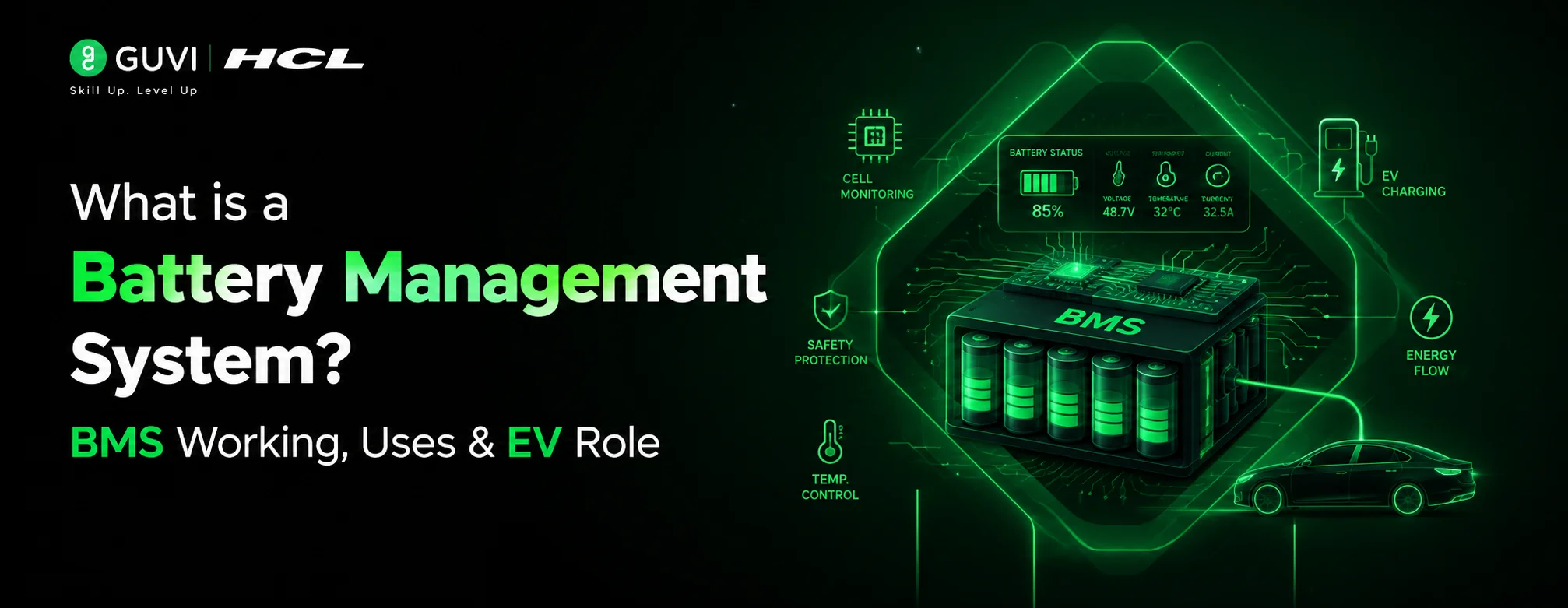
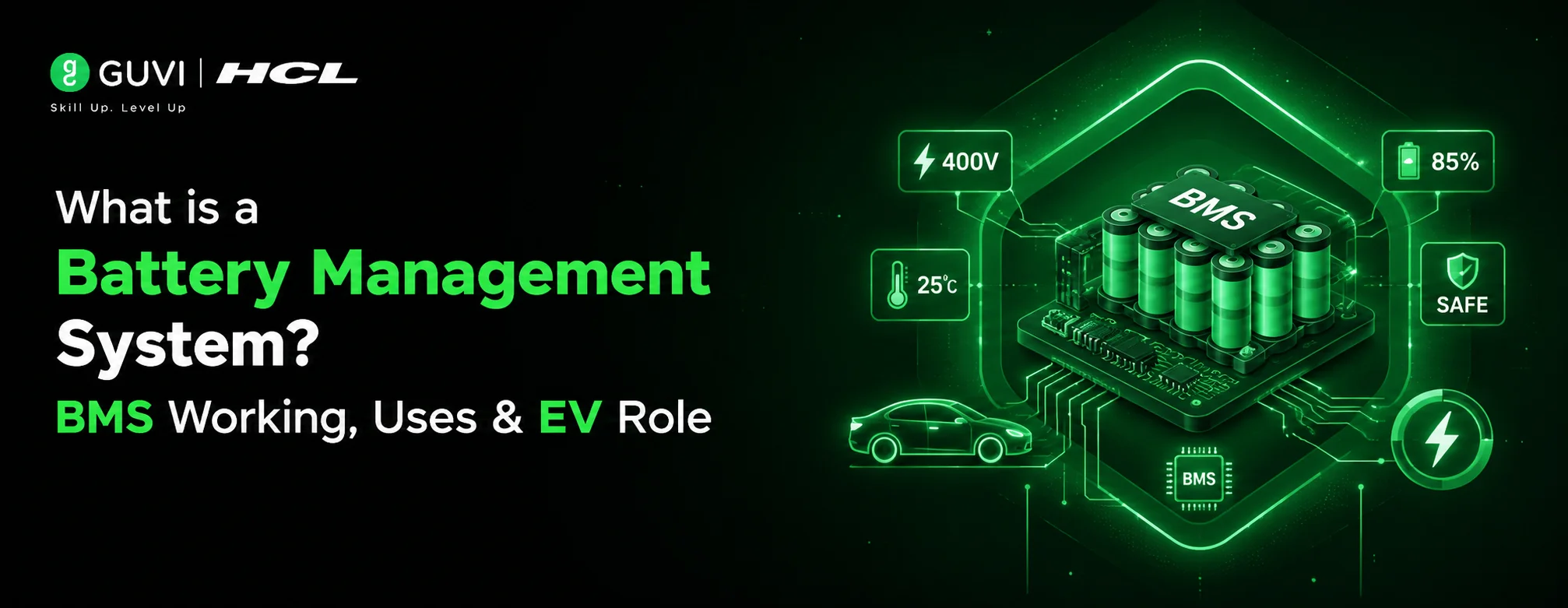
The Battery Management System monitors and controls the battery’s operation. It tracks voltage, temperature, current, and state of charge of each cell. By preventing overcharging, deep discharge, and overheating, the BMS plays a critical role in ensuring safety and extending battery life.
Key Points:
- Voltage Monitoring: Tracks voltage levels of individual cells
- Temperature Control: Prevents overheating and thermal runaway
- Charge Management: Controls charging and discharging limits
- Cell Balancing: Ensures uniform performance across all cells
- Fault Detection: Identifies and responds to abnormal conditions
4. Thermal Management System
The thermal management system regulates the temperature of the EV battery during charging and driving. Batteries perform best within a specific temperature range, and this system prevents overheating or extreme cooling. Proper thermal control improves charging efficiency, performance, and long-term battery durability.
Key Points:
- Heat Dissipation: Removes excess heat during operation
- Cold Weather Support: Maintains performance in low temperatures
- Fast Charging Protection: Prevents overheating during rapid charging
- Battery Longevity: Reduces degradation caused by thermal stress
5. Power Electronics
Power electronics control how electricity flows between the battery, motor, and charging system. Components such as inverters and converters adjust voltage and current levels based on driving needs. Efficient power electronics reduce energy loss and ensure smooth acceleration and regenerative braking.
Key Points:
- Power Conversion: Converts DC battery power to usable motor power
- Energy Efficiency: Minimizes power loss
- Voltage Regulation: Maintains stable energy delivery
- System Coordination: Synchronizes battery and motor operation
6. High-Voltage Wiring And Connectors
High-voltage wiring and connectors safely transfer electricity from the battery pack to the motor and other components. These parts are designed to handle high power levels securely.
Key Points:
- Safe Energy Transfer: Handles high voltage without leakage
- Durable Insulation: Prevents short circuits and electric shock
- Heat Resistance: Designed for high-temperature operation
- Secure Connections: Reduces power loss and failure risks
7. Charging Interface
The charging interface allows the EV battery to connect with external charging sources such as home chargers, public stations, and fast chargers. It works closely with the BMS to control charging safely.
Key Points:
- External Power Access: Enables battery charging
- Charging Control: Regulates speed and current
- Compatibility: Supports different charging standards
- User Safety: Designed for safe and easy daily use
Types Of Electric Vehicle Batteries
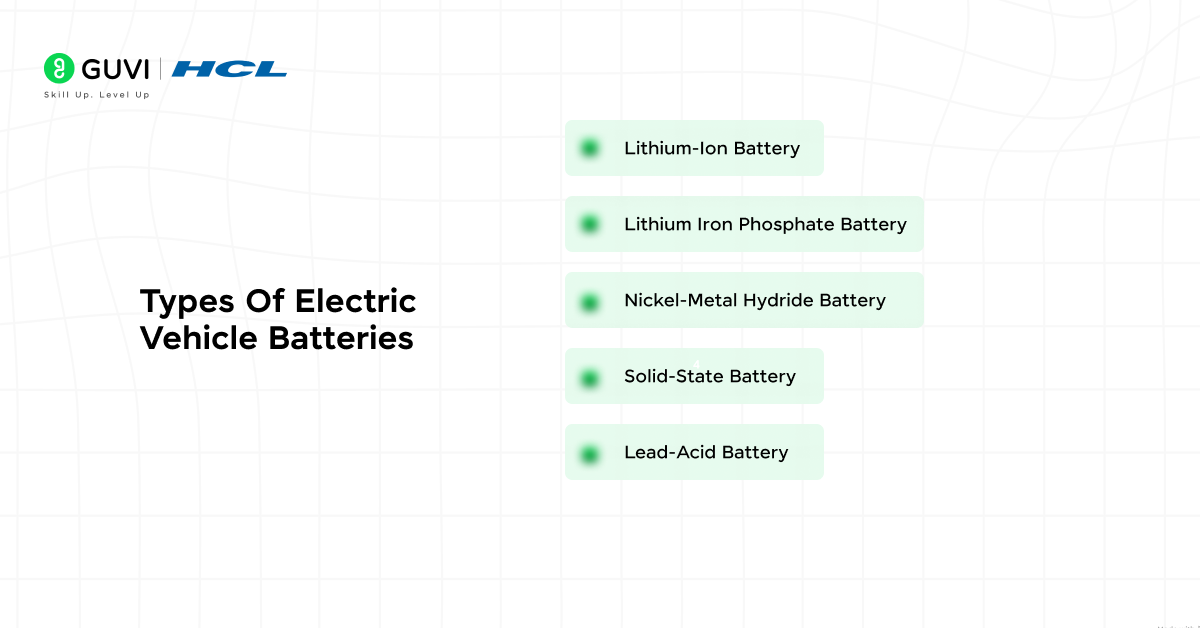
Electric vehicles use different battery technologies based on factors like driving range, cost, safety, charging speed, and lifespan. Before going deeper into how each battery works, it is important to clearly understand the main types of EV batteries used today, which differ in performance and real-world application.
In this section, we will look at the main types of electric vehicle batteries currently used or being developed, and understand how each type differs in terms of performance and real-world usage.
- Lithium-Ion Battery
- Lithium Iron Phosphate Battery
- Nickel-Metal Hydride Battery
- Solid-State Battery
- Lead-Acid Battery

1. Lithium-Ion Battery
Lithium-ion batteries are the most widely used batteries in modern electric vehicles. They offer high energy density, which allows EVs to travel longer distances without increasing battery size. Their lightweight nature also improves overall vehicle efficiency and acceleration. Because of their fast-charging capability and reliable performance, they are commonly found in passenger electric cars.
Key Points:
- High Energy Density: Stores more energy in less space, improving driving range
- Lightweight Design: Helps reduce vehicle weight and improve efficiency
- Fast Charging Support: Compatible with rapid charging infrastructure
- Wide Adoption: Used in most mainstream and premium electric vehicles
2. Lithium Iron Phosphate Battery
Lithium Iron Phosphate batteries focus more on safety and durability than maximum range. They are chemically stable, which reduces the risk of overheating and fire. While their energy density is lower than lithium-ion batteries, they last longer and are more cost-effective. These batteries are popular in budget EVs and commercial electric vehicles.
Key Points:
- Thermal Stability: Safer under high temperatures and heavy usage
- Long Cycle Life: Can handle more charge-discharge cycles
- Lower Cost: Cheaper to manufacture than lithium-ion batteries
- Common Usage: Found in electric buses and entry-level EVs
3. Nickel-Metal Hydride Battery
Nickel-Metal Hydride batteries were commonly used before lithium batteries became dominant. They are known for reliability and tolerance to overcharging. However, their lower energy density and heavier weight make them unsuitable for modern long-range electric vehicles. Today, they are mostly limited to hybrid vehicles.
Key Points:
- Durability: Strong resistance to overcharging damage
- Lower Energy Density: Provides shorter driving range
- Heavier Weight: Reduces vehicle efficiency
- Limited Usage: Mostly used in hybrid electric vehicles
4. Solid-State Battery
Solid-state batteries are an emerging technology expected to transform electric vehicles in the future. They use solid electrolytes instead of liquid ones, which improves safety and allows higher energy storage. These batteries promise faster charging, longer range, and improved lifespan. However, they are still under development and not yet widely available.
Key Points:
- Solid Electrolyte: Eliminates liquid components for better safety
- Higher Energy Potential: Can significantly increase driving range
- Faster Charging: Supports quicker energy transfer
- Development Stage: Still in research and testing phases
5. Lead-Acid Battery
Lead-acid batteries are one of the oldest battery technologies. They are inexpensive and easy to produce but are heavy and inefficient compared to modern alternatives. Due to their low energy density, they are not suitable for powering electric vehicles fully. Today, they are mainly used for auxiliary functions in EVs.
Key Points:
- Low Cost: Cheapest battery technology available
- Heavy Design: Adds significant weight to vehicles
- Low Efficiency: Not suitable for long-range EV use
- Current Role: Used mainly for backup and support systems
Advancements In EV Battery Technology
Electric vehicle battery technology has seen rapid progress in recent years as manufacturers focus on improving performance, safety, and user convenience. These advancements are aimed at increasing driving range, reducing charging time, and making batteries more reliable for everyday use. In this section, we look at the key technological improvements that are shaping modern and future EV batteries.
Key Points:
- Higher Energy Density: New battery chemistries allow more energy to be stored in smaller and lighter battery packs
- Fast Charging Technology: Advanced charging systems significantly reduce the time required to recharge EV batteries
- Improved Battery Management Systems: Smart BMS software monitors cell health, balances energy usage, and extends battery life
- Better Thermal Management: Advanced cooling systems help maintain safe operating temperatures
- Solid-State Battery Development: Research into solid electrolytes promises safer batteries with higher capacity and longer lifespan
Challenges In EV Battery Technology
Despite rapid progress, electric vehicle battery technology still faces several challenges that affect cost, performance, and large-scale adoption. These issues influence how affordable EVs are, how convenient they feel to use, and how sustainable they are in the long run. In this section, we look at the major challenges currently faced by EV battery technology.
Key Points:
- High Battery Cost: Batteries remain the most expensive component of an electric vehicle, increasing overall vehicle price
- Limited Charging Infrastructure: Lack of widespread fast-charging stations affects long-distance travel and convenience
- Long Charging Time: Even with fast chargers, charging takes longer compared to refueling conventional vehicles
- Thermal Management Issues: Managing heat is critical to prevent battery degradation and safety risks
- Battery Degradation Over Time: Repeated charging cycles reduce battery capacity and driving range
- Recycling And Disposal Challenges: Safe recycling and reuse of battery materials are still complex and developing
💡 Did You Know?
- Electric vehicle batteries are designed to last 8 to 15 years, often outliving the warranty period
- Smart battery management systems actively control charging, temperature, and power flow, which directly improves battery lifespan and performance
- Many used EV batteries are repurposed for home and grid energy storage instead of being discarded
Conclusion
Electric vehicle battery technology is the backbone of electric mobility, shaping how EVs perform, charge, and last. Understanding EV batteries, their components, and types helps explain why they are so important to modern transportation.
Although challenges like cost and charging time remain, ongoing advancements are improving battery efficiency and reliability. As technology evolves, electric vehicles are becoming more practical for everyday use.
FAQs
1. What is the most commonly used battery in electric vehicles?
Lithium-ion batteries are the most commonly used EV batteries because they offer high energy density, fast charging, and reliable performance.
2. How long do electric vehicle batteries last?
Most EV batteries last between 8 to 15 years, depending on usage, charging habits, and battery management systems.
3. Are EV batteries safe to use?
Yes, EV batteries are designed with multiple safety systems, including thermal management and battery monitoring, to prevent overheating and failures.
4. Can EV batteries be recycled?
Yes, EV batteries can be recycled, and many are also reused for energy storage applications after vehicle use.
5. Do EV batteries lose capacity over time?
Yes, like all batteries, EV batteries gradually lose capacity, but proper charging and temperature control can slow down this process.
Success Stories

About the Author
Jebasta
I translate the language of data into stories that anyone can understand. As a writer with a data science background, I simplify analytics, AI, and decision-making so beginners and enthusiasts can confidently explore the world of data.
View all posts by Jebasta
Connect with me @








Did you enjoy this article?