


Career Articles
Can a Deputy Manager in Finance Switch to Data Analytics Mid-Career?
What Skills Do Finance Team Leads Need for Finance Analytics Leadership?


Get In Touch For Details! Request More Information
Azure Certification Roadmap 2026: 7 Best Certifications Beginners Must Know
Mar 11, 2026 5 Min Read 2493 Views
(Last Updated)
Think of cloud computing like renting storage space online instead of buying hard drives for your computer. Microsoft Azure is one of the biggest cloud platforms in the world, helping companies store data, run websites, and manage their business online.
Azure is growing fast, and companies need people who know how to use it. That’s where Azure certifications come in. These certifications act like report cards that prove your cloud knowledge and skills. For students and job seekers, following a clear Azure certification roadmap can make it easier to choose the right exams and land your first tech job with a good salary.
This complete guide will walk you through the Azure certification roadmap step by step, showing you which Azure certifications to take, in what order, and how to prepare for them. By the end, you’ll have a clear path to start your cloud computing career with confidence.
Quick Answer
Start with cloud fundamentals with AZ-900, then choose AZ-104 for managing Azure systems or AZ-204 for building cloud applications. Progress to expert-level certifications like AZ-305 or AZ-400, while gaining hands-on experience with virtual machines, networking, storage, and DevOps tools to build a strong Azure portfolio.
Table of contents
- First Certification to Take
- Why Start with AZ-900: Microsoft Azure Fundamentals
- What is AZ-900 Certification
- How to Prepare for AZ-900
- Step-by-Step Azure Certification Learning Path
- Level 1: Fundamentals - AZ-900
- Level 2: Associate Certifications - AZ-104 & AZ-204
- Level 3: Expert Certifications – AZ-305 & AZ-400
- Recommended sequence for beginners
- Understanding Azure Role-Based Certifications
- Certification Levels Explained
- Matching Azure Certifications to Job Roles
- What are all the Skills Required to Pass Azure Certifications
- Core Technical Skills for Azure Exams
- Soft Skills for Azure Professionals:
- Best Learning Resources for Azure Certification:
- Complete Azure Certification Overview
- High-Demand Azure Jobs
- Salary Expectations in India and Globally
- Industries hiring Azure professionals:
- How Azure Certifications Enhance Job Clarity and Growth
- Tips to Stand Out in Your Azure Cloud Career
- Conclusion
- Frequently Asked Questions
- Is Azure certification worth it for beginners in 2026?
- How long does it take to prepare for the AZ-900 exam?
- Do I need programming experience for Azure certifications?
- How much does an Azure certification exam cost?
- Can I get a job with just the AZ-900 certification?
- What is the difference between AZ-104 and AZ-204?
- Do Azure certifications expire?
- Can I take Azure exams online from home?
- What happens if I fail an Azure certification exam?
- Which Azure certification should I take after AZ-900?
First Certification to Take
Why Start with AZ-900: Microsoft Azure Fundamentals
If you’re completely new to Azure, begin with the AZ-900 certification. This is the easiest Azure exam and doesn’t require any previous cloud experience. Think of it as your introduction to Azure, like learning the alphabet before writing sentences.
The AZ-900 exam covers basic cloud concepts, what services Azure offers, how to keep data safe, and how Azure pricing works. It’s designed for beginners, so you don’t need to be a tech expert to pass it.
Before diving deeper into your Azure certification roadmap, explore HCL GUVI’s Azure Certification Course. This course teaches cloud basics, Azure Functions, and SaaS, PaaS, and IaaS using easy, step-by-step lessons and real examples. Learn at your own pace, practice with quizzes and coding tasks, and earn a certificate to build job-ready Azure skills.
What is AZ-900 Certification
- It builds your confidence with cloud basics
- Employers see you’re serious about learning Azure
- It prepares you for harder certifications later
- The exam is not too difficult for newcomers
How to Prepare for AZ-900
- Use Microsoft Learn (it’s free!) to study the AZ-900 content
- Watch YouTube videos explaining Azure concepts
- Practice with Azure’s free account to try things yourself
- Take practice tests online before the real exam
- Study for about 2-4 weeks if you’re starting from scratch
Step-by-Step Azure Certification Learning Path
Azure certifications have three levels: Fundamentals, Associate, and Expert. Here’s the best order to take them:
Level 1: Fundamentals – AZ-900
- AZ-900: Microsoft Azure Fundamentals
- Timeline: 2-4 weeks of study
Level 2: Associate Certifications – AZ-104 & AZ-204
After AZ-900, pick one of these based on your interests:
- AZ-104: Azure Administrator (managing Azure systems)
- AZ-204: Azure Developer (building applications on Azure)
- Timeline: 6-8 weeks of study per certification
Level 3: Expert Certifications – AZ-305 & AZ-400
Once you have an Associate certification, move to Expert level:
- AZ-305: Azure Solutions Architect (designing cloud solutions)
- AZ-400: Azure DevOps Engineer (automating and deploying code)
- Timeline: 8-12 weeks of study per certification
Recommended sequence for beginners
Start with AZ-900, then choose AZ-104 or AZ-204 based on whether you like managing systems or writing code. After gaining some work experience, pursue an Expert certification to advance your career.
Understanding Azure Role-Based Certifications
Azure certifications are organized by job roles. This means different certifications prepare you for different careers. Here’s how it works:
Certification Levels Explained
- Fundamentals: Basic knowledge for everyone
- Associate: Mid-level skills for specific jobs
- Expert: Advanced skills for senior positions
- Specialty: Deep knowledge in specific areas like AI or security
Matching Azure Certifications to Job Roles
- Azure Administrator (AZ-104): These professionals manage Azure resources, create virtual machines, set up networks, and keep systems running smoothly. If you like organising and maintaining computer systems, this is your path.
- Azure Developer (AZ-204): Developers build applications that run on Azure. They write code, create websites, and connect different services. Choose this if you enjoy programming.
- Azure Solutions Architect (AZ-305): Architects design complete cloud systems for companies. They decide which Azure services to use and how to connect them. This role needs experience with Azure first.
- Azure DevOps Engineer (AZ-400): DevOps engineers automate tasks and help teams release software faster. They work with both development and operations teams.
Role-based certifications help you focus on one career path instead of learning everything at once. This makes job hunting easier because you can target specific positions.
What are all the Skills Required to Pass Azure Certifications
Core Technical Skills for Azure Exams
You’ll need to understand these core concepts:
- Cloud basics: What cloud computing is and how it works
- Virtual machines: Computers that run in the cloud
- Networking: How data travels between computers
- Storage: Where and how data is saved in Azure
- Security: Protecting data and systems from hackers
- Databases: Organising and storing information
- DevOps basics: Tools for managing and deploying software
Soft Skills for Azure Professionals:
Technical knowledge isn’t everything. You also need:
- Problem-solving: Finding solutions when things don’t work
- Logical thinking: Understanding how different parts connect
- Learning mindset: Technology changes fast, so keep learning
Best Learning Resources for Azure Certification:
- Microsoft Learn: Free official courses from Microsoft
- Online courses: Udemy, Coursera, and Pluralsight offer Azure training
- Hands-on labs: Practice in real Azure environments
- Practice exams: Test your knowledge before the real exam
- YouTube channels: Free video tutorials explaining Azure concepts
Complete Azure Certification Overview
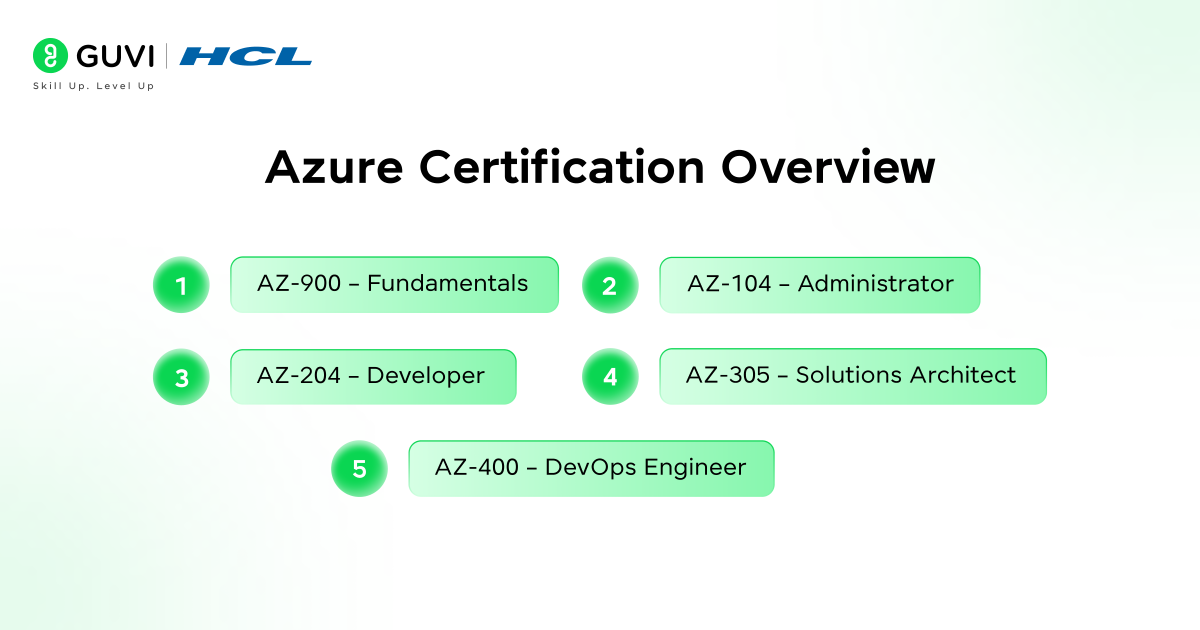
Here’s a quick look at the main Azure certifications:
- AZ-900 – Azure Fundamentals: Your starting point. Covers cloud concepts and basic Azure services. Great for anyone beginning their cloud journey.
- AZ-104 – Azure Administrator Learn to manage Azure subscriptions, virtual machines, storage, and networks. This certification is perfect for IT professionals who want to manage cloud infrastructure.
- AZ-204 – Azure Developer: Focus on building cloud applications. You’ll learn to create web apps, work with databases, and use Azure services in your code.
- AZ-305 – Azure Solutions Architect Design complete cloud solutions for businesses. This advanced certification shows you can plan and build large-scale Azure systems.
- AZ-400 – Azure DevOps Engineer Master automation, continuous delivery, and collaboration between development and operations teams.
Each certification makes you more valuable to employers and opens doors to better job opportunities. Azure certifications can lead to well-paying jobs in growing industries.

High-Demand Azure Jobs
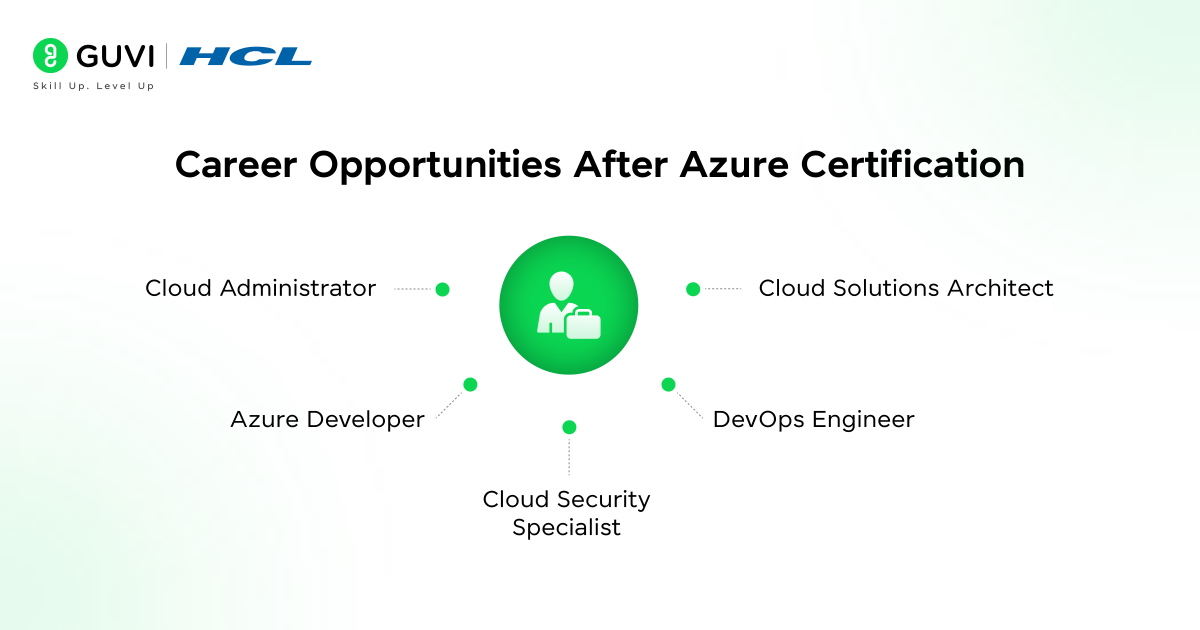
- Cloud Administrator
- Azure Developer
- Cloud Solutions Architect
- DevOps Engineer
- Cloud Security Specialist
Salary Expectations in India and Globally
- Freshers with AZ-900: ₹3-5 lakhs per year
- Azure Administrator (AZ-104): ₹7-7.8 lakhs per year
- Azure Developer (AZ-204): ₹8.1-9 lakhs per year
- Solutions Architect (AZ-305): ₹31-34.2 lakhs per year
Global salary ranges: Azure professionals often earn $60,000-$150,000 per year in countries like the US, UK, and Australia.
Industries hiring Azure professionals:
- IT services companies (TCS, Infosys, Wipro, Accenture)
- Banks and financial companies
- Healthcare organizations
- Startups building cloud products
- E-commerce companies
How Azure Certifications Enhance Job Clarity and Growth
Azure certifications give freshers a clear advantage when looking for their first tech job. Here’s how they help:
Getting your first job: Certifications prove you have real Azure skills, even without work experience. Many companies specifically look for certified candidates because it shows you’re committed to learning.
Career progression:
- Entry-level: Start as a junior administrator or developer
- Mid-level: Become a senior engineer or architect
- Senior-level: Lead teams or become a cloud consultant
Tips to Stand Out in Your Azure Cloud Career
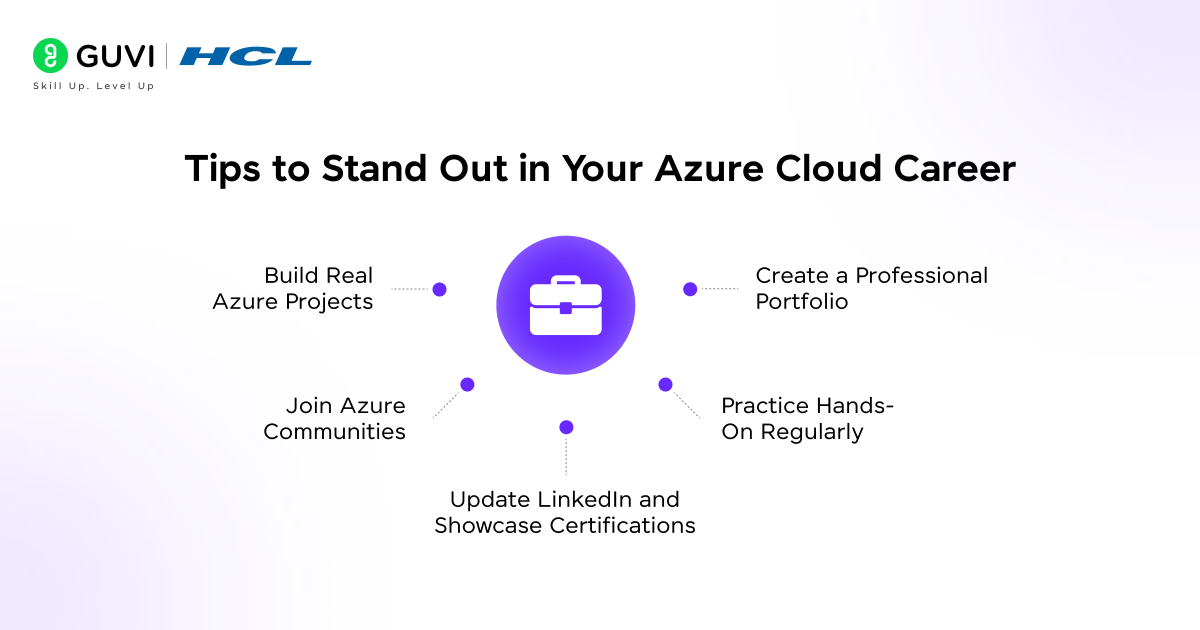
- Build projects: Create your own Azure projects and share them on GitHub
- Make a portfolio: Show what you’ve built using Azure
- Update LinkedIn: Add your certifications and share Azure content
- Join communities: Connect with other Azure learners online
- Practice regularly: Keep using Azure even after getting certified
Conclusion
Azure certifications are valuable tools for anyone starting a career in cloud computing. They give you structured learning, prove your skills to employers, and open doors to exciting job opportunities.
The key is to start small and build gradually. Begin with AZ-900 to learn the basics, then choose a role-based certification that matches your interests. Whether you want to manage systems, write code, or design solutions, there’s an Azure certification path for you.
Frequently Asked Questions
1. Is Azure certification worth it for beginners in 2026?
Yes, absolutely! Azure certifications are highly valuable for beginners because they prove your cloud skills to employers, even without work experience. Companies are actively looking for Azure-certified professionals, and having a certification
2. How long does it take to prepare for the AZ-900 exam?
For complete beginners, preparing for AZ-900 typically takes 2-4 weeks if you study consistently. If you dedicate 1-2 hours daily using Microsoft Learn’s free resources and practice with Azure’s free account, you can be ready for the exam within a month.
3. Do I need programming experience for Azure certifications?
It depends on which certification you choose. For AZ-900 (Fundamentals), you don’t need any programming experience at all. For AZ-104 (Administrator), programming is helpful but not required.
4. How much does an Azure certification exam cost?
The AZ-900 exam costs Around ₹8,000 in India. Associate-level exams like AZ-104 and AZ-204 also cost around ₹13,500.
5. Can I get a job with just the AZ-900 certification?
While AZ-900 alone might not guarantee a job, it significantly improves your chances, especially for entry-level positions. Many companies use AZ-900 as a baseline requirement for cloud-related roles.
6. What is the difference between AZ-104 and AZ-204?
AZ-104 (Azure Administrator) focuses on managing and maintaining Azure infrastructure. You’ll learn to handle virtual machines, networks, storage, and user accounts. This path is ideal if you like system administration and keeping things running smoothly.
AZ-204 (Azure Developer) focuses on building applications on Azure. You’ll learn to write code, create web apps, and use Azure services in your applications. Choose this if you enjoy programming and want to be a developer.
7. Do Azure certifications expire?
Yes, most Azure role-based certifications expire after one year. To keep your certification active, you need to pass a free renewal assessment on Microsoft Learn before the expiration date. The renewal assessment is shorter and easier than the original exam.
8. Can I take Azure exams online from home?
Yes! Microsoft offers online proctored exams that you can take from home. You’ll need a computer with a webcam, microphone, and stable internet connection. A proctor will monitor you through your webcam during the exam to ensure exam integrity.
9. What happens if I fail an Azure certification exam?
If you fail, you can retake the exam after waiting 24 hours. You’ll need to pay the full exam fee again for your second attempt.
10. Which Azure certification should I take after AZ-900?
After AZ-900, choose based on your career interests:
Choose AZ-104 if you want to manage cloud systems, handle infrastructure, and work in IT operations
Choose AZ-204 if you want to build applications, write code, and work as a developer
Success Stories

About the Author
Salini Balasubramaniam
A curious, information-savvy writer loves to turn deep insights into authentic and engaging content that connects. With experience in writing for brands and driving audience engagement, I believe that words can make a powerful difference.
View all posts by Salini Balasubramaniam
Connect with me @














Did you enjoy this article?