


Artificial Intelligence and Machine Learning Articles
How to Evaluate LLM Outputs in Production Deployments
AI/ML Skills Gap 2026: Why Companies Can't Find Job-Ready Talent
20 AI/ML Interview Questions Recruiters Can Use Without a Tech Background - Best Guide
How Industry-Backed AI/ML Bootcamps Are Changing the AI/ML Hiring Pipeline - Best Guide 2026

Get In Touch For Details! Request More Information
What is AI in Business? A Guide for 2026
Feb 17, 2026 6 Min Read 1703 Views
(Last Updated)
AI in business is rapidly becoming essential, with companies either already using it or planning to implement it in the future. Despite this widespread adoption, a significant gap exists—only 10% of small businesses know how to use AI for work-related tasks.
The integration of artificial intelligence in business offers remarkable benefits, from improved customer engagement to enhanced decision-making and process automation. In fact, since 2017, the use of artificial intelligence in business operations has doubled.
You might be wondering how to implement AI in your business as the global AI market grows from $621.19 billion in 2024 to a projected $2.74 trillion by 2032. This guide will help you understand what AI in business means, its key benefits, practical applications, potential challenges, and what to expect in 2026 and beyond. Let’s begin!
Table of contents
- What is AI in Business?
- How AI differs from traditional automation
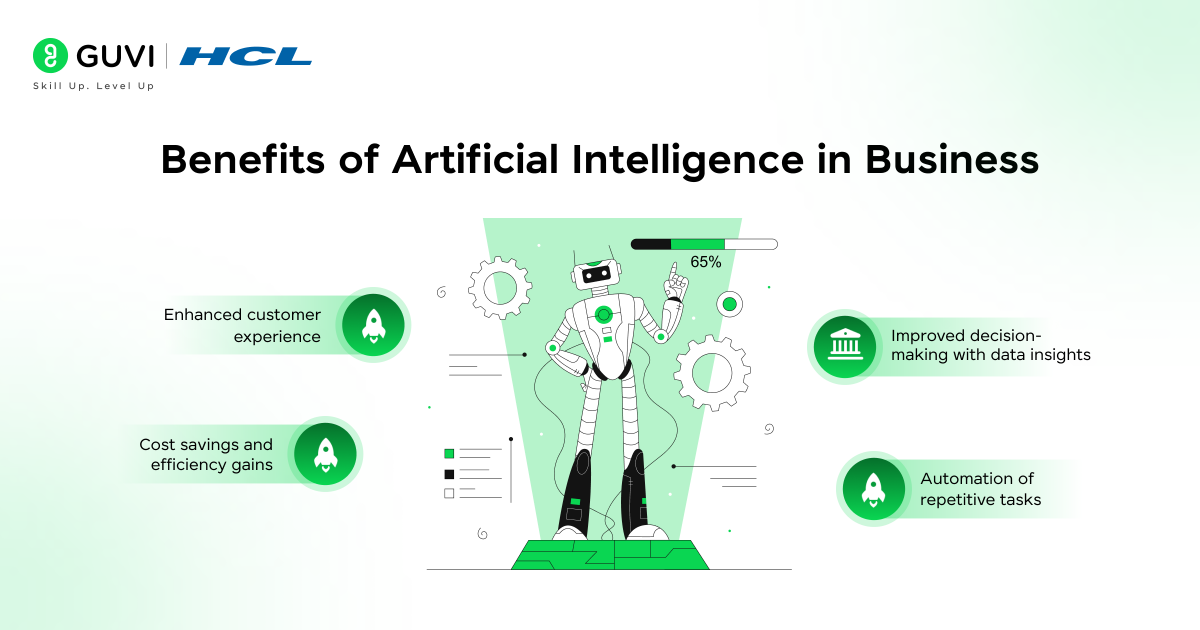
- Benefits of Artificial Intelligence in Business
- 1) Improved decision-making with data insights
- 2) Automation of repetitive tasks
- 3) Enhanced customer experience
- 4) Cost savings and efficiency gains
- Top Applications of AI in Business Today
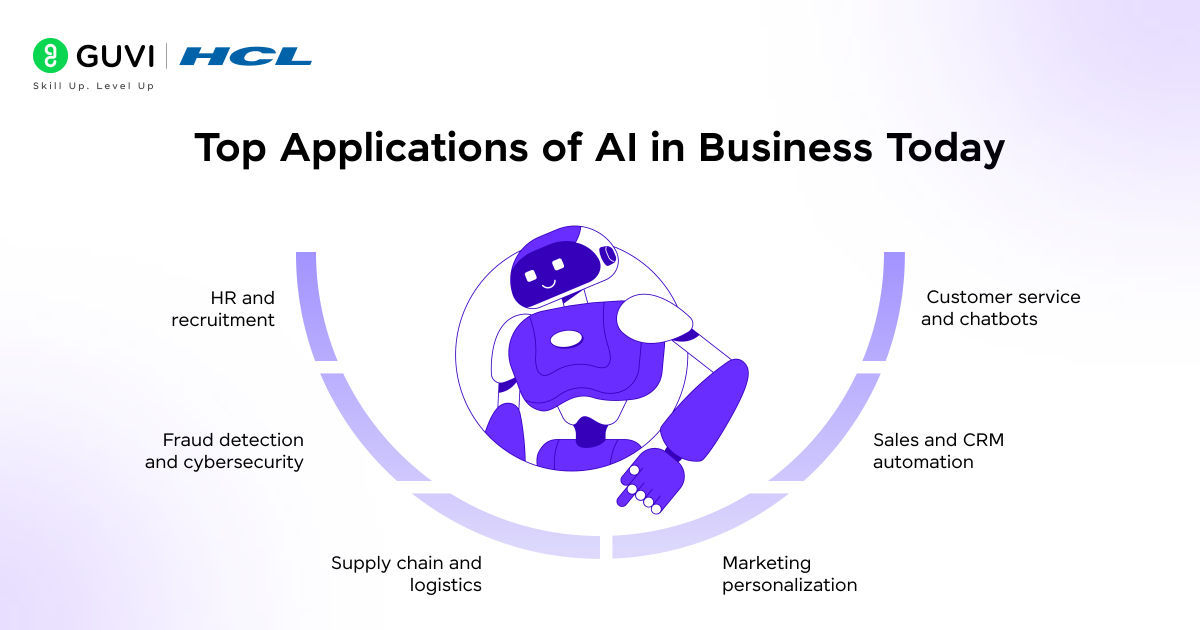
- 1) Customer service and chatbots
- 2) Sales and CRM automation
- 3) Marketing personalization
- 4) Supply chain and logistics
- 5) Fraud detection and cybersecurity
- 6) HR and recruitment
- Challenges and Ethical Concerns
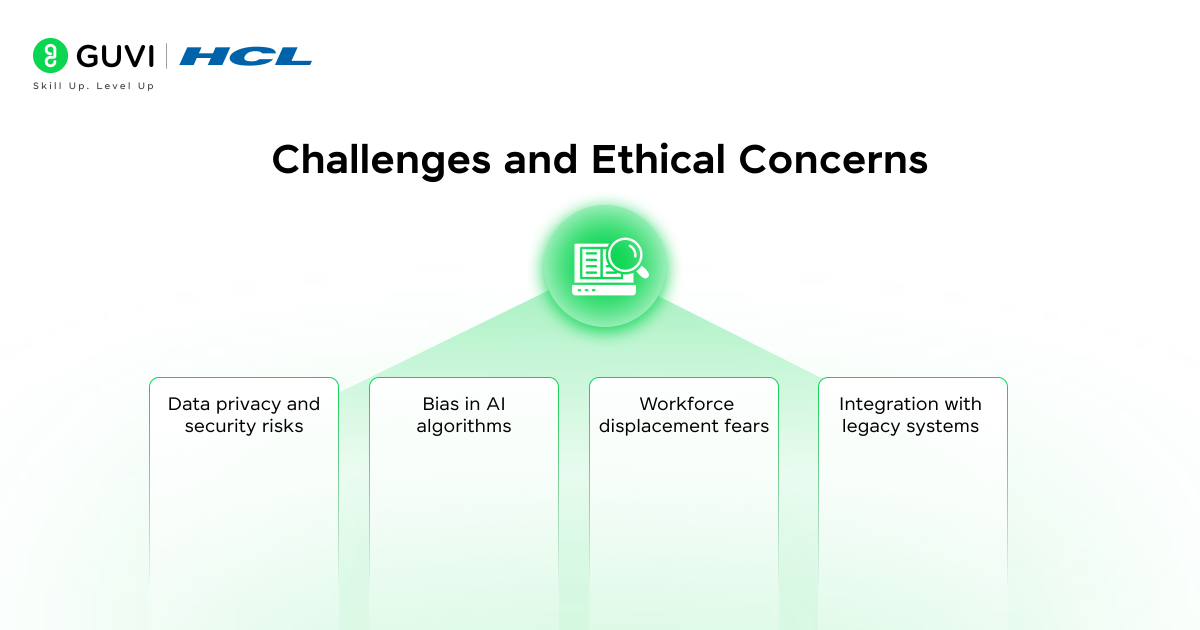
- 1) Data privacy and security risks
- 2) Bias in AI algorithms
- 3) Workforce displacement fears
- 4) Integration with legacy systems
- The Future of AI in Business (2026 and Beyond)
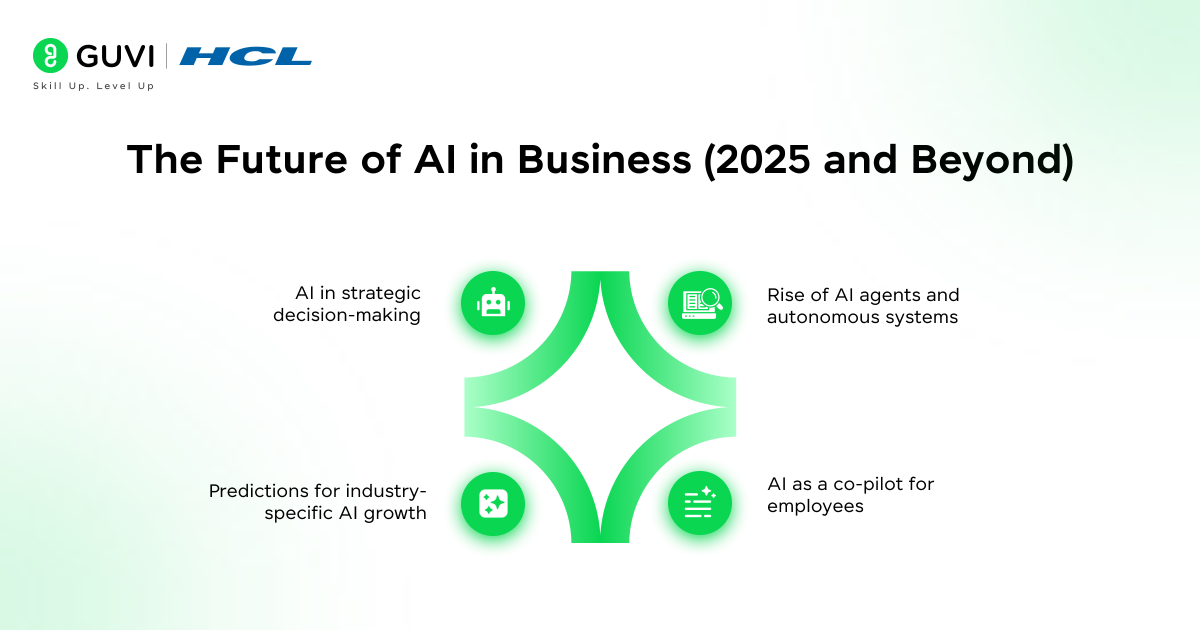
- 1) Rise of AI agents and autonomous systems
- 2) AI as a co-pilot for employees
- 3) AI in strategic decision-making
- 4) Predictions for industry-specific AI growth
- Concluding Thoughts…
- FAQs
- Q1. How will AI impact businesses by 2026?
- Q2. What are the key AI technologies businesses should be aware of?
- Q3. What are the potential challenges of implementing AI in business?
- Q4. How will AI change the role of employees in the workplace?
- Q5. What is the projected growth of the AI market?
What is AI in Business?
Artificial intelligence in business refers to technologies designed to handle tasks that typically require human intelligence. These AI tools act as supportive systems that work alongside your employees rather than replacing them. Essentially, AI improves productivity by taking over repetitive or time-consuming tasks, which allows your team to focus on more complex strategic work.
Think of AI as a tireless teammate that reads, summarizes, and predicts to handle routine tasks. This technology doesn’t just execute pre-programmed instructions—it continuously evolves to optimize performance as it processes more data.
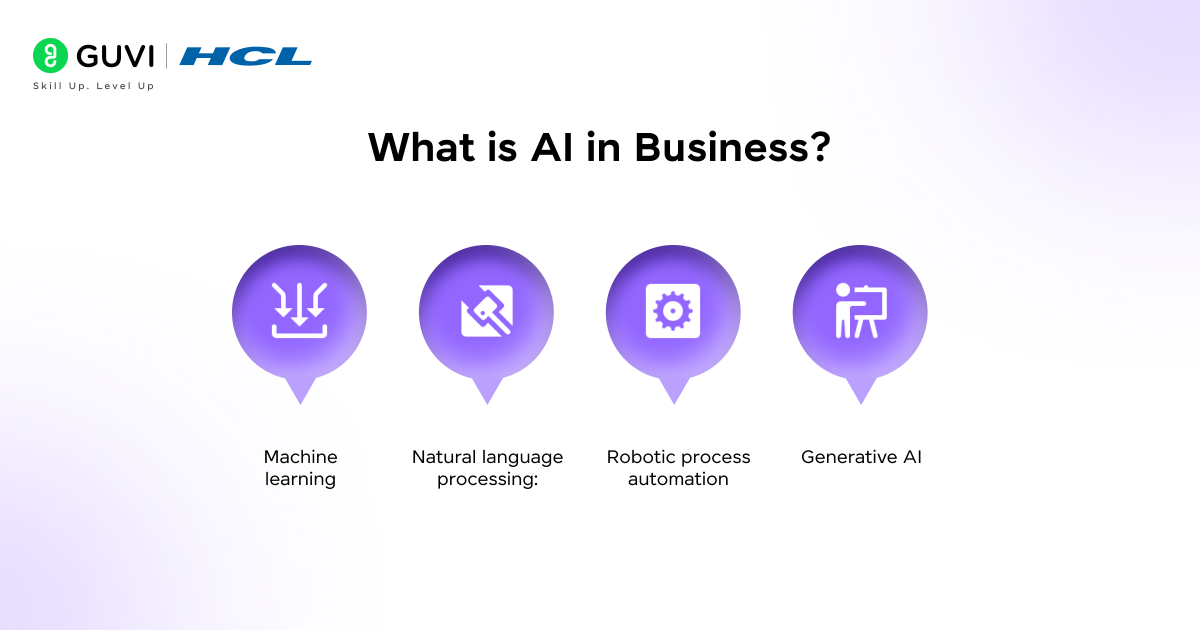
The primary categories of AI in business include:
- Machine learning: AI models that enable computers to learn similarly to humans
- Natural language processing: Technology for comprehending and generating human language
- Robotic process automation: Programs that automate the behaviors of physical robots
- Generative AI: AI models that create text, images, audio, video, and other media
How AI differs from traditional automation
While people often confuse AI with automation, they function quite differently. Traditional automation executes predefined, specific tasks based on set rules. It works well for repetitive tasks with clear, consistent rules but struggles with complex, dynamic situations requiring flexibility.
To put it differently, automation is like setting up robots to follow predetermined instructions, whereas AI enables machines to make their own decisions based on data patterns. The key differences include:
- Learning capability: AI systems learn from new data and interactions to improve over time, while automation requires manual updates
- Decision-making: AI can make independent decisions by analyzing datasets, whereas automation cannot decide autonomously
- Adaptability: AI adapts to changing circumstances, while traditional automation depends on fixed rules
Benefits of Artificial Intelligence in Business
The strategic implementation of artificial intelligence delivers measurable advantages across business operations. Let’s explore how AI creates value for companies of all sizes in 2026.
1) Improved decision-making with data insights
AI transforms raw data into actionable business intelligence. Unlike traditional analytics, AI processes vast datasets at unprecedented speeds, identifying patterns that humans might overlook. This capability allows you to make faster, more accurate decisions based on comprehensive insights rather than limited samples.
Moreover, AI’s value extends beyond simple data processing. AI-powered tools now provide:
- Real-time analysis that enables immediate response to market changes
- Predictive forecasting for customer behavior and business trends
- Autonomous identification of opportunities and threats
For financial analysts, AI simulates different scenarios to project future outcomes and assess the impact of various decisions. McKinsey research shows that organizations using AI in strategic decision-making are seeing meaningful revenue increases within business units deploying these technologies.
2) Automation of repetitive tasks
One of the most significant benefits of AI in business is operational efficiency enhancement through task automation. Unlike humans, AI works continuously without fatigue, completing tasks faster and with fewer errors.
Consequently, this automation allows your employees to focus on more strategic and creative work. According to Salesforce, 64% of employees report being able to concentrate on higher-value tasks after their companies adopted AI automation tools.
The time savings are substantial across multiple departments:
- Healthcare: AI reduces manual data entry time for medical professionals, allowing them to focus on patient care
- Marketing: AI-powered tools automatically generate performance reports, helping teams allocate resources effectively
- HR: AI systems analyze resumes and match candidates with job requirements more efficiently than human recruiters
3) Enhanced customer experience
AI is fundamentally changing how businesses interact with customers. Chatbots, virtual assistants, and automated response systems now provide round-the-clock customer support without increasing staff. This constant availability meets modern expectations for immediate service.
Furthermore, AI allows for unprecedented personalization. By analyzing customer data, AI creates tailored experiences based on individual preferences and past behaviors. This personalization eliminates the need for customers to repeat information and ensures service remains consistently relevant.
The shift from reactive to proactive customer service represents perhaps the most valuable transformation. AI can now:
- Flag delayed shipments before customers notice
- Identify unusual account activity and notify customers proactively
- Analyze customer sentiment to identify high churn risk and enable timely intervention
4) Cost savings and efficiency gains
- The financial impact of implementing AI across business operations is substantial. According to PwC research, businesses leveraging AI for task automation can reduce operational costs by up to 30%. These savings come from multiple sources, including reduced labor costs, minimized errors, and more efficient resource allocation.
- Additionally, AI improves efficiency by streamlining workflows and reducing disruptions. For instance, in supply chain management, 41% of companies saw cost reductions of 10-19% after implementing AI. In manufacturing, AI-powered predictive maintenance prevents costly equipment failures by detecting early warning signs.
- The healthcare sector demonstrates AI’s efficiency potential particularly well. Accenture reports that AI in healthcare could create annual savings of USD 150 billion for the U.S. healthcare economy by 2026, primarily by automating routine tasks. Similarly, 70-90% of enterprises experience cost reductions after adopting AI.
Overall, integrating artificial intelligence into your business operations delivers a powerful combination of improved decisions, streamlined processes, better customer experiences, and measurable cost savings.
Top Applications of AI in Business Today
In 2026, businesses across sectors are implementing AI technologies to gain competitive advantages. The following applications demonstrate how AI is transforming business operations.
1) Customer service and chatbots
- AI-powered chatbots have revolutionized customer service by providing instant, 24/7 support across websites, mobile apps, and social messaging platforms. These intelligent assistants handle routine inquiries, freeing human agents for complex tasks. Businesses implementing AI chatbots report significant improvements, including reduced response times and higher customer satisfaction rates.
- Key capabilities of modern AI customer service solutions include emotionally intelligent responses, voice-enabled interfaces, and hyper-automation of service processes. Cosmetics brand Lush, for example, saved approximately 360 agent hours monthly by using AI to handle common inquiries and tag incoming tickets.
2) Sales and CRM automation
- AI has transformed customer relationship management by automating data entry and providing actionable insights. Modern AI-powered CRM systems analyze customer data through algorithms to recommend personalized products based on individual needs. These systems also streamline lead qualification and scoring processes.
- Advanced CRM platforms now automatically capture customer data from various touchpoints, analyze sales pipelines in real-time, and identify bottlenecks causing delays or dropped opportunities. This automation helps sales teams prioritize high-value prospects and predict future purchasing behaviors.
3) Marketing personalization
Currently, AI personalization is reshaping how businesses connect with customers. By analyzing data including browsing history, social media interactions, and purchase patterns, AI suggests products that align with individual preferences.
AI enhances marketing through:
- Tailored experiences that boost customer satisfaction and loyalty
- Content personalization that keeps users engaged longer
- Relevant recommendations that increase purchase likelihood
MovingWaldo, a digital concierge service, uses AI to deliver over 100 highly targeted emails monthly based on data points like moving dates and language preferences.
4) Supply chain and logistics
- AI is optimizing supply chains through improved route planning, inventory management, and demand forecasting. Companies implementing AI-driven supply chain management have reduced logistics costs by 15%, improved inventory levels by 35%, and enhanced service levels by 65%.
- Uber Freight uses machine learning for algorithmic carrier pricing, providing upfront guaranteed pricing for trucking services. This approach has reduced empty truck miles from 30% to between 10-15%, saving fuel and reducing carbon emissions.
5) Fraud detection and cybersecurity
- Financial institutions increasingly use AI to detect and prevent fraud. AI systems analyze large datasets to identify suspicious activities, often catching patterns human agents might miss. These systems can operate in real-time, blocking potentially fraudulent transactions before execution.
- American Express improved fraud detection by 6% using advanced AI models, while PayPal enhanced their real-time fraud detection by 10% through AI systems operating worldwide, around the clock.

6) HR and recruitment
- Between 35-45% of companies now use AI in their hiring processes. AI recruitment tools automate resume screening, interview scheduling, and candidate matching, saving recruiters’ time while connecting them to better candidates.
- Chipotle Mexican Grill deployed an AI assistant called ‘Ava Cado’ to accelerate hiring for seasonal roles, which increased application completion rates from 50% to 85% and reduced hiring timelines from 12 to just 4 days.
Challenges and Ethical Concerns
While AI offers powerful capabilities for businesses, implementing this technology comes with several important considerations. Understanding these challenges is crucial for responsible AI adoption in your organization.
1) Data privacy and security risks
As companies collect massive amounts of data for AI systems, privacy concerns have grown significantly. In 2025, 69% of business leaders cite data privacy as a major concern about generative AI, up from 43% in late 2024. This worry is justified, as AI systems can inadvertently expose sensitive information through:
- Data leakage during model training
- Unauthorized access to personal information
- Vulnerability to prompt injection attacks
Security executives now rank AI security among their top expenditures, with 73% investing in AI-specific security tools. Nevertheless, many organizations face a critical misalignment—despite citing security as a primary AI concern, only 10% rank AI security as their largest expense.
2) Bias in AI algorithms
Algorithmic bias occurs when AI systems produce unfair or discriminatory outcomes that reflect existing societal inequalities. These biases typically enter AI systems through:
- Flawed or non-representative training data
- Incorrect data categorization during model development
- Proxy variables unintentionally correlated with sensitive attributes
The consequences can be severe. In healthcare, bias can result in computer-aided diagnosis systems showing lower accuracy for Black patients. Likewise, studies found that ride-hailing pricing algorithms charged more for drop-offs in neighborhoods with high non-white populations.
3) Workforce displacement fears
Although AI creates new opportunities, especially in data analytics and machine learning fields, job displacement remains a legitimate concern. Nearly half of all entry-level white-collar jobs in tech, finance, law, and consulting could potentially be replaced or eliminated by AI.
However, history shows predicting specific employment effects is extraordinarily difficult. On balance, experts suggest that 35% of tasks in white-collar work overlap with AI capabilities.
4) Integration with legacy systems
Implementing AI within existing business infrastructure presents significant technical hurdles. Legacy systems often lack:
- Modern APIs needed for AI connectivity
- Infrastructure for AI lifecycle management
- Compute capacity for real-time model inference
Furthermore, organizations with siloed data spread across multiple systems struggle with AI integration. Most successful implementations require effective collaboration between AI experts and IT professionals who often approach problems from different perspectives.
Artificial Intelligence isn’t just reshaping business—it’s been quietly influencing it for decades! Here are some quick facts that might surprise you:
AI in Business Dates Back to the 1980s: While today’s AI feels cutting-edge, businesses began experimenting with expert systems in the early 1980s to automate decision-making and customer support.
AI Adoption Has Skyrocketed: According to IBM, over 42% of companies globally now use AI actively in their operations, and the number keeps rising each year.
AI Boosts Productivity Dramatically: Studies show that AI-driven automation can improve business productivity by up to 40%, freeing employees from repetitive tasks.
These insights show how AI has evolved from a niche research concept to a driving force behind modern business innovation and efficiency!
The Future of AI in Business (2026 and Beyond)
The business world stands at the threshold of a new era where AI evolves from simple tools to intelligent collaborators.
1) Rise of AI agents and autonomous systems
AI agents are evolving rapidly, with autonomous systems now operating at different capability levels:
- Level 1 (Chain): Pre-defined rule-based automation
- Level 2 (Workflow): Dynamic sequencing with LLMs
- Level 3 (Partially autonomous): Goal-based planning with minimal oversight
- Level 4 (Fully autonomous): Proactive goal-setting across domains
The AI agents market is projected to grow to USD 52.60 billion by 2030, with a compound annual growth rate of approximately 45%.
2) AI as a co-pilot for employees
Instead of replacing your workforce, AI will augment it significantly. Currently, AI copilots help employees cut through information overload—reducing the typical two hours spent daily searching for information. These digital teammates continuously learn from interactions, becoming more efficient at supporting your team over time.
3) AI in strategic decision-making
Large language models can now generate and evaluate business strategies at levels comparable to entrepreneurs and investors. This capability extends human reasoning by processing more information faster than previously possible. By 2028, at least 15% of work decisions will be made autonomously by agentic AI, compared to 0% in 2024.
4) Predictions for industry-specific AI growth
Healthcare organizations increasingly use AI for patient diagnosis and treatment recommendations. In pharmaceutical development, AI revolutionizes drug discovery by automating biomarker validation. Meanwhile, manufacturing facilities employ AI to optimize inventory levels and predict equipment maintenance needs before breakdowns occur.
Ready to turn AI from buzzword to business driver? Our Intel-powered, IITM-certified Artificial Intelligence and Machine Learning Course via HCL GUVI teaches foundational to advanced techniques — including Generative AI, MLOps, and Agentic AI — with hands-on projects and career support to help you apply AI in the real world.
Concluding Thoughts…
AI has rapidly transformed from an optional technology to a business necessity. Throughout this guide, you’ve seen how artificial intelligence offers game-changing benefits across operations. The technology provides data-driven insights for smarter decisions, automates repetitive tasks, creates personalized customer experiences, and delivers substantial cost savings.
The AI journey for your business might seem complex at first glance. Nevertheless, taking incremental steps toward implementation can yield remarkable results.
Starting with clearly defined problems, gathering quality data, and focusing on measurable outcomes will help you navigate this technological shift successfully. AI in business isn’t just about adopting new technology—it’s about reimagining what your organization can achieve.
FAQs
Q1. How will AI impact businesses by 2026?
By 2026, AI is expected to become an integral part of business operations. It will enhance decision-making through data insights, automate repetitive tasks, improve customer experiences, and lead to significant cost savings and efficiency gains across various industries.
Q2. What are the key AI technologies businesses should be aware of?
The main AI technologies businesses should focus on are machine learning, natural language processing (NLP), and computer vision. These technologies form the backbone of AI systems that are reshaping business operations, from customer service to supply chain management.
Q3. What are the potential challenges of implementing AI in business?
Implementing AI in business comes with several challenges, including data privacy and security risks, potential bias in AI algorithms, concerns about workforce displacement, and difficulties integrating AI with legacy systems. Addressing these issues is crucial for responsible AI adoption.
Q4. How will AI change the role of employees in the workplace?
Rather than replacing employees, AI is expected to augment their capabilities. AI will act as a co-pilot, helping employees cut through information overload and become more efficient. This shift will allow workers to focus on more strategic and creative tasks while AI handles routine operations.
Q5. What is the projected growth of the AI market?
The global AI market is expected to grow significantly, with projections indicating an increase from $621.19 billion in 2024 to $2.74 trillion by 2032. This rapid growth reflects the increasing adoption and importance of AI across various business sectors.
Success Stories

About the Author
Jaishree Tomar
A recent CS Graduate with a quirk for writing and coding, a Data Science and Machine Learning enthusiast trying to pave my own way with tech. I have worked as a freelancer with a UK-based Digital Marketing firm writing various tech blogs, articles, and code snippets. Now, working as a Technical Writer at GUVI writing to my heart’s content!
View all posts by Jaishree Tomar
Connect with me @










Did you enjoy this article?