


Data Science Articles
My Data Scientist Interview Experience: From Rejection to 6-Figure Offer
My Data Analyst Interview Experience: From Rejection to Success Story
Validation and Metrics: Are They Being Ignored in Modern Data Science?

Get In Touch For Details! Request More Information
Role of Data Science in Big Data Analytics
Nov 06, 2025 4 Min Read 949 Views
(Last Updated)
Imagine trying to make sense of billions of data points—tweets, transactions, sensor readings—all happening every second. It sounds overwhelming, right? That’s where data science steps in.
In today’s digital world, data is everywhere. This massive volume of information, known as big data, holds valuable insights about customer behavior, market trends, and operational efficiency. But without the right tools and techniques, it’s just noise.
In this article, we’ll explore how data science powers big data analytics, uncovering patterns, predicting outcomes, and enabling smarter, faster decisions across industries.
Table of contents
- Why Data Science is Important for Big Data Analytics
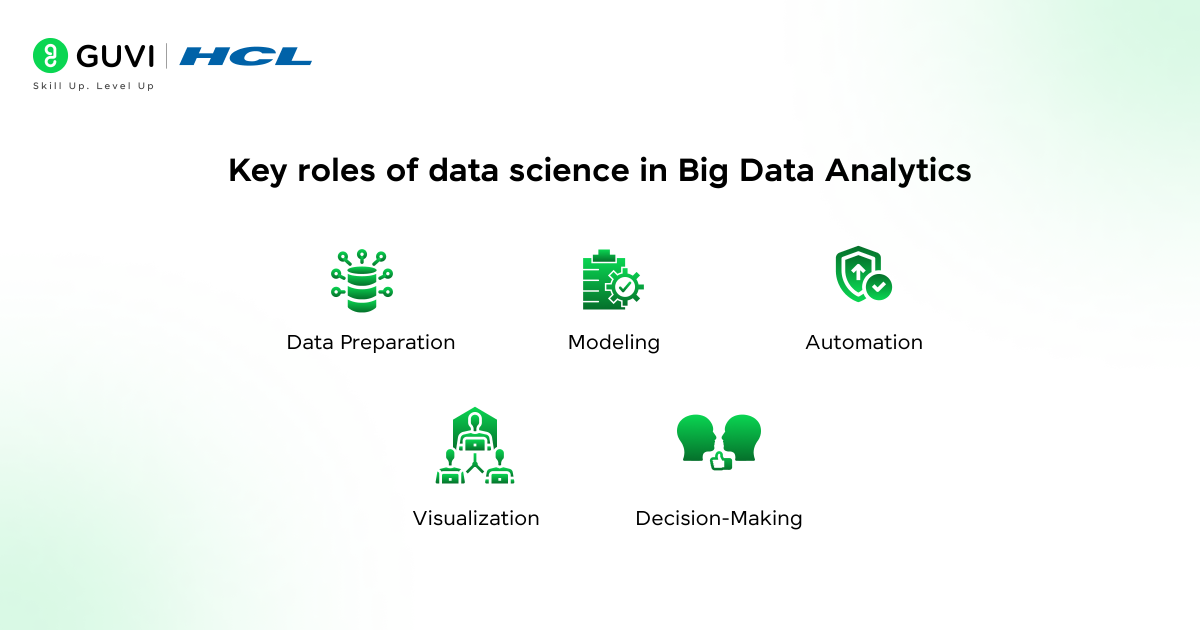
- Key Roles of Data Science in Big Data Analytics
- Data Preparation and Integration
- Pattern Discovery and Insight Generation
- Predictive Analytics and Forecasting
- Automation and Real-Time Analysis
- Personalization and Customer Experience
- Visualization and Communication
- Tools used in Big Data Analytics
- Real-World Applications
- Challenges in Big Data Analytics
- Future Trends in Data Science and Big Data
- Conclusion
- FAQs
- Q1. What is big data?
- Q2. How does data science help with big data?
- Q3. What is predictive analytics?
- Q4. Why is real-time analytics important?
- Q5. What are some tools used in big data analytics?
Why Data Science is Important for Big Data Analytics
Big data is vast, fast, and varied. Traditional analytics methods struggle to keep up with its complexity. Data science bridges this gap by using advanced techniques to extract meaning from chaos.
It enables scalable analysis of structured and unstructured data, predictive modeling to forecast trends and behaviors, real-time decision-making using live data streams, and automation of repetitive tasks for faster insights. From personalized recommendations to fraud detection, data science transforms raw data into actionable intelligence.
Kickstart your Data Science journey! Join HCL GUVI’s free 5-day Data Science Email Course and learn how to analyze, visualize, and apply data to solve real-world problems one day at a time.
Key Roles of Data Science in Big Data Analytics
1. Data Preparation and Integration
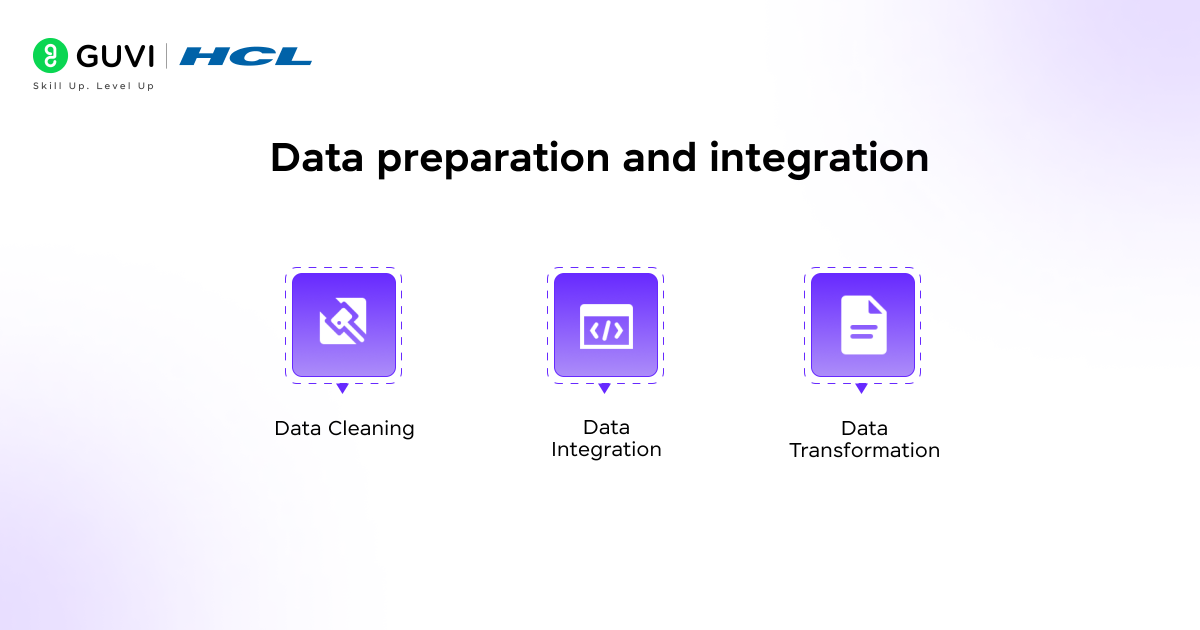
Think about it, Netflix collects data from millions of users every day. But without cleaning and organizing that data, it’s just digital clutter. Before any analysis can begin, data must be cleaned, merged, and structured. This foundational step ensures that the information used is accurate, consistent, and usable across systems. Data science plays a critical role in transforming raw, messy data into a reliable format.
Key Aspects:
- Data Cleaning: Removing duplicates, correcting errors, and handling missing values
- Data Integration: Combining data from multiple sources such as CRM systems, sensors, and social media
- Data Transformation: Structuring data into usable formats for analysis
Example: A retail company merges online and offline sales data to understand customer buying patterns across channels.
2. Pattern Discovery and Insight Generation
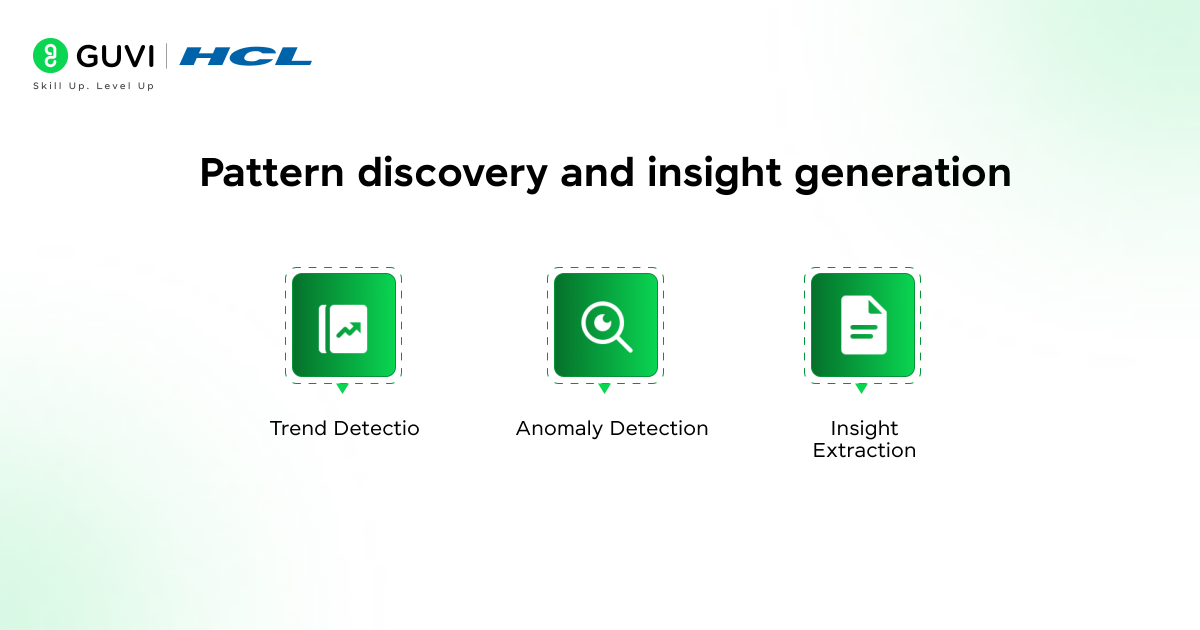
Did you know Spotify doesn’t just track what you listen to, it finds patterns in your skips, replays, and likes to predict your next favorite song? Once the data is prepared, the next step is to explore it for hidden trends and relationships. Data science enables organizations to uncover meaningful patterns that inform strategic decisions and improve operations.
Key Features:
- Trend Detection: Identifying recurring behaviors or seasonal shifts
- Anomaly Detection: Spotting unusual patterns that may signal risks or opportunities
- Insight Extraction: Translating patterns into strategic recommendations
Example: A telecom company analyzes call drop patterns to improve network coverage in specific regions.

3. Predictive Analytics and Forecasting
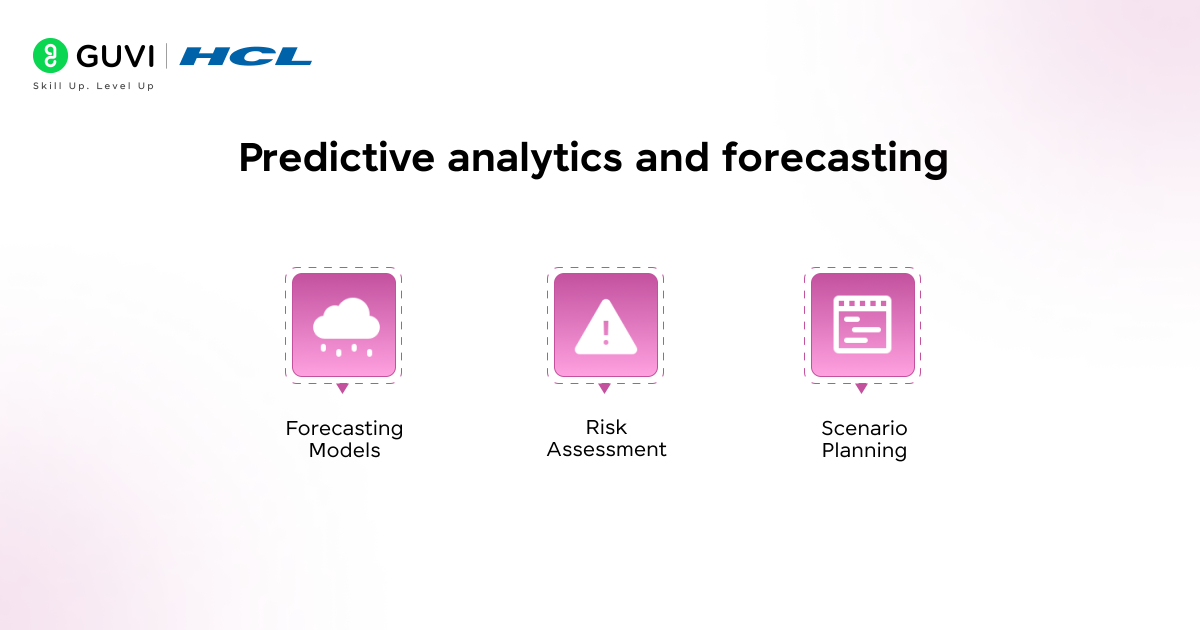
Uber knows when and where demand will spike before it even happens. Predictive analytics uses historical data to forecast future outcomes. This helps businesses anticipate customer needs, optimize resources, and reduce risks. Data science enables the development of models that can simulate various scenarios and guide decision-making.
Key Features:
- Forecasting Models: Predicting sales, demand, or churn
- Risk Assessment: Identifying potential failures or fraud
- Scenario Planning: Simulating different outcomes for strategic decisions
Example: A food delivery app predicts peak hours and allocates drivers accordingly to reduce wait times.
4. Automation and Real-Time Analysis
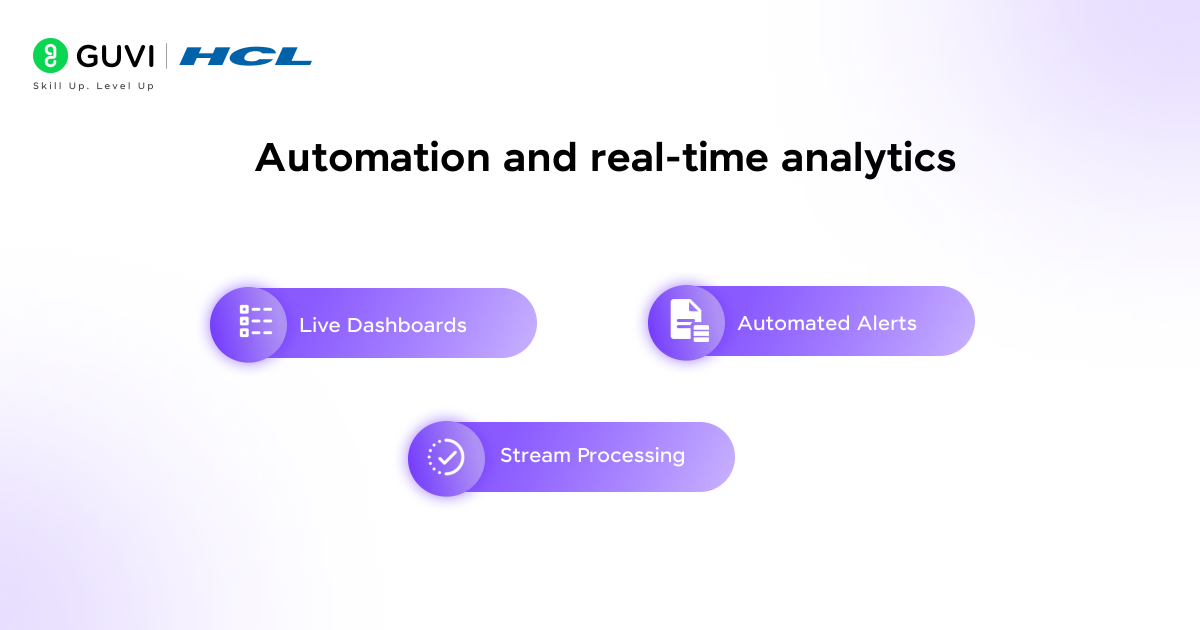
Every time Google Maps reroutes you instantly during traffic, it’s using real-time analytics powered by data science. Speed and responsiveness are essential in today’s data-driven world. Data science enables real-time monitoring and automated responses, allowing businesses to act instantly based on live data.
Key Benefits:
- Live Dashboards: Tracking KPIs and metrics as they happen
- Automated Alerts: Triggering actions based on data thresholds
- Stream Processing: Analyzing data on the fly without delays
Example: A stock trading platform uses real-time analytics to execute trades based on market fluctuations.
5. Personalization and Customer Experience
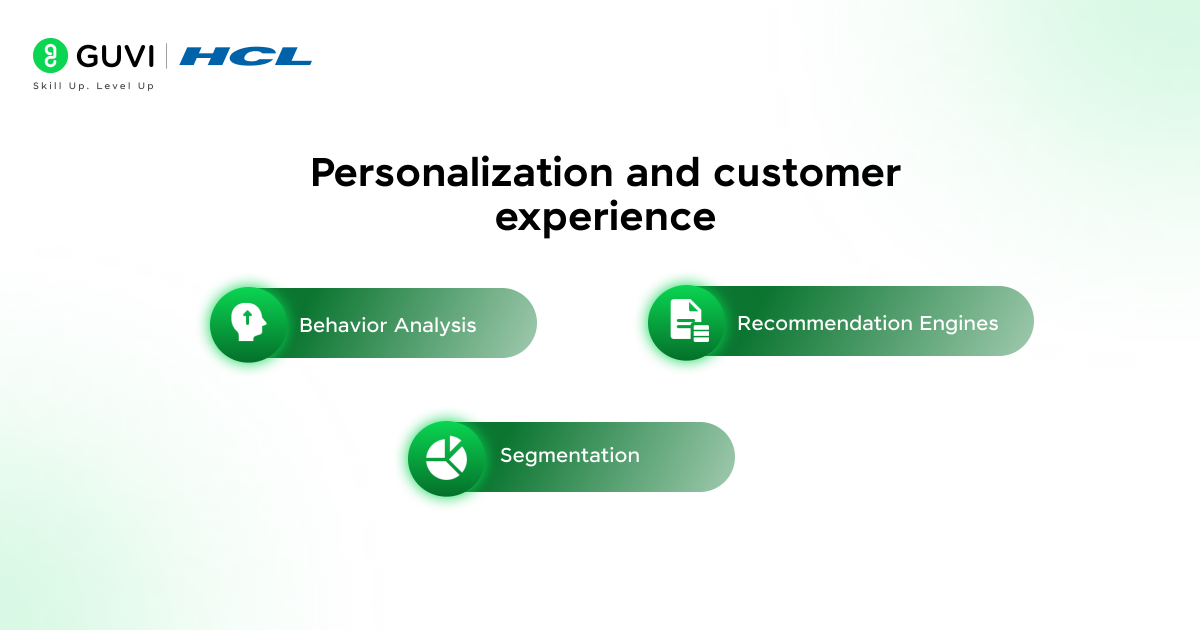
Ever noticed how Amazon seems to know exactly what you need—even before you search for it? Understanding individual customer behavior is key to delivering personalized experiences. Data science helps businesses tailor their offerings and communication to meet specific user needs.
Key Features:
- Behavior Analysis: Tracking clicks, purchases, and preferences
- Recommendation Engines: Suggesting products or content based on user history
- Segmentation: Grouping users by behavior or demographics
Example: A streaming service recommends shows based on your watch history and ratings.
6. Visualization and Communication
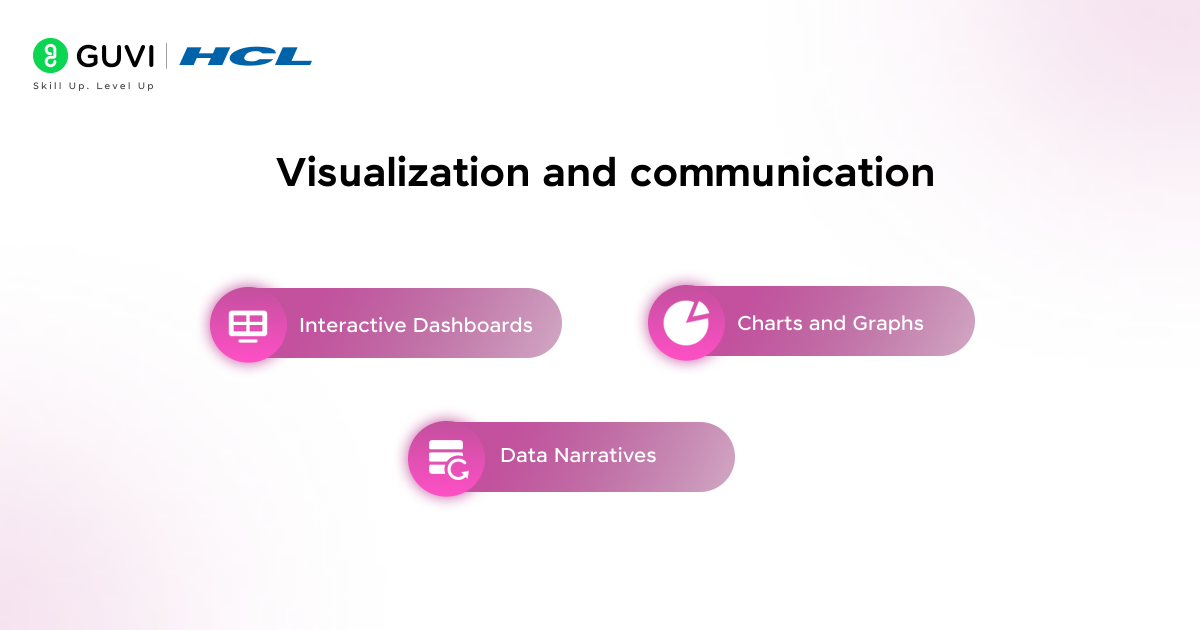
Fact: A well-designed dashboard can turn thousands of data points into one clear decision. Communicating insights effectively is just as important as discovering them. Data visualization turns complex datasets into visual stories that are easy to understand and act upon.
Key Features:
- Interactive Dashboards: Real-time views of performance metrics
- Charts and Graphs: Highlighting trends, comparisons, and outliers
- Data Narratives: Explaining insights in a business-friendly format
Example: A sales team uses a dashboard to track regional performance and adjust strategies instantly.
Tools used in Big Data Analytics
Big data analytics isn’t just about having data—it’s about having the right tools to handle it. As datasets grow in volume and complexity, organizations rely on a diverse set of technologies to store, process, analyze, and visualize information efficiently. Data science brings these tools together, enabling scalable and intelligent workflows that support modern decision-making.
Key Categories:
- Programming Languages: Python and R for modeling and automation
- Databases: SQL, NoSQL, BigQuery for data storage and querying
- Visualization Tools: Tableau, Power BI for dashboards and reports
- Big Data Platforms: Apache Hadoop, Spark for distributed processing
- Cloud Computing: AWS, Azure, Google Cloud for scalable infrastructure
- Machine Learning Libraries: TensorFlow, Scikit-learn for predictive modeling
Example: A marketing team uses Python for analysis, Tableau for reporting, and AWS for data storage.
Level up your Python skills! Grab HCL GUVI’s free Python eBook – A Beginner’s Guide to Coding & Beyond and master Python with easy examples, hands-on projects, and real-world tips.
Real-World Applications
Data science isn’t confined to labs or tech companies—it’s reshaping industries across the board. From retail shelves to hospital rooms, its impact is visible wherever data is used to improve outcomes. By applying data science to big data, organizations can unlock new efficiencies, personalize services, and respond faster to changing demands.
Key Industries:
- Retail: Inventory optimization, personalized marketing
- Healthcare: Disease prediction, patient monitoring
- Finance: Fraud detection, credit scoring
- Logistics: Route planning, demand forecasting
- Marketing: Campaign analysis, customer segmentation
Example: A bank uses data science to detect suspicious transactions and prevent fraud in real time.
Challenges in Big Data Analytics
Working with data sounds powerful, but it comes with its own set of hurdles. While data science drives smarter decisions, organizations often face challenges in implementing modern analytics effectively. These challenges range from technical limitations to ethical concerns, and overcoming them is key to unlocking the full potential of big data.
Key Challenges:
- Data Quality: Incomplete or inconsistent data can skew results
- Privacy and Security: Protecting sensitive information is critical
- Integration Complexity: Merging data from diverse sources is technically demanding
- Talent Shortage: Skilled data scientists are in high demand but in short supply
Future Trends in Data Science and Big Data
The landscape of data analytics is evolving rapidly. As technologies mature and expectations rise, data science is moving toward greater automation, accessibility, and intelligence. Staying ahead means understanding the trends that are shaping tomorrow’s analytics—from AI-driven insights to edge computing and beyond.
Key Trends:
- AI and Machine Learning: Smarter models that learn and adapt
- Self-Service Analytics: Empowering non-tech users to explore data
- Prescriptive Analytics: Recommending actions, not just insights
- Edge Computing: Processing data closer to its source for faster decisions
Conclusion
Big data holds immense potential, but it’s data science that turns potential into progress. By enabling smarter decisions, faster responses, and deeper insights, data science has become the backbone of modern analytics. As organizations continue to embrace data-driven strategies, mastering these skills will be essential for staying competitive and innovative.
Want to master these skills hands-on?
Check out HCL GUVI’s Data Science Course—an IIT-M certified program with real-world projects, expert mentorship, and placement support. It’s beginner-friendly and designed to get you job-ready fast.
FAQs
Q1. What is big data?
Big data refers to extremely large and complex datasets that traditional tools can’t handle efficiently.
Q2. How does data science help with big data?
Data Science uses advanced techniques to clean, analyze, and extract insights from big data for smarter decisions.
Q3. What is predictive analytics?
Predictive analytics uses historical data to forecast future outcomes and trends.
Q4. Why is real-time analytics important?
Real-time analytics enables instant decision-making based on live data, improving responsiveness and efficiency.
Q5. What are some tools used in big data analytics?
Popular tools include Python, SQL, Tableau, Hadoop, Spark, and cloud platforms like AWS and Azure.
Success Stories

About the Author
Jebasta
I translate the language of data into stories that anyone can understand. As a writer with a data science background, I simplify analytics, AI, and decision-making so beginners and enthusiasts can confidently explore the world of data.
View all posts by Jebasta
Connect with me @










Did you enjoy this article?