


DevOps Articles
My DevOps Interview Experience at MAANG: From Rejection to Success [2026]
What is Ansible in DevOps? A Complete Practical Guide
Azure DevOps Lifecycle: 7 Stages from Planning to Deployment

Get In Touch For Details! Request More Information

What does it take for a recruiter to stop at your resume in a pile of hundreds? In the field of DevOps, where competition grows every year, your resume often decides whether you get an interview call. A well-structured DevOps Engineer Resume highlights your technical expertise, demonstrates measurable impact, and presents your ability to work across teams.
This guide explains how to build a resume that matches recruiter expectations and shows why you are the right fit for top DevOps roles. You’ll be learning how to build a DevOps Engineer Resume in a proper format which will add value to your getting into top companies for the DevOps engineer role. Let’s learn more:
- 77% of organizations use DevOps practices in their software delivery processes.
- 63% of companies report that DevOps adoption improved the quality of their software deployments.
- The global DevOps market was valued at USD 13.16 billion in 2024 and is projected to grow to USD 81.14 billion by 2033, with a compound annual growth rate (CAGR) of approximately 19.95%.
Table of contents
- Best DevOps Engineer Resume Guide
- Best DevOps Engineer Resume Example
- Technologies and Tools to Highlight
- Tips for a Strong DevOps Engineer Resume
- Mistakes to Avoid in a DevOps Engineer Resume
- Conclusion
- FAQs
- How do I write a DevOps engineer resume?
- What skills should a DevOps engineer put on a resume?
- What is the role of an entry-level DevOps engineer?
Best DevOps Engineer Resume Guide
Building an outstanding DevOps Engineer Resume is a very crucial and mandatory step to get into DevOps engineering. Also, you should know what to read before getting into DevOps Engineering. Let’s discuss some of the important elements required for building a DevOps Engineer Resume:
- Clear and Concise Header: Begin your resume with a clear and concise header containing your full name, contact information, and professional links, such as your LinkedIn profile and GitHub repositories. Make it easy for recruiters to reach out and learn more about your expertise.
- Professional Summary: Craft a compelling professional summary that provides a snapshot of your skills, experience, and career objectives. Tailor this section to highlight your proficiency in key DevOps tools, methodologies, and any specific achievements in your career.
Also, you can include an objective section that describes your goal/aim in working for a company. - Technical Skills: Create a dedicated section to showcase your technical skills. This is the place to list your proficiency in tools like Jenkins, Docker, Kubernetes, Git, Ansible, and more. Tailor this list to match the specific requirements of the job and company you’re applying for.
It is recommended to read about the roles and responsibilities, and the Job Description of a DevOps Engineer before preparing a DevOps Engineer Resume. - Work Experience: Detail your work experience in reverse chronological order, starting with your most recent role. For each position, include the company name, your title, and the dates of employment. Focus on quantifiable achievements and responsibilities, emphasizing how your contributions positively impacted the organization’s efficiency and productivity.
If you’re a fresher, do mention if you have done any internships related to the DevOps engineering domain, and completed any course for the same. - DevOps Projects: Dedicate a section to highlight the best DevOps projects you’ve worked on. Provide details on the scope of the projects, the tools and technologies used, and the outcomes achieved. This helps to demonstrate the practical application of your skills.
- Education: Include your educational background, starting with the most recent degree. Mention the institution, degree earned, and graduation date. If you have certifications relevant to DevOps (e.g., AWS Certified DevOps Engineer, Docker Certified Associate), include them in this section.
- Certifications: DevOps is a rapidly evolving field, and certifications can validate your expertise. List relevant certifications you’ve earned, along with the issuing body and date of certification. Also, it is advisable to gain certifications from AWS, or any other renowned platform to increase of chance of getting into a top product-based company.
- Professional Associations and Conferences: If you’re an active participant in the DevOps community, mention any relevant professional associations, conferences, or meetups you’ve attended. This demonstrates your commitment to continuous learning and networking.
- GitHub and Open Source Contributions: DevOps professionals often contribute to open-source projects. If you have a GitHub profile or have made significant contributions to open source, include this information. It serves as a tangible representation of your skills and collaboration within the community.
- Tailor for Each Application: Customize your resume for each job application. Highlight the skills and experiences most relevant to the specific role you’re applying for. This shows recruiters that you’ve taken the time to understand their needs.

Best DevOps Engineer Resume Example
Now, that we have talked about the important elements, let’s have a look at a DevOps Engineer Resume Example to make you understand better:
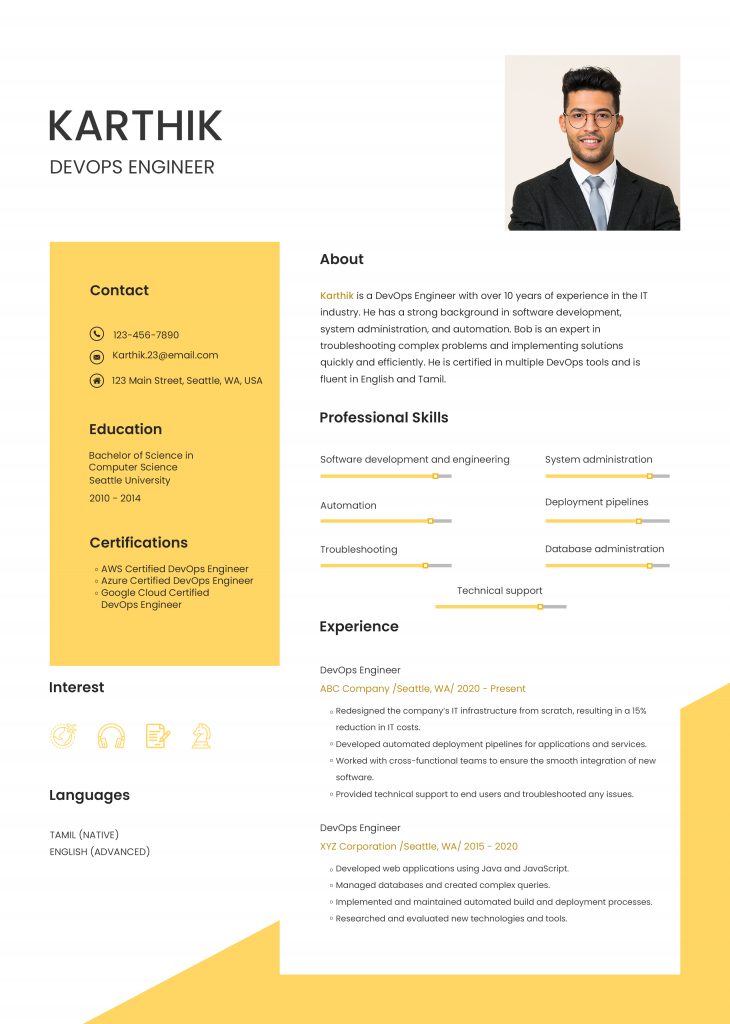
[IMAGE REQUIRED FROM THE DESIGN TEAM]
Do check out our DevOps course which covers all the important topics at a very affordable price with 100% placement support and doubt-clearing sessions.
There are ample career opportunities for DevOps Engineer to discover explore and get into this high-demanding and high-paying profession.
If you want to build your resume in minutes and also check the ATS score for it, then use HCL GUVI’s Free Resume Builder Tool – Create and Check ATS Score For Free
Technologies and Tools to Highlight
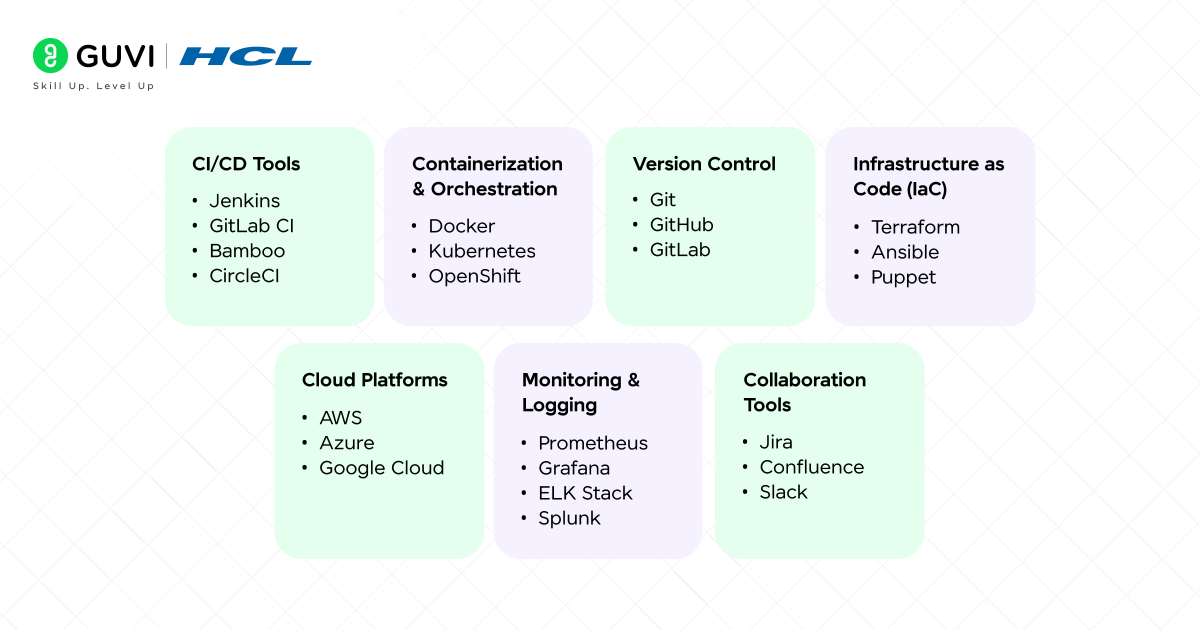
Recruiters look for resumes that display the right mix of DevOps tools. Adding a clear section for technologies shows where your strengths lie:
- CI/CD Tools: Mention Jenkins, GitLab CI, Bamboo, or CircleCI if you have hands-on experience.
- Containerization and Orchestration: Include Docker, Kubernetes, and OpenShift to reflect modern deployment practices.
- Version Control: Highlight Git and GitHub or GitLab to show your ability to manage collaborative codebases.
- Infrastructure as Code: Tools like Terraform, Ansible, and Puppet demonstrate your automation skills.
- Cloud Platforms: List AWS, Azure, or Google Cloud if you have practical knowledge in managing services and infrastructure.
- Monitoring and Logging: Add Prometheus, Grafana, ELK Stack, or Splunk to prove your experience in maintaining reliability.
- Collaboration Tools: Include Jira, Confluence, or Slack if you have used them for agile workflows.
Tips for a Strong DevOps Engineer Resume
A few practical additions can make your resume stand out more effectively:
- Tailor Each Application: Adjust your skills and achievements based on the job description rather than using the same version everywhere.
- Highlight Relevant Tools: Focus on tools like Jenkins, Docker, Kubernetes, and Git instead of listing unrelated technologies.
- Showcase Key Projects: Provide context on projects that reflect your technical impact and collaboration across teams.
- Keep Formatting Clean: Use a simple and consistent layout that recruiters can scan quickly.
Mistakes to Avoid in a DevOps Engineer Resume
Certain errors can lower your chances of getting shortlisted. Keep these points in mind while preparing your resume:
- Generic Objectives: Avoid vague statements like “Looking for growth opportunities.” Replace them with focused career goals.
- Overloading with Buzzwords: Listing every tool without practical experience weakens credibility. Highlight tools you have actually used.
- Ignoring Results: Describing responsibilities without achievements makes the resume less convincing. Add metrics to support your claims.
- Skipping Proofreading: Spelling or formatting errors create a negative impression, even if your technical skills are strong.
Conclusion
Crafting the perfect DevOps Engineer resume requires a strategic balance of technical expertise, practical experience, and effective communication. By following this comprehensive guide, you can create a resume that not only showcases your skills but also grabs the attention of recruiters in this competitive field.
Stay current with industry trends, continually update your resume, and be prepared to demonstrate your DevOps prowess in interviews. Your resume is your ticket to opening doors in the dynamic world of DevOps.
Also, keep this noted that every company has its specific set of requirements for the DevOps Engineer role. More or less, every company works on similar skill sets but there are some specific details that are different in every company’s JD. So, before applying for any company, do read the Job Description and prepare your resume accordingly.
FAQs
How do I write a DevOps engineer resume?
Start with an objective, mention the skills you have that match the role, showcase some best projects on DevOps, non-tech skills that would also matter, and show some of the best certifications you’ve gained, any kind of experience as a full-time/intern.
What skills should a DevOps engineer put on a resume?
Here are some of the skills a DevOps engineer can put up on a resume:
Platform familiarity.
Programming and scripting languages.
Configuration management, version management, and infrastructure as code.
Provisioning and deployment.
Security.
Tracking and assessing release performance.
Network optimization.
Troubleshooting.
What is the role of an entry-level DevOps engineer?
The duties of an entry-level DevOps engineer involve taking steps to integrate all aspects of software design, development, and updates into one managed system. DevOps utilizes IT operations to shorten the systems development lifecycle of an application.
Success Stories

About the Author
Isha Sharma
I’m a versatile technical content writer with over 3.5 years of experience in technical writing and 1 year of experience in web development. My specialized domains are web development, AWS, cloud computing, etc. I have written over 250+ SEO-optimized technical articles.
View all posts by Isha Sharma
Connect with me @
















Did you enjoy this article?