


Interview Articles
Wipro Elite NTH Interview Experience 2026: What Candidates Say
Wipro HR Interview Questions for Elite NTH 2026: How to Answer Them - Best Guide
Wipro Technical Interview Questions 2026: Most Asked Questions and Answers


Get In Touch For Details! Request More Information

So you’ve applied for an interview and got through the first round. Now you want to get ready for your technical round. Are you looking for a perfect guide to crack your upcoming technical interview? I say, “You’re in the perfect place.”
Technical interviews are a big deal in today’s job market because every company wants engineers who can actually solve real problems.
Following the philosophy of “Don’t tell, show”. Whether you’re a total beginner or someone with years of experience, companies use these interviews to make sure you make the deal right.
Technical interviews are basically where they test if you can actually code and think through problems, and not just talk about coding.
There are different types of technical interviews you might face: coding challenges, data structures and algorithms (DSA), system design, debugging, problem-solving, and more.
Each round tests different skills.
Quick Answer:
Technical interviews check your coding and problem-solving skills. Learn basics, practice coding daily, build small projects, do mock interviews, and explain your answers clearly to crack interview rounds.
Table of contents
- Breakdown of the types of Technical Interviews
- Step-by-Step Technical Interview Preparation Roadmap
- Technical Interviews at Different Types of Companies
- What are the Skills You Need?
- Core Coding Skills
- Master Data Structures & Algorithms
- Technical Interview Tips for Beginners
- Start Small, Think Big
- Follow the Framework
- Learn from Failures
- Code Every Single Day
- Build Confidence Gradually
- How to Ace Google/FAANG Technical Interviews
- Most Asked Technical Interview Topics
- Mistakes Everyone Makes
- Quick-Fix Checklist
- Got an interview coming up? Use this:
- Conclusion
- Frequently Asked Questions
- How long does it take to prepare for a technical interview?
- Do I need to know DSA to crack technical interviews?
- Are technical interviews different for freshers and experienced candidates?
- How many coding problems should I practice?
- What should I do one day before the interview?
Breakdown of the types of Technical Interviews
Different companies test you in different ways.
Online Coding Test – You get a problem and a time limit. Code it up. And there is no cool vibe. You have tons of pressure.
Technical Interview Round – This is usually where they ask you to solve problems on the spot using DSA. They want to see how you think, not just if you know the answer.
System Design Round – For people with more experience, they ask you to design big systems like Instagram or Uber. Basically, “How would you build this?”
Debugging Round – They give you broken code, and you gotta fix it. It’s like being a detective, but make it tech.
Behavioural Interview – This isn’t really technical, it’s where they ask about your experiences and how you handle things. Be real here.
Hiring Manager Round – It is a ‘culture fit’ round to check whether you match the team’s vibe or not.
Are you looking for the perfect course to become a full-stack developer? Explore HCL GUVI’s Live online program and sharpen your problem-solving skills like a pro.
Step-by-Step Technical Interview Preparation Roadmap
Think of this as your quest line in the interview game. Don’t skip ahead; complete each phase properly.
- Strengthen Your Fundamentals (Weeks 1-4)
Before you can run, you gotta learn to walk. Start here:
Pick a Programming Language – Python is beginner-friendly, but Java and C++ are what big companies expect. Honestly, it doesn’t matter too much, just pick one and commit to it.
Master Data Structures & Algorithms – This is literally the foundation. You need to understand arrays, linked lists, stacks, queues, trees, graphs, and the basics of dynamic programming. Don’t rush this part.
- Level Up Your Problem-Solving (Weeks 5-12)
Now that you know the basics, time to practice actually solving problems. Use platforms like Codekata, webkata to solve the problems by experts.
Start with easy problems on LeetCode, HackerRank, or CodeSignal. Seriously, don’t jump to hard problems, because….that’s a recipe for burnout.
Solve problems daily – Even just 30 minutes a day beats cramming. Consistency > intensity.
Learn from your mistakes – When you get stuck or fail, that’s the learning moment. Read the solution, understand it, and try a similar problem the next day.
Just Remember:
Read the problem → understand it → solve it → make it faster → test it with edge cases.
- Build Real Projects (Weeks 13-16)
Companies want to see what you can actually build, not just theory.
Make 2-3 real projects – Build something that solves an actual problem. A weather app, a to-do tracker, a chat app, anything that shows you can code in real life.
Put it on GitHub – Make your profile public and keep it clean. Companies check this.
Build a portfolio – Get a simple website showing your projects. This makes you stand out.
- Mock Interviews to get Polished (Weeks 17-20)
You’re almost there. Now practice interviewing itself.
Do mock interviews – Use websites like Pramp or LeetCode’s interview feature. Practice talking through your solution while coding.
Time yourself – Real interviews have time limits. Get used to pressure.
Get feedback – Ask friends or mentors to do mock interviews with you and tell you what you need to work on.
If you’re struggling in your coding journey and looking for a mentor to guide you, check out HCL GUVI’s Zen Class Courses.
Technical Interviews at Different Types of Companies
The challenge is different depending on where you’re interviewing.
Product-Based Companies (Google, Amazon, etc.) – They’re hardcore about DSA and system design. Interviews are tough but consistent.
Service-Based Companies – Slightly easier, more focused on basics and practical coding.
Startups – Might be less formal. They care more about you getting things done than perfect algorithms.
For Freshers: Companies know you’re new. They’ll test the basics and see if you can learn. Don’t stress.

For Experienced People: They expect faster problem-solving and system design skills. You need to know your stuff.
What are the Skills You Need?
Core Coding Skills
Write clean code – Comment your code, use clear variable names, don’t make spaghetti code. Interviewers care about readability.
Strong logic building – This is just being able to think through problems step-by-step. It’s a skill you build over time.
Master Data Structures & Algorithms
Know these inside out:
Arrays & Strings – Basics of everything
Stacks & Queues – For tracking orders and sequences
Trees & Graphs – For hierarchical and network data
Dynamic Programming – For optimizing solutions
Sorting & Searching – Classic algorithms
Technical Interview Tips for Beginners
Start Small, Think Big
Don’t try to solve hard problems on day one. That’s the quickest way to feel like garbage.
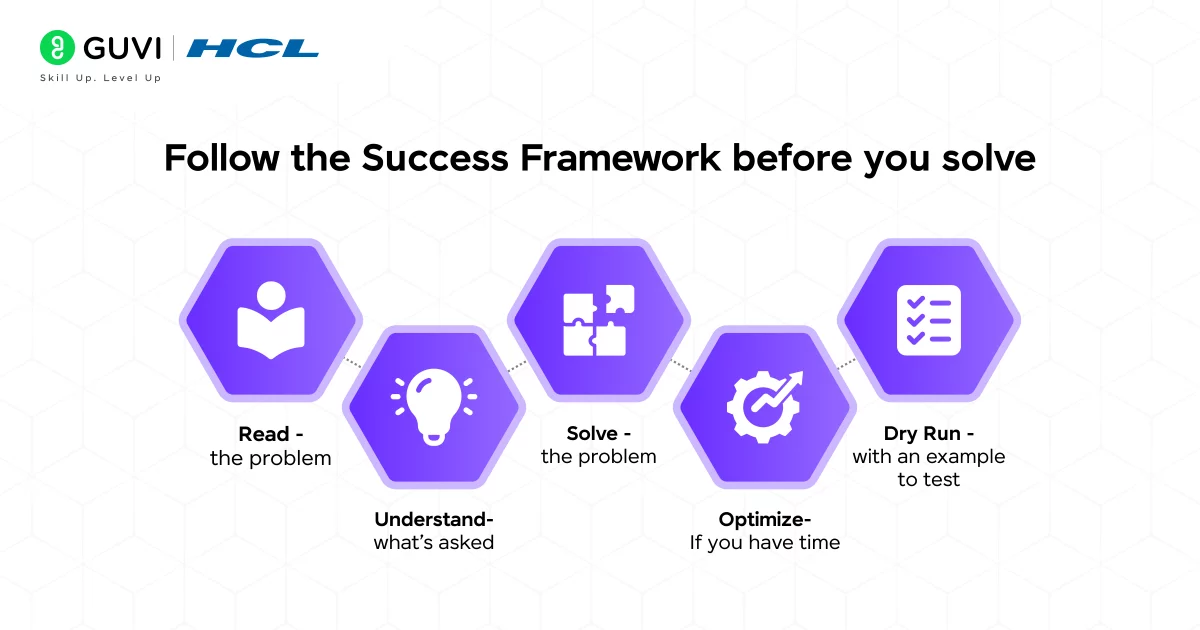
Follow the Framework
Every problem deserves this approach:
- Read the problem carefully
- Understand what’s being asked
- Solve it (even if it’s slow)
- Optimize if you have time
- Dry run with an example to test
Learn from Failures
When you mess up or can’t solve something, that’s actually the best learning moment. Study the solution and try similar problems later.
Code Every Single Day
Even 20 minutes daily beats studying for 5 hours on a Sunday. Your brain needs consistent practice.
Use Practise platform:
LeetCode, Coderkata, HackerRank, CodeSignal, and CodeChef to practice coding challenges daily and steadily improve your problem-solving skills.
Build Confidence Gradually
Each solved problem is a win. Celebrate small wins. You’re literally rewiring your brain to think like an engineer.
How to Ace Google/FAANG Technical Interviews
FAANG (Facebook/Meta, Amazon, Apple, Netflix, Google) interviews are notoriously hard. Here’s the breakdown:
What They Test:
DSA – They go deep. Medium to hard problems.
System Design – If you have 3+ years of experience, this is crucial.
Coding clarity – Your code needs to be clean and organised.
Problem-solving mindset – How you think matters as much as the final answer.
Most Asked Technical Interview Topics
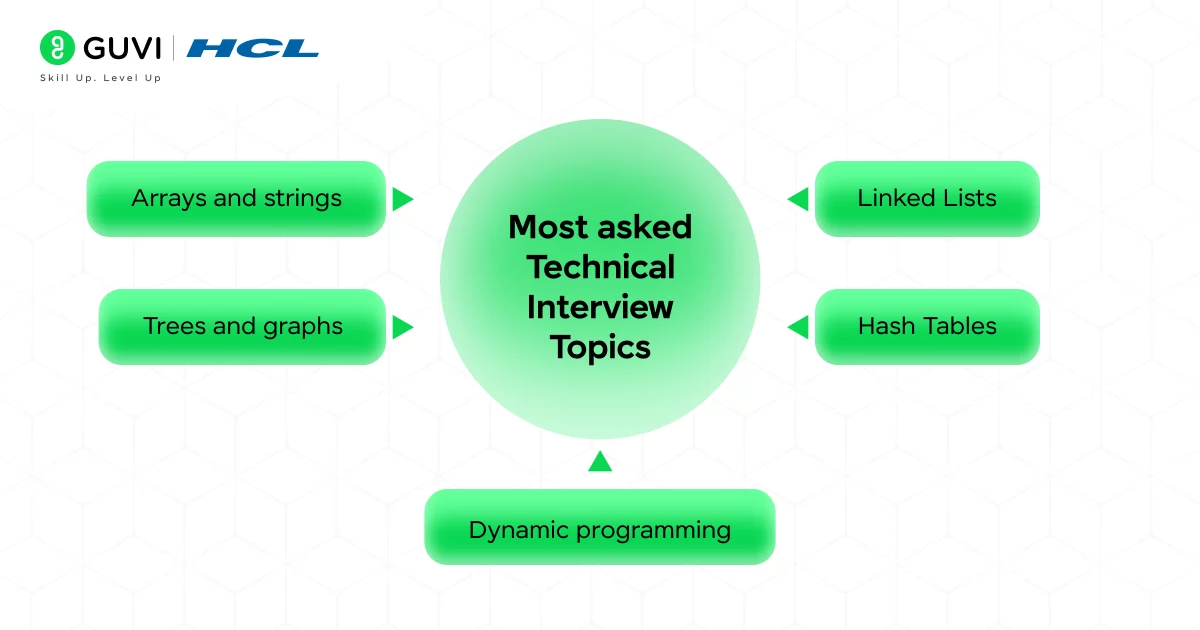
Arrays and strings
Trees and graphs
Dynamic programming
Linked lists
Hash tables
Mistakes Everyone Makes
Not Talking Out Loud – Interviewers want to hear your thought process. Silent coding looks suspicious.
Coding Too Fast – Jumping to code before understanding the problem is a trap. Take 2 minutes to plan.
Bad Time Management – Spend time on the hardest part. If you’re stuck, ask for hints.
Weak Debugging – When your code doesn’t work, walk through it step-by-step. Don’t just guess.
Forgetting Edge Cases – Test with empty inputs, single elements, and negative numbers. Think about corner cases.
Skipping the Behavioural Interview – Technical skills matter, but so does how you work with people. Be genuine and tell good stories.
Quick-Fix Checklist
Got an interview coming up? Use this:
DSA Crash Course:
- Review the top 20 most common problems
- Memorise time/space complexities
- Practice explaining your approach
Must-Solve Problems:
- Two Sum
- Reverse Linked List
- Binary Tree Traversal
- Longest Substring
- Merge Sorted Arrays
- And 15 more medium-level problems
Conclusion
Preparation beats gifted talent every time.
Technical interviews can be easy if you build problem-solving skills. They’re designed to find people who can problem-solve and communicate.
Start today. Solve one problem. Then do it again tomorrow. In a few months, you’ll look back and realise how much you’ve levelled up.
Frequently Asked Questions
1. How long does it take to prepare for a technical interview?
It usually takes 2 to 4 months of consistent practice, depending on your current skill level and the company you are targeting.
2. Do I need to know DSA to crack technical interviews?
Yes. Most companies test your understanding of arrays, strings, trees, graphs, and basic algorithms. You don’t need to be an expert, but you must know the fundamentals well.
3. Are technical interviews different for freshers and experienced candidates?
Yes. Freshers are tested mainly on basics and problem-solving skills, while experienced candidates face system design and deeper technical questions.
4. How many coding problems should I practice?
Aim for 50 to 100 problems across easy and medium levels. Focus on understanding patterns, not just memorizing solutions.
5. What should I do one day before the interview?
Review key concepts, look through your projects, revise common DSA patterns, and get good rest. Don’t start new topics right before the interview.
Success Stories

About the Author
Salini Balasubramaniam
A curious, information-savvy writer loves to turn deep insights into authentic and engaging content that connects. With experience in writing for brands and driving audience engagement, I believe that words can make a powerful difference.
View all posts by Salini Balasubramaniam
Connect with me @












Did you enjoy this article?