


Interview Articles
Wipro Elite NTH Interview Experience 2026: What Candidates Say
Wipro HR Interview Questions for Elite NTH 2026: How to Answer Them - Best Guide
Wipro Technical Interview Questions 2026: Most Asked Questions and Answers


Get In Touch For Details! Request More Information

Top 40 Software Developer Interview Questions and Answers
Jul 22, 2026 8 Min Read 12783 Views
(Last Updated)
The world of software development is highly competitive, and preparing for a software developer interview can be a daunting task, especially with the vast array of topics and questions that might come your way.
To help you navigate this process, we’ve compiled a comprehensive list of 40 software developer interview questions and answers, categorised by experience level: Fresher, Intermediate, Advanced and Scenario-based questions.
Table of contents
- Quick Answer
- Who is a Software Developer?
- Top 40 Software Developer Interview Questions and Answers
- Freshers
- Intermediates
- Experienced
- Scenario-Based Software Developer Interview Questions
- Tips to Ace the Interview
- Conclusion
- FAQs
- Q1. What are the typical rounds in a software development interview?
- Q2. What topics should I prepare for the technical round?
- Q3. Do I need to know the system design as a fresher?
- Q4. How important is communication during the interview?
Quick Answer
Software developer interviews are designed to see how you think and solve problems using core technical skills. Freshers are mostly tested on OOP basics, simple data structures, and fundamental programming concepts. Mid-level roles dive deeper into DSA, operating systems, and databases. Senior roles focus heavily on system design and your ability to build large, scalable systems.
Who is a Software Developer?
A software developer is someone who designs, builds digital solutions, such as software and applications that we use on our websites, desktops, and mobile devices. They are problem solvers who figure out how to make things easier, faster, or more useful through technology. They are the people who bring digital ideas to life.
Software developers take responsibility for the product throughout its life cycle from designing, developing, testing, deploying and maintaining. These tasks can be easy and manageable using various software tools.
Now that we have seen who is a software developer is, let’s jump into the top 30 interview questions and answers to become one.
Top 40 Software Developer Interview Questions and Answers
This section covers interview questions for various experience levels, ranging from freshers to experienced. Before jumping into questions, remember that Data Structures and Algorithms (DSA) is a mandatory skill for a software developer interview. Let’s get started!
Freshers
In this section, we will look into some of the software developer interview questions and answers for freshers. This covers concepts such as the basis of Object Oriented Programming (OOP), Linear Data Structures and Algorithms (DSA).
- What is a data structure, and why is it important?
Data structures organise data efficiently, making it easier to access, modify, and store. Common data structures include arrays, lists, stacks, queues, and trees, each designed for specific use cases.
- What is Object Oriented Programming (OOP)?
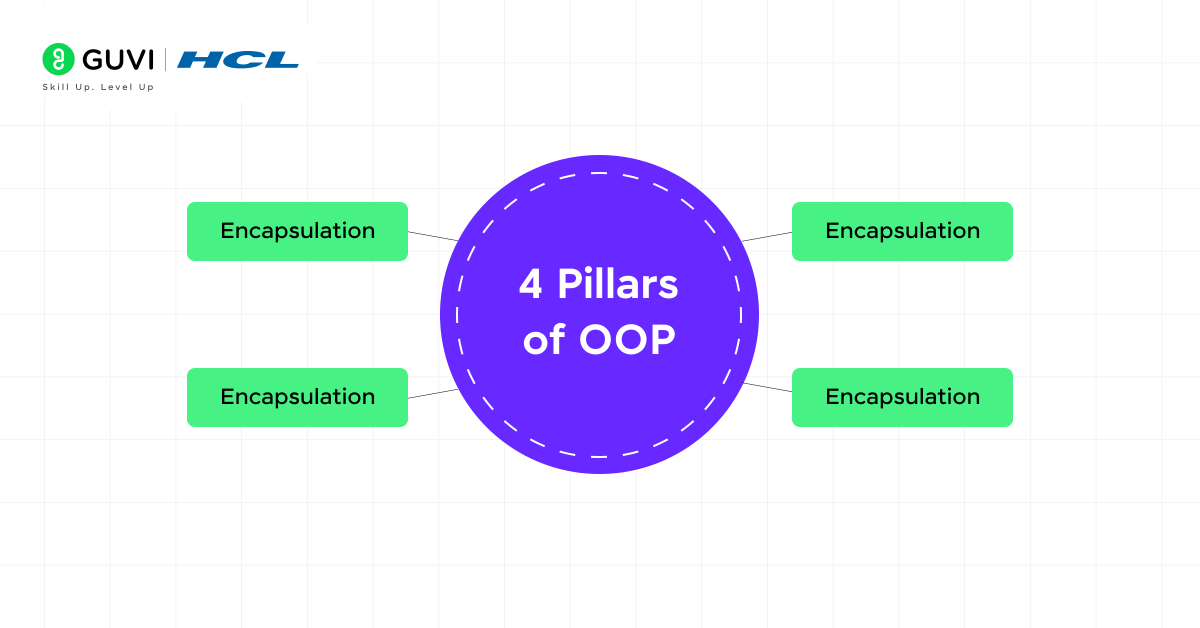
OOP is a programming paradigm that is based on objects, which can hold both data and methods. There are four principles in OOP, such as encapsulation, inheritance, polymorphism and abstraction. These principles help write clean and organised code, making it reusable.
- What is an algorithm?
An algorithm is a step-by-step procedure to solve a problem or perform a task. Algorithms are crucial in programming, as they determine the efficiency and speed of your code.
- How does version control work, and why is it important?
Version control manages changes to code, allowing multiple developers to collaborate effectively. Git is a popular tool that records revisions and tracks who made changes.
- Write a function in JavaScript to check if a number is even.
| function isEven(num) { return num % 2 === 0; } console.log(isEven(4)); // true console.log(isEven(7)); // false |
- What are linear data structures?
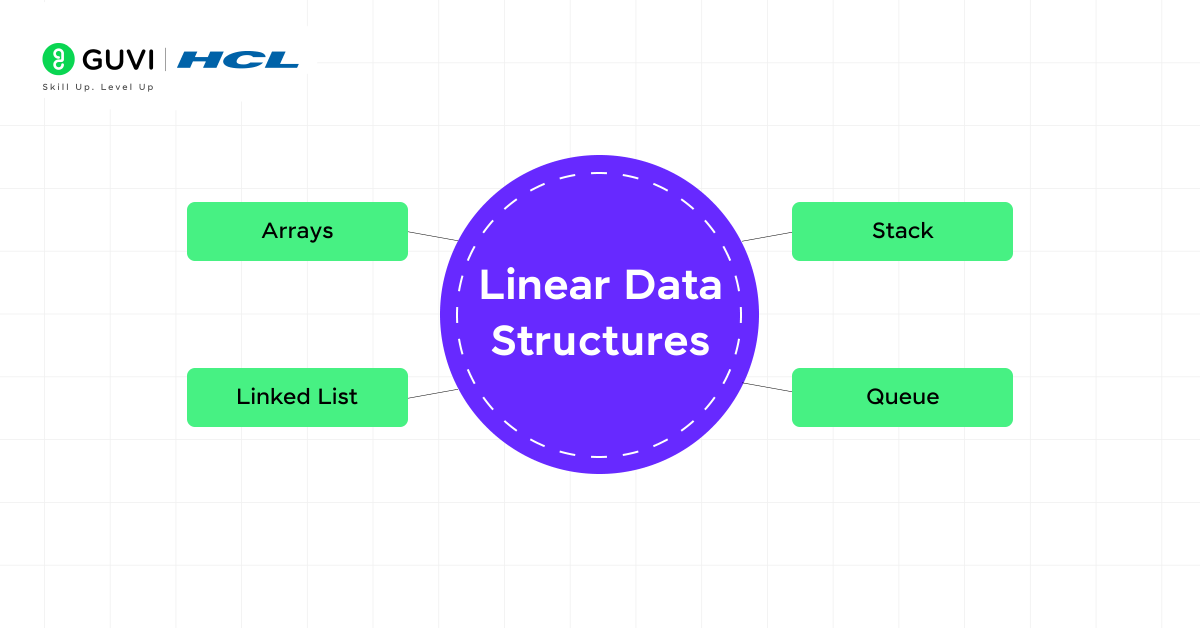
Linear data structures are simple yet powerful data structures that arrange elements in a sequential or linear order. Some of the common linear data structures are arrays, linked lists, stacks, and queues.
- Arrays: It is a fixed-size collections of elements of the same data type in a contiguous memory location.
- Linked List: It is a sequence of nodes where each node points to the next node.
- Stack: It follows the Last In First Out (LIFO) principle, like a pile of plates.
- Queue: It follows the First In First Out (FIFO) principle, like a waiting line.
- Write a function in Python to reverse a string.
| def reverse_string(s): return s[::-1] print(reverse_string(“Hello”)) # This function uses Python’s slicing technique to reverse a string. |
- Can you explain what an API is?
An API (Application Programming Interface) is a set of rules that allows different software programs to communicate with each other. For example, a weather app might use a weather API to get real-time data.
- What’s the difference between a compiled and an interpreted language?
A compiled language is translated into machine code before execution (like C or C++), which usually makes it faster. An interpreted language is translated line by line at runtime (like Python or JavaScript), which can be more flexible but a bit slower.
- Describe the differences between a stack and a queue.
A stack operates in a “last in, first out” (LIFO) manner, while a queue follows “first in, first out” (FIFO). For instance, adding books to a stack works from the top, while people joining a queue are served in order.
Mastering any one of the programming languages is a must. If you’re confused about which language to choose, start exploring HCL Guvi’s FREE E-book on Python: A Beginner’s Guide to Coding & Beyond. It is a great start towards your DSA and software developer journey.
Intermediates
This section covers various topics such as Non-linear data structures, Operating System (OS), Database Management System (DBMS) and Programming. Now, let’s get into the intermediate-level software developer interview questions and answers briefly!
- What are non-linear data structures?
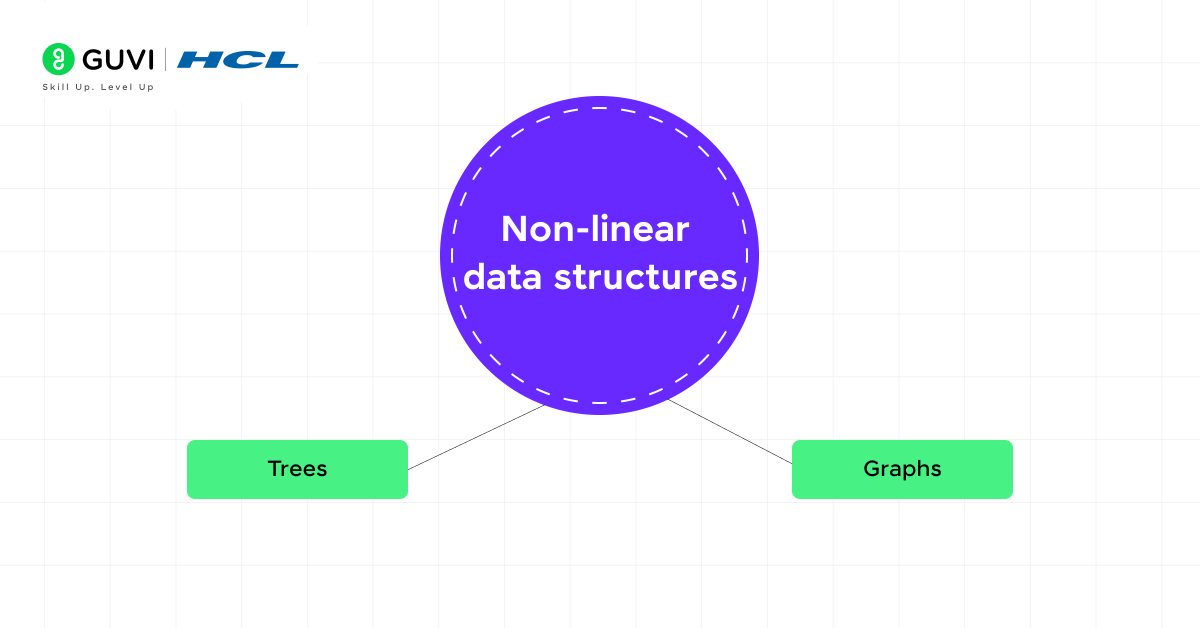
Non-linear data structures are structures where data elements are arranged in a non-sequential order. Instead, they are connected in a hierarchical or network-like structure. Common non-linear data structures are trees and graphs.
- Implement a function to sort an array using the Bubble Sort algorithm.
| def bubble_sort(arr): n = len(arr) for i in range(n): for j in range(0, n – i – 1): if arr[j] > arr[j + 1]: arr[j], arr[j + 1] = arr[j + 1], arr[j] return arr # Example usage print(bubble_sort([64, 34, 25, 12, 22, 11, 90])) # Output: [11, 12, 22, 25, 34, 64, 90] |
- Explain the importance of Big O notation.
Big O notation describes an algorithm’s efficiency based on input size, helping developers predict runtime and optimise performance.
- What is Normalisation?
Normalisation is the process of organising a database to minimise redundancy and avoid undesirable characteristics like insertion, update, and deletion anomalies. The goal of normalisation is to break down complex data structures into smaller, manageable parts that are easier to maintain and update.
- Implement a function to check if a number is prime.
| def is_prime(n): if n <= 1: return False for i in range(2, int(n**0.5) + 1): if n % i == 0: return False return True # Example usage print(is_prime(7)) # Output: True |
- What is a deadlock in an operating system?
A deadlock occurs when two or more processes are waiting for each other to release resources, and none of them can proceed. It’s like two people holding one key each, but both need both keys to unlock a door, so they wait forever.
- What is the difference between a process and a thread?
| Process | Thread |
| It is a program in execution state | It is a lightweight unit of a process |
| It runs independently | It depends on the parent process |
| It needs inter-process communication | It directly access shared memories |
- What are CRUD Operations? Explain with examples.
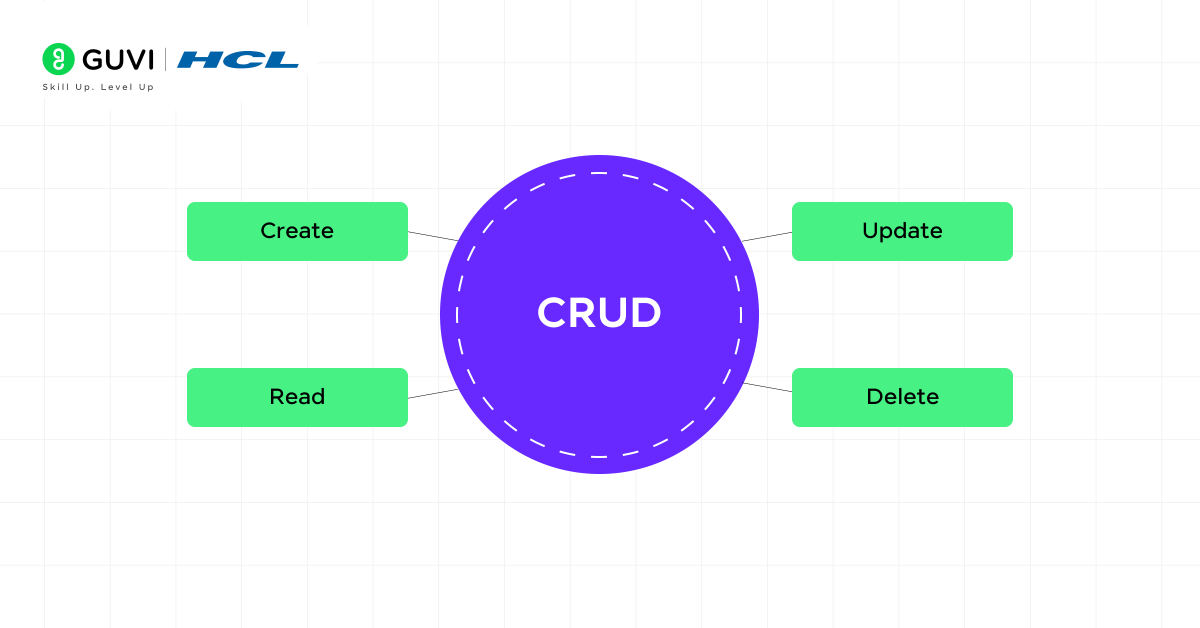
CRUD stands for Create, Read, Update, and Delete, which are the four basic operations for managing data in a database.
- Create: It is used to create a table and insert new records into the table.
- Read: It is used to retrieve records from the table (SELECT * FROM Students;).
- Update: It is used to modify the existing records in the table (UPDATE Students SET Age = 21 WHERE StudentID = 3;).
- Delete: It removes the records from a table (DELETE FROM Students WHERE StudentID = 1;).
- What is RDBMS?
RDBMS stands for Relational Database Management System. It is a subset of the database management system (DBMS), it only stores structured data such as tables. RDBMS defines relationships between tables through the concept of foreign keys. It is based on the relational model of data, where tables represent data and relationships among them. Examples of popular RDBMS include MySQL, PostgreSQL, Oracle, and SQL Server.
Explore: Top Mainframe Interview Questions and Answers
- What are the types of joins?
There are five types of joins in SQL. They are:
- INNER JOIN: This join returns only the rows that have matching values (common values) in both tables.
- LEFT JOIN: It is also known as LEFT OUTER JOIN. It returns all the rows from the left table and only returns the matching rows from the right table. If there are no matching rows, then NULL values are returned from the right table.
- RIGHT JOIN: It is also known as RIGHT OUTER JOIN. This join returns all the rows from the right table and only returns the matching rows from the left table. If there are no matching rows, it will return NULL values from the left table.
- FULL JOIN: It is also known as FULL OUTER JOIN. This join returns all rows from both the left and right tables if there is a match between either of the left or right tables. No matching rows will return NULL values.
- SELF JOIN: This will join a table with itself. It is used to compare the rows within the same table.
If you want to become a full-stack developer and learn the necessary skills required for it, starting from scratch to advance in a single course from India’s top Industry Instructors, consider enrolling in HCL GUVI’s Full Stack Development course that not only teaches you everything about full-stack development from scratch, but also provides you with hands-on project experience and an industry-grade certificate!
Experienced
If you are aiming for an experienced role such as SDE-3 or above, then it is mandatory to have system design skills. This section covers concepts such as advanced levels of OS, database security, DSA, and microservices. Let’s get into the software developer interview questions and answers for advanced roles.
- What is multithreading, and why is it used?
Multithreading allows concurrent execution of multiple parts of a program to improve performance, especially in CPU-intensive tasks.
- Explain the difference between optimistic and pessimistic locking in databases.
Optimistic locking assumes conflicts are rare, checking for changes before committing. Pessimistic locking assumes conflicts are frequent, locking records early to prevent them.
| def binary_search(arr, target): low, high = 0, len(arr) – 1 while low <= high: mid = (low + high) // 2 if arr[mid] == target: return mid elif arr[mid] < target: low = mid + 1 else: high = mid – 1 return -1 print(binary_search([1, 2, 3, 4, 5], 4)) # Output: 3 |
- What are design patterns? Give an example.
Design patterns are reusable solutions to common programming problems. For example, the Singleton pattern restricts the instantiation of a class to one object, commonly used for database connections.

- What are microservices, and what benefits do they offer?
Microservices divide an application into independent services, each focusing on specific functions, enhancing scalability and flexibility for large applications.
- Write a function to find the longest substring without repeating characters in a given string.
| def longest_unique_substring(s): char_map = {} start = max_length = 0 for end in range(len(s)): if s[end] in char_map: start = max(start, char_map[s[end]] + 1) char_map[s[end]] = end max_length = max(max_length, end – start + 1) return max_length # Example usage print(longest_unique_substring(“abcabcbb”)) # Output: 3 (“abc”) |
- Implement a function to perform binary search on a sorted list.
| def binary_search(arr, target): left, right = 0, len(arr) – 1 while left <= right: mid = (left + right) // 2 if arr[mid] == target: return mid elif arr[mid] < target: left = mid + 1 else: right = mid – 1 return -1 # Element not found # Example usage print(binary_search([1, 2, 3, 4, 5, 6], 4)) # Output: 3 |
- Write code to implement an LRU (Least Recently Used) cache in Python.
| from collections import OrderedDict class LRUCache: def __init__(self, capacity): self.cache = OrderedDict() self.capacity = capacity def get(self, key): if key in self.cache: value = self.cache.pop(key) self.cache[key] = value return value return -1 def put(self, key, value): if key in self.cache: self.cache.pop(key) elif len(self.cache) >= self.capacity: self.cache.popitem(last=False) self.cache[key] = value |
- What is a monolithic application, and how does it differ from microservices?
A monolithic application has tightly integrated components, while microservices split functionality into independent services, making updates easier but adding complexity to deployment.
- Write a function to detect cycles in a linked list.
| class ListNode: def __init__(self, x): self.val = x self.next = None def has_cycle(head): slow, fast = head, head while fast and fast.next: slow = slow.next fast = fast.next.next if slow == fast: return True return False # Example usage # Create a linked list with a cycle for testing node1 = ListNode(1) node2 = ListNode(2) node1.next = node2 node2.next = node1 print(has_cycle(node1)) # Output: True |
Scenario-Based Software Developer Interview Questions
Scenario-based questions help interviewers understand how you think in real project environments. Instead of testing only definitions, these questions reveal your ability to debug issues, design scalable systems, collaborate with teams, and make smart technical decisions under pressure. They show how you would perform as a developer when things break, when systems slow down, and when architecture choices truly matter.
31. Your application slows down significantly when traffic increases. How would you diagnose the issue?
Start by checking performance metrics, logs, and monitoring dashboards to identify bottlenecks. Analyse CPU usage, database query times, and network delays. Use profiling tools to inspect memory leaks or inefficient code paths. Based on findings, consider caching, load balancing, database indexing, or optimising critical functions.
32. A recently deployed feature is causing unexpected crashes in production. What steps would you take first?
Begin by rolling back to a stable version to stop further impact. Examine logs, error traces, and monitoring alerts to identify root causes. Reproduce the issue in a staging environment and validate fixes through automated tests. Implement safer deployment practices like feature flags for future releases.
33. Your database queries are becoming slower over time. How do you address this?
Check for unindexed columns, unnecessary joins, or N+1 query patterns. Use performance tools EXPLAIN to analyse slow queries. Introduce caching where possible, rewrite complex queries, or restructure data. If required, consider partitioning, sharding, or moving read-heavy operations to replicas.
34. A team member insists on rewriting a large part of the codebase. How do you approach this situation?
Evaluate whether the rewrite solves a real problem or introduces risk. Explore refactoring in smaller iterations instead of a full rewrite. Prioritise maintainability and stability. Facilitate a discussion on technical debt, time constraints, and business impact before making a decision.
35. Two services in a microservices architecture communicate slowly. What is your debugging approach?
Check for network latency, improper timeout settings, or inefficient serialisation formats. Inspect API logs and response times. Use distributed tracing tools to identify slow hops. Consider implementing caching, message queues, or optimising payload sizes to improve inter-service communication.
36. Your login API is receiving repeated failed attempts, suggesting suspicious activity. What would you do?
Implement rate limiting, CAPTCHA validation, and temporary IP blocking. Strengthen logging and monitor unusual patterns. Ensure hashed and salted password storage. Consider using multi-factor authentication for added security.
37. A client reports that your app behaves differently on different devices. How do you investigate this?
Reproduce the issue across platforms and browsers. Check for compatibility issues, viewport settings, API version differences, or time zone mismatches. Include cross-platform automated tests and ensure consistent environments using containers.
38. You find that a junior developer’s code works but is not maintainable. What is your next step?
Provide constructive feedback highlighting readability, modularity, and best practices. Walk them through refactoring the code together. Encourage adherence to coding standards and use code reviews as a learning opportunity.
39. A third-party API your system depends on becomes unreliable. How do you ensure your app remains stable?
Introduce retry mechanisms with backoff strategies, local caching, or fallbacks. Monitor API health and set up alerting. If needed, wrap API calls in a circuit breaker pattern to protect your application from cascading failures.
40. You’re asked to speed up a feature but have very limited time. What is your strategy?
Prioritise profiling to identify the biggest win with the smallest effort. Implement quick optimisations like caching, reducing redundant computations, or simplifying logic. Communicate constraints clearly and document what will need deeper optimisation later.
Tips to Ace the Interview
Preparing for a software developer interview doesn’t have to be overwhelming. With a few consistent habits and the right practice approach, you can steadily improve your concepts, coding speed, and confidence. Here are some practical tips to help you prepare effectively:
1. Revise a few topics every day
Cover 2–3 concepts daily (like OOP, SQL, OS, or DSA) instead of trying to learn everything at once.
2. Practice coding consistently
Solve 2–3 problems a day on LeetCode, HackerRank, or CodeKata to build steady problem-solving confidence.
3. Review mistakes and tough problems
Keep a separate notes file for questions you couldn’t solve or got wrong, and revisit them regularly.
4. Build or improve small projects
Add features, clean up code, or fix bugs in your personal projects weekly to keep your practical skills sharp.
5. Attempt mock interviews regularly
Take one mock interview every week to improve communication, time management, and real interview confidence.
Conclusion
In conclusion, by preparing these questions across different levels, you can boost your confidence and showcase your knowledge effectively.
Remember, practice makes perfect, so take time to understand the concepts and try coding solutions on your own to reinforce your learning. Good luck with your interview preparation!
FAQs
Q1. What are the typical rounds in a software development interview?
Most companies follow these rounds:
1. Aptitude/Online Coding Test
2. Technical Interview(s)
3. System Design or Coding Challenge (optional for freshers)
4. HR/Behavioural Round
Q2. What topics should I prepare for the technical round?
Data Structures & Algorithms, OOP Concepts, Databases (SQL basics), Operating System & Networking fundamentals, and Basic coding in one programming language (like Java, Python, or C++)
Q3. Do I need to know the system design as a fresher?
Not in detail. For freshers, companies may ask basic design questions (e.g., how would you design a simple library system or a login page). Understanding fundamentals is enough.
Q4. How important is communication during the interview?
Very important! Explaining your thought process, even if you don’t get the perfect answer, shows your problem-solving skills and how you approach challenges.
Success Stories

About the Author
Jebasta
I translate the language of data into stories that anyone can understand. As a writer with a data science background, I simplify analytics, AI, and decision-making so beginners and enthusiasts can confidently explore the world of data.
View all posts by Jebasta
Connect with me @











Did you enjoy this article?