


Artificial Intelligence and Machine Learning Articles
Finance Manager to Data Analytics: Career Growth, Salary and Seniority
How to Evaluate LLM Outputs in Production Deployments
AI/ML Skills Gap 2026: Why Companies Can't Find Job-Ready Talent
20 AI/ML Interview Questions Recruiters Can Use Without a Tech Background - Best Guide


Get In Touch For Details! Request More Information
AI Agents Unleashed: Real-World Revolution Across Industries
Sep 08, 2026 6 Min Read 1640 Views
(Last Updated)
A few years ago, AI in business meant reactive tools like chatbots answering FAQs or recommendation engines suggesting products. They waited for input, spat out outputs, and stopped, unable to plan, act across systems, or handle anything outside their narrow scope. Impressive then, but they left a massive gap between business needs and tech capabilities.
AI agents are closing that gap today, running in production across industries. These autonomous systems plan, reason, and execute multi-step tasks with minimal human help, delivering 30-80% gains in speed, accuracy, and costs. Unlike a calculator that just computes, an agent acts like a colleague taking initiative to complete workflows end-to-end.
In this article, we will walk through real-world AI agent examples across healthcare, finance, customer service, supply chain, education, software development, legal work, and e-commerce with concrete company examples and measurable outcomes where they exist.
Table of contents
- TL;DR:
- Why Does Healthcare Need AI Agents?
- Key Use Cases
- The Bigger Picture
- AI Agents in Finance
- Key Use Cases
- AI Agents in Customer Service
- Transforming Customer Interactions
- Streamlining Workflows
- AI Agents in Supply Chain and Logistics
- Solving Supply Chain Challenges
- Enterprise Examples: Walmart and Amazon
- Why It Matters
- AI Agents in Education
- AI Agents in Software Development
- Rapid Evolution in Dev Tools
- Real-World Impact and Metrics
- Advanced Capabilities
- AI Agents in Legal and HR Work
- In Legal Work
- In HR Work
- AI Agents in E-commerce
- Final Thoughts
- FAQs
- What makes AI agents different from chatbots like ChatGPT?
- Which industry sees the biggest AI agent impact right now?
- Can you name a real company using AI agents in finance?
- How are AI agents changing software development?
- What's the predicted growth for AI agents by 2026?
- What is the difference between an AI course and an AI & ML course?
- What job roles can I apply for after completing an AI & ML course?
- How do I choose the best AI course for my career goals?
- What should I look for before enrolling in an AI & ML course?
- How should I evaluate AI & ML certifications before enrolling?
- What is the difference between an AI course and an AI & ML course?
- How do I choose the best AI course for my career goals?
TL;DR:
- AI Agents Defined: Autonomous systems that plan, reason, and execute multi-step tasks across tools with minimal human input, unlike reactive traditional AI.
- Healthcare Impact: Handle claims, scheduling, and patient queries; address 15% claim denial rates and future 10M worker shortage.
- Finance Examples: Ramp’s agent audits expenses and approves reimbursements; Bank of America’s Erica is used by 90% of employees.
- Supply Chain Wins: Walmart and Amazon use agents for real-time inventory, rerouting, and trend-based product creation.
- Dev & Education: Replit Agent built 2M+ apps; education agents personalize learning and accelerate research.
- Future Scale: Gartner predicts 40% of enterprise apps will have AI agents by end of 2026.
What Are AI Agents in Simple Terms?
AI agents are software systems that receive a high-level goal and independently plan, gather data, make decisions, and take actions across multiple tools and systems to complete it.
Why Does Healthcare Need AI Agents?
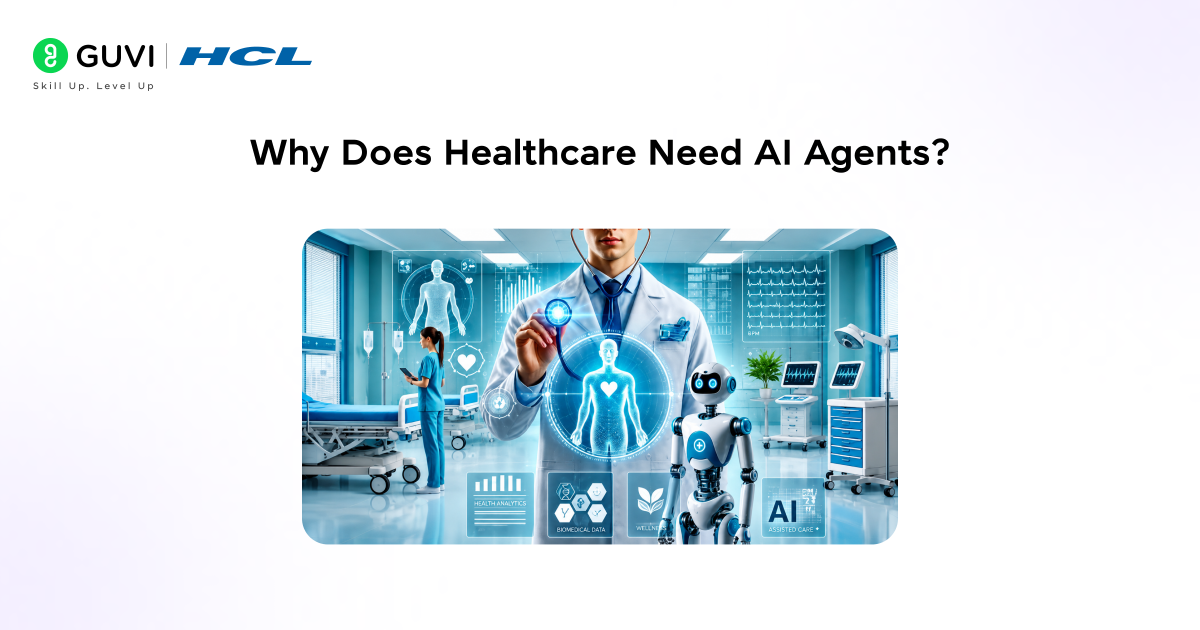
Healthcare inefficiencies, like 15% of claims denied on first submission for avoidable reasons, cost billions and stem from manual chasing of updates across systems. AI agents deliver measurable impact by automating these costly bottlenecks, turning reactive processes into seamless workflows.
Key Use Cases
- Clinical Support: Physicians retrieve patient history via voice, skipping complex menus; agents handle scheduling and automated note-taking during visits.
- Billing & Claims: Patients query claim status via chat; agents pull details from billing systems, confirm payer responses, and explain pendings all in one interaction without human handoffs.
The Bigger Picture
With a projected 10 million worker shortage by 2030 and rising patient volumes, AI agents for documentation, scheduling, claims, and pre-authorizations aren’t just efficiency boosters; they’re essential for scaling healthcare sustainably.
AI Agents in Finance
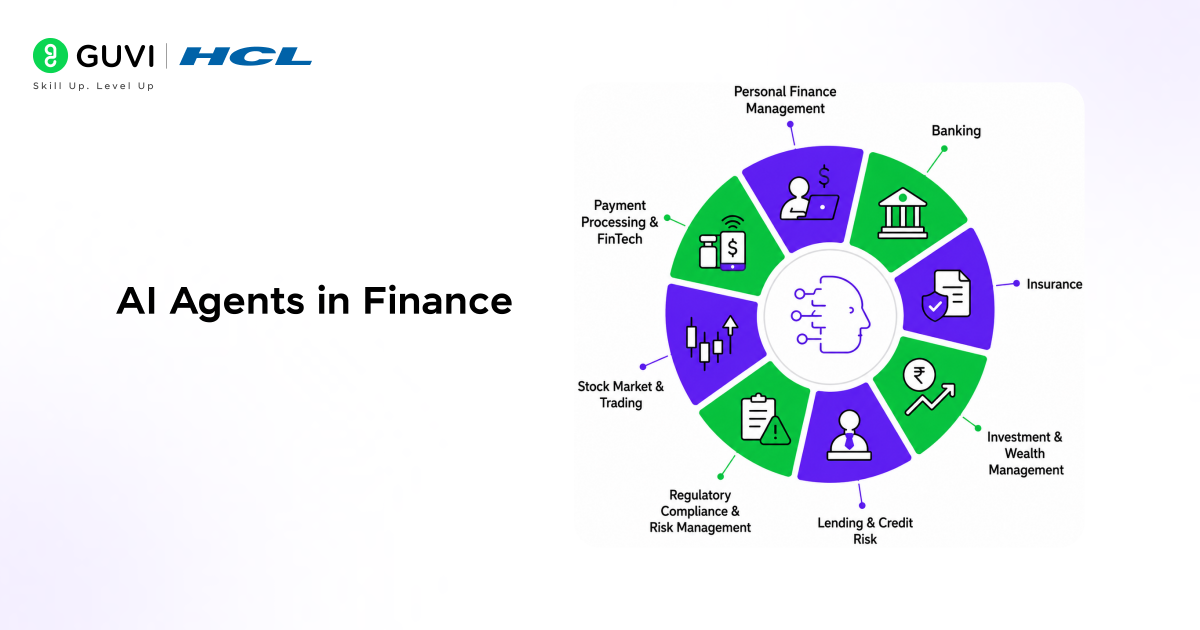
Finance was one of the earliest industries to deploy AI agents at scale, moving far beyond basic fraud alerts. AI agents tackle fraud detection, risk assessment, and automated trading by analyzing vast transaction data to spot unusual patterns and execute trades at optimal times based on market trends.
Key Use Cases
- Ramp’s AI Finance Agent:
Launched in July 2025 within their spend management and corporate card platform, this agent reads company policy documents, audits expenses autonomously, flags violations automatically, generates reimbursement approvals and sends notifications without manual review, coordinates with procurement systems to preemptively verify vendor compliance, and learns from each decision to refine checks and reduce false alarms.
Thousands of businesses adopted it within weeks, leading to significant reductions in manual audit hours for finance teams.
- Bank of America’s Erica:
Now used by over 90 percent of employees, Erica represents enterprise-scale impact. The bank invested 4 billion dollars in AI and new tech initiatives in 2025, with agents handling code writing, client feedback capture, and internal process automation at scale.
Strategic Impact
These deployments show finance’s edge in scaling AI agents for high-stakes, data-heavy operations, setting a model for efficiency and autonomy across enterprises.
AI Agents in Customer Service
Customer service is where most people encounter AI agents directly, and the quality of those encounters has improved dramatically as the systems have moved from keyword-triggered rules to genuine reasoning and multi-system integration.
Transforming Customer Interactions
- AI agents revolutionize customer service by handling inquiries, resolving issues, and delivering personalized recommendations. Unlike early chatbots that only managed high-volume interactions with instant responses, modern agents complete full transactions.
- A customer requesting a return doesn’t just get instruction; the agent initiates it, generates the label, updates order status, and sends confirmation, all in one seamless conversation.
Streamlining Workflows
- A typical case involves routing, summarization, response drafting, compliance checks, and documentation, where each handoff adds latency. Enterprise platforms now provide robust APIs, enabling agents to manage this entire sequence without human intervention for routine issues.
- Humans focus on complex cases needing judgment, empathy, or authority, while AI handles the bulk of repetitive interactions that once overwhelmed support teams.
AI Agents in Supply Chain and Logistics
Supply chain management involves exactly the kind of multi-system, multi-variable complexity that AI agents are built to handle. Real-time disruptions, shipping delays, demand spikes, weather events, and supplier failures require decisions that cannot wait for a human to analyze data and approve action.
1. Solving Supply Chain Challenges
Agentic AI agents go beyond alerts by actively solving issues: they analyze delays, rebalance inventory, optimize delivery routes, and reroute logistics on the fly.
For demand forecasting, they process historical sales, seasonal trends, market signals, and external factors like weather or news to project needs and adjust procurement. During disruptions, agents find alternative carriers, reroute shipments, and update ETAs across systems, cutting delays without manual input.
2. Enterprise Examples: Walmart and Amazon
Walmart’s unified supply chain uses agentic AI for real-time inventory visibility across stores, fulfillment centers, and logistics. Agents detect demand surges, tweak replenishment schedules, and reroute around weather or disruptions automatically.
Their Trend-to-Product system, a multi-agent engine, tracks social media and search trends, generates product concepts, and feeds them into prototyping and sourcing, drastically shortening production timelines. Amazon integrates agents into fulfillment centers for inventory management, shelf optimization, and automated order picking.
3. Why It Matters
These deployments handle multi-variable complexity in real-time, turning reactive supply chains into proactive, resilient operations that scale with disruptions.
AI Agents in Education
Education is a domain where personalization has always been the aspiration and scale has always been the obstacle. AI agents are beginning to bridge that gap in ways that scripted e-learning platforms never could.
- In 2026, AI agents are redefining learning by adapting content to each student’s pace, style, and needs. Agents suggest exercises, explanations, and quizzes based on user performance; engage in Socratic dialogue and scaffold difficult concepts; sync progress across devices and provide real-time feedback, and provide goal tracking, nudges, and motivation through gamification.
- The agent does not teach the same way to everyone; it reads where each student is struggling, adjusts what it presents next, and changes its explanatory approach based on what is landing and what is not.
- For academic researchers, AI agents are accelerating a different kind of educational work. Academic research has always been time-intensive, sifting through hundreds of papers, conducting literature reviews, compiling data, drafting manuscripts, and applying for funding.
- Agentic AI is being deployed as a co-pilot across every phase of the research lifecycle. These agents do not just summarize articles or generate text; they reason, plan, and take action on behalf of researchers.
- A research agent might identify the 20 most relevant papers from a corpus of thousands, extract key findings, identify methodological gaps, and draft a literature review section compressing weeks of work into hours.
AI Agents in Software Development
Rapid Evolution in Dev Tools
Software development leads AI agent advancement, with tools like GitHub Copilot, Cursor, Replit Agent, and others evolving from autocomplete to full autonomous sessions. These agents fundamentally shift developers from coders to reviewers and strategists.

Real-World Impact and Metrics
Replit’s launch skyrocketed their ARR from $10M to $100M in nine months, with users building over 2 million apps. Rokt created 135 internal apps in 24 hours; Zinus saved $140,000 and halved dev time on analytics dashboards. One-quarter of Y Combinator founders now boast over 95% AI-generated codebases.
Advanced Capabilities
Beyond code generation, agents manage testing, debugging, deployment, and security scanning. They operate autonomously for extended periods Replit Agent 3 runs up to 200 minutes without input, and top systems build multi-agent pipelines for complex engineering workflows.
AI agents are already transforming everyday business operations in 2026, from Walmart’s real-time supply chain rerouting during disruptions to Replit’s agent enabling startups to build 135 apps in 24 hours.
These autonomous systems don’t just suggest—they act. For example, Ramp’s finance agent reduces manual audits by reading policies and flagging issues instantly, while healthcare agents help address billions in claim denial costs by automating detection and review.
With Gartner forecasting 40% enterprise adoption this year, companies that ignore AI agents risk falling behind as these systems compound efficiency gains across finance, development, and operations.
AI Agents in Legal and HR Work
1. In Legal Work
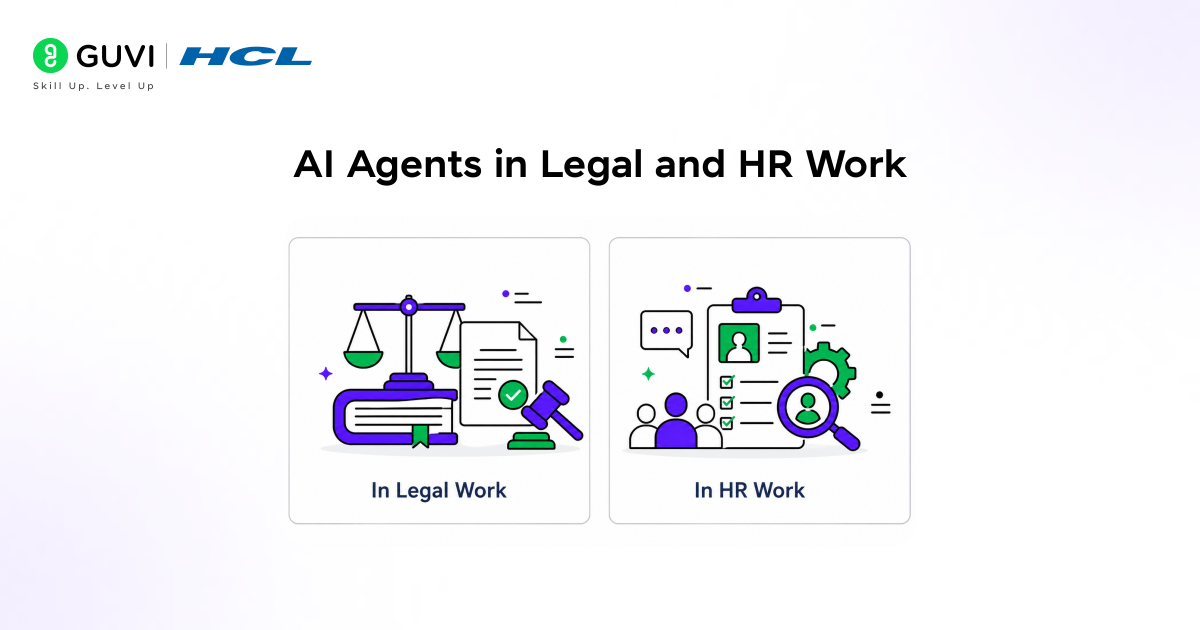
Legal departments thrive on AI agents for repetitive tasks like classifying and redacting sensitive documents. For contract review, agents read agreements, flag nonstandard clauses, compare against playbooks, and highlight key issues, slashing review time from days to minutes for standard deals.
2. In HR Work
HR workflows gain from agents that summarize meeting notes, schedule follow-ups, draft job postings, and evaluate candidates. They handle full screening for high-volume roles from application review to booking interviews while assisting recruiting by explaining payand benefits and managing sales deals or inquiries.
AI Agents in E-commerce
E-commerce is where AI agents become most visible to everyday consumers, and the most advanced deployments are moving well beyond recommendation engines into genuinely autonomous shopping and merchandising behavior.
- A customer browsing multiple stores can have an AI shopping agent compare prices across retailers, negotiate a discount through automated price matching, and complete the purchase using stored payment preferences all while the customer sleeps.
- On the business side, a manufacturing company’s AI procurement agent monitors production schedules and inventory levels, automatically reordering supplies from preferred vendors when stock hits predetermined thresholds.
- For personalized recommendations, AI agents analyze individual shopper behavior, purchase history, session activity, and psychographic traits to dynamically display products most likely to convert, adapting in real time.
- This is not static segmentation; the agent reads each session and adjusts what it surfaces moment by moment, creating an experience that feels genuinely responsive to individual intent rather than demographic category.
Ready to deploy AI agents and drive real-world revolutions across industries without the complexity? Unlock pro strategies on autonomous workflows, multi-agent systems, and enterprise integration by enrolling in HCL GUVI’s Intel & IITM Pravartak Certified Artificial Intelligence & Machine Learning course.
Final Thoughts
AI agents are not a future technology they are running in production across healthcare, finance, customer service, supply chain, education, software development, legal work, and e-commerce right now. Gartner predicts that by 2026, up to 40 percent of enterprise applications will integrate task-specific AI agents, up from less than 5 percent in 2025.
From streamlining HR and finance operations to transforming student support and healthcare services, autonomous AI agents are proving their value across industries. They are automating tasks, running workflows, making decisions, and scaling operations without the overhead.
The businesses that are building with agents now even at modest scale are developing the organizational knowledge of how to work with agentic systems effectively. That learning curve is the real competitive advantage, and it compounds over time as the underlying technology continues to improve.
FAQs
1. What makes AI agents different from chatbots like ChatGPT?
AI agents go beyond generating responses; they plan multi-step actions, use tools across systems, and execute tasks autonomously, like processing refunds end-to-end.
2. Which industry sees the biggest AI agent impact right now?
Healthcare and supply chain lead, with agents cutting claim denials, automating scheduling, and rerouting logistics in real-time for companies like Walmart.
3. Can you name a real company using AI agents in finance?
Ramp’s 2025 AI finance agent audits expenses, approves reimbursements, and integrates with procurement, adopted by thousands of businesses quickly.
4. How are AI agents changing software development?
Tools like Replit Agent generate, test, and deploy code autonomously users built 2M+ apps, with some startups having 95% AI-generated codebases.
5. What’s the predicted growth for AI agents by 2026?
Gartner forecasts up to 40% of enterprise applications will integrate task-specific AI agents, up from under 5% in 2025.
What is the difference between an AI course and an AI & ML course?
An AI course focuses on artificial intelligence concepts, while an AI & ML course includes machine learning, deep learning, NLP, computer vision, and practical model-building skills. If you’re looking for hands-on AI and ML training, explore the HCL GUVI AI & ML Programme.
What job roles can I apply for after completing an AI & ML course?
You can apply for roles such as AI Engineer, Machine Learning Engineer, Data Scientist, NLP Engineer, Computer Vision Engineer, and AI Developer. To prepare for these roles, consider a project-based AI & ML Programme with career support.
How do I choose the best AI course for my career goals?
Choose an AI course based on your career goals, curriculum, hands-on projects, mentor support, industry tools, and placement assistance. A structured AI & ML Programme can help you build practical skills and a strong portfolio.
What should I look for before enrolling in an AI & ML course?
Look for a structured curriculum, practical projects, experienced mentors, updated AI tools, certification value, and career support. Compare programmes carefully before enrolling in an AI & ML Programme.
How should I evaluate AI & ML certifications before enrolling?
Evaluate AI & ML certifications based on industry recognition, curriculum relevance, hands-on learning, project experience, and career outcomes. You can also compare what’s included in the HCL GUVI AI & ML Programme before making a decision.
What is the difference between an AI course and an AI & ML course?
An AI course focuses on artificial intelligence concepts, while an AI & ML course includes machine learning, deep learning, NLP, computer vision, and practical model-building skills. If you’re looking for hands-on AI and ML training, explore the HCL GUVI AI & ML Programme.
How do I choose the best AI course for my career goals?
Choose an AI course based on your career goals, curriculum, hands-on projects, mentor support, industry tools, and placement assistance. A structured AI & ML Programme can help you build practical skills and a strong portfolio.
Success Stories

About the Author
Vishalini Devarajan
An Aerospace Engineer turned content writer, I focus on making complex concepts easy to understand through well-structured, reader-friendly blogs. Whether it’s a technical topic or a non-technical one, I love creating content that is clear, engaging, and impactful.
View all posts by Vishalini Devarajan
Connect with me @








Did you enjoy this article?