


Artificial Intelligence and Machine Learning Articles
From IT Support to AI Engineer: A Realistic Career Switch Guide 2026
Is the HCL GUVI AI/ML Program Right for You? A Quick Self-Assessment
Inside the HCL GUVI AI/ML Curriculum: What You’ll Actually Build
Get In Touch For Details! Request More Information
What is a Multi-Agent System (MAS) in AI? A Complete Guide
Jun 19, 2026 4 Min Read 730 Views
(Last Updated)
Why build one system to handle everything when many smaller systems can solve problems faster by working together?
This idea is behind a Multi-Agent System.
In a Multi-Agent System, intelligence is spread across autonomous agents.
These agents interact in a shared environment. Each agent focuses on one task.
Their real power comes from working coordinating and adapting quickly Examples include teams in an organization, city traffic networks or natural ecosystems.
As technology improves the need for distributed AI and teamwork among agents grows. By making one model more complex, Multi-Agent Systems make problem-solving easier. They do this by dividing tasks
In this blog you will learn how Multi-Agent Systems work. You will also learn why they matter in todays AI world. They work together to achieve goals.
TL;DR Summary
A Multi-Agent System (MAS) is a system in artificial intelligence where multiple autonomous agents interact, collaborate, or compete within an environment to solve problems or achieve goals. Each agent operates independently but contributes to a larger system through coordination and communication.
Table of contents
- What is a Multi-Agent System?
- Key Characteristics
- The importance of Multi-Agent Systems Today
- Why Traditional AI is Weak
- Key Advantages
- Components of a Multi-Agent System
- The Agents (The Decision Makers)
- Environment (Where Agents Operate)
- Interaction Mechanism (Communication Layer)
- Coordination Strategy (How Agents Co-ordinate)
- Goals (Purpose of the System)
- Types of Agents in MAS
- Reactive Agents
- Deliberative Agents
- Hybrid Agents
- Learning Agents
- Agent Collaboration and Coordination
- Coordination Techniques
- Wrapping it up:
- FAQs:
- What is a Multi-Agent System?
- What are autonomous agents?
- Where are Multi-Agent Systems used?
- What is agent collaboration?
- Is a Multi-Agent System better than artificial intelligence?
What is a Multi-Agent System?
A Multi-Agent System is an artificial intelligence framework where autonomous agents interact with each other in a shared environment and make independent choices with respect to a common goal. Unlike a single AI model that handles everything centrally, MAS distributes intelligence across several agents, allowing systems to behave more dynamically and efficiently.
Each agent is designed with a specific role or capability. Certain agents can be data collection oriented and others can be analytical, planning or performing action.What makes MAS powerful is not just the presence of multiple agents, but the interaction and coordination between them.
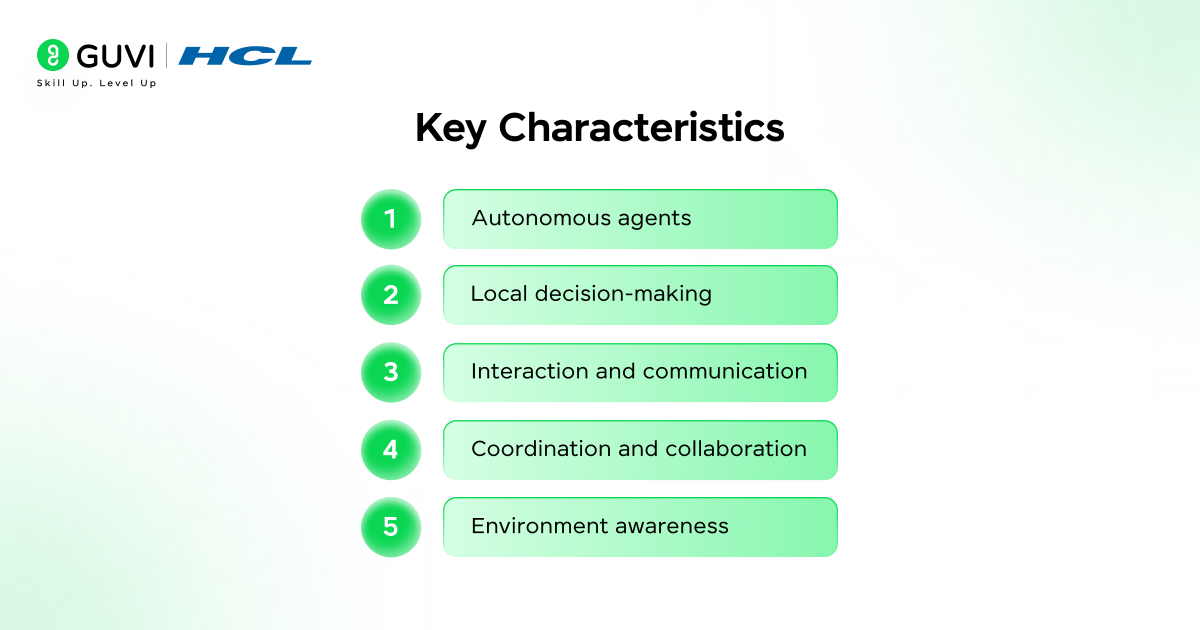
Key Characteristics
- Autonomous agents: All the agents are independent and do not require human control. This implies that an agent is able to sense its surrounding, act on its own will as dictated by its internal logic and behave.
- Local decision-making: Instead of relying on a single centralized brain, each agent makes decisions based on its own knowledge and observations. This eliminates bottlenecks and enables quick responses particularly in time sensitive systems such as stock trading or emergency response systems.
- Interaction and communication: The information is shared among agents. This communication may be designed (such as APIs or protocols) or dynamic (real-time signals). Communication will help keep the agents on track and eliminate contradicting behaviors.
- Coordination and collaboration: Agents do not merely do things in isolation but rather work together to produce more desirable consequences. As an example, in a warehouse, several robots are planned to ensure that they do not collide and can deliver the goods most efficiently.
- Environment awareness: The agents continuously monitor the changes in the environment and change their behaviors. This makes MAS very applicable in dynamic environments where the conditions vary very often as in a traffic system or a financial market.
You ca also checkout: Building Multi-Agent Application with CrewAI in 2026
The importance of Multi-Agent Systems Today
Modern real-life issues are multi-dimensional, intertwined, and evolving. This level of complexity is sometimes difficult to manage effectively by traditional AI systems that typically utilize only one model. It is at this point that Multi-agent Systems are critical.
Why Traditional AI is Weak
- When managing several tasks at the same time, it gets overloaded.
- When the environment is changing at a rapid pace, it is not flexible.
- It creates a single point of failure
- It is not easily scalable to large systems.
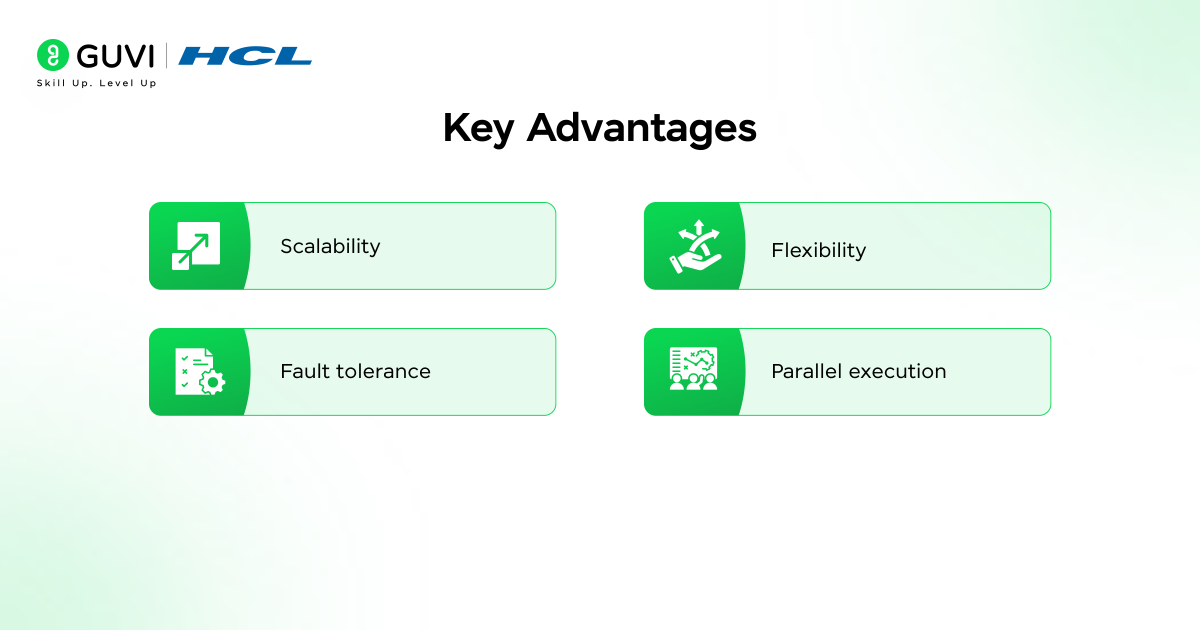
Key Advantages
- Scalability: MAS enables you to expand the number of agents as the system expands. An example is that on an e-commerce platform, you can add more recommendation agents as the number of users grows, without having to redesign the entire system.
- Flexibility: Agents can be altered, inserted or deleted without impacting the whole system. This modularity makes MAS ideal for evolving industries like fintech and healthcare.
- Fault tolerance: When one of the agents fails, the others will keep running. This guarantees reliability in the system.
- Parallel execution: Many agents have the ability to work at the same time, which greatly enhances efficiency.
You can also checck out: ChatGPT Agents: 3 Powerful Ways to Automate Tasks with AI
Components of a Multi-Agent System
When you subdivide MAS into its basic elements, it becomes a lot easier to understand.
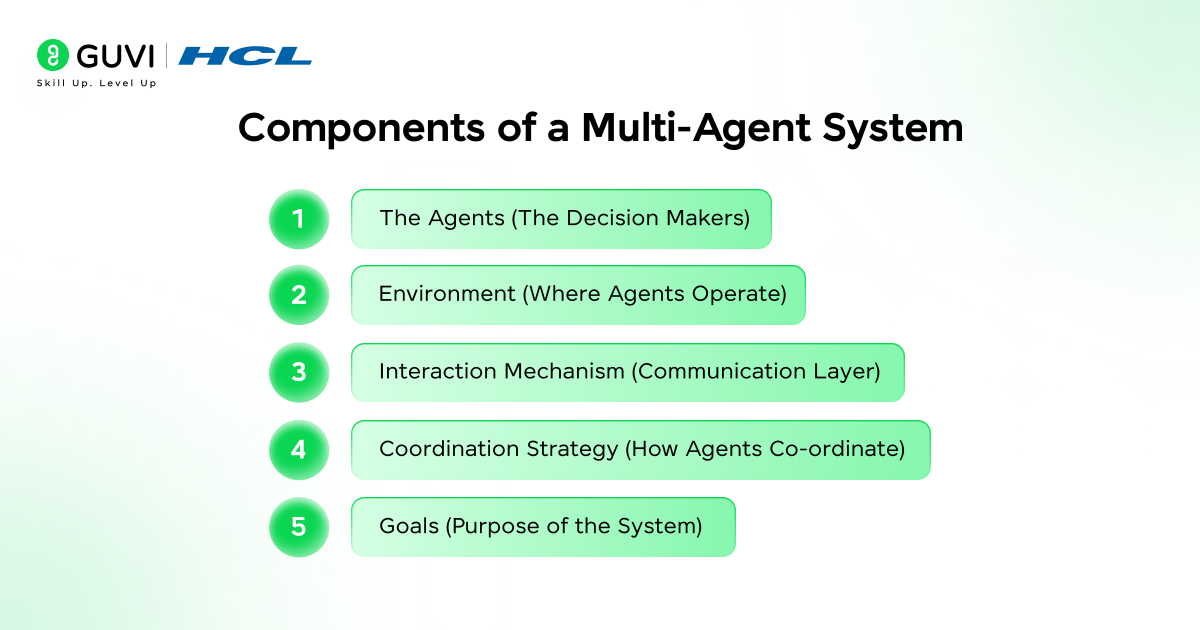
1. The Agents (The Decision Makers)
The fundamental components of a Multi-Agent System are agents. Each agent:
- Monitors its surroundings with sensors or data inputs.
- Logically manipulates information or rules or machine learning models.
- Makes decisions that have environmental impacts.
Agents can be simple (rule-based bots) or highly complex (AI-driven systems).
2. Environment (Where Agents Operate)
The environment is the space in which agents function. It can be:
- Physical: Warehouse robots or roadside autonomous vehicles.
- Digital: Computer programs such as recommendation engines or chatbots.
The environment provides the context in which agents make decisions.
3. Interaction Mechanism (Communication Layer)
Agents require a means of exchange of information. This can include:
- Messaging systems
- APIs
- Shared databases
Effective communication will keep the agents in tune and eliminate unnecessary duplication of effort.
4. Coordination Strategy (How Agents Co-ordinate)
Coordination is the process that determines the alignment of the actions of agents. This can involve:
- Sharing of duties (who does what)
- Conflict management (priority is given to who)
- Resource sharing
Uncoordinated agents can be ineffective or even counterproductive.

5. Goals (Purpose of the System)
Agents have objectives that direct them. These can be:
- Individual objectives: There are individual objectives where each agent maximizes its performance.
- Shared goals: There are common goals that all the agents pursue.
One of the largest problems of MAS design is balancing such objectives.
More than half of organizations are already using AI agents for multi-stage workflows, with many reporting measurable business returns. Some enterprise agents can reduce tasks that once took hours to just minutes by connecting directly with documents, databases, and internal tools. However, the biggest challenge is often not the AI itself, but integration with legacy systems, clean data, and existing team workflows.
Types of Agents in MAS
The complexity of the problem determines the types of agents to use.
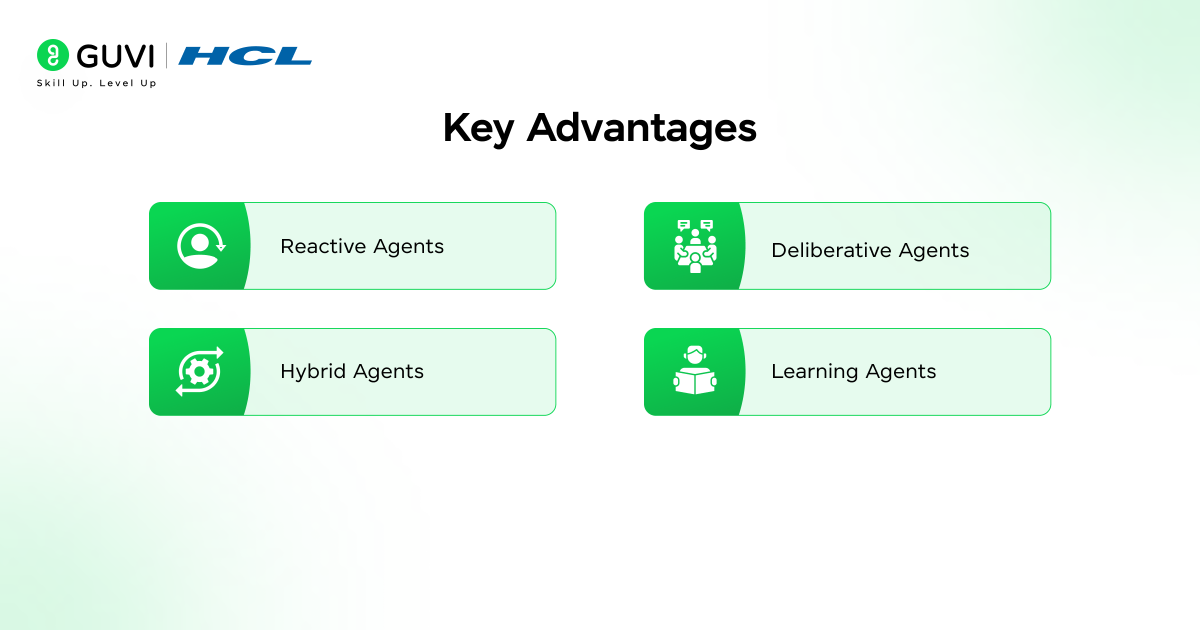
1. Reactive Agents
- These agents react immediately to changes in the environment without in-depth thought.
- They do not retain the past or strategize on how to act.
- Most appropriate with real-time applications such as traffic lights or rudimentary automation.
Example: A thermostat that regulates temperature by reading the existing temperature.
2. Deliberative Agents
- These agents plan the actions based on internal models, and then execute them.
- They evaluate various options and select the most favorable one.
- Applicable in strategy decision making.
Example: AI systems used in chess or route planning
3. Hybrid Agents
- Integrate proactive and reflective skills.
- Is able to react with a quick response and plan.
- Provide a combination of speed and intelligence.
Example: Autopilot vehicles responding to obstacles and scheduling routes.
4. Learning Agents
- Refine performance in the long run with data and feedback.
- Adjust to new situations.
- Often use machine learning techniques
Example: User preference learning recommendation systems.
You can also check out: Types of AI Agents: A Practical Guide with Examples
Agent Collaboration and Coordination
The true power of a Multi-Agent System lies in how agents collaborate between the agents.
Types of Collaboration
- Cooperative Systems
- Agents cooperate towards a common objective. They openly share information and maximize on collective success.
- Examples: Robots in the warehouse collaborating to complete orders quicker.
- Competitive Systems
- Agents are competing over scarce resources or rewards. It is typical in economic simulations or in a game.
- Examples: on-line advertisement bidding systems.
- Mixed Systems
- There is cooperation and competition between agents based on the circumstance.
- Example: Ride-hailing apps where drivers bid against each other to get a ride but collaborate with the system.
Coordination Techniques
- Task allocation: The agents are assigned tasks according to their abilities, which is efficient and specialization.
- Voting mechanisms: Decisions are made by the agents and the majority wins. This is applicable in decentralized systems.
- Auction-based systems: Agents place bids to tasks or resources so that there is optimum allocation.
- Rule-based coordination: They have predefined rules that regulate the behavior of the agents and minimize conflicts as well as consistency.
Want to build real-world AI systems like Multi-Agent Systems?
Learn AI & Machine Learning Course with HCL GUVI, backed by IIT-M Pravartak, and gain hands-on experience in building intelligent systems, automation workflows, and real-world AI applications.
Wrapping it up:
Rather than using one system to accomplish everything, a Multi-Agent System demonstrates the strength of teamwork in AI, a group of autonomous agents interacting with each other, adapting, and finding solutions more effectively. In the simplest applications to the more advanced industry implementations, MAS is silently finding its way into the core of smarter and more responsive systems. With AI continuously developing, the knowledge of such concepts as agent collaboration and coordination will not only be useful but also necessary.
I hope you liked this blog and got a clear idea on Multi- Agent Systems!
FAQs:
1. What is a Multi-Agent System?
A Multi-Agent System is like a team where many artificial intelligence agents work together to find solutions to problems. The Multi-Agent System has agents that help each other.
2. What are autonomous agents?
Autonomous agents are like robots that can make their decisions without needing people to tell them what to do. These autonomous agents can think for themselves.
3. Where are Multi-Agent Systems used?
Multi-Agent Systems are used in lots of places like traffic systems and healthcare and finance and robotics and many other places.
4. What is agent collaboration?
Agent collaboration is when agents talk to each other and work together to get things done. The agents in a Multi-Agent System work together by sharing information.
5. Is a Multi-Agent System better than artificial intelligence?
Yes, for complex and dynamic problems, multi agent system is a good option.
Success Stories

About the Author
Vishalini Devarajan
An Aerospace Engineer turned content writer, I focus on making complex concepts easy to understand through well-structured, reader-friendly blogs. Whether it’s a technical topic or a non-technical one, I love creating content that is clear, engaging, and impactful.
View all posts by Vishalini Devarajan
Connect with me @




Did you enjoy this article?