


Career Articles
How I Switched from Web Developer to ML Engineer (A Web Developer's Real Story)
PHP Developer Resume: Writing Guide & Key to Landing Your Dream Job
My Frontend Developer Interview at Google: What Really Happens Behind Closed Doors
Future of Electric Vehicle Course: Fast-Track Your EV Career


Get In Touch For Details! Request More Information
How to Get Into Project Management Without Related Experience: Tips and Strategies
Feb 05, 2026 6 Min Read 861 Views
(Last Updated)
If you’re reading this, you’ve probably thought: “I want to be a project manager, but I have no PM experience. Am I too late?”
The truth is, project management without experience is far more common than you think. Most successful project managers didn’t start with a PM job title. They came from software development, marketing, operations, teaching, customer support, and dozens of other fields.
What they had wasn’t a perfect resume, it was transferable skills, strategic thinking, and the willingness to learn.
This guide is for career switchers, fresh graduates, and professionals who want to transition into project management but don’t know where to start.
You’ll learn how to leverage what you already know, fill the gaps strategically, and position yourself as a credible candidate even without traditional PM experience.
Let’s break down exactly how to do it.
Quick Answer:
Identify and reframe your transferable skills like planning, coordination, communication, and stakeholder management
Use the skills you already have like planning, talking to people, and solving problems. Get real experience by leading small projects, volunteering, or doing side projects.
Apply for beginner PM jobs and take simple certifications to show you know the basics. Focus on what you achieve, not your job title, and show you can get things done.
Table of contents
- What Does a Project Manager Actually Do?
- Common Myths vs Reality
- Who Can Transition Into Project Management?
- Here's how your existing skills translate
- Entry-Level Roles to Target When Starting Project Management Without Experience
- How to Gain Project Management Experience Without the Job Title
- Certifications That Help You Break In (Beginner-Friendly)
- How to Build a Project Management Resume Without Experience
- How to Prepare for Project Management Interviews as a Fresher
- Common Mistakes to Avoid When Switching to Project Management
- Realistic Career Path: What Growth Looks Like
- Is Project Management Right for You?
- Conclusion
- Frequently Asked Questions
- Can I become a project manager with no experience?
- Do I need a certification to start in project management?
- What skills should I highlight for entry‑level PM roles?
- How do I get project management experience without a PM job title?
- Which roles should I target first when applying?
What Does a Project Manager Actually Do?
Before you chase the title, understand the role.
A project manager is responsible for planning, executing, and closing projects on time, within budget, and to the required quality standards. You’re the bridge between stakeholders, team members, and deliverables. You don’t need to be the smartest person in the room, but you need to keep everyone aligned and moving forward.
Also Read: What are the Pros & Cons of Working in Project Management
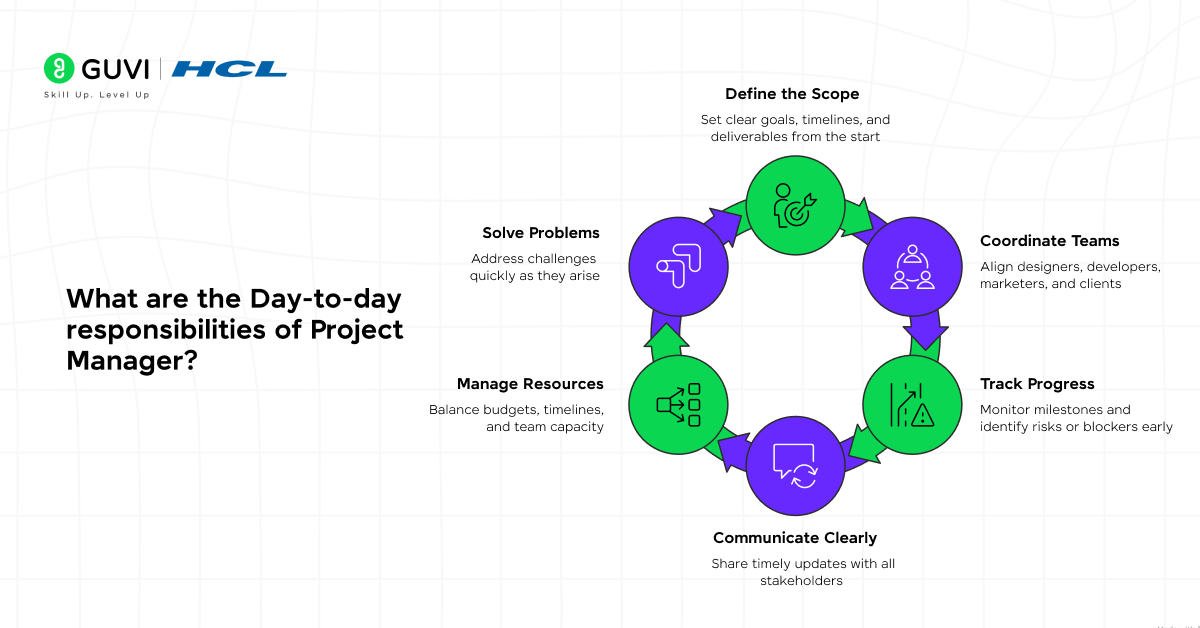
Day-to-day tasks include:
- Defining project scope, timelines, and deliverables
- Coordinating with cross-functional teams (designers, developers, marketers, clients)
- Tracking progress and identifying risks or blockers
- Communicating updates to stakeholders
- Managing budgets, resources, and timelines
- Solving problems as they arise
If you’re ambitious about becoming a Project Manager but unsure where to begin, consider enrolling in HCL GUVI’s Project Management Fundamentals Course.
Common Myths vs Reality
Myth: You need technical expertise to manage projects.
Reality: You need to understand enough to ask the right questions, rather than building the solution yourself.
Myth: PMs send emails and attend meetings.
Reality: You’re accountable for outcomes, which means decision-making, prioritization, and managing people through uncertainty.
Myth: You need a PMP certification to get started.
Reality: PMP requires years of experience. Entry-level roles value skills and initiative over advanced certifications.
Who Can Transition Into Project Management?
Project management is one of the most accessible career pivots because it values skills over credentials. Here are some common backgrounds that translate well:
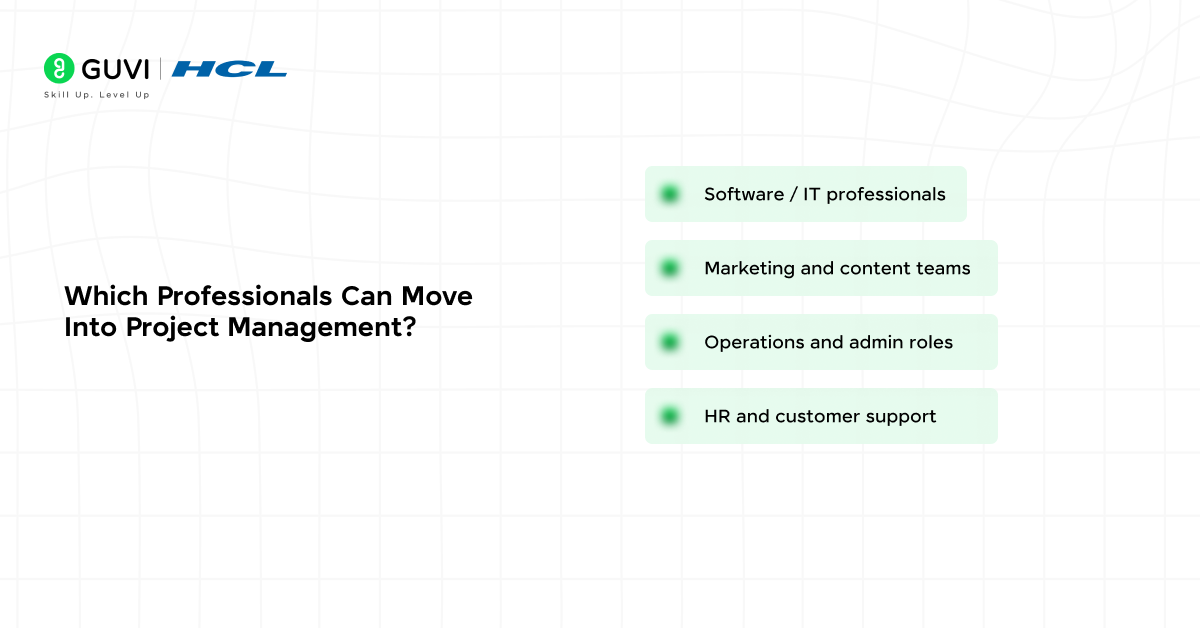
Software / IT professionals: Developers, testers, and support engineers who understand workflows, sprints, and delivery cycles often move into technical PM roles.
Marketing and content teams: Campaign managers, content coordinators, and social media leads already juggle timelines, stakeholders, and deliverables.
Operations and admin roles: If you’ve managed schedules, coordinated teams, or handled logistics, you’ve been doing PM work without the title.
Teachers and trainers: Lesson planning, managing diverse groups, and adapting to challenges are core PM skills.
HR and customer support: Handling people, resolving conflicts, and managing expectations are essential in project management.
The key isn’t where you come from, it’s what you can do. Employers care about your ability to deliver results, not just your job history.
Transferable Skills You Already Have You don’t need to learn project management from scratch. You’re already doing PM work in some form.

Here’s how your existing skills translate
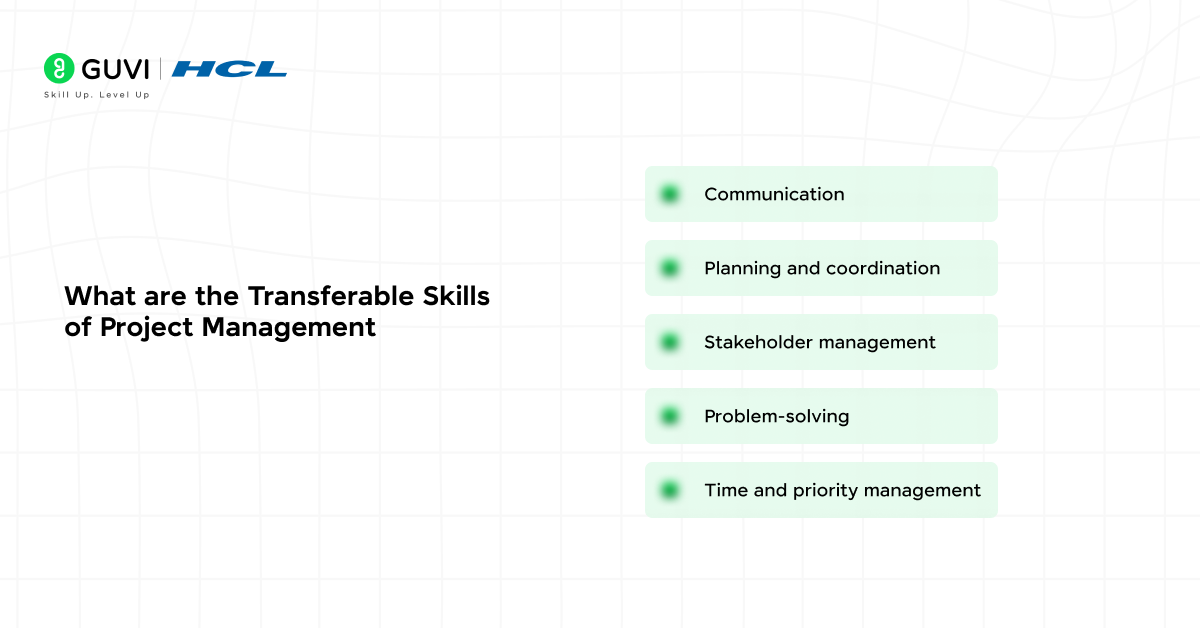
Communication: Ever explained a complex idea to a non-expert? Mediated between two departments? Written clear emails that get things done? That’s PM communication.
Planning and coordination: Organizing events, managing campaigns, or coordinating team schedules all require the same planning muscle PMs use daily.
Stakeholder management: If you’ve managed client expectations, reported to leadership, or collaborated across teams, you’ve practiced stakeholder management.
Problem-solving: Troubleshooting issues, finding workarounds, and making decisions under pressure are PM essentials.
Time and priority management: Juggling multiple tasks, meeting deadlines, and knowing what to tackle first? That’s project prioritization.
The difference between what you’re doing now and project management is often just framing. Start thinking of your work through a PM lens, and you’ll realize you’re more qualified than you thought.
Entry-Level Roles to Target When Starting Project Management Without Experience
If you’re entering project management without experience, avoid applying for senior PM roles. Instead, target roles are designed to help beginners build credibility and hands-on exposure.
Don’t apply for Senior Project Manager roles if you have no experience. Instead, focus on entry points designed for people like you:
Project Coordinator: Supports PMs with scheduling, documentation, and tracking. Perfect for building foundational skills.
Associate Project Manager: Junior PM role with training and mentorship. You’ll manage smaller projects or parts of larger ones.
Junior Project Manager: Similar to Associate PM but with slightly more autonomy. Common in agencies and startups.
PMO Executive: Works within a Project Management Office, handling processes, reporting, and governance. Great for learning structure.
Operations Executive (with PM exposure): Some ops roles involve project coordination, making them natural stepping stones.
These roles don’t expect five years of PM experience. They want someone organized, communicative, and eager to learn. That can be you.
How to Gain Project Management Experience Without the Job Title
The biggest barrier to entering PM isn’t lack of skill, it’s lack of proof. Here’s how to build real experience even if you’re not officially a PM:
Project management is one of the most accessible career pivots because it values skills over credentials.
This is why project management without experience is achievable for professionals from IT, marketing, HR, operations, and even teaching backgrounds.
Employers care more about your ability to plan, communicate, and deliver results than whether your previous job title included “Project Manager
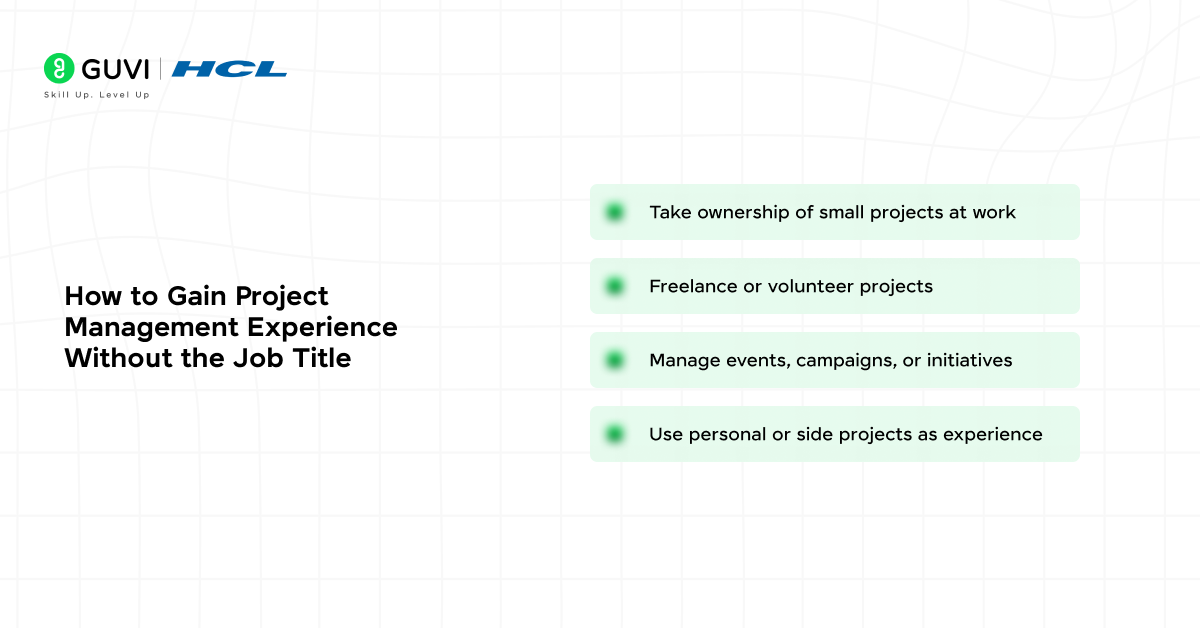
Take ownership of small projects at work: Volunteer to lead an internal initiative, organize a team event, or coordinate a product launch. Document everything: scope, timeline, outcomes.
Freelance or volunteer projects: Nonprofits, community groups, and small businesses need help managing projects. Offer your skills for free or low cost to build your portfolio.
Manage events, campaigns, or initiatives: Plan a workshop, run a marketing campaign, or coordinate a fundraiser. These are legitimate projects with measurable results.
Use personal or side projects as experience: Building a website, launching a podcast, or organizing a group trip all require planning, coordination, and execution. Treat them like real projects.
The goal is to have specific examples to discuss in interviews. Instead of saying “I have no experience,” you can say, “I managed a volunteer event for 50 people, coordinated three vendors, and delivered under budget.”
Certifications That Help You Break In (Beginner-Friendly)
Certifications won’t get you a job by themselves, but they signal credibility and fill knowledge gaps. Here are the best options for beginners:
CAPM (Certified Associate in Project Management): Offered by PMI, this is the entry-level version of PMP. It covers PM fundamentals and is globally recognized. Best if you want a structured, traditional PM foundation.
Scrum Master (CSM / PSM): Focuses on Agile and Scrum frameworks, common in tech and software teams. CSM (Certified Scrum Master) requires a course; PSM (Professional Scrum Master) is exam-only. Ideal for tech or product-focused roles.
Google Project Management Certificate: Available on Coursera, affordable, and beginner-friendly. Covers both traditional and Agile approaches. Great for people with zero PM background.
ITIL Foundation: Useful if you’re targeting IT service management or operations roles. Not essential, but adds value in certain industries.
When certifications help: You’re switching from an unrelated field, you need to prove commitment, or you’re competing with experienced candidates.
When they don’t: You already have strong project experience (even informally), you’re applying for roles that prioritize skills over credentials, or you’re in a startup environment that values action over certificates.
Invest in one certification to start, then focus on real experience. Don’t collect certificates without applying what you learn.
How to Build a Project Management Resume Without Experience
A strong resume is critical when applying for project management roles without experience. Focus on outcomes, measurable impact, and PM-style language to show hiring managers you can manage real projects.
Your resume needs to show you can manage projects, even if your job title says otherwise. Here’s how:
Focus on outcomes, not titles: Don’t list duties. Show what you delivered, how you delivered it, and the impact it had.
Rewrite past roles with PM language: Use terms like coordinated, planned, delivered, stakeholder, timeline, budget, and scope. Frame your work as project-based achievements.
Sample bullet-point structure:
Before: “Organized team meetings and took notes.”
After: “Coordinated weekly cross-functional meetings for a 10-person team, documenting action items and tracking completion to ensure 95% on-time delivery.”
Before: “Helped launch a new product.”
After: “Supported product launch by coordinating marketing, sales, and support teams, managing a 6-week timeline, and delivering all assets on schedule.”
Use ATS-friendly formatting: Avoid tables, graphics, and unusual fonts. Stick to clear headings, bullet points, and standard sections (Experience, Skills, Certifications, Education).
Include a skills section with PM-relevant terms like Agile, Scrum, Stakeholder Management, Risk Management, Timeline Planning, Budget Tracking, and tools like Jira, Trello, Asana, or MS Project.
Even without a PM title, you can build a resume that screams, “I can manage projects.”
How to Prepare for Project Management Interviews as a Fresher
Interviews for entry-level PM roles focus on potential, not past titles. Here’s how to prepare:
Common questions for entry-level PMs:
- Tell me about a time you managed a project or led an initiative.
- How do you prioritize tasks when everything is urgent?
- Describe a situation where you had to manage conflicting stakeholder expectations.
- What would you do if a project were running behind schedule?
- Why do you want to be a project manager?
How to explain “no direct experience” confidently:
Don’t apologize. Instead, reframe: “While I haven’t had the formal title, I’ve managed multiple projects, including [specific example]. I coordinated teams, managed timelines, and delivered results. I’m excited to bring that experience into a dedicated PM role.”
STAR method for PM-style answers:
- Situation: Set the context (What was the project or challenge?)
- Task: Explain your responsibility (What were you trying to achieve?)
- Action: Describe what you did (How did you approach it?)
- Result: Share the outcome (What was the impact? Use numbers if possible.)
Example: “In my marketing role (Situation), I was tasked with launching a campaign in four weeks (Task). I created a project plan, coordinated with design and content teams, and held daily check-ins to track progress (Action). We launched on time and exceeded our lead target by 30% (Result).”
Practice 5–10 STAR stories from your past work, volunteer projects, or personal initiatives. You’ll have answers ready for almost any question.
Explore: What are the Pros & Cons of Working in Project Management
Common Mistakes to Avoid When Switching to Project Management
Applying only for senior PM roles: You’re competing with people who have years of experience. Start with coordinator or junior roles to build credibility.
Overloading certifications without practice: Three certifications and zero real projects won’t impress anyone. Prioritize doing over studying.
Ignoring domain knowledge: If you’re targeting tech PM roles, understand software development basics. For marketing PM, know campaign planning. Context matters.
Undervaluing current experience: You’ve already managed projects, just not with the title. Don’t downplay what you’ve done. Own it.
Realistic Career Path: What Growth Looks Like
Year 0–1: Coordinator / Junior PM
You’re learning the ropes, supporting senior PMs, managing small projects, and building your toolkit. Expect hands-on work with lots of guidance.
Year 2–4: Project Manager
You’re independently managing projects, leading teams, and making decisions. You’ve built credibility and a track record of delivery.
Year 5+: Senior PM / Program Manager / Delivery Manager
You’re managing multiple projects or programs, mentoring junior PMs, and influencing strategy. You’re a trusted leader.
Growth isn’t always linear, and it depends on industry, company size, and your initiative. But most people can reach mid-level PM roles within 3–5 years if they’re proactive.
Is Project Management Right for You?
Not everyone should be a PM. Here’s a quick self-check:
You might thrive as a PM if you:
- Enjoy organizing chaos and bringing structure to ambiguity
- I like working with people more than working alone
- Can handle pressure, shifting priorities, and tight deadlines
- Prefer breadth (knowing a little about a lot) over depth (being an expert in one thing)
- Get satisfaction from seeing a project go from idea to completion
You might struggle if you:
- Prefer deep technical work over coordination
- Find meetings and communication draining
- Want complete control over how things are done (PMs influence, they don’t control)
- Dislike ambiguity or changing requirements
Project management is rewarding but demanding. Make sure it aligns with your strengths and interests before committing.
Conclusion
Breaking into project management without experience isn’t easy, but it’s absolutely doable. Thousands of people have done it, and you can too.
Stop waiting for the perfect time, the perfect resume, or the perfect certification. Start where you are. Take on a small project at work. Sign up for a beginner certification. Rewrite your resume. Apply for coordinator roles. Build your skills one project at a time.
The project management career you want starts with one decision: to stop overthinking and start doing.
Frequently Asked Questions
1. Can I become a project manager with no experience?
2. Do I need a certification to start in project management?
Not always. Beginner certifications like CAPM help show commitment and basic knowledge, but experience and skills matter too.
3. What skills should I highlight for entry‑level PM roles?
Employers look for communication, organization, leadership, and problem‑solving skills, which you can often show from past work.
4. How do I get project management experience without a PM job title?
Success Stories

About the Author
Salini Balasubramaniam
A curious, information-savvy writer loves to turn deep insights into authentic and engaging content that connects. With experience in writing for brands and driving audience engagement, I believe that words can make a powerful difference.
View all posts by Salini Balasubramaniam
Connect with me @













Did you enjoy this article?