


Electric Vehicle Articles
How Does an Electric Vehicle Work? A Complete Guide
Future of Electric Vehicle Course: Fast-Track Your EV Career
Electric Vehicle Technology and Components: A Beginner-Friendly Guide


Get In Touch For Details! Request More Information
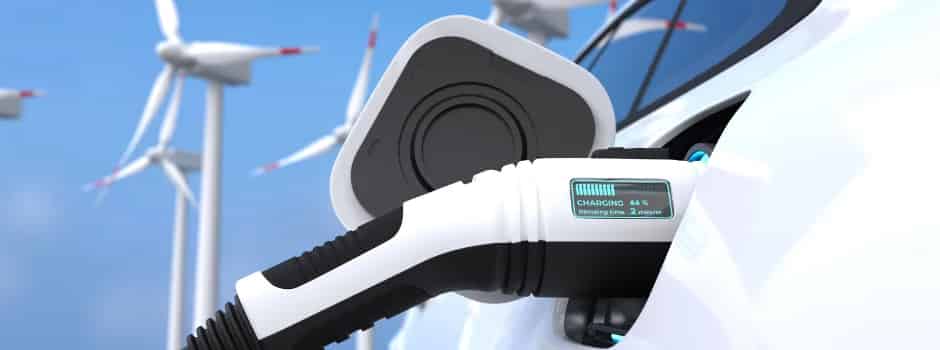
Top Electric Vehicle (EV) Project Ideas in 2026
Feb 27, 2026 4 Min Read 42 Views
(Last Updated)
Imagine this, it is a quiet Tuesday morning and, rather than going to a petrol pump, you would simply plug your car into your home socket, overnight as you would charge your phone. No exhaust fumes. No fluctuating fuel prices. No loud engine rumble. Simply clean, quiet, and affordable energy to get you from point A to point B. This is not science fiction anymore; this is the everyday reality that electric vehicles (EVs) are creating around the world right now.
Whether you are a student, a hobbyist or a professional who wants to step in EV space then this blog is for you. Our list of the best electric vehicle project ideas in 2026 is carefully selected to get hands-on experience with real-world technologies like battery management, motor control, IoT, and renewable energy.
TL/DR Summary:
The top electric vehicle project ideas in 2026 focus on real-world technologies like Smart Battery Management Systems, IoT-based EV charging schedulers, regenerative braking simulations, solar-powered charging systems, and BLDC motor control. These projects help you gain hands-on experience in embedded systems, power electronics, energy management, and sustainable mobility solutions.
Table of contents
- Top Electric Vehicle Project Ideas in 2026
- Smart Battery Management System (BMS)
- EV Charging Station Scheduler with IoT
- Regenerative Braking System Simulation
- Solar-Powered EV Charging System
- EV Motor Control System Using BLDC Motors
- Vehicle-to-Grid (V2G) Energy Management System
- EV Health Monitoring Dashboard with Machine Learning
- Wrapping it up:
- FAQs
- Which electric vehicle project is best for final-year students?
- Do I need coding knowledge for EV projects?
- Are EV projects good for career growth in 2026?
Top Electric Vehicle Project Ideas in 2026
Here are the most exciting and relevant electric vehicle project ideas you can start working on right now.
1. Smart Battery Management System (BMS)
The most important and most costly part of any electric vehicle is the battery, and a Smart Battery Management System is the brain that would make it stay healthy and do its best.
What it involves: You will design a system that monitors battery voltage, current, temperature, and state of charge in real time. The system will trigger protective actions like balancing cells, sending alerts, and preventing overcharging or deep discharge.
Skills you will learn: Embedded C/C++, microcontroller programming (Arduino/STM32), sensor integration, and data communication protocols like CAN bus and I2C.
Why it is important: A properly designed BMS can extend battery life up to 30 times, and this has a direct effect on the price and availability of an EV.
Also read: What is Electric Vehicle Battery Technology
2. EV Charging Station Scheduler with IoT
The greatest obstacle to EV adoption is range anxiety, the anxiety of not being able to get to a charging location before the charge runs out. One of the most practical ideas that you can work on in 2026, related to EV is is to build a smart EV charging station scheduler using IoT.
What it involves: You will develop a mobile/web-based application, which will indicate both real-time location of charging stations and check their availability, pre-booking a slot, and smart notifications when the vehicle is completely recharged.
Skills you will learn: IoT protocols, such as MQTT, cloud providers, such as AWS or Firebase, mobile apps, API integration in Google Maps, and backend implementation with Node.js or Python.
Why it is important: The smart charging infrastructure is an enormous business opportunity as the number of EVs on the road is increasing each year. There are companies such as ChargePoint and EVGO that seek developers who can develop such systems at all times.
3. Regenerative Braking System Simulation
One of the most exquisite works of engineering in an electric car is regenerative braking, which recycles the kinetic energy that is wasted during braking and recharges the battery. This system is also one of the most technically rewarding project ideas for students and engineers to simulate or build an electric vehicle.
What it involves: You will simulate the energy recovery mechanism in MATLAB/Simulink or build a small physical prototype using a DC motor, microcontroller, and capacitor bank to demonstrate energy regeneration during deceleration.
Skills you will learn: The basics of power electronics, motor control theory, MATLAB simulation,and physics of energy conversion.
Why it is important: Regenerative braking can increase the range of an EV by 10 and 25 per cent, depending on the driving conditions, so it is one of the major focus points of ongoing research and development in the automotive industry.
Also read: How Do You Choose the Right Electric Vehicle Course & Certification in 2026?

4. Solar-Powered EV Charging System
What if your electric vehicle could be charged entirely by sunlight? Combining solar energy with EV charging is one of the greenest and most innovative electric vehicle project ideas you can build in 2026, especially as solar panel costs continue to fall dramatically.
What it involves: You will design a solar panel array attached to a charge controller, battery storage pack and an EV charging outlet. The system will be smart in controlling the flow of power depending on the availability of sunlight and the battery conditions.
Skills you will learn: Solar energy system, MPPT (Maximum Power Point Tracking), power electronics, energy storage design and embedded programming.
Why it is important: As long as electricity grids in most countries rely on fossil fuels, solar-charging EV is the way to achieve zero-emission transportation.
5. EV Motor Control System Using BLDC Motors
Brushless DC (BLDC) motors are the engine of choice for modern electric vehicles because of their high efficiency, durability, and low maintenance. One of the most technically difficult yet professionally fulfilling ideas of an electric vehicle project that you can do is to create a motor control system for a BLDC motor.
What it involves: You will implement Field-Oriented Control (FOC) or trapezoidal commutation to drive a BLDC motor, using sensors or sensor-less techniques to detect rotor position and adjust the drive signals accordingly.
Skills you will learn: DSP programming, PWM signal generation, PID control loops, Hall sensor interfacing, and real-time motor control algorithms.
Why it is important: Motor control engineers are one of the most highly paid professionals in the EV environment. Companies such as Tesla, Rivian, and Ola Electric annually invest billions in motor control optimization research.
Also read: The Right Guide to Begin Your High-Paying Career in the Electric Vehicle Industry
6. Vehicle-to-Grid (V2G) Energy Management System
Imagine a scenario where your parked electric car could sell electricity back to the grid during peak hours and earn you money? This is the concept behind Vehicle-to-Grid (V2G) technology, and designing a V2G energy management system is one of the most forward-thinking electric vehicle project ideas available in 2026.
What it involves: In this case, you will be modeling or prototyping a system in which an EV battery can release power back to the electrical grid, with a bidirectional charger, controlled by a smart controller, deciding when to charge and when to discharge based on price and demand on the electricity grid.
Skills you will learn: Smart grid concepts, power flow analysis, energy market pricing models, bidirectional power electronics, and control system design.
Why it matters: V2G has the potential to transform millions of EV batteries into a distributed energy storage network, fundamentally changing how electricity grids operate. This is a multi-billion dollar opportunity being pursued by utilities and automakers worldwide.
Also read: Electric Vehicle Interview Questions and Answers Most Candidates Fail to Prepare For
7. EV Health Monitoring Dashboard with Machine Learning
Predictive maintenance is transforming every industry, and electric vehicles are no exception. Building an AI-powered EV health monitoring dashboard is one of the most data-science-forward electric vehicle project ideas you can work on, combining machine learning with automotive engineering.
What it involves: You will collect operational data from an EV (battery voltage, temperature, motor current, vibration, etc.), train a machine learning model to detect anomalies and predict failures, and display the insights on an intuitive real-time dashboard.
Skills you will learn: Python, scikit-learn or TensorFlow, time-series data analysis, dashboard development with tools like Grafana or Power BI, and OBD-II data protocols.
Why it matters: Fleet operators and individual EV owners lose significant money on unexpected breakdowns. A system that predicts failures before they happen can save thousands of dollars per vehicle annually and is a highly sellable commercial product.
Take the next step and explore GUVI’s Advanced Electric Vehicle Technology Course – IIT Delhi to gain hands-on expertise in electric vehicle components and EV systems.
Wrapping it up:
In 2026, the electric vehicle (EV) industry will continue to make a significant impact on the way we travel, the way we produce energy and the way we produce electricity. By working on advanced electric vehicle project ideas such as Smart BMS, BLDC motor control, V2G systems, IoT-based charging, and AI-powered health monitoring, you build practical skills in embedded systems, power electronics, machine learning, and renewable integration. If you want to enter the EV industry with confidence, the best approach is simple: start building real-world projects that solve real-world problems.
FAQs
1. Which electric vehicle project is best for final-year students?
Consider working on Smart Battery Management Systems, BLDC motor control, or EV health monitoring dashboards projects.
2. Do I need coding knowledge for EV projects?
Yes. Basic knowledge of Embedded C/C++, Python, MATLAB, or IoT frameworks is highly useful for implementing EV systems.
3. Are EV projects good for career growth in 2026?
Without a doubt! The Electric Vehicle business continues to grow quickly, and the need for qualified engineers will also continue to increase, which creates a need for engineers.
Success Stories

About the Author
Vishalini Devarajan
An Aerospace Engineer turned content writer, I focus on making complex concepts easy to understand through well-structured, reader-friendly blogs. Whether it’s a technical topic or a non-technical one, I love creating content that is clear, engaging, and impactful.
View all posts by Vishalini Devarajan
Connect with me @










Did you enjoy this article?