


Electric Vehicle Articles
What is Vehicle-to-Grid Technology : How EVs Can Power the Grid
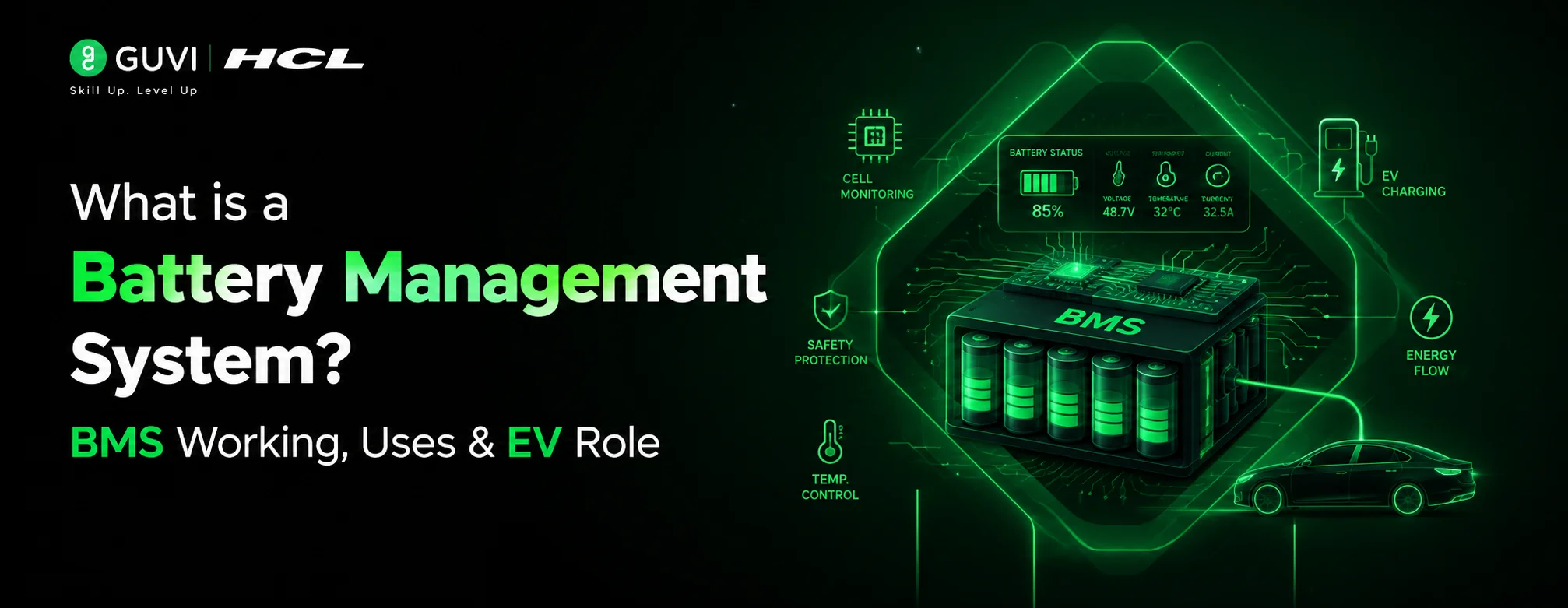
What is a Battery Management System? BMS Working, Uses & EV Role
EV Infrastructure in India: Best Components, Charging Network, Challenges & Future (2026 Guide)


Get In Touch For Details! Request More Information
Different Types of Electric Vehicles: A Complete Guide
Jun 16, 2026 4 Min Read 1790 Views
(Last Updated)
Many first-time buyers assume all electric vehicles function the same, which often leads to confusion when comparing options. Electric vehicles are often discussed as a single category, but not all EVs operate the same way. Some run entirely on batteries, while others combine electric systems with fuel-based engines.
This guide explains the different types of electric vehicles, how they work, and where each type fits in real-world usage.
Quick Answer:
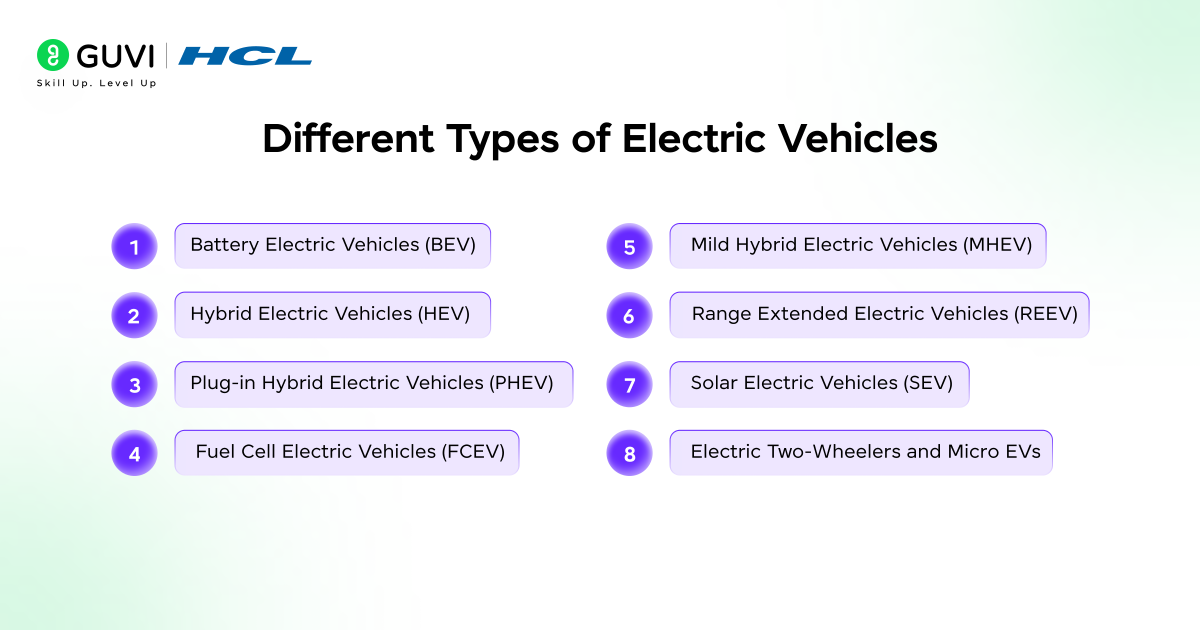
Electric vehicles are broadly classified into Battery Electric Vehicles (BEV), Hybrid Electric Vehicles (HEV), Plug-in Hybrid Electric Vehicles (PHEV), and Fuel Cell Electric Vehicles (FCEV). Each type differs in power source, charging method, and level of dependence on fossil fuels.
Table of contents
- What Is an Electric Vehicle?
- Different Types of Electric Vehicles
- Battery Electric Vehicles (BEV)
- Hybrid Electric Vehicles (HEV)
- Plug-in Hybrid Electric Vehicles (PHEV)
- Fuel Cell Electric Vehicles (FCEV)
- Mild Hybrid Electric Vehicles (MHEV)
- Range Extended Electric Vehicles (REEV)
- Solar Electric Vehicles (SEV)
- Electric Two-Wheelers and Micro EVs
- Technologies Behind Electric Vehicles
- Benefits of Electric Vehicles
- Limitations of Electric Vehicles
- Future of Electric Vehicles
- Conclusion
- FAQs
- Which type of electric vehicle is most suitable for city driving?
- Do all electric vehicles require external charging?
- What factors affect the efficiency of electric vehicles?
What Is an Electric Vehicle?
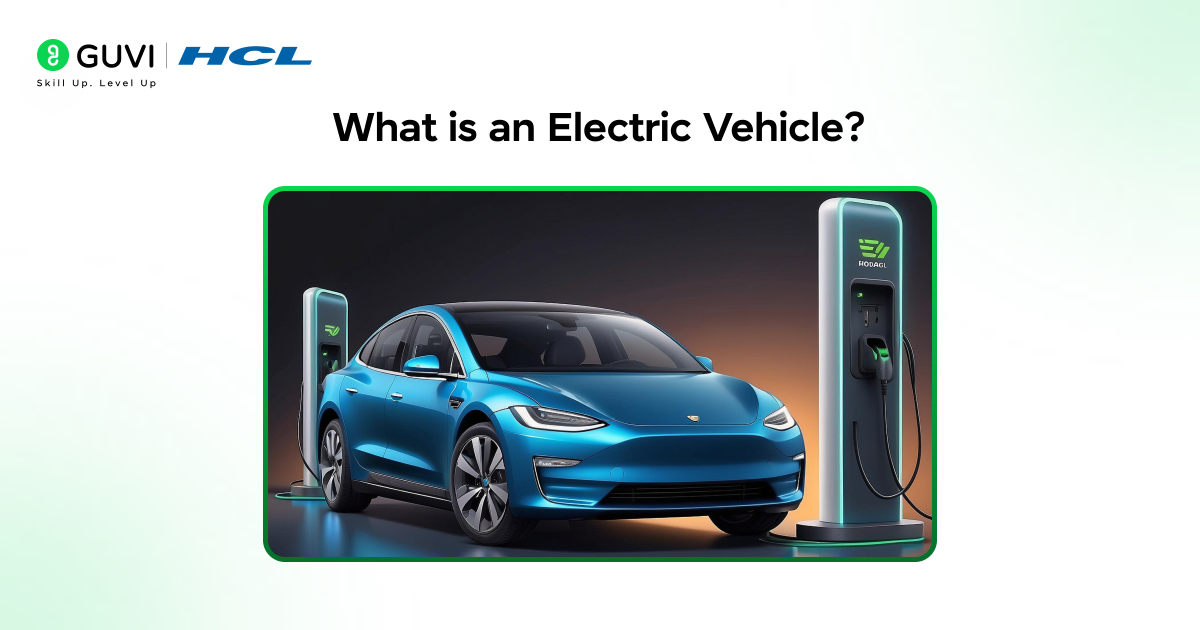
An electric vehicle (EV) is a transportation system powered fully or partially by electric energy stored in rechargeable battery packs, replacing or supplementing the internal combustion engine used in conventional vehicles. EVs operate through an electric motor that converts electrical energy into mechanical motion, supported by components such as a battery management system, power electronics controller, and regenerative braking mechanism.
Different Types of Electric Vehicles
1. Battery Electric Vehicles (BEV)
Battery Electric Vehicles rely entirely on electrochemical energy stored in lithium-ion battery packs, which supply direct current to an inverter that converts it into alternating current for the traction motor. The drivetrain eliminates components such as fuel injectors, exhaust systems, and multi-speed transmissions, resulting in higher drivetrain efficiency, often exceeding 85%. Thermal management systems regulate battery temperature to maintain performance and extend lifecycle under varying load and climate conditions.
Key Features
- High-voltage battery systems typically ranging from 300V to 800V
- Single-speed transmission due to broad torque band of electric motors
- Regenerative braking recovers kinetic energy into battery storage
- Battery management system monitors charge cycles, voltage, and thermal stability
Examples
- Tesla Model 3
- Nissan Leaf
- Tata Nexon EV
2. Hybrid Electric Vehicles (HEV)
Hybrid Electric Vehicles functioning integrate a parallel or series hybrid architecture where the internal combustion engine and electric motor operate in coordination through a power-split device or transmission system. The control unit dynamically allocates torque between the engine and motor based on load conditions, improving fuel efficiency in stop-and-go traffic. The onboard battery is charged through regenerative braking and engine-driven generators, removing reliance on external charging infrastructure.
Key Features
- Power-split or parallel hybrid drivetrain configuration
- Engine downsizing combined with electric torque assist
- Regenerative braking integrated with mechanical braking system
- Automatic switching between electric, engine, or combined drive modes
Examples
- Toyota Prius
- Honda City Hybrid
Build future-ready expertise in electric mobility and move beyond theory into real EV systems. Join IIT Delhi’s Advanced Electric Vehicle Technology Course to learn batteries, power electronics, BMS, and charging infrastructure through a structured 6-month program with live sessions, hands-on projects, and industry-relevant curriculum designed for the growing EV ecosystem.
3. Plug-in Hybrid Electric Vehicles (PHEV)
Plug-in Hybrid Electric Vehicles incorporate larger battery capacities compared to HEVs, typically enabling 40-80 km of electric-only driving. These systems support external charging via AC or DC sources and use electric-first strategies where the control system prioritizes battery usage before engaging the combustion engine. Energy management algorithms optimize transitions between electric and hybrid modes to balance efficiency and performance.
Key Features
- Larger battery capacity than conventional hybrids
- External charging via standard EV charging infrastructure
- Electric-only mode for short-distance urban driving
- Intelligent energy management for mode switching
Examples
- Mitsubishi Outlander PHEV
- Volvo XC90 Recharge
4. Fuel Cell Electric Vehicles (FCEV)
Fuel Cell Electric Vehicles generate electricity through an electrochemical reaction between hydrogen and oxygen within a proton exchange membrane fuel cell. The generated electricity powers the motor, while a small buffer battery handles transient loads and regenerative braking. Hydrogen is stored in high-pressure tanks, typically at 700 bar, and converted into electrical energy on demand, making the system independent of conventional battery charging cycles.
Key Features
- Proton exchange membrane fuel cell stack for power generation
- High-pressure hydrogen storage systems
- Auxiliary battery for load balancing and energy recovery
- Continuous power generation without reliance on grid charging
Examples
- Toyota Mirai
- Hyundai Nexo
5. Mild Hybrid Electric Vehicles (MHEV)
Mild Hybrid Electric Vehicles use a small electric motor to support the internal combustion engine but cannot power the vehicle independently. The system typically operates on a 12V or 48V architecture and assists during acceleration and load balancing. This improves fuel efficiency without requiring major drivetrain changes.
Key Features
- Low-voltage electrical system integrated with engine
- Electric assist during acceleration phases
- Start-stop functionality to reduce idle fuel consumption
- Minimal impact on vehicle architecture and cost
Examples
- Maruti Suzuki Ciaz Smart Hybrid
- Audi A6 Mild Hybrid
6. Range Extended Electric Vehicles (REEV)
Range Extended Electric Vehicles are primarily electric-driven but include a small internal combustion engine that acts only as a generator to recharge the battery. The engine does not drive the wheels directly, which differentiates it from traditional hybrid systems. This architecture allows extended driving range without compromising electric drivetrain benefits.
Key Features

- Electric motor solely responsible for propulsion
- Auxiliary engine used only for battery charging
- Extended range without direct engine-wheel connection
- Suitable for long-distance travel with reduced charging dependency
Examples
- BMW i3 REx
- Chevrolet Volt
7. Solar Electric Vehicles (SEV)
Solar Electric Vehicles integrate photovoltaic panels into the vehicle surface to convert solar energy into electrical power. While current solar efficiency limits full reliance on solar charging, these systems can supplement battery charging and extend driving range under optimal conditions.
Key Features
- Integrated solar panels for energy generation
- Supplementary charging to extend battery range
- Reduced dependence on external charging in specific conditions
- Limited output based on sunlight availability
Examples
- Lightyear 0
- Aptera Solar EV
8. Electric Two-Wheelers and Micro EVs
This category includes electric scooters, bikes, and compact urban vehicles designed for short-distance mobility. These vehicles use smaller battery packs and simplified drivetrains, making them suitable for urban environments with lower speed and range requirements.
Key Features
- Compact battery systems with lower energy capacity
- Optimized for short-range urban commuting
- Lower cost and simpler charging requirements
- High efficiency for low-speed mobility use cases
Examples
- Ola S1 Pro
- Ather 450X
- Tata Tiago EV
Technologies Behind Electric Vehicles
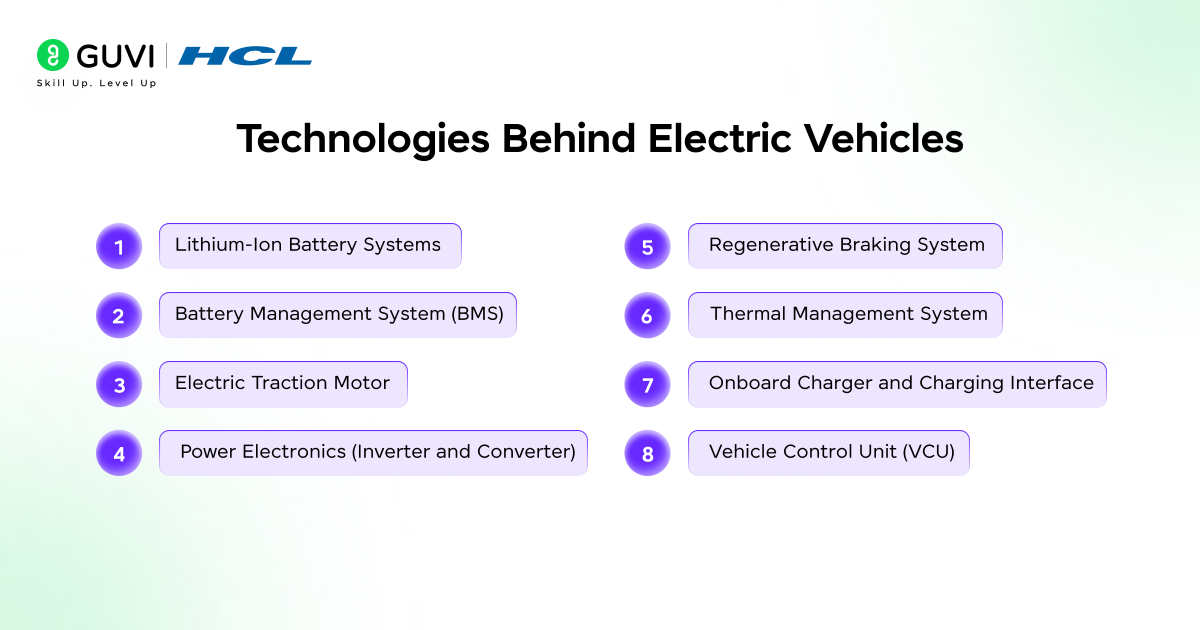
- Lithium-Ion Battery Systems: High energy-density cells store electrical energy and support fast charge-discharge cycles while maintaining thermal stability
- Battery Management System (BMS): Monitors cell voltage, temperature, and state of charge to prevent overcharging, overheating, and degradation
- Electric Traction Motor: Converts electrical energy into mechanical torque with high efficiency and instant torque delivery
- Power Electronics (Inverter & Converter): Inverter converts DC from battery to AC for motor operation, while converters manage voltage levels across subsystems
- Regenerative Braking System: Captures kinetic energy during braking and converts it back into electrical energy stored in the battery
- Thermal Management System: Regulates temperature of battery, motor, and electronics to maintain performance and extend component lifespan
- Onboard Charger and Charging Interface: Converts external AC power to DC for battery charging and manages charging protocols and safety
- Vehicle Control Unit (VCU): Central system that coordinates motor control and system-level decision-making based on driving conditions
Benefits of Electric Vehicles
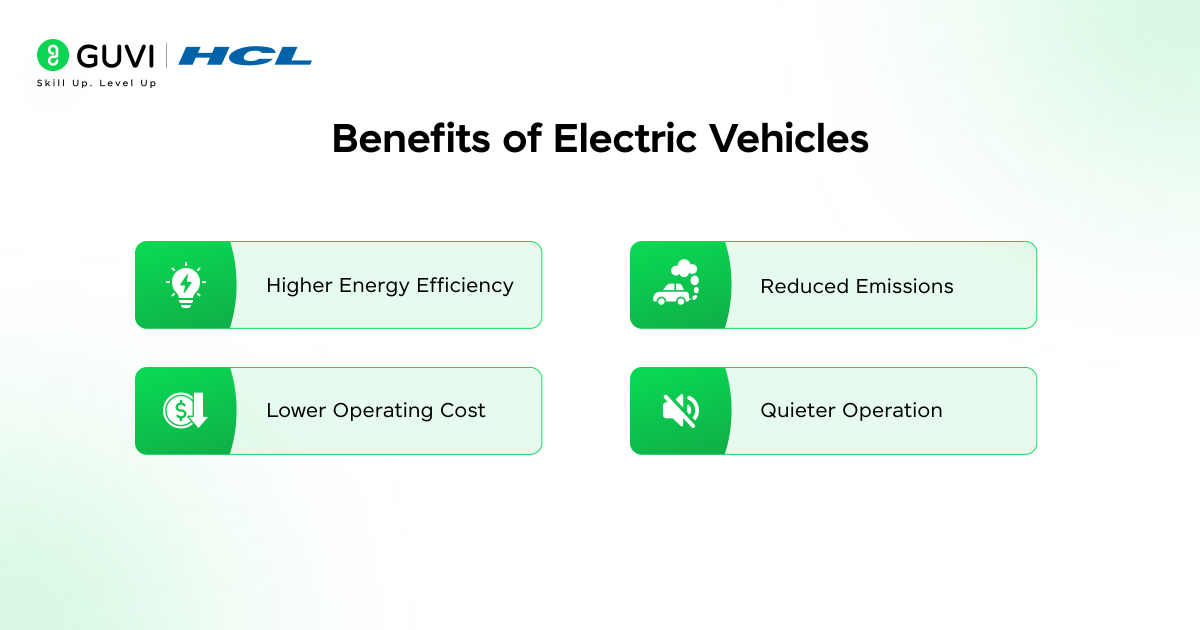
- Higher Energy Efficiency: Electric drivetrains convert a larger share of energy into motion compared to internal combustion engines, reducing energy loss during operation
- Lower Operating Cost: Electricity cost per kilometer is lower than fuel, and fewer moving parts reduce servicing and maintenance expenses
- Reduced Emissions: Zero tailpipe emissions in BEVs help lower urban air pollution and dependence on fossil fuels
- Quieter Operation: Electric motors produce minimal noise, reducing noise pollution in urban environments
Limitations of Electric Vehicles
- Limited charging infrastructure in many regions
- Higher upfront cost compared to conventional vehicles
Future of Electric Vehicles
The next phase of electric vehicle development is being shaped by measurable advancements in battery chemistry and energy ecosystems. Solid-state batteries are moving from lab prototypes to early commercial validation, offering higher energy density, improved safety, and faster charging compared to conventional lithium-ion systems. At the same time, 800V charging platforms are reducing charging times to under 20 minutes for substantial range recovery, which directly addresses one of the key adoption barriers.
On the infrastructure side, grid-integrated solutions such as vehicle-to-grid systems are being tested to allow EVs to act as distributed energy storage units, supporting peak load balancing. In parallel, hydrogen production through green electrolysis is improving the viability of fuel cell vehicles in commercial transport.
Conclusion
Electric vehicles represent a spectrum of technologies rather than a single category, each designed to address specific operational needs, infrastructure conditions, and efficiency goals. From fully electric BEVs to hybrid and hydrogen-based systems, the differences lie in how energy is stored, converted, and delivered to the drivetrain. Understanding these distinctions allows for informed decision-making based on usage patterns, cost considerations, and long-term sustainability goals.
FAQs
1. Which type of electric vehicle is most suitable for city driving?
Battery Electric Vehicles and electric two-wheelers are well-suited for city driving due to shorter travel distances, access to charging infrastructure, and lower operating costs.
2. Do all electric vehicles require external charging?
No, only BEVs and PHEVs require external charging. HEVs generate electricity internally, while FCEVs use hydrogen refueling instead of plug-in charging.
3. What factors affect the efficiency of electric vehicles?
Efficiency depends on battery capacity, motor design, driving conditions, regenerative braking efficiency, and thermal management systems.
Success Stories

About the Author
Vaishali
I'm a seasoned writer with four years of experience across technical, non-technical, and just about every genre or niche you can imagine. Adaptable and curious, I enjoy exploring new topics and making information engaging and easy to understand. Fueled by a steady stream of tea, I approach each project with creativity, reliability, and genuine enthusiasm for storytelling.
View all posts by Vaishali
Connect with me @







Did you enjoy this article?